


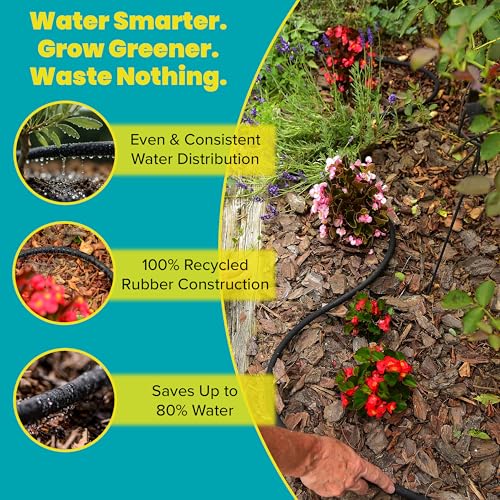
The best soaker hose for shrubs delivers slow, deep watering while saving water and protecting plant roots.
If your shrubs look dry even after running a sprinkler, the water may never reach their root zones. Sprinklers lose water to wind and evaporation, while hand watering takes time and often wets leaves instead of soil. A good soaker hose solves this by releasing water along its length, right where shrubs need it. I tested the key features that matter most, including flow, hose shape, fittings, length, and ease of placement. This guide compares seven useful options so you can choose the best soaker hose for shrubs in your yard.
Gilmour Round Soaker Hose

The Gilmour Round Soaker Hose is a simple choice for small shrub beds, foundation plants, and narrow garden borders. Its 25-foot length is easy to guide around a few shrubs without leaving a large coil to manage. The round design feels more substantial than many thin flat hoses, and the heavy-duty couplings add confidence at the connection points. I especially like this size for homeowners who want controlled watering rather than a long hose spread across the whole yard.
This hose works best when placed on bare soil or under a light layer of mulch. Slow seepage can help keep water near the roots instead of throwing water onto leaves and flowers. The compact length also makes it easier to use with a timer, since the water demand is usually lower than with a very long hose. For a small planting bed, it has the focused feel I look for in the best soaker hose for shrubs.
Pros:
- Compact 25-foot length suits small shrub beds
- Round shape is easy to curve around plants
- Heavy-duty couplings support a secure connection
- Good choice for foundation beds and borders
- Simple layout makes setup quick
- Works well with a low-flow timer system
Cons:
- Too short for large rows of shrubs
- May need landscape staples to hold its shape
- Watering speed depends on household water pressure
My Recommendation
I recommend the Gilmour Round Soaker Hose for gardeners with a short row of shrubs or a small bed beside the house. It is easy to place, easy to store, and less likely to create a tangled mess than an oversized hose. The heavy-duty couplings are also helpful for repeated seasonal use. If you need the best soaker hose for shrubs in a compact space, this is one of the most practical picks.
CARPATHEN 50-Foot Soaker Hose Kit

The CARPATHEN Soaker Hose Kit gives you more than a single length of hose. It includes 50 feet of mainline tubing and connectors, which makes it useful for custom layouts around shrubs. I see this type of kit as a good fit for gardeners who want to build watering paths instead of simply placing one hose in a straight line. You can route water along several sections of a bed and place the tubing close to different root zones.
The main benefit is flexibility. A connected layout can follow curved beds, separate groups of shrubs, or long foundation plantings with fewer awkward bends. The kit does require more planning than a ready-to-use hose, so I suggest sketching the bed before cutting or connecting anything. Used with a filter, pressure control, and timer, it can become a useful drip-style system for steady shrub care.
Pros:
- 50 feet covers medium and large planting areas
- Connectors allow a custom watering layout
- Useful for curved beds and multiple shrub groups
- Can reduce the need for several garden hoses
- Supports neat routing along plant rows
- Good option for gardeners who enjoy custom irrigation
Cons:
- Setup takes longer than using a single hose
- Connectors may require careful hand tightening
- Not the best choice for a very small bed
- Custom tubing needs thoughtful planning before installation
My Recommendation
I recommend the CARPATHEN kit for homeowners with many shrubs, curved borders, or separate planting zones. It is more versatile than a fixed-length soaker hose because you can shape the system around your landscape. This kit may be the best soaker hose for shrubs when coverage and layout control matter more than instant setup. It also offers strong value for gardeners who plan to expand their beds later.
75-Foot Flat Sprinkler Soaker Hose

This 75-foot flat sprinkler soaker hose is designed for broad coverage. Its long length can reach across a large shrub row, hedge, lawn edge, or mixed garden bed. Unlike a traditional round soaker hose that mainly seeps downward, a sprinkler-style hose can send water upward or outward through its holes when positioned correctly. That makes it a flexible tool for areas where shrubs need wider coverage.
The flat body is easy to roll and store when the season ends. However, it needs a flat path for the best performance, so remove sharp stones, sticks, and large clumps of soil before laying it down. I would use this hose for young shrubs, wide beds, and areas that need gentle spray over a larger surface. It is not as precise as a drip line, but it offers useful coverage for the price.
Pros:
- 75-foot length covers large areas
- Flat profile stores more easily than bulky round hose
- Useful for wide shrub beds and long borders
- Sprinkler holes can spread water across a broader zone
- Works for lawns, flowers, shrubs, and vegetable beds
- Can be repositioned for different watering tasks
Cons:
- Needs a smooth surface to lie flat
- May water less evenly if twisted
- Spray can wet foliage in windy conditions
- Less precise than a true root-zone drip system
My Recommendation
This hose is best for gardeners who need long coverage and do not mind checking the spray pattern. It suits broad shrub beds more than tiny spaces. I would choose it when a 75-foot reach matters and the bed has a fairly clear surface. For wide landscapes, it can be the best soaker hose for shrubs when coverage is the main goal.
Gilmour 25-Foot Flat Weeper Hose

The Gilmour Flat Weeper Hose is a classic choice for beds that need a low, gentle flow. Its 25-foot length works well around small shrub groups, flower beds, vegetable rows, and orchard plants. The flat shape rests close to the soil, which helps it blend into a bed more easily than a thick round hose. I find this design useful when I want a clean look and simple storage.
You can lay it with the holes facing up for a soft sprinkler effect or facing down for more direct soil watering. That choice gives it added flexibility, but the hose must lie flat for consistent results. It can also work beneath mulch, where the dark color becomes less noticeable. For homeowners who want a basic hose from a familiar garden brand, this model deserves serious consideration.
Pros:
- Low flat shape blends well into garden beds
- 25-foot size fits many home landscapes
- Easy to roll for storage
- Can provide gentle spray or seepage based on placement
- Useful for shrubs, flowers, vegetables, and orchard trees
- Simple design is easy for new gardeners to understand
Cons:
- Flat hose can kink if stored carelessly
- Needs a level surface for even watering
- Limited length for large shrub borders
- May shift without garden stakes
My Recommendation
I recommend this Gilmour hose for small beds and gardeners who value easy storage. It is especially useful when you want a hose that can sit under mulch or along the edge of a planting bed without standing out. The 25-foot length keeps the layout manageable. For simple, low-cost shrub watering, this model may be the best soaker hose for shrubs in a compact garden.
LINEX 75-Foot Sprinkler Soaker Hose

The LINEX 75-foot Sprinkler Soaker Hose adds stakes to a long watering hose, and that feature can make a real difference. Long hoses tend to move, twist, or curl when water pressure changes. Stakes help keep the hose aligned beside shrub rows and garden edges. I like this design for larger beds where keeping the watering path in place saves repeated adjustment.
The sprinkler-soaker format gives you two ways to water. You can position the holes to create a spray pattern, or place the hose for closer soil coverage. The long length is helpful for hedges and wide borders, but you should test a short section first to see how far the water travels. A pressure regulator or timer can help prevent overly strong spray and reduce wasted water.
Pros:
- 75-foot length reaches long shrub rows
- Included stakes help secure the hose
- Useful for borders, lawns, and large garden beds
- Flexible positioning supports different watering patterns
- Stakes reduce movement during use
- Good option for larger yards and hedges
Cons:
- Long length takes more time to arrange and store
- Spray may be uneven if the hose twists
- Stakes can be difficult to push into hard soil
- May use more water than a focused drip line
My Recommendation
The LINEX hose is best for people who need long reach but still want help keeping the hose in place. It fits large shrub rows, hedge lines, and borders with soft soil. The stakes are a useful practical feature, especially on sloped or busy beds. I would call it a strong candidate for the best soaker hose for shrubs when stability and coverage are equally important.
50-Foot Flat Sprinkler Soaker Hose

This 50-foot flat sprinkler soaker hose offers a middle ground between compact 25-foot models and extra-long 75-foot hoses. It has enough reach for many residential shrub beds without creating an oversized coil. The flat design makes it simple to roll and store, while the sprinkler holes help spread water across a wider area. I see it as a useful general-purpose hose for homeowners who want one tool for several garden jobs.
It can water shrubs, flowers, vegetable beds, and narrow strips of lawn. To get the most even flow, lay it straight and remove bends before turning on the water. The hose may work best in short sections when the bed is very wide, since water pressure can drop along a long run. For regular care, I would pair it with a timer and check the soil beneath the mulch instead of judging moisture by the surface.
Pros:
- 50-foot length fits many average-size yards
- Flat body is easy to roll and store
- Good balance between reach and manageability
- Can water shrubs and other garden areas
- Sprinkler holes provide broader coverage than seepage alone
- Useful for seasonal or occasional watering
Cons:
- Can kink when folded too sharply
- Requires a clear, flat path
- May shift without staples or careful placement
- Water pattern can change with household pressure
My Recommendation
I recommend this 50-foot model for average-size shrub beds and mixed gardens. It is long enough for useful coverage but not as cumbersome as a 75-foot hose. If you want a flexible hose for shrubs, flowers, and vegetables, it offers a practical compromise. It could be the best soaker hose for shrubs for buyers who want one affordable hose for several outdoor tasks.
Atlantic 2-Foot Short Soaker Hose

The Atlantic Short Soaker Hose is made for focused watering. At only 2 feet long, it can sit near a single shrub, a foundation corner, or a small plant cluster without covering unwanted areas. This short format is useful when you want to connect several small sections around a specific landscape feature. It also avoids the extra hose that often piles up behind a plant bed.
I would consider this style for foundation watering, container groups, narrow beds, and individual shrubs that need extra care. It is not a replacement for a long hose, but it can solve a very specific problem with less waste. Short sections can also be easier to hide under mulch and easier to remove before yard work. If precision matters more than reach, this is a clever option.
Pros:
- Very focused watering for individual shrubs
- Ideal for small beds and foundation areas
- Easy to hide beneath mulch
- Creates less excess hose around plants
- Simple to position and remove
- Useful for custom irrigation layouts
Cons:
- Two-foot length cannot cover a large bed alone
- May require several sections and connectors
- Not ideal for long rows of shrubs
- Custom layouts can take extra installation time
My Recommendation
The Atlantic Short Soaker Hose is best for precise watering near a foundation, single shrub, or small plant group. It is also useful as part of a larger custom system. I would not buy it as the only hose for a large yard, but it can be the best soaker hose for shrubs when you need control in a tight space. Its small footprint makes it easy to hide and maintain.
What Is a Soaker Hose?
A soaker hose is a porous garden hose that releases water along its length. Instead of sending a strong stream into the air, it allows water to move slowly into nearby soil. This method can keep water close to plant roots and reduce runoff on many beds. The hose may be made in a round, flat, or tubing-style design.
Round soaker hoses usually provide gentle seepage along the sides. Flat weeper hoses can sit close to the ground and may offer seepage or a light spray based on the hole position. Sprinkler soaker hoses use openings that send water upward or outward. Each style can work, but the right choice depends on the size of your shrub bed, soil type, and desired precision.
Why Use a Soaker Hose for Shrubs?
Shrubs often need water at the soil line, not on their leaves. A soaker hose can place water near the root zone while keeping the foliage drier than an overhead sprinkler. This may help limit leaf wetness and reduce evaporation during calm watering periods. It also lets you water several plants at once without holding a hose by hand.
Deep watering is important because many established shrubs have roots that spread beyond the trunk or main stems. Short, frequent surface watering may encourage shallow roots. A longer, slower watering session can help moisture move deeper, though the exact timing depends on soil, weather, plant type, and local watering rules. I always check the soil with a finger or hand trowel before adding more water.
Water conservation also matters. The U.S. Environmental Protection Agency promotes efficient outdoor watering and encourages homeowners to reduce runoff and evaporation. A soaker hose is not automatically efficient in every situation, but careful placement, moderate pressure, and a timer can make it far more controlled than careless hand watering. The best soaker hose for shrubs should match the bed rather than simply be the longest model available.
How I Compare the Best Soaker Hoses for Shrubs
Hose Length
Measure the planting bed before buying. A 25-foot hose suits a small foundation bed or a few shrubs. A 50-foot model works for many average garden areas. A 75-foot hose helps with hedges and large borders but can be harder to arrange and store.
Round or Flat Design
Round hoses are often easy to curve around plants. Flat hoses can store neatly and sit close to the ground. A flat hose may kink if you fold it sharply, while a round hose may take more space in a shed. Neither shape wins every job.
Water Pattern
Check whether the hose seeps, sprays, or does both. Shrubs planted close together may benefit from slow seepage. Young plants or wide beds may benefit from broader spray. If the hose sprays too far, water can miss the root zone or wet nearby walls and paths.
Connectors
Connectors are often the weak point in a garden watering setup. Look for secure couplings and avoid cross-threading. Hand-tighten first, then make only a small adjustment if needed. A washer at the connection can help reduce leaks, but replace damaged washers rather than forcing the fitting.
Pressure Control
Too much water pressure can cause uneven output or damage a hose. Start with the spigot partly open and observe the pattern. A pressure regulator can help with custom tubing systems. The best soaker hose for shrubs should release water slowly enough that soil absorbs it instead of forming puddles.
Durability and Storage
Sun, heat, freezing temperatures, and lawn equipment can shorten hose life. Keep the hose away from sharp edges and do not drag it over concrete when full of water. At the end of the season, drain it and store it out of harsh weather. Always follow the care directions supplied with the product.
How to Install a Soaker Hose Around Shrubs
Start by clearing sticks, sharp stones, and weeds from the bed. Place the hose near the outer root area rather than directly against the shrub stems. For a row of shrubs, make a gentle line or loop that reaches each plant. Do not bury the hose deeply, because deep placement can make inspection and repair harder.
Connect the hose to a clean water source. Turn the water on slowly and watch for leaks, puddles, or dry sections. If the hose sprays away from the plants, rotate it or move it closer to the soil. Use landscape staples if the hose shifts, but do not drive staples through the hose.
After watering, push a finger into the soil several inches from the shrub stem. The soil should feel moist, not muddy. If the top looks wet but the deeper soil remains dry, water for a longer period at a lower flow. If water runs down a slope, pause the cycle and use shorter sessions to improve absorption.
How Long Should You Run a Soaker Hose?
There is no single run time that suits every shrub bed. Soil type, hose length, water pressure, mulch, weather, and plant age all change the result. Sandy soil drains fast, while clay soil absorbs water slowly and may puddle. Start with a short test cycle and check the soil below the surface.
Many gardeners begin with about 20 to 30 minutes, then adjust after checking the root zone. That is only a starting point, not a rule. A timer can prevent accidental overwatering, but it cannot replace a soil check. Reduce watering during cool, rainy weather and follow local restrictions during drought.
New shrubs may need closer attention while they establish roots. Mature, drought-tolerant shrubs may need less frequent watering than thirsty plants. Use mulch to slow evaporation, but keep mulch a few inches away from the main stems. A soaker hose works best as part of a complete care plan, not as a substitute for observing the plants.
Tips for Better Shrub Watering
- Water early in the morning when possible.
- Place the hose near the active root zone.
- Use mulch to slow moisture loss.
- Keep mulch away from direct contact with stems.
- Check soil depth instead of trusting the surface.
- Use a timer for repeatable watering cycles.
- Open the spigot slowly to reduce pressure problems.
- Inspect fittings at the start of every season.
- Drain the hose before freezing weather.
- Move the hose as shrubs grow and roots spread.
Common Soaker Hose Mistakes
Using Too Much Pressure
A wide-open spigot does not always water faster in a useful way. It may create spray, leaks, and uneven coverage. Begin with low pressure and increase it only when needed.
Placing the Hose Against the Trunk
Roots spread outward from the main stem. Watering directly against the trunk can keep the base too wet and miss much of the root zone. Place the hose around the plant’s outer canopy area when possible.
Ignoring Slopes
Water moves downhill. A hose on a slope may water the lower end more than the upper end. Use shorter sections, lower flow, or separate zones to improve balance.
Leaving the Hose in the Sun
Long-term exposure to strong sun can age garden materials. Store the hose in a shaded place when you do not need it. Drain it first so it is lighter and easier to handle.
Failing to Test Coverage
Do not assume the whole hose waters equally. Run it briefly and inspect the soil along its length. A blocked opening, kink, or weak connection can create a dry patch that remains hidden beneath mulch.
Best Uses for Each Hose
| Best for | Why |
|---|---|
| Small shrub beds | The Gilmour 25-foot round and Gilmour 25-foot flat hoses are easy to place and store. |
| Large rows and hedges | The LINEX and 75-foot flat sprinkler hoses provide the reach needed for broad coverage. |
| Custom and precise watering | The CARPATHEN kit and Atlantic short hose allow flexible layouts around selected root zones. |
Which Hose Shape Is Best for Shrubs?
A round soaker hose is often best when you need to curve around several shrubs. It can follow a gentle ring or winding path and usually stays easy to handle. The Gilmour round model is a good example of this simple layout.
A flat hose is useful when you want low storage volume or a hose that rests close to the soil. It works well in beds with clear, level ground. Flat models can also provide broader spray, but they need careful placement to avoid twists.
A tubing kit is best when the bed has several zones or unusual shapes. It takes more work at first, yet the custom layout may deliver better coverage. For a single shrub or small foundation corner, a short hose can provide more control than any long model.
Are Soaker Hoses Safe for Shrubs?
Soaker hoses are generally safe for shrubs when used at a suitable pressure and placed correctly. Keep the hose from rubbing against sharp edges, mower paths, and hot surfaces. Do not wrap it tightly around trunks or stems. Watch for standing water, which may signal poor drainage or excessive flow.
Plant needs vary. Some shrubs prefer dry soil between watering, while others need steady moisture. Check the care needs of each plant and follow guidance from local extension services. If a plant shows yellow leaves, wilt, mold, or stem damage, adjust the watering plan instead of assuming it needs more water.
FAQs Of best soaker hose for shrubs
What is the best soaker hose for shrubs?
The best choice depends on the bed size. The Gilmour Round Soaker Hose suits small shrub beds, while the CARPATHEN kit works well for custom layouts. For long rows, consider a 75-foot model such as the LINEX hose.
Should a soaker hose go above or below mulch?
Place the hose on the soil, then cover it with a light layer of mulch. This can reduce evaporation and hide the hose. Keep the mulch away from direct contact with shrub stems.
Can I leave a soaker hose on all day?
It is better to use a timed cycle and check the soil. All-day watering can waste water and create soggy soil. Start with a short test and adjust for your soil, weather, and shrub type.
How far should a soaker hose be from a shrub?
Place it near the active root zone, often around the outer part of the shrub canopy. Avoid pressing it directly against the trunk. Young shrubs may need closer placement than mature shrubs.
Do soaker hoses save water?
They can reduce runoff and evaporation when placed correctly and used at low pressure. They do not save water automatically. A timer, soil checks, good placement, and proper pressure make the largest difference.
Final Verdict: Which Should You Buy?
For most small and medium shrub beds, I would choose the Gilmour Round Soaker Hose. It is simple, compact, and easy to place. For large rows, the LINEX 75-foot model offers better reach, while CARPATHEN wins for custom layouts.
The best soaker hose for shrubs is the one that matches your bed, soil, and watering goals. Measure first, water slowly, and check the soil often for healthy roots.
