


The best sprinkler timers for hose save water, protect plants, and keep your yard green with little daily effort.
You set the hose, open the faucet, and plan to return in ten minutes. Then work, heat, or a busy morning gets in the way. A hose timer solves that common problem by turning water on and off on a set schedule. I reviewed these popular options for ease of use, schedule control, outlet design, rain-delay tools, and everyday value so you can choose the best sprinkler timers for hose use in your yard.
RAINPOINT Programmable Hose Timer

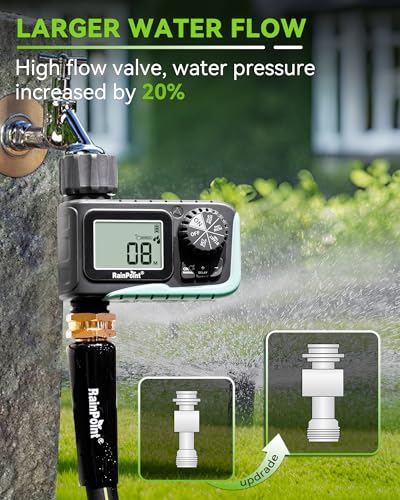
The RAINPOINT programmable hose timer is a strong starting point for most home gardens. It has one outlet, so it works well when you need to run one sprinkler, soaker hose, or drip line. The digital screen makes the settings easier to see than a small mechanical dial. I also like the separate controls for automatic watering, manual watering, and rain delay.
This timer suits raised beds, flower borders, small lawns, and container plants. You can set a watering start time, run time, and repeat schedule to match your plants and local weather. The manual option lets you water on demand without erasing the programmed plan. For shoppers who want simple digital control at a reasonable price, this is one of the best sprinkler timers for hose use.
Pros:
- Clear digital display for easier setup
- Automatic, manual, and rain-delay modes
- Works with sprinklers, soaker hoses, and drip lines
- Useful for lawns, beds, and container gardens
- One-outlet design keeps the setup simple
- Helps reduce overwatering and forgotten hoses
Cons:
- One outlet cannot run two watering zones at once
- Requires batteries for digital operation
- Users may need to read the controls carefully during first setup
My Recommendation
I recommend the RAINPOINT one-outlet timer for gardeners who want more control than a basic dial can offer. It is especially useful for people who water a single lawn section, vegetable bed, or row of pots. The rain-delay feature can help pause watering after a storm, while manual mode gives quick access when a plant needs extra care. It offers good overall value and is widely available for everyday yard projects.
Orbit 62061 Digital Hose Watering Timer

The Orbit 62061 is a well-known one-outlet timer with a practical digital layout. Its LCD screen shows the watering schedule and gives you a clearer view of the selected settings. The battery-powered design needs no electrical outlet, which makes it useful near garden faucets, side yards, and detached beds. Its water-resistant housing is designed for outdoor use, but I still suggest placing it where the faucet area drains well.
This model is a good match for people who want a familiar brand and straightforward controls. The built-in rain delay lets you pause the schedule without rebuilding it from scratch. You can use it with a hose-end sprinkler or a low-flow irrigation line, as long as the water pressure meets the needs of the attached device. In my view, the simple layout makes this one of the best sprinkler timers for hose setups that need dependable basic scheduling.
Pros:
- Readable LCD screen
- Built-in rain-delay function
- Battery operation works in locations without power
- One outlet is easy to install and manage
- Suitable for many common hose-end watering tools
- Orbit branding provides broad replacement support
Cons:
- Does not control two zones independently
- Digital settings may take a few minutes to learn
- Not a smart timer with phone or weather-service control
My Recommendation
The Orbit 62061 is best for homeowners who prefer a trusted, no-frills hose timer with a screen. It can serve a small lawn, garden bed, or patio plant area without adding a complicated app. I would choose it for a rental home, starter garden, or simple seasonal watering plan. If your goal is reliable schedule control rather than advanced smart features, this model remains a sensible value among the best sprinkler timers for hose.
RAINPOINT Two-Zone Hose Timer

The RAINPOINT two-zone timer is made for yards with different watering needs. Its two outlets let you connect separate hoses or watering devices and manage them as two zones. That matters when a sunny lawn needs more water than a shaded flower bed. It can also help you water a vegetable patch and a group of containers on different schedules.
The rain-delay and manual-water options add useful flexibility. I like the two-zone design for homes where one faucet serves several garden areas. Keep in mind that two outlets do not always mean unlimited water flow; the faucet, hose size, and sprinkler type still affect performance. Even so, this is one of the best sprinkler timers for hose use when a single outlet feels too restrictive.
Pros:
- Controls two watering zones
- Useful for plants with different water needs
- Includes automatic, manual, and rain-delay functions
- Can reduce the need for extra faucet splitters
- Good fit for mixed lawn and garden layouts
- Supports more organized seasonal watering
Cons:
- Two-zone setup takes longer to program
- Both zones still depend on available faucet pressure
- Requires batteries and regular battery checks
My Recommendation
I recommend this RAINPOINT timer for medium-size home landscapes with two clear watering areas. It is a better choice than a one-outlet model when your lawn and garden need separate run times. It also suits gardeners who want one faucet to serve more than one hose. For the price, the two-zone control gives this timer strong practical value, especially during hot months when watering needs change quickly.
Outdoor Programmable Garden Hose Timer

This outdoor garden hose timer focuses on the features most people use each week. It has one outlet and supports automatic, manual, and rain-delay watering. The controls are intended for common outdoor jobs, such as running a lawn sprinkler in the morning or feeding a soaker hose around shrubs. Its compact format should fit most standard outdoor faucet areas without taking up much space.
One-outlet timers are often easier to troubleshoot because fewer connections are involved. That makes this option appealing to new gardeners and homeowners who do not want a complex control panel. As with any hose timer, use a fresh battery, tighten connections by hand, and check for leaks after installation. It is a practical candidate among the best sprinkler timers for hose if you want core features at a modest cost.
Pros:
- Simple one-outlet configuration
- Supports automatic and manual watering
- Rain delay helps avoid needless watering
- Works with many standard garden hose devices
- Compact design suits small faucet spaces
- Useful for first-time timer owners
Cons:
- Cannot operate separate watering zones
- May not offer advanced smart-home features
- Setup instructions should be followed closely
My Recommendation
This timer is best for a homeowner who wants basic scheduling without paying for features they may not use. I would place it on a small lawn, herb bed, flower border, or patio garden. The one-outlet setup keeps the water path simple and makes seasonal removal easy. It is a good budget-minded choice when you need automatic hose watering and a quick rain pause.
Orbit 62067 Digital Hose Timer 2-Pack

The Orbit 62067 two-pack gives you two separate one-outlet timers. This approach differs from a two-zone timer because each faucet connection gets its own timer and schedule. That can be useful when your front and back yards use different faucets or when you want one timer for plants and one for a lawn. It also gives you a spare unit if one seasonal project ends and another begins.
Each timer uses a digital control system with a built-in rain-delay feature. I see the two-pack as a flexible choice for households with more than one watering point. It does require two sets of batteries and two separate programming sessions, so it is not the best fit for someone who wants one central control box. Still, this package ranks among the best sprinkler timers for hose when coverage matters more than a single compact unit.
Pros:
- Includes two separate hose timers
- Useful for front and back yards
- Each faucet can use its own schedule
- Built-in rain-delay control
- Helpful for homes with more than one outdoor faucet
- Offers a spare or second timer for future projects
Cons:
- Requires programming two units
- Needs two battery sets
- Each timer controls only one outlet
My Recommendation
I recommend the Orbit 62067 two-pack for homes with separate faucets or two distant garden areas. It is also useful if you manage a rental property, community garden plot, or several small planting zones. Choose it over a two-outlet timer when the watering points are far apart. Its main value comes from flexible placement and the convenience of getting two matching timers in one purchase.
MOES Two-Zone Hose Timer
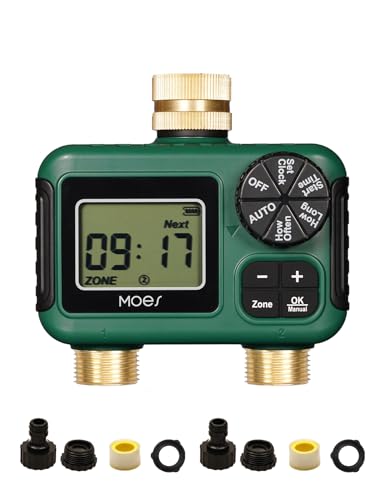
The MOES two-zone hose timer stands out with a brass inlet and outlet design. Metal connection parts can feel more reassuring than lightweight plastic when you attach and remove a timer often. Its two-zone layout is aimed at gardeners who need separate schedules from one faucet. You might use one side for a lawn sprinkler and the other for a drip line around plants.
Separate zones can make water planning more precise. For example, you can run a short cycle for shallow-rooted flowers and a longer cycle for shrubs, rather than giving both areas the same amount of water. The timer still depends on your faucet pressure and the flow needs of each device. For shoppers who value sturdy connections and split-zone control, it deserves attention among the best sprinkler timers for hose.
Pros:
- Two-zone design supports separate schedules
- Brass inlet and outlet components add a sturdy feel
- Useful for sprinklers, drip lines, and soaker hoses
- Can serve mixed plant areas from one faucet
- Good option for repeated seasonal installation
- Helps match watering time to plant needs
Cons:
- Two-zone programming may feel complex at first
- Metal fittings can add weight to the faucet connection
- Actual flow depends on the home water system
My Recommendation
The MOES timer is best for gardeners who want two zones and place a high value on solid connection hardware. I would consider it for a busy backyard with lawn, beds, and drip irrigation sharing one faucet. It is also a good fit for users who install and remove their timer each season. If durable fittings and flexible watering control matter to you, this model offers strong potential value.
Orbit 62034 Mechanical Hose Timer

The Orbit 62034 takes a different path from digital hose timers. It uses a mechanical clockwork design, so it does not need batteries or a screen. You turn the easy-grip dial to select a watering period, connect the timer to the faucet, and let the mechanism shut off the water. A manual bypass feature also lets you use the hose without waiting for the timed cycle.
This design has a clear benefit: fewer electronic parts and no battery to replace. It also has clear limits. A mechanical timer is better for a simple one-time watering cycle than a detailed weekly schedule. I would choose it for a vacation watering task, a short garden run, or a user who prefers physical controls. Among the best sprinkler timers for hose, this is the simple, battery-free pick.
Pros:
- Does not require batteries
- Simple dial operation
- Manual bypass supports normal hose use
- Easy to move between watering locations
- Good for short, basic watering cycles
- Less electronic setup than a digital timer
Cons:
- Limited schedule control compared with digital models
- Not ideal for several watering times each day
- Mechanical parts may need careful handling over time
My Recommendation
I recommend the Orbit 62034 for people who want the easiest possible timer. It is a strong choice for a small garden, occasional watering, or a backup unit during travel. It also suits users who do not want to manage batteries or read a digital menu. Pick another model if you need different schedules across the week, but choose this one for simple and quick shutoff control.
Orbit 58910 Two-Outlet Hose Timer

The Orbit 58910 is built for gardeners who need two hose connections from one faucet. Its two-outlet design can help organize a lawn sprinkler on one side and a garden hose, soaker hose, or drip line on the other. Instead of manually opening two valves, you can set each outlet to operate on its own schedule. This can save time and help avoid watering both areas for the same length of time.
A two-outlet timer is most useful when the yard has clear zones. It will not create more water pressure, so check that your faucet can support both connected devices. I also suggest testing each outlet before leaving the system unattended. For larger home gardens and mixed watering tasks, the Orbit 58910 is one of the best sprinkler timers for hose because it combines central placement with separate outlet control.
Pros:
- Two outlets support separate watering areas
- Useful for lawn and garden combinations
- Reduces the need for manual valve changes
- Central faucet placement keeps the setup tidy
- Helps set different run times for different plants
- Useful for expanding a basic irrigation layout
Cons:
- May need strong water flow for two active zones
- More settings mean a longer setup process
- Not the best choice for a very small single-zone garden
My Recommendation
The Orbit 58910 is best for homeowners who want two outlets in one central timer. I would choose it for a backyard with a lawn area and a separate planting area that need different watering times. It can also help reduce trips to the faucet during the growing season. If you want a tidy, expandable setup and have enough water pressure, this is a capable choice for regular yard care.
What to Look for in the Best Sprinkler Timers for Hose
The right timer should match your faucet, hose layout, plants, and daily routine. A timer with many features is not always the best buy. A small garden may work better with a simple one-outlet model, while a larger yard may need two independently controlled zones.
Number of outlets
One outlet is enough for one sprinkler or one irrigation line. It also keeps installation easy. Two outlets help when you need different run times for a lawn and a garden bed. A two-pack can be better when the faucets are in separate parts of the property.
Digital or mechanical control
Digital timers usually provide more control. They can support repeat schedules, manual watering, and rain delay. Mechanical timers are faster to set and do not need batteries, but they often provide less schedule flexibility. Think about your habits before choosing one.
Rain delay
Rain delay is one of the most useful features on the best sprinkler timers for hose. It lets you pause watering after rain without deleting your schedule. This can help avoid soggy soil and wasted water. Still, do not rely on the timer alone; check your soil and local weather.
Water pressure and flow
A timer controls when water flows. It does not increase pressure. A long hose, narrow tubing, clogged filter, or low-pressure faucet can reduce sprinkler performance. If you use two zones, test both sides to make sure the attached devices receive enough flow.
Connection quality
Look for a clean thread, a good washer, and a connection that does not wobble. Hand-tighten the timer first, then check for drips. Avoid forcing plastic threads with tools. Brass fittings may feel more robust, but they can also add weight to the faucet.
Battery access
Digital timers need power. Use the battery type listed in the product instructions and replace it before a long vacation or hot season. Keep the battery compartment closed and dry. A low battery can cause missed cycles or a blank screen.
Seasonal storage
Freezing water can damage outdoor plumbing and timer parts. Remove the timer before hard freezes if the product instructions advise it. Drain the timer and store it in a dry place. This small step may extend its useful life.
How I Choose a Hose Sprinkler Timer
I focus first on control. A good timer should start and stop water at the planned time without making the owner fight the controls. I then look at outlet count, schedule options, rain delay, manual access, connection quality, and the likely needs of a normal home yard.
I also consider the mistakes that happen in real life. People forget hoses. Batteries run low. Rain arrives after a schedule is set. A useful timer should make those moments easier, not more stressful. That is why manual watering and rain-delay controls matter so much in this category.
Finally, I match the timer to the job. A mechanical timer can be the smart pick for a simple short cycle. A two-zone digital timer makes more sense for a mixed landscape. The best sprinkler timers for hose are the ones that solve your exact watering problem without adding needless work.
Best-For Comparison
| Best for | Why |
|---|---|
| Simple single-zone watering | RAINPOINT and Orbit one-outlet timers offer easy scheduling, manual use, and rain delay. |
| Two areas from one faucet | The RAINPOINT two-zone, MOES two-zone, and Orbit 58910 models provide separate outlet control. |
| Battery-free operation | The Orbit 62034 uses a mechanical dial and does not need digital power. |
Tips for Installing a Hose Timer
Start with a clean outdoor faucet. Remove old tape, grit, or a worn washer from the connection. Install the timer in the direction shown by its water-flow marking. Attach the hose or irrigation line without cross-threading the fitting.
Open the faucet slowly after installation. Look at every connection for leaks. A small drip may come from a missing or damaged washer, not from the timer itself. Fix leaks before you set a long watering cycle.
Run a short test by hand. Watch the sprinkler pattern and check that the timer stops water as planned. If the timer has two outlets, test each zone alone before running both. This simple check can prevent a dry garden or a flooded path.
How Long Should a Hose Timer Run?
There is no single run time for every yard. Sandy soil drains fast, while clay soil holds water longer. A small sprinkler may need more time than a drip line, and a shaded bed may need less water than a sunny lawn.
Start with a short cycle and inspect the soil. Water should reach the root area without creating runoff. Split a long cycle into two shorter cycles if water runs down a slope. Local heat, wind, rainfall, plant type, and season should guide your final schedule.
Morning watering often gives plants time to use moisture before the hottest part of the day. Avoid watering so late that leaves stay wet for long periods. A timer can help create a steady plan, but your garden still needs regular observation.
Common Hose Timer Mistakes to Avoid
One common mistake is choosing a timer before checking the faucet. Make sure the faucet has a standard outdoor hose connection and enough flow for the sprinkler. Another mistake is running a powerful sprinkler through a long, narrow hose and blaming the timer for weak coverage.
Many people also set a schedule and never adjust it. Plants need less water in cool, wet weather and may need more during heat. Use the rain-delay button when needed, then review the plan as the season changes.
Finally, do not leave a new timer untested. Check the first complete cycle while you are nearby. This confirms that the start time, stop time, hose connection, and sprinkler coverage all work together.
FAQs Of best sprinkler timers for hose
Do hose sprinkler timers save water?
They can help save water by shutting off the faucet on time and avoiding forgotten hoses. Savings depend on the schedule, sprinkler, soil, weather, and water pressure. A rain-delay feature can help prevent watering after rainfall.
Can one hose timer run two sprinklers?
A two-outlet timer can connect to two watering devices. However, available water pressure may limit performance when both outlets run together. Test each zone and follow the timer’s instructions.
Do hose timers need batteries?
Most digital hose timers need batteries. The Orbit 62034 mechanical timer is an exception because it uses a clockwork dial. Check the battery before long trips and replace it when the display becomes weak.
Can I use a hose timer with a drip system?
Yes. Many hose timers work with drip tubing, soaker hoses, and hose-end sprinklers. A filter and pressure regulator may be needed for some drip systems. Always check the requirements of the attached irrigation parts.
Should I remove a hose timer in winter?
Remove and drain an outdoor timer before freezing weather if the instructions recommend it. Frozen water can damage valves and fittings. Store the timer in a dry place until the next watering season.
Final Verdict: Which Should You Buy?
For most yards, I would choose the RAINPOINT two-zone timer because it offers useful control for separate watering areas. Choose the Orbit 62034 if you want a simple battery-free dial.
The best sprinkler timers for hose make watering calmer, easier, and more consistent. Match the outlet count and schedule features to your yard, then test the setup before leaving it alone.
