


The best soaker hose for foundation delivers slow, even moisture while protecting soil beside your home.
Dry, cracked soil near a home can shrink and pull away from the foundation. Then heavy rain may rush into those gaps and create new trouble. I use a soaker hose to add gentle moisture around the soil, not to flood the wall. The right hose can help keep clay soil more stable, save water, and make summer care much easier. In this guide, I compare seven practical options and explain how to place them safely.
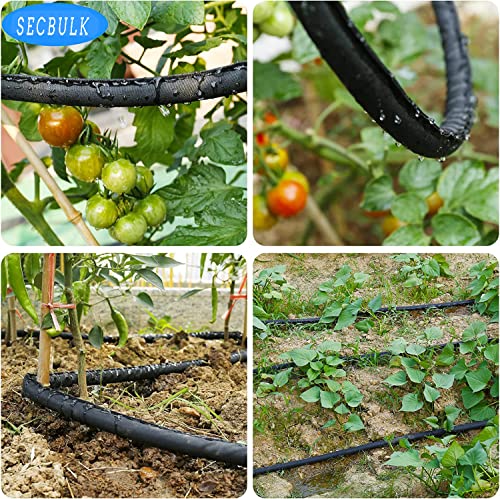
Secbulk 100-Foot Flat Soaker Hose

The Secbulk 100-foot flat soaker hose uses two 50-foot sections that can work together or apart. That layout fits many homes with a short foundation wall, a side garden, or one long planting bed. Its flat shape is easy to place close to the soil surface. I like this style because it can sit under mulch without creating a large bump.
The linked design also makes it easier to shape a watering path around corners. Stakes help hold the hose in place, which matters when the ground is dry and hard. The hose aims to release water through small openings instead of spraying into the air. That gentle flow can reduce waste and help prevent soil from washing away beside the foundation.
Pros:
- Two 50-foot sections offer flexible layout options
- Flat shape rests neatly under mulch
- Included stakes help prevent hose movement
- Linkable design suits short or long foundation runs
- Slow watering helps limit surface runoff
- Dual-layer construction adds useful everyday support
Cons:
- Flat hoses may kink if stored carelessly
- It needs a filter when used with dirty or sandy water
- Water flow may vary if pressure is too high
My Recommendation
I recommend this model for homeowners who want a simple, adjustable setup. It works well for a foundation with one main dry side and a nearby bed. The 100-foot length gives enough reach without forcing you to manage a very large coil. It is also a good choice for people who want to remove one section during cooler months.
For most small and medium homes, this is a strong candidate for the best soaker hose for foundation use. Its main value comes from its flexible length, low profile, and included stakes. I would still run it at low pressure and check the soil by hand after each watering cycle. Availability and price can change, so check the current Amazon listing before ordering.
Hlinker 150-Foot Flat Soaker Hose

The Hlinker flat soaker hose gives you 150 feet of watering length. That extra reach helps when a home has a long wall, several dry sides, or a broad landscape bed. Its linkable format lets you arrange the hose in sections rather than laying one stiff line everywhere. The flat body also stores more easily than many round hoses.
This hose is designed for slow drip irrigation, so it can apply water near the soil instead of throwing water toward the wall. That distinction is important. I want moisture to enter the ground evenly, not splash against siding, windows, or exposed masonry. A heavy-duty double layer may also help the hose handle routine garden use, though careful storage remains essential.
Pros:
- 150-foot length covers larger foundation areas
- Linkable sections support custom layouts
- Flat profile works well below mulch
- Slow release can reduce evaporation
- Double-layer design offers added durability
- Useful for beds, shrubs, and orchard rows
Cons:
- Extra length can be more than a small home needs
- Long runs may need pressure adjustment for even flow
- Flat material can fold when dragged over rough ground
My Recommendation
I would choose the Hlinker for a larger property or a home with a long foundation line. It gives you room to create a broad, gentle watering zone without moving the hose every few feet. It can also serve garden beds after foundation watering is complete. That makes it a practical multi-use buy for active gardeners.
This model may be the best soaker hose for foundation protection when coverage matters most. It is not my first pick for a tiny yard because the extra hose may need careful storage. Measure the path first, keep the hose several inches away from the wall, and use a timer only after you learn how fast your soil absorbs water. Review the current listing for available lengths and fittings.
Suneed Four-Pack 25-Foot Soaker Hoses

The Suneed four-pack includes four 25-foot flat soaker hoses. This format is useful when you want separate watering zones instead of one long line. You can place one hose beside a short foundation wall, another in a flower bed, and store the rest for later. Small sections are also easier to lift, inspect, and replace.
A modular set can help homeowners avoid overwatering one area while trying to reach another. You can connect sections when you need more length, or use them as independent lines with suitable fittings. The flat profile should sit close to the ground and under light mulch. I find this style especially helpful for small yards, narrow side paths, and homes with several separate dry spots.
Pros:
- Four short sections make zone control simple
- Easy to carry and store
- Good fit for small beds and narrow spaces
- Flexible setup can limit water waste
- Separate pieces simplify inspection
- Can support several garden watering layouts
Cons:
- Short sections may require extra connectors
- It may not cover a long foundation in one setup
- More connection points can create more leak checks
My Recommendation
I recommend the Suneed set for people who value control over maximum reach. It is a smart match for a small home, a townhouse, or a landscape with separate planting pockets. The four-piece design also helps renters and new gardeners learn how soaker hoses work. You can begin with one section and add another only when the soil needs it.
For a compact property, this may be the best soaker hose for foundation care because it does not force you to water unused areas. It offers good flexibility, but you must inspect each connection before leaving it in place. Keep the sections flat, avoid sharp bends, and use low pressure. This set is worth considering when modular watering matters more than a single long run.
Secbulk 200-Foot Flat Soaker Hose

The Secbulk 200-foot set includes four 50-foot sections. It is built for broad coverage, so it can serve a long foundation, several garden beds, or a full landscape loop. The separate sections give you more control than one continuous 200-foot hose. You can also disconnect unused sections when a smaller watering area needs attention.
Stakes help hold each hose in place while the soil takes in water. That is helpful on slopes, around new mulch, and near active garden paths. The hose uses a flat, dual-layer design that should remain low to the ground when placed with care. Because the run is long, I would pay close attention to pressure, end caps, and flow balance.
Pros:
- 200 feet provides wide coverage
- Four 50-foot pieces make the layout adjustable
- Stakes help keep lines aligned
- Useful for large homes and wide beds
- Flat body is easy to cover with mulch
- Can support several watering zones
Cons:
- May be excessive for a small foundation
- Long layouts need careful pressure control
- More hose takes more space to store
My Recommendation
This Secbulk set suits a large lot, a long ranch-style home, or a gardener who wants one irrigation kit for many jobs. I would not buy it just because the length sounds impressive. First, measure the foundation and garden paths. Extra hose can become a tangled burden if you cannot lay it flat or store it in a cool, dry place.
For extensive coverage, it is a serious contender for the best soaker hose for foundation use. The separate 50-foot pieces give it more practical value than a single oversized line. Use a pressure regulator if your faucet produces strong flow, and open one zone at a time if the far end receives too little water. The value is strongest when you will use the full system across several areas.
Gilmour 75-Foot Black Flat Weeper Hose

The Gilmour 75-foot black flat weeper hose is a straightforward option for garden beds and foundation-side planting areas. Its shorter length is easy to place and does not take much room in a storage bin. The flat design can rest under mulch, where it releases water close to plant roots. It also works well when you need a simple hose without a large collection of sections.
Its black color blends into dark soil and mulch better than a bright hose. That small detail can make a landscape look cleaner after installation. I would use it for a short or medium foundation run, then move it to flower beds when the soil has enough moisture. As with any soaker hose, slow flow and good placement matter more than the label alone.
Pros:
- 75-foot size fits many small and medium beds
- Low-profile flat shape is easy to hide
- Black color blends with soil and mulch
- Simple design is easy for new users
- Useful for vegetables, flowers, lawns, and shrubs
- Shorter length is easier to drain and store
Cons:
- It may not reach around a large home
- It offers less layout flexibility than multi-piece kits
- It still needs protection from sharp rocks and tools
My Recommendation
I would choose the Gilmour for a homeowner who wants a basic 75-foot hose for one focused area. It is a good fit for a short foundation wall with a garden bed in front. It also makes sense as a starter hose because the layout is simple and easy to understand. You can learn the watering time without managing a large irrigation network.
This hose can be the best soaker hose for foundation care when you prefer a compact, familiar design. It will not solve every large-property watering need, but it can do one job well when placed correctly. Keep it away from direct foot traffic and sharp edging. Its overall value is strongest for small projects and simple seasonal care.
Bluepro 200-Foot Flat Soaker Hose

The Bluepro kit includes four 50-foot hoses and a brass splitter. The splitter can make it easier to divide water between separate paths, such as two sides of a house or a foundation and a garden bed. Brass hardware is often preferred for outdoor connections because it feels more solid than thin plastic. Still, every connection should be checked for leaks before regular use.
The 200-foot total length gives this kit broad reach. You can create parallel lines, separate zones, or a long route around a landscape. I would use the splitter with a pressure regulator when possible, since two open lines can change the flow at each end. This setup is best for someone who wants more control than a single hose can provide.
Pros:
- Four 50-foot hoses support many layouts
- Brass splitter helps divide watering paths
- Large total length suits broad landscapes
- Flat construction stays close to the soil
- Separate hoses make repairs and replacement simpler
- Can water a foundation and garden in planned zones
Cons:
- Splitter connections require regular inspection
- Two active lines may reduce flow at the far ends
- Large kits need organized storage
My Recommendation
I recommend Bluepro for homeowners who want to manage several watering areas from one faucet. The splitter adds useful control, especially on a corner lot or a home with two dry sides. It is also helpful when one line needs water while another line rests. Just remember that more parts mean more places to inspect.
This could be the best soaker hose for foundation maintenance if zone control is your top goal. It offers strong coverage and a practical brass splitter, but it rewards careful setup. Start with one line, watch the flow, and add the second only after checking the soil. It is a good value for larger landscapes that can use the full 200-foot system.
Secbulk 200-Foot Linkable Soaker Hose

This Secbulk 200-foot model uses four 50-foot sections for broad garden and landscape coverage. Its linkable design lets you build a short route or a much longer one as your needs change. The flat hose can sit beneath mulch and near rows of shrubs without taking up much vertical space. This makes it a useful option for homeowners who expect their landscape to grow.
The hose is designed to release water through its perforated surface for gentle irrigation. That slow action is useful near foundations because it avoids the force of a spray nozzle. I would still keep the line away from the foundation wall itself and aim moisture into the surrounding soil. With a good filter, low pressure, and seasonal inspection, the system can support steady soil care.
Pros:
- 200-foot capacity covers large watering areas
- Four sections allow custom length
- Flat design works below light mulch
- Linkable layout can change with landscape needs
- Slow irrigation reduces splash and runoff
- Suitable for foundation beds and general gardens
Cons:
- Large length may be difficult to store neatly
- Connections need protection from bending and pulling
- Flow can differ across a very long layout
My Recommendation
This model is a good match for a growing landscape. If you plan to add shrubs, trees, or beds along the foundation, the extra length gives you room to adapt. I like that you can begin with fewer sections and add more later. That approach also helps you learn how your soil responds before running the entire system.
For flexible expansion, this is a strong best soaker hose for foundation candidate. It gives you much of the coverage of a large irrigation kit without locking you into one shape. Use a low-pressure supply, avoid tight coils, and flush the hose at the start of each season. It offers good long-term value when you will use its adjustable format.
Best Features at a Glance
| Best for | Why |
|---|---|
| Small foundation areas | The Suneed four-pack and Gilmour 75-foot hose offer simple, focused coverage. |
| Long foundation runs | The Hlinker 150-foot and 200-foot Secbulk kits reach farther with linkable sections. |
| Multiple watering zones | The Bluepro kit adds a splitter, while the 200-foot kits support separate layouts. |
How to Choose the Best Soaker Hose for Foundation Use
Choosing the right hose starts with the soil, not the package length. Clay soil can shrink when it loses moisture, while sandy soil drains fast and may need shorter, more frequent watering. Loam usually holds water better, but it can still dry near a hot wall or under a roof overhang. I always look at the site before choosing the hose.
Measure the dry area first
Walk around the house and look for cracks, gaps, hard soil, or plants that wilt quickly. Measure the sections that need water. Do not assume you need to circle the entire home. In many yards, only one sunny side dries enough to need regular watering.
A 75-foot hose may fit a small home. A 100- or 150-foot kit may suit a longer wall. A 200-foot set makes sense only if you will use its reach. Extra hose is not automatically better. It can create weak flow, messy storage, and more connection points.
Choose a flat or round hose
Flat soaker hoses lie close to the ground. They are easy to hide under mulch and simple to roll for storage. However, they can fold when dragged or stored in a tight knot. I recommend laying them out straight before turning on the water.
Round soaker hoses often feel more rugged and may hold their shape better. They can also be heavier and less discreet. For foundation beds, a flat hose often offers the cleanest look. The best soaker hose for foundation use is the one that stays flat, delivers even moisture, and fits the space without strain.
Check the connection system
Connectors are small, but they control much of the user experience. A loose coupling can spray water, lower pressure, and create a muddy patch. A splitter can save time when you need separate zones, but it adds another point to inspect.
Before burying or covering a hose, turn on the water and watch every joint. Replace damaged washers. Keep the hose from pulling against the faucet. A soft curve is better than a sharp bend.
Use safe water pressure
Soaker hoses usually work best with low to moderate pressure. High pressure can cause uneven flow, stress fittings, or turn small openings into strong streams. I prefer to open the faucet slowly. If the hose bulges, sprays, or floods one end, reduce the pressure.
A pressure regulator can help on homes with strong outdoor water pressure. A simple filter can also keep grit from blocking the openings. These small accessories may extend hose life and improve watering consistency.
How to Use a Soaker Hose Near a Foundation
Place the hose on the soil beside the foundation planting area. Do not press it directly against the wall. A gap of several inches gives water room to spread while limiting direct contact with siding, sealant, or exposed masonry.
Keep the hose level when possible. If the ground slopes, water may move toward the low end faster than the high end. You can use short sections or separate zones to improve balance. Stakes should hold the line without crushing it.
Cover the hose with a thin layer of mulch after testing it. Mulch helps reduce evaporation and keeps the hose cooler. Do not bury it deep. Deep placement makes inspection harder and may cause damage during digging.
Run the hose long enough to moisten the soil several inches down, then stop. The correct time depends on the hose, pressure, soil, temperature, and weather. A short test tells you more than a timer setting copied from another yard.
Use a soil check, not guesswork
Push a screwdriver or finger into the soil after watering. If the top is wet but the soil below remains hard, the cycle was too short. If the area is muddy or water pools, the cycle was too long or the soil drains poorly.
Check the soil again the next day. The goal is even moisture, not a wet surface all day. The best soaker hose for foundation care should act like a slow rain, not a small flood.
Water during the right part of the day
Early morning is often a good time to water. The soil can absorb moisture before the day becomes hot. Evening watering can work too, but avoid leaving plant leaves wet for long periods if disease is a concern.
Do not water during heavy rain. Turn the system off when the ground already has enough moisture. A rain sensor or manual check can prevent waste. Smart watering means responding to the soil, not following a rigid schedule.
Foundation Watering Mistakes to Avoid
The first mistake is putting the hose directly against the foundation. Water should support stable soil around the home, not soak the wall. Keep the line in the planting zone and watch where the water travels.
The second mistake is watering too much too fast. A high-flow setting can create a wet pocket on one side and leave the far end dry. Low pressure and shorter zones usually work better.
The third mistake is ignoring drainage. A soaker hose cannot fix a gutter that dumps water beside the foundation. Clean gutters, extend downspouts, and direct roof water away from the home first. Then use the hose to manage dry soil.
The fourth mistake is leaving the hose out all year. Sun, freezing temperatures, lawn tools, and foot traffic can shorten its life. Drain it before freezing weather. Store it loosely in a shaded, dry place.
The fifth mistake is assuming every crack comes from dry soil. Foundation movement can have many causes. Large cracks, sticking doors, sloping floors, or water inside the basement need a qualified inspection. A soaker hose is a soil-care tool, not a structural repair.
Soaker Hose Care and Maintenance
Flush a new hose before placing it under mulch. Small bits from manufacturing or storage may come out during the first use. Flushing also lets you see whether water reaches the end.
Inspect the hose at the start and end of each season. Look for splits, hard spots, worn connectors, and blocked openings. Repair small connection leaks early. A tiny leak can become a muddy hole after repeated watering.
Remove the hose before digging, edging, or using a lawn aerator. Mark its route if it stays in place for several months. Even a shallow hose can suffer damage from a shovel or sharp landscape tool.
Drain the hose before storage. Avoid tight loops, knots, and sharp folds. Place it in a cool location away from direct sunlight. Proper care can make an affordable hose last much longer.
FAQs Of best soaker hose for foundation
Can a soaker hose help protect a foundation?
It can help maintain more even moisture in dry soil near the home. This may reduce soil shrinkage in some yards, especially where clay soil dries and cracks. It cannot repair a damaged foundation or solve poor drainage.
How far should a soaker hose be from the foundation?
Keep it several inches away from the foundation wall and place it in the nearby soil or planting bed. The exact distance depends on the site, drainage, and landscaping. Never aim to soak the wall itself.
How long should I run the hose?
Start with a short test cycle and check the soil several inches below the surface. Increase the time only if the soil remains dry. Flow, pressure, soil type, weather, and hose length all change the correct run time.
Should I use a timer with a foundation soaker hose?
A timer can help, but test the hose first. Set a schedule only after you know how quickly the soil absorbs water. Stop or reduce watering after rain and during cool, wet periods.
Which length is best for foundation watering?
Measure the area first. A 75- or 100-foot hose suits many small homes, while 150- and 200-foot kits fit long walls or several zones. A modular hose is helpful when your needs may change.
Final Verdict: Which Should You Buy?
I would choose the Secbulk 100-foot kit for most homes. Its linkable sections, flat shape, and stakes make it a balanced best soaker hose for foundation care.
Choose a longer kit for broad yards and the Suneed set for small zones. Place any hose safely, use low pressure, and check the soil often for the best results.
