
How Much Are Self Propelled Lawn Mowers: Price Guide
Self-propelled lawn mowers in the United States usually cost $300 to $900. Basic gas models often start near $300, while battery models commonly cost $400 to $800. Premium gas, electric, and all-wheel-drive mowers can cost $900 to $1,500 or more.
The right price depends on more than the mower itself. Fuel type, drive system, battery size, cutting width, warranty, terrain, and long-term maintenance all affect the total cost.
This guide explains the typical price ranges, extra costs, key features, and ways to choose a mower that fits your yard and budget.

Self-Propelled Lawn Mower Prices at a Glance
A self-propelled mower moves forward under its own power. You still guide it, but you do not need to push its full weight across the lawn.
| Mower type | Typical U.S. price | Best for |
|---|---|---|
| Basic gas self-propelled mower | $300–$500 | Flat or moderately sloped lawns |
| Mid-range gas mower | $500–$800 | Larger yards and regular use |
| Battery self-propelled mower | $400–$800 | Quieter mowing and lower routine upkeep |
| Premium battery mower | $800–$1,300+ | Larger lawns and strong cordless systems |
| All-wheel-drive mower | $600–$1,200+ | Hills, slopes, and uneven ground |
| Commercial-grade walk-behind mower | $1,000–$2,000+ | Frequent or professional mowing |
These are planning ranges, not guaranteed sale prices. Retail prices change with season, stock, promotions, batteries, and included chargers.
A key detail is whether a battery mower includes the battery and charger. A mower listed at $500 may seem cheaper than another listed at $650, but the second model may include a battery kit worth several hundred dollars.
What changes the price?
The main price drivers are:
- Engine or motor quality: Larger gas engines and stronger electric motors usually cost more.
- Drive type: Front-wheel drive is often the least expensive. Rear-wheel and all-wheel drive usually cost more.
- Battery system: Battery mowers may cost more at checkout but can reduce fuel and oil costs.
- Cutting deck: A wider deck can reduce mowing time but raises the purchase price.
- Deck material: Steel decks often add weight and durability. Plastic or composite decks may be lighter and resist rust.
- Adjustments: Single-lever height control, speed control, and storage features add convenience.
- Warranty: Longer coverage can raise the price, but it may reduce repair risk.

How Much Do Gas Self-Propelled Mowers Cost?
Gas self-propelled lawn mowers generally cost $300 to $800 for residential use. Heavy-duty or all-wheel-drive models may cost $900 to $1,500 or more.
Gas mowers remain common in the United States because they can run as long as fuel is available. They also tend to offer strong power for thick grass, wet conditions, and larger lawns.
Typical gas mower costs
-
Entry level: $300–$450
- Often has front-wheel drive
- May use a smaller engine
- Usually suits smaller, flatter yards
- May have fewer speed and deck adjustments
-
Mid-range: $450–$800
- Often includes rear-wheel drive
- May offer variable speed
- Usually has a stronger deck and better controls
- Fits larger yards and moderate slopes
-
Premium: $800–$1,500+
- May include all-wheel drive
- Often has a commercial-style transmission or engine
- May offer improved handling, larger rear wheels, and stronger construction
- Better suited to steep or difficult terrain
Gas ownership has costs beyond the sticker price. You may need gasoline, engine oil, a spark plug, an air filter, a blade, and seasonal service.
The U.S. Environmental Protection Agency explains that small off-road engines are regulated sources of air pollution. Follow the mower manual and local rules when storing fuel, servicing the engine, and disposing of used oil.

How Much Do Battery Self-Propelled Mowers Cost?
Battery-powered self-propelled mowers usually cost $400 to $800 for residential models. Premium systems can cost $800 to $1,300 or more, especially when they include a large battery and charger.
Battery mowers are often quieter and need less routine maintenance than gas models. They do not need gasoline, engine oil, spark plugs, or carburetor service.
The battery is the main cost variable. Some manufacturers sell the mower as a bare tool without a battery or charger. Others include one or two batteries.
Battery mower cost examples
| Purchase setup | Possible total cost |
|---|---|
| Bare mower only | $300–$700 |
| Mower with one battery and charger | $400–$900 |
| Mower with two batteries and charger | $600–$1,300+ |
| Extra battery | Often $100–$400+ |
Battery run time depends on grass height, moisture, slope, cutting width, blade speed, and battery capacity. A manufacturer’s run-time figure is usually based on stated test conditions. Your yard may produce a different result.
Before buying, check whether the battery also works with the brand’s other tools. A shared battery platform can lower the cost of a blower, trimmer, or edger later.
Do not compare a bare-tool price with a complete kit price. That is one of the most common causes of misleading mower comparisons.

Is a Self-Propelled Mower Worth the Extra Cost?
A self-propelled mower is often worth the extra money when the lawn is large, sloped, uneven, or tiring to mow with a push mower.
A standard push mower may cost less, but you supply all the forward force. A self-propelled model uses a drive system to turn its wheels. This can make a noticeable difference on hills or when the mower has a heavy steel deck.
A self-propelled mower may be worth it if you have:
- A lawn larger than about one-quarter acre
- Slopes or rolling ground
- Thick or damp grass
- A heavy mower deck
- Limited strength or joint pain
- A need to reduce mowing time and effort
A self-propelled mower may not be worth the added price on a small, flat lawn. A lightweight push mower can be easier to turn, store, and maintain.
The drive system also uses energy. On a battery mower, self-propulsion can reduce the area covered per charge. On a gas mower, it adds mechanical complexity and may require more service over time.
The best value is not always the lowest purchase price. It is the mower that reduces effort without adding features your yard does not need.
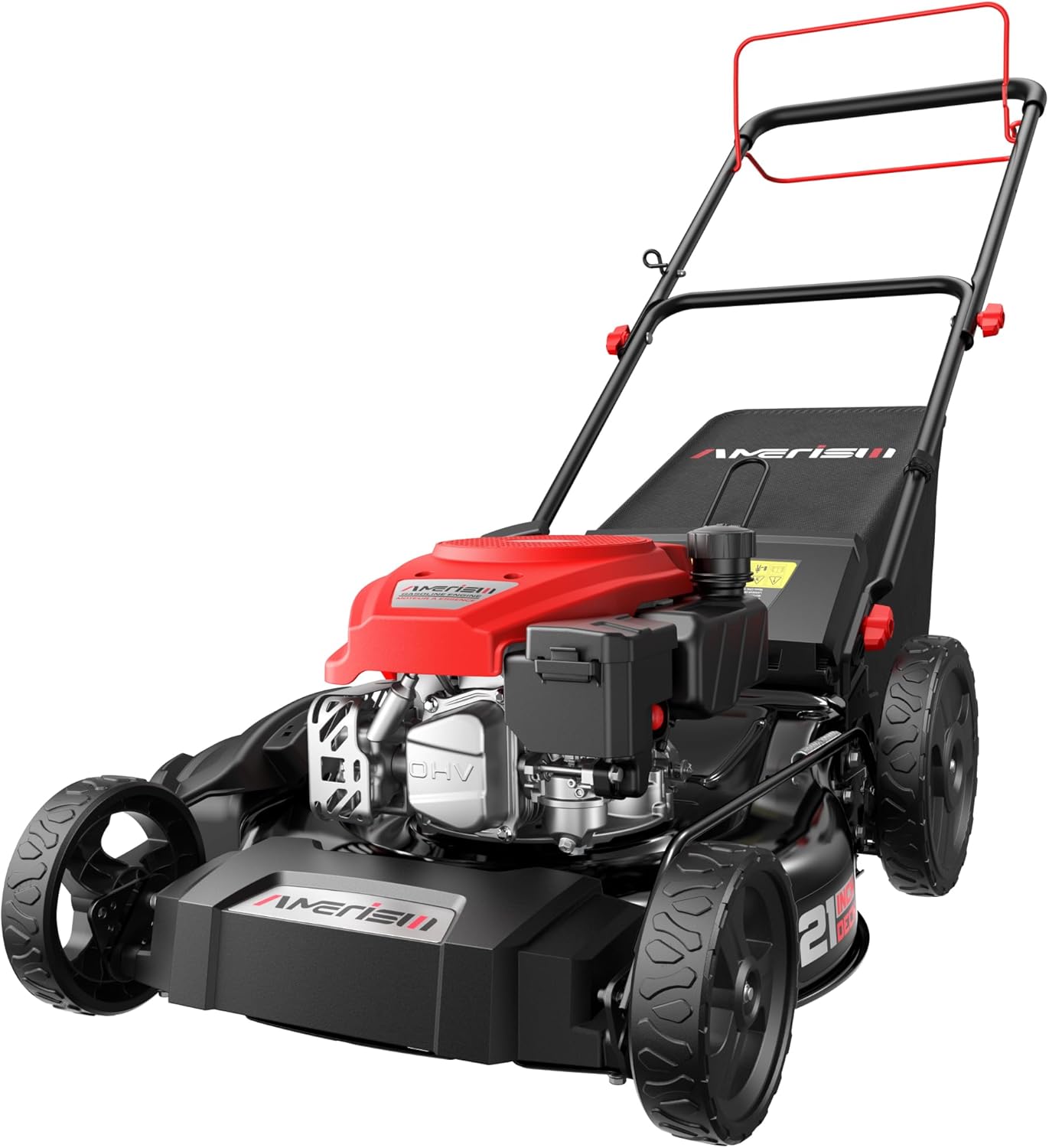
Front-Wheel, Rear-Wheel, or All-Wheel Drive: Which Costs More?
Drive type affects both price and handling.
Front-wheel drive
Front-wheel-drive mowers are often the least expensive self-propelled option. They work well on flat lawns and are easy to turn because lifting the front wheels can disengage traction.
They may lose grip on steep slopes or when the grass is wet. A full grass bag can also reduce front-wheel traction on some designs.
Rear-wheel drive
Rear-wheel-drive mowers usually cost more than front-wheel-drive models. They tend to offer better traction while climbing and can handle uneven ground well.
They may be less agile when turning. You should release the drive control before making tight turns, as directed by the owner’s manual.
All-wheel drive
All-wheel-drive mowers often cost the most. They can provide better control on steep, rough, or slippery lawns.
The extra drive parts add weight, cost, and possible service needs. All-wheel drive is not necessary for every yard. It is most useful when two-wheel-drive models struggle for traction.
| Drive type | Usual price position | Best use |
|---|---|---|
| Front-wheel drive | Lower | Flat lawns and easy turns |
| Rear-wheel drive | Medium | Moderate slopes and uneven lawns |
| All-wheel drive | Higher | Steep slopes and difficult terrain |
Never rely on a mower’s drive system to make an unsafe slope safe. Follow the manufacturer’s slope guidance. The Consumer Product Safety Commission recommends reading the owner’s manual and using care around slopes, obstacles, and moving blades.

What Extra Costs Should You Budget For?
The purchase price is only part of the cost. A realistic budget should include fuel or electricity, maintenance, storage, replacement parts, and possible repairs.
Gas mower ownership costs
Common gas mower expenses include:
- Gasoline
- Engine oil
- Oil changes
- Air filters
- Spark plugs
- Sharpening or replacing the blade
- Fuel stabilizer during storage
- Replacement cables, belts, or drive parts
- Professional service, if needed
Gas prices vary by location and season. The exact yearly cost depends on mowing frequency, engine size, lawn area, and local fuel prices.
Battery mower ownership costs
Battery mower expenses may include:
- Electricity for charging
- Replacement batteries
- Blades
- Blade sharpening
- Cleaning and inspection
- Repairs to the motor, controls, or charger
Battery packs may eventually lose capacity. The service life depends on the battery chemistry, storage conditions, charging habits, heat exposure, and use.
Accessories
You may also need:
- A replacement blade
- A mulch plug or grass bag
- A battery storage shelf
- A fuel container for gas
- A mower cover
- A maintenance kit
- A spare battery
A simple annual budget can help:
Total yearly cost = energy or fuel + routine maintenance + replacement parts + expected repair cost
For example, a hypothetical battery mower may have low routine energy costs but require a replacement battery after several years. A gas mower may have a lower initial cost but higher yearly service needs.

How to Choose the Right Price Range
Start with the lawn, not the advertised horsepower or feature list.
For a small, flat lawn
A basic front-wheel-drive mower may be enough. Consider a push mower if the lawn is small and easy to cross. Paying extra for all-wheel drive would add little value.
For a medium lawn
A mid-range gas or battery mower is often a practical choice. Variable speed control can help you match the mower to your walking pace.
For a large lawn
Look for a wider deck, strong drive system, and a battery system with enough capacity for the full job. For gas models, prioritize easy starting and accessible maintenance.
For slopes
Rear-wheel drive may offer a useful balance of traction and cost. All-wheel drive can help on steeper or rougher ground, but it adds weight and price.
For quiet neighborhoods
A battery mower may be a better fit. Check local quiet hours and the mower’s published sound information where available.
For limited storage
Look for a mower with a documented vertical-storage feature. Use this position only if the owner’s manual permits it. Gas mowers may have special rules about fuel and oil before vertical storage.
A simple buying rule
Choose the least expensive mower that has:
- Enough power for your grass.
- The correct drive type for your slopes.
- Enough run time or fuel range.
- A deck size you can manage.
- Parts and service support in your area.
- A warranty that matches your expected use.

How to Compare Mower Prices Correctly
Compare complete ownership packages, not just the headline price.
Use this checklist:
- Is the battery included?
- Is the charger included?
- Is the grass bag included?
- Does the mower have a variable-speed drive?
- Is the drive system front-wheel, rear-wheel, or all-wheel?
- What is the cutting width?
- Is the deck steel, aluminum, composite, or plastic?
- How long is the warranty?
- Are replacement batteries still available?
- Are blades and drive parts easy to find?
- Does the seller offer parts and service?
- Does the warranty require registration?
- Is the listed price a sale price or a regular price?
Manufacturer pages can confirm specifications and included equipment. Retailer pages can show current prices, but stock and promotions change often.
Useful sources include:
- U.S. Environmental Protection Agency: Small Engines
- U.S. Consumer Product Safety Commission: Lawn Mower Safety
- Consumer Reports lawn mower buying guidance
- The owner’s manual and warranty page for the exact mower model
These sources serve different purposes. EPA information addresses emissions rules. CPSC material addresses safety. Manufacturer documents define model features and limits. Consumer buying guides can help frame comparisons, but they should not replace the exact product manual.

Common Mistakes to Avoid
The most costly mistake is choosing a mower by price alone.
Mistake 1: Comparing bare-tool and full-kit prices
A battery mower without a battery may look like a bargain. Add the correct battery and charger before comparing it with another model.
Mistake 2: Buying too much drive system
All-wheel drive is useful on difficult slopes. It adds little benefit on a small, flat lawn and can make the mower heavier.
Mistake 3: Ignoring battery compatibility
A battery platform can save money if you already own tools from the same system. It may cost more if you are starting from zero.
Mistake 4: Treating deck width as a complete performance measure
A wider deck can reduce passes, but it may be harder to maneuver around trees, gates, and small spaces.
Mistake 5: Skipping the warranty terms
Check what the warranty covers. The mower, battery, charger, engine, and drive system may have different coverage periods.
Mistake 6: Using a mower on unsafe slopes
Self-propulsion does not remove the risk of slipping, tipping, or losing control. Do not mow across a slope if the manufacturer warns against it. Keep hands and feet away from the blade and stop the engine or motor before clearing a blockage.

Key Takeaways
- Most self-propelled lawn mowers cost $300 to $900 in the United States.
- Basic gas models are often the least expensive way to get self-propelled performance.
- Battery models may cost more at first but usually need less routine maintenance.
- Premium and all-wheel-drive models can cost $900 to $1,500 or more.
- Always check whether a battery and charger are included.
- Choose the drive type based on your terrain.
- Include fuel, electricity, batteries, blades, service, and repairs in your budget.
- Follow the owner’s manual for slopes, maintenance, storage, and safety.
Frequently Asked Questions
Are self-propelled lawn mowers more expensive than push mowers?
Yes. Self-propelled mowers usually cost more because they include a transmission, drive motor, gears, or related controls. The extra cost may be worthwhile on large or sloped lawns.
How much should I spend on a self-propelled lawn mower?
Many homeowners can find a suitable model in the $400 to $800 range. Spend less if you have a small, flat yard. Consider spending more when you need all-wheel drive, a large battery system, stronger construction, or frequent-use durability.
Are gas or battery self-propelled mowers cheaper?
Gas mowers often have a lower starting price. Battery mowers can have lower routine maintenance costs, but replacement batteries can be expensive. Compare the full purchase package and expected ownership period.
Do self-propelled mowers use more battery power?
Usually, yes. Moving the mower requires energy in addition to turning the blade. Hills, wet grass, tall grass, and fast blade settings can also reduce battery run time.
How long do self-propelled lawn mowers last?
Service life varies by build quality, storage, mowing conditions, maintenance, and use. Regular blade care, cleaning, correct storage, and timely service can help extend the mower’s useful life. Check the manufacturer’s warranty and parts support before buying.
Can I use a self-propelled mower without the drive?
Many models let you disengage the drive and push the mower manually. The exact method varies. Check the owner’s manual before using the mower this way.
Conclusion: What Is a Fair Price?
A fair price for a self-propelled lawn mower is usually $400 to $800 for a dependable residential model. Choose a basic gas mower near the lower end for a small, flat yard. Choose a battery model when quiet operation and low routine maintenance matter. Move toward the upper end when you need stronger traction, longer run time, a wider deck, or better durability.
Before you buy, compare the complete package, confirm the drive system, check the warranty, and price the replacement battery or service parts. The best mower is the one that matches your lawn without charging you for features you will not use.


