How To Choose A Battery Powered Lawn Mower: Best Guide
Introduction
The best battery-powered lawn mower for a U.S. homeowner depends on four things: lawn size, grass conditions, yard shape, and the battery system you plan to use. For a small, flat lawn, a compact 18- or 21-inch mower may be enough. Large lawns, thick grass, slopes, and wet spring growth need more battery capacity, wider cutting decks, and stronger drive systems.
Start by measuring your mowing area. Then choose the mower type, cutting width, battery capacity, drive system, and safety features that match your yard. Do not choose by voltage alone. Battery watt-hours, deck size, mowing conditions, and the maker’s runtime test method all affect real use.

Key Takeaways
- Measure the grass area, not the total property size.
- For many U.S. suburban lawns, a 21-inch push mower is a practical starting point.
- Choose a self-propelled mower for slopes, large yards, or users who want less pushing effort.
- Compare battery capacity in watt-hours when possible: volts × amp-hours = watt-hours.
- Buy enough battery capacity for the full job, with extra room for thick or wet grass.
- A wider deck can reduce mowing time but may be harder to use around trees, gates, and small beds.
- Check battery, charger, and replacement costs before choosing a brand ecosystem.
- Never mow wet grass or service the blade while the battery is installed.
1. Measure Your Lawn Before You Shop
Measure the area you actually mow because lawn size determines the battery capacity and mower width you need. Exclude patios, driveways, garden beds, sheds, and other areas that do not contain grass.
For a simple rectangular lawn, multiply length by width:
Lawn area = length × width
For an irregular lawn, divide it into smaller rectangles or squares, calculate each area, and add the results.
Approximate mower sizes by lawn area
| Mowing area | Suitable starting point | What to look for |
|---|---|---|
| Up to about ¼ acre | 18- to 21-inch push mower | One battery, compact storage |
| About ¼ to ½ acre | 21- to 22-inch mower | Larger battery or a spare battery |
| About ½ to 1 acre | 21- to 25-inch mower | Two batteries, high capacity, or a second pack |
| More than 1 acre | Wide battery mower or riding mower | Long runtime, fast charging, multiple packs |
These are planning ranges, not guarantees. A ¼-acre lawn with thick St. Augustine grass, slopes, and many obstacles may need more battery power than a larger, flat lawn with thin turf.
Measure narrow gates and storage doors as well. A mower that fits the lawn may not fit through a side gate or into a shed.
Estimate mowing time
A mower’s cutting width gives a rough idea of how quickly you can finish. A wider deck covers more grass per pass, but turns, obstacles, overlap, and empty paths reduce the actual work rate.
A rough planning formula is:
Mowing time = lawn area ÷ practical mowing rate
Most homeowners should use the maker’s estimated runtime as a guide, not a promise. Runtime can drop when you:
- Cut tall or wet grass
- Use a self-propelled drive system
- Mow slopes
- Use a high blade setting
– Stop and start often - Let grass build up under the deck
- Use an older or cold battery
A mower that claims enough runtime for your lawn may still finish short when summer grass is thick. Leave a reserve of at least 20% when your yard has demanding conditions.

2. Choose Between Push, Self-Propelled, and Riding Mowers
The mower type should match the effort you can comfortably manage. Battery power removes engine fuel and exhaust, but it does not remove the need to push, turn, lift, or control the machine.
Push mowers
A push mower relies on your effort for movement. It is usually the simplest and lightest option.
Choose a push mower when:
- Your lawn is small or mostly flat
- You want lower weight
- You have narrow paths or many garden beds
- You want fewer drive-system parts to maintain
- You prefer to save battery power
Push mowers often use less energy than self-propelled models because the battery does not power the wheels. That can improve runtime, although the exact difference varies by mower and terrain.
Self-propelled mowers
A self-propelled mower drives its wheels with a motor. You still guide and control it, but you do not need to push its full weight across the lawn.
Choose self-propelled drive when:
- Your lawn has slopes
- You mow a medium or large area
- The mower feels heavy to push
- You have physical limits that make pushing difficult
- You need better traction on uneven ground
Self-propelled drive uses battery power. Look for adjustable speed if more than one person will use the mower or if your yard has both flat and sloped sections.
A rear-wheel-drive model may help with traction on slopes. Front-wheel drive can make turning easier, especially when you lift the front wheels to pivot. All-wheel drive may improve traction but can add cost, weight, and energy use. These are design trade-offs, not universal rankings.
Riding and zero-turn mowers
A riding mower may make sense when the lawn is large enough that walking becomes tiring or inefficient. Battery riding mowers need much larger battery systems, more storage space, and higher purchase costs than walk-behind models.
Check:
- Battery replacement cost
- Charging time
- Storage size
- Deck width
- Hill limits in the manual
- Service support near you
- Whether the mower can complete your full lawn on one charge
Do not use a walk-behind mower on a slope that feels unsafe. Follow the manual’s slope guidance, and mow across a slope only when the manufacturer permits it.

3. Understand Battery Voltage, Amp-Hours, and Watt-Hours
Battery voltage alone does not tell you how long a mower will run. You also need battery capacity, usually listed in amp-hours, or Ah.
The basic calculation is:
Watt-hours (Wh) = volts (V) × amp-hours (Ah)
For example, a hypothetical 40-volt, 5-Ah battery has about:
40 V × 5 Ah = 200 Wh
A hypothetical 56-volt, 5-Ah battery has about:
56 V × 5 Ah = 280 Wh
This does not mean the second mower will run 40% longer. Motor efficiency, blade speed, grass thickness, deck width, drive use, and control software also affect runtime.
Why watt-hours help
Watt-hours provide a better way to compare batteries across voltage systems. A 40V battery and a 56V battery are not directly comparable if their amp-hour ratings differ.
Compare:
- Battery watt-hours
- Number of batteries included
- Usable battery capacity
- Charger speed
- Cost of extra batteries
- Battery warranty
- Compatibility with other tools
Some brands list one battery’s capacity. Others advertise total capacity from two installed batteries. Read the specifications closely so you do not compare one battery with a two-battery system.
Battery chemistry and care
Most modern cordless lawn equipment uses lithium-ion batteries. These packs are light for their capacity, but they require proper charging and storage.
For safer battery use:
- Use the charger made for the battery system.
- Keep batteries dry and away from heat.
- Do not use a pack with a cracked case, swelling, burning smell, or damaged contacts.
- Let a hot battery cool before charging if the manual requires it.
- Store batteries according to the manufacturer’s temperature guidance.
- Remove the battery before cleaning, transporting, or servicing the mower.
The U.S. Consumer Product Safety Commission provides consumer guidance on lithium-ion battery hazards and damaged packs. Local rules for battery recycling vary. In the United States, programs such as Call2Recycle may help locate a drop-off site.

4. Match the Cutting Deck to Your Yard
The cutting deck holds the blade and determines how much grass the mower cuts in one pass. A wider deck can reduce the number of passes, but it is not always the best choice.
Common deck widths
- 18 to 20 inches: Easier to store and maneuver
- 21 to 22 inches: A useful fit for many suburban yards
- 23 to 25 inches: Faster coverage on open lawns
- More than 25 inches: Better suited to large, open areas
A narrow deck works well around trees, posts, play equipment, and small planting beds. A wide deck may struggle in tight gates or crowded yards.
Check whether the listed width refers to the blade, cutting path, or overall deck. A mower with a 21-inch cutting path may be wider than 21 inches at its outer housing.
Steel versus plastic decks
Steel decks can resist impact and may feel solid, but they can be heavier and may rust if damaged or stored wet. Composite or polymer decks can reduce weight and resist rust, but durability depends on the design and material.
Neither material is automatically better for every owner. Focus on:
- Deck strength
- Weight
- Corrosion resistance
- Ease of cleaning
- Warranty coverage
- Replacement part availability
Cutting height and adjustment
Choose a mower with a height range suitable for your turf. Warm-season grasses in parts of the southern United States often need different mowing heights from cool-season grasses in the Northeast or Pacific Northwest.
A single-point height adjustment is quicker because one lever changes all wheels. Separate adjustments may be simple but take longer. Make sure the adjustment is secure and easy to reach.
Avoid cutting more than one-third of the grass blade at once. Removing too much leaf can stress turf and leave clumps.

5. Check Mulching, Bagging, and Side Discharge Options
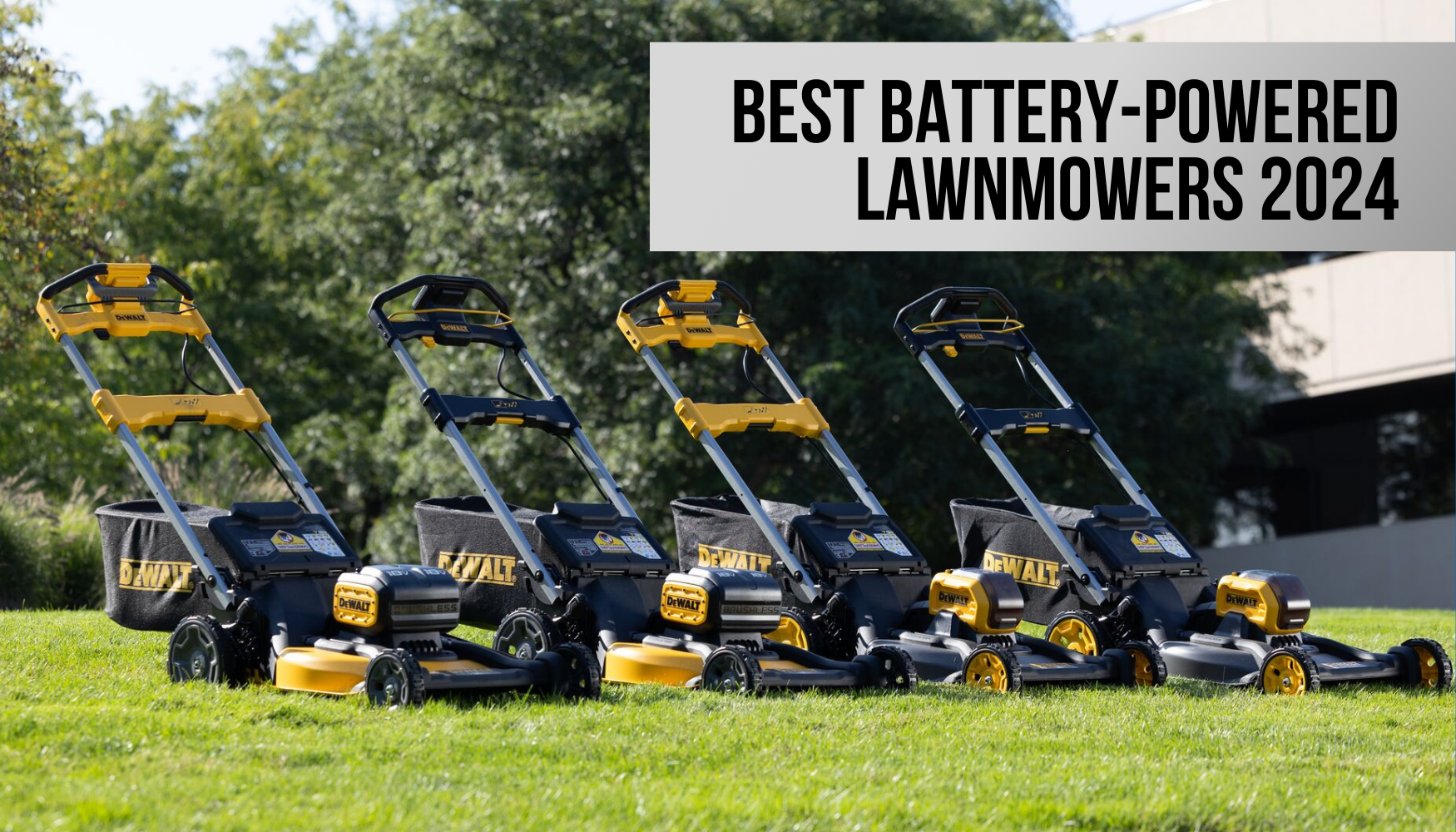
A mower’s discharge system affects cleanup and lawn care. Most battery walk-behind mowers offer some combination of mulching, rear bagging, and side discharge.
Mulching
Mulching cuts grass into small pieces and returns them to the lawn. It can save time because you do not empty a bag. Mulching works best when the grass is dry and not excessively tall.
The mower needs enough blade speed and deck airflow to handle clippings. If the mower leaves trails of grass, raise the deck, slow down, or mow more often.
Bagging
Bagging collects clippings for a cleaner appearance. It helps when grass is tall, leaves cover the lawn, or you do not want clippings near walkways.
A full bag adds weight and requires repeated emptying. Check the bag’s capacity and how easily it detaches. A rigid opening may be easier to empty than a soft bag, but the design adds bulk during storage.
Side discharge
Side discharge moves clippings away from the mower. It works well for tall grass but can spread clippings into beds, paths, or neighboring areas.
If you frequently switch modes, inspect the design of the mulch plug, bag, and discharge chute. A tool-free changeover can save time, but the parts must still lock in place correctly.
6. Evaluate Motor Power and Performance Claims
Battery mower power claims are difficult to compare because manufacturers do not use one universal test. Terms such as “brushless,” “high torque,” and “peak power” describe features or operating conditions, not guaranteed cutting performance in every yard.
Brushless motors
A brushless motor uses electronic controls instead of traditional brushes. It may offer efficient operation, less brush wear, and good control. However, the motor is only one part of the system.
Performance also depends on:
- Blade design
- Battery output
- Electronic controls
- Deck airflow
- Mower weight
- Grass height and moisture
- Wheel traction
A brushless motor does not guarantee longer runtime or better cutting in every condition.
Automatic power adjustment
Some mowers increase blade speed when they detect heavier grass. This can help prevent bogging, but it may use more battery power during demanding cuts.
A manual or automatic mode may let you choose between longer runtime and more cutting power. Read the manual to learn whether the mower has separate eco and high-power settings.
Noise
Battery mowers are usually quieter than gas mowers because they do not have a combustion engine. They still produce blade noise, wheel noise, and motor sound. Wear hearing protection if the sound level feels uncomfortable, and follow local rules about lawn equipment operating hours.

7. Inspect Wheels, Controls, and Handling
Good handling can matter more than a small difference in advertised battery capacity. A mower must turn easily, roll over your lawn without sinking, and stay stable on uneven ground.
Look for:
- Large rear wheels for rough terrain
- Strong wheel height adjusters
- A comfortable handle
- A simple start button or key system
- Foldable storage handles
- A battery compartment protected from grass and water
- A clear battery charge indicator
- Easy access to the controls
A heavy mower may feel stable but can be tiring to lift and turn. A very light mower may be easier to carry but can bounce on uneven ground.
If possible, handle the display model before buying. Test the handle height, folding action, battery access, and lifting points. Check the packed weight as well as the operating weight.
Do not assume that a mower advertised as “water resistant” can be left outside or sprayed with a hose. Use only the cleaning method listed in the owner’s manual.
8. Compare the Complete Battery Ecosystem
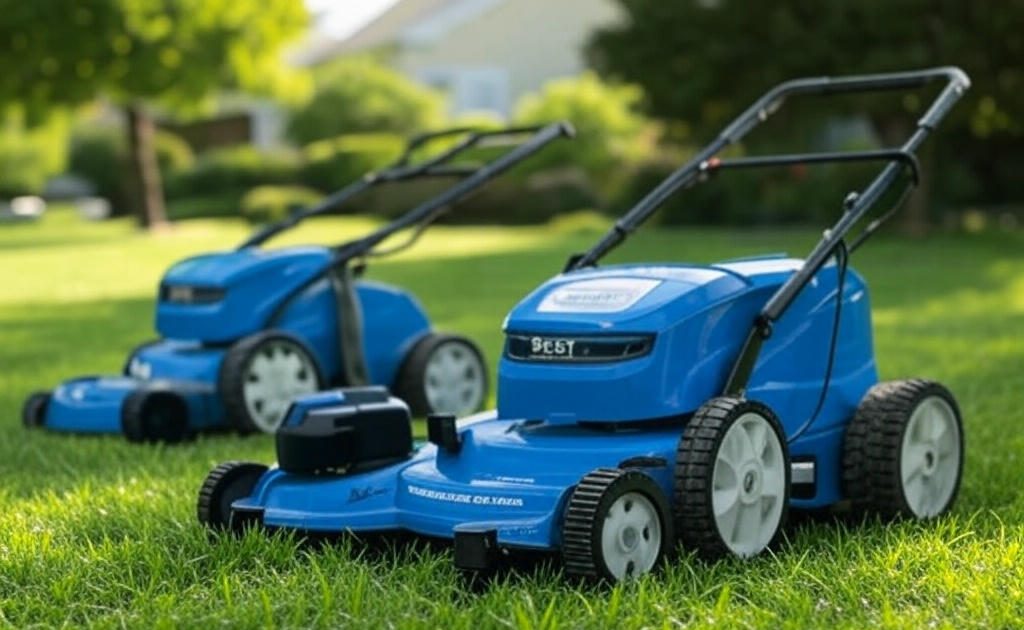
The mower is only one part of the ownership cost. The battery, charger, spare packs, blade, and service parts can affect the long-term value.
Before you buy, check:
- Included battery size
- Included charger type
- Cost of a second battery
- Cost of a replacement battery
- Whether the battery powers other tools
- Battery warranty length and conditions
- Mower warranty
- Local repair options
- Availability of blades and hardware
- Charger storage and charging time
A battery platform can be useful if you already own compatible tools. But confirm that the mower accepts the exact battery series. Batteries with the same brand name may not work across every product line.
An inexpensive mower can become costly if its replacement battery is hard to find or costs nearly as much as the mower. On the other hand, a more expensive platform may make sense if you will use the batteries for a trimmer, blower, hedge cutter, or chainsaw.
Use the maker’s current U.S. warranty terms. Warranty coverage may differ by product, battery, commercial use, and registration status.

9. Use This Battery Capacity Estimate
You can make a rough battery estimate with watt-hours, but treat it as a planning tool. It is not a substitute for the mower maker’s runtime data.
Suppose a hypothetical mower uses about 250 watt-hours to complete your lawn under your normal conditions. A 40V, 5Ah battery provides about 200 watt-hours before operating losses. That pack may not finish the job, especially in thick grass.
A 40V, 8Ah battery provides:
40 V × 8 Ah = 320 Wh
The extra capacity gives more margin. Actual usable energy will be lower than the simple calculation because the mower has electrical and mechanical losses, and battery output changes with temperature and load.
A practical selection rule
Choose:
- One standard battery for a small, flat lawn that you mow often
- A larger battery for thick grass, longer mowing sessions, or warm weather
- Two batteries when the lawn is near the mower’s stated runtime limit
- A spare battery when you cannot wait for charging between cuts
If the mower supports two batteries, determine whether it runs both at once or switches from one to the other. That difference affects both runtime and performance.

10. Check Safety Features and Operating Limits
Safe operation begins with the owner’s manual. The manual sets the mower’s limits for slopes, cleaning, charging, transport, and blade service.
Useful safety features may include:
- A removable safety key
- A battery interlock
- A blade-stop control
- A start button that requires two actions
- A brake that stops the blade when the control is released
- A blocked-chute warning
- A headlight for low-light visibility
Features do not replace safe behavior. Before each use:
- Inspect the lawn for stones, sticks, wire, toys, and other objects.
- Wear sturdy shoes and eye protection.
- Keep children and pets away from the mowing area.
- Do not carry passengers.
- Stop the mower before crossing gravel, sidewalks, or driveways when the manual requires it.
- Remove the battery before clearing a blockage or touching the blade.
- Wait for the blade to stop before tilting or moving the mower.
- Never mow during lightning, or in conditions where you cannot see hazards.
Do not mow wet grass unless the manual specifically permits the conditions. Wet grass can reduce traction, clog the deck, damage turf, and increase the risk of slips.
For slopes, follow the mower’s instructions. If you cannot keep stable footing, do not use the mower on that slope. A professional lawn service may be the safer choice.

11. Plan Maintenance and Storage
Battery mowers need less routine maintenance than gas mowers, but they are not maintenance-free. A clean deck and sharp blade help the mower cut well and use energy efficiently.
After each use:
- Remove the battery and safety key.
- Brush away grass from the deck and wheels.
- Check the blade for damage.
- Empty and clean the grass bag.
- Look for loose fasteners.
- Store the mower in a dry, secure place.
Before cleaning, follow the manual. Some models allow limited water cleaning, while others require a dry brush or cloth. Never direct water at the battery, charger, switches, or electrical openings unless the manufacturer expressly allows it.
A dull blade can tear grass instead of cutting it cleanly. Sharpen or replace the blade according to the manual. Remove the battery before blade work, and use gloves when handling the blade. If you do not know how to secure the blade safely, use a qualified repair service.
Store lithium-ion batteries indoors where they are protected from extreme heat, freezing conditions, moisture, children, and metal objects that could bridge the contacts.

12. Avoid These Common Buying Mistakes
The most common mistake is buying a mower based only on advertised voltage. Voltage describes part of the electrical system. It does not show the full battery capacity or predict how the mower will perform in your yard.
Other common mistakes include:
Buying too little battery
A mower may be suitable for a small lawn but struggle when the grass grows tall during a rainy week. Choose extra capacity if you mow infrequently or have demanding turf.
Ignoring self-propelled energy use
Self-propelled drive improves comfort but reduces the energy available for cutting. Compare runtime with the drive system operating, if the maker provides that information.
Choosing a deck that is too wide
A wide deck can save passes on an open lawn. It can also be awkward around trees, fences, and narrow gates.
Forgetting the charger
Some listings include the mower and battery but not a charger. Confirm the complete package before comparing prices.
Assuming all batteries in a brand family fit
Battery platforms may have several voltage classes or product generations. Confirm compatibility with the exact model number.
Leaving no runtime reserve
Using the full stated runtime every time leaves little room for thick grass, cold weather, or a battery that has aged.
Storing the mower outside
A weather-resistant design is not the same as outdoor storage approval. Keep the mower and battery in a dry place unless the manual says otherwise.

Battery-Powered Lawn Mower Buying Checklist
Use this checklist before you place an order:
- I measured the area I actually mow.
- I checked the mower’s cutting width against my gates and storage space.
- I chose push or self-propelled drive based on my terrain and physical needs.
- I compared battery capacity in watt-hours.
- I checked runtime conditions and left a reserve.
- I confirmed the charger is included.
- I checked the price of a spare and replacement battery.
- I verified battery compatibility with my other tools.
- I reviewed slope, cleaning, and blade-service instructions.
- I checked the warranty and local service options.
- I chose the discharge method that fits my lawn care routine.
Frequently Asked Questions
How many volts should a battery lawn mower have?
There is no single correct voltage. A higher-voltage mower may support more power, but voltage alone does not determine runtime or cutting quality. Compare voltage with amp-hours, watt-hours, motor design, deck size, and the maker’s test conditions.
Is a battery mower powerful enough for thick grass?
Many battery mowers can handle thick grass when the blade is sharp, the deck is set high, and the mower has enough battery capacity. Cut more often and avoid mowing wet grass. If the mower slows sharply or leaves large clumps, raise the cutting height and make a second pass rather than forcing the machine through too much grass at once.
Should I buy a push or self-propelled battery mower?
Buy a push mower for a small, flat lawn and lower weight. Choose self-propelled drive for slopes, large lawns, or reduced pushing effort. Remember that self-propelled operation uses extra battery energy.
How long do lawn mower batteries last?
Battery life depends on charge cycles, storage, temperature, workload, and care. The exact service life varies by battery design and manufacturer. Follow the charging and storage instructions, and replace a battery that shows physical damage, swelling, overheating, or a major loss of capacity.
Can I leave a battery in the mower?
Follow the owner’s manual. For transport, cleaning, storage, and blade service, removing the battery is the safer general practice. Store the battery and charger in the conditions specified by the manufacturer.
Are battery lawn mowers safe in the rain?
Do not assume they are safe to operate in rain. Water can reduce traction and create electrical and handling hazards. Check the manual, avoid wet grass, and never charge a wet or damaged battery.
Conclusion
To choose a battery-powered lawn mower, begin with your lawn area and terrain. Then match the mower type, deck width, battery watt-hours, discharge options, and storage needs to that use.
For many U.S. homeowners, a 21-inch mower with a removable lithium-ion battery is a practical middle ground. A push model suits a small, level lawn. A self-propelled model is more helpful on slopes or larger yards. If your lawn is near the mower’s runtime limit, choose a larger battery or a second pack instead of relying on the maximum advertised runtime.
The best next step is to measure your mowing area, record your gate and storage dimensions, and compare complete mower packages—not just the mower price.
Sources and Research Notes
The following U.S.-focused sources provide general safety, energy, recycling, and product-use guidance. Always give priority to the owner’s manual for the exact mower and battery model.
- U.S. Consumer Product Safety Commission: Lithium-Ion Battery Safety
- U.S. Environmental Protection Agency: Electric Lawn Equipment
- Occupational Safety and Health Administration: Lawn Mower Safety
- Call2Recycle: Battery Recycling Locations
- Manufacturer owner’s manual for the exact mower, battery, and charger model