
Best Weather Station For Garden: Top 10 For 2026
The best garden weather stations for 2026 combine accurate sensors, clear displays, useful alerts, and simple setup.
A garden weather station helps when rain seems close, frost may harm plants, or strong wind could damage young growth. Instead of guessing, you can check local temperature, humidity, rainfall, pressure, wind, and forecast data from your yard. I reviewed the five supplied models for sensor coverage, display quality, Wi-Fi tools, ease of use, and value. This guide to the best weather station for garden top 10 for 2026 focuses on practical choices for gardeners, hobby growers, and homeowners.
See the differences between my top picks at a glance.
Sainlogic 10-in-1 Weather Station

The Sainlogic 10-in-1 is a practical choice for gardeners who want many local readings without a Wi-Fi setup. Its listed functions include outdoor temperature, humidity, rainfall, wind information, pressure, forecast data, moon phase, and an alarm clock. That mix covers the readings I check most often when planning watering, mowing, planting, and outdoor work.
This model suits a home where the indoor console does most of the work. The no-Wi-Fi design keeps the system simple, since you do not need an app or cloud account for basic checks. It is also a good fit for a bedroom, kitchen, shed, or home office. I would choose it for a gardener who values direct local data more than remote alerts.
Pros:
- Provides a broad 10-in-1 set of weather readings
- Includes a rain gauge for local rainfall tracking
- Shows useful temperature and humidity information
- Offers pressure, forecast, and moon-phase data
- No Wi-Fi account or app setup is required
- Indoor console can also serve as an alarm clock
Cons:
- No remote app monitoring or phone alerts
- Local readings depend on careful outdoor sensor placement
- Users seeking long-term online data storage may need another model
What Amazon Buyers Are Saying
Buyer feedback for weather stations often centers on setup, display clarity, sensor range, and reading consistency. Reviews for this type of Sainlogic model commonly show that shoppers like the large amount of information available from one console and the simple, self-contained design. The main concerns to watch for are the learning curve during setup, battery care, and the need to place the outdoor sensor away from walls, roofs, and heat sources.
Because buyer experiences can vary by yard layout and local conditions, I suggest reading the newest Amazon reviews before ordering. Pay close attention to comments about wireless connection, rain-gauge mounting, and the visibility of the console. Those details matter more than a long feature list when you use a weather station every day.
My Recommendation
I recommend this model for gardeners who want a feature-rich local station at a straightforward level. It is not the best choice for phone alerts, but it offers the core measurements most home gardens need. For a no-Wi-Fi setup, it earns a strong value rating.
Sainlogic 10-in-1 Wi-Fi Weather Station

This Sainlogic model adds connected features to the familiar 10-in-1 weather station format. The listing highlights Wi-Fi, 24/7 AI weather forecasts through Weatherseed, app alerts, a rain gauge, wind-speed data, and two-year data storage. That combination makes it more useful for gardeners who cannot stand near the indoor console all day.
Remote alerts can help you react to heavy rain, sharp temperature changes, or other local shifts. The system uses 2.4 GHz Wi-Fi, so your home network must support that band during setup. I see this as the more capable Sainlogic choice for a garden that needs history and phone access. It offers more convenience than the no-Wi-Fi model, but it also asks more from the setup process.
Pros:
- Supports remote weather checks through an app
- Includes app alerts for useful weather changes
- Offers 10-in-1 local weather monitoring
- Stores up to two years of weather data, according to the listing
- Includes rainfall and wind-speed readings
- Uses a 2.4 GHz Wi-Fi connection for network access
Cons:
- Does not support every Wi-Fi band during setup
- Connected features may take longer to configure than a basic console
- App and network performance can depend on home Wi-Fi strength
What Amazon Buyers Are Saying
Customers shopping for connected weather stations usually praise app access, alerts, and the ability to review past conditions. The common friction points tend to involve pairing the station with a 2.4 GHz network, understanding app settings, and finding the best sensor location. Buyers also often value a console that remains useful when the phone is not nearby.
I recommend checking recent Amazon comments for app updates and connection performance before buying. Look for reviews from people with a similar home network and yard size. A connected weather station can be excellent for garden care, but only when the sensor, console, router, and app communicate reliably.
My Recommendation
This is my preferred Sainlogic option for gardeners who want alerts and stored weather history. It gives you more control than the offline model and can support better decisions when you are away from home. Buy it if you are comfortable with 2.4 GHz Wi-Fi setup.
Ambient Weather WS-1965 Wi-Fi Station

The Ambient Weather WS-1965 targets users who want remote monitoring and access to a wider weather network. Its listing includes Wi-Fi, access to the Ambient Weather Network, AWN+ inclusion, and an indoor-outdoor weather station setup. This makes it a strong candidate for a connected garden where local readings matter but online access matters too.
Network access can add context to the data from your own yard. It may also suit hobby weather watchers who want more than a small indoor screen. I would place this model on a stable network and take time to install the outdoor sensor in an open, representative location. The station is best for users who care about connected weather tools and do not mind a more involved setup.
Pros:
- Provides Wi-Fi-based remote monitoring
- Includes access to the Ambient Weather Network
- Comes with AWN+ according to the product listing
- Combines local outdoor sensing with online access
- Useful for gardeners who check conditions away from home
- Fits users who want a broader weather-monitoring ecosystem
Cons:
- Wi-Fi setup may require more time and attention
- Network features depend on a stable internet connection
- May offer more connected functionality than casual gardeners need
What Amazon Buyers Are Saying
Amazon buyers who choose Ambient Weather products often focus on remote access, network tools, sensor performance, and the quality of the overall system. The most useful review details involve how simple the pairing process feels, how well the station works at a distance from the router, and how clear the console and online views are. These points can vary with house construction and local Wi-Fi conditions.
Before ordering, I suggest reading current buyer reviews about account setup, network reliability, and outdoor sensor placement. Also check whether the included network features match the level of access you want. Connected weather data has real value, but only when the online tools fit your daily routine.
My Recommendation
The WS-1965 is a good pick for serious home weather tracking and remote garden checks. It stands out for network access rather than a simple plug-in experience. I recommend it to users who want an established connected weather platform and can manage a careful setup.
Logia 21-in-1 Wi-Fi Weather Station
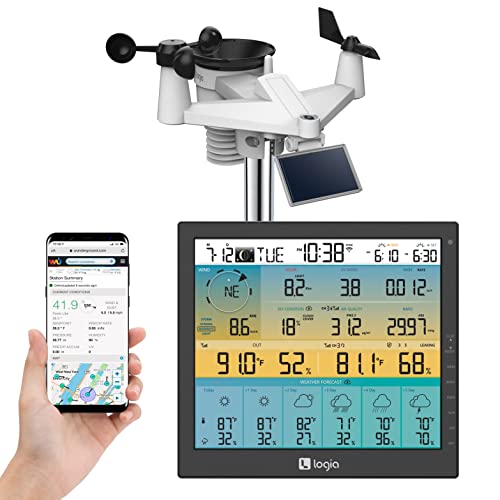
The Logia 21-in-1 Wi-Fi weather station is built for users who enjoy detailed information on a large screen. The product listing highlights 21-in-1 monitoring, a 10-inch display, Wi-Fi connectivity, and a six-day forecast. For a garden, that larger information set can help you see several conditions at once without relying only on a phone.
This model makes the most sense in a kitchen, office, greenhouse area, or other place where a larger display can stay visible. The many readings may help dedicated gardeners compare weather patterns and plan outdoor tasks. Still, more information can take more time to learn. I would choose it when dashboard detail is more important than the smallest footprint.
Pros:
- Offers a very broad 21-in-1 weather information set
- Includes a large 10-inch display
- Provides Wi-Fi connectivity for connected use
- Shows a six-day forecast according to the listing
- Good fit for users who like detailed dashboards
- Useful for tracking more than basic temperature and rain
Cons:
- Large screens need more wall or desk space
- Many readings may feel overwhelming to casual users
- Wi-Fi features require network setup and maintenance
What Amazon Buyers Are Saying
Reviews for large, multi-reading weather stations often focus on screen size, readability, the amount of data shown, and the connection process. Buyers tend to value a display that gives a quick view of the garden environment. Common concerns include learning what each icon means, finding a good viewing angle, and completing Wi-Fi setup without confusion.
Read the latest Amazon feedback for comments about screen visibility in your intended room and the ease of using the forecast tools. I also suggest checking photos from buyers when available. A large display is helpful only if you have a suitable place to mount or store it.
My Recommendation
I recommend the Logia 21-in-1 to data-minded gardeners who want a large, detailed home dashboard. It is a strong choice for a greenhouse or garden office. Casual users may prefer a simpler station with fewer readings and less setup.
Logia 7-in-1 Wi-Fi Weather Station

The Logia 7-in-1 Wi-Fi weather station offers a simpler path into connected garden monitoring. It includes seven core weather readings, an 8-inch display, Wi-Fi, and a 10-day forecast. That balance should appeal to households that want useful information without the larger list of readings found on a 21-in-1 model.
The 8-inch display gives you a clear home view while taking less space than a 10-inch unit. Wi-Fi can extend the station’s value when you want to check conditions from a phone or another location. I see this as a balanced option for gardeners who want modern features but do not need every possible weather indicator. It can also suit first-time buyers who want room to grow into connected tools.
Pros:
- Provides seven core weather readings
- Includes Wi-Fi for connected monitoring
- Offers a 10-day forecast according to the listing
- Uses a practical 8-inch display
- Balances useful features with a simpler data set
- Suitable for many kitchens, offices, and garden rooms
Cons:
- Provides fewer readings than the Logia 21-in-1 model
- Wi-Fi setup still adds steps over an offline station
- Forecast information should not replace local sensor readings
What Amazon Buyers Are Saying
Buyers of mid-range Wi-Fi stations often mention the value of a readable display, forecast length, and access to weather data away from home. The most useful review patterns concern setup time, screen clarity, sensor placement, and whether the available readings meet the buyer’s needs. Some shoppers prefer a smaller data set because it makes the console easier to read.
I recommend checking current Amazon reviews for comments about wireless range and app behavior. Also compare the seven readings with your garden goals. If you mainly need temperature, humidity, rainfall, wind, and forecast information, this format may provide a better balance than a more complex station.
My Recommendation
The Logia 7-in-1 is a sensible middle-ground choice. It gives you Wi-Fi, a 10-day forecast, and a useful display without the full 21-in-1 data load. I recommend it for most home gardeners who want connected features at a manageable level.
How to Choose the Best Weather Station for Garden Top 10 for 2026
Choosing the best weather station for garden top 10 for 2026 starts with your daily garden tasks. A vegetable grower may care most about rain, humidity, and temperature. A hobby weather watcher may want pressure, wind data, long-term records, and network access. Start with the readings you will use often, then choose the display and connection style that fits your home.
1. Match the Sensors to Your Garden Tasks
Temperature helps you watch heat stress and cold risk. Humidity gives useful context for plant care, though it does not replace careful disease checks. Rainfall data can help you avoid watering after a wet day. Wind data matters when you use row covers, grow lights outdoors, trellises, or young plants.
Pressure and forecast tools can add useful weather context. Yet no small home station can promise perfect forecasts. Treat the forecast as a planning aid. For the best local results, place the outdoor sensor in an open spot with good airflow. Keep it away from hot walls, dryer vents, roof runoff, sprinklers, and dense cover.
2. Decide Between Offline and Wi-Fi Monitoring
An offline station works well when you want a quick view from one indoor console. It avoids app accounts and network pairing. The no-Wi-Fi Sainlogic model fits this role. It may suit a small garden, a weekend home, or anyone who prefers a simple setup.
Wi-Fi stations add remote viewing, alerts, forecasts, or data storage. The Sainlogic Wi-Fi model highlights app alerts and two-year storage. Ambient Weather focuses on remote monitoring and network access. Logia offers Wi-Fi with six-day or 10-day forecast options, depending on the model. Before choosing a connected model, confirm that your home network supports the product’s connection needs.
3. Compare Display Space, Installation, and Long-Term Value
A large screen can make many readings easier to see. The Logia 21-in-1 uses a 10-inch display, while the Logia 7-in-1 uses an 8-inch display. Measure your desk or wall space before buying. A station that remains visible will help more than one that stays in a drawer.
Also check the sensor mounting plan. A rain gauge needs a level position. Wind sensors need open exposure. The outdoor temperature sensor needs shade and airflow. Follow the included instructions and allow time for calibration or pairing. Finally, compare the features you will use with the price. The best weather station for garden top 10 for 2026 is not always the model with the most readings. It is the one that gives useful data in a form you can trust and use.
Final Verdict: Which Should You Buy?
For most connected gardens, I recommend the Sainlogic 10-in-1 Wi-Fi model for its alerts, data storage, and broad local readings. Choose the Logia 7-in-1 for a balanced display, or the offline Sainlogic for simple use.
The best weather station for garden top 10 for 2026 should match your plants, space, network, and weather habits. Install the sensor well, then use its readings to plan smarter garden work.
FAQs Of best weather station for garden top 10 for 2026
What is the best weather station for a home garden in 2026?
The Sainlogic 10-in-1 Wi-Fi model is a strong choice for most connected gardens. It combines local readings with app alerts and data storage.
Do garden weather stations need Wi-Fi?
No. A no-Wi-Fi station can show local readings on its indoor console. Wi-Fi is useful for remote access, alerts, and stored weather history.
Which weather readings matter most for plants?
Temperature, humidity, rainfall, and wind are useful starting points. These readings can help with watering, frost planning, and protection from harsh weather.
Where should I place an outdoor weather sensor?
Place it in an open area with good airflow. Keep it away from walls, roofs, vents, sprinklers, direct heat, and heavy shade.
Is a 21-in-1 weather station better than a 7-in-1 model?
Not always. A 21-in-1 model suits users who want detailed data. A 7-in-1 station may be easier to read and better for basic garden tasks.



One Comment