Top 10 Soil Tester Kits For 2026: Best Buying Guide
The top 10 soil tester kits for 2026 include accurate nutrient kits, pH meters, test strips, and lab-based soil analysis.
A weak lawn, yellow leaves, or poor vegetable growth often starts below the surface. Many gardeners add fertilizer without knowing what the soil lacks. That can waste money and harm plants. I reviewed these top 10 soil tester kits for 2026 with a focus on test range, ease of use, practical accuracy, and value. You will find simple strips, reusable meters, complete NPK kits, and professional lab testing options for gardens, lawns, farms, and indoor plants.
See the differences between my top picks at a glance.
| Product | Test Type | Best For | Test Capacity | Main Strength | Check Price |
|---|---|---|---|---|---|
| 140-Test Soil Kit | pH, N, P, K, ammonia | Large gardens | 140 tests | Broad test coverage | View on Amazon |
| Rapitest Soil Test Kit | pH and nutrients | Home gardeners | Varies by kit | Simple garden testing | View on Amazon |
| MySoil Soil Test Kit | Lab nutrient and pH test | Detailed lawn care | One lab sample | Personalized guidance | View on Amazon |
| 2026 4-in-1 Soil Kit | pH, N, P, K | Garden and lawn | 40 tests | Complete basic panel | View on Amazon |
| SONKIR MS02 Meter | Moisture, light, pH | Houseplants | Reusable meter | Fast spot checks | View on Amazon |
| 3-in-1 Soil Tester | Moisture, nutrient, pH | Indoor and outdoor plants | Reusable meter | Quick readings | View on Amazon |
| 100 Soil pH Strips | pH | Low-cost checks | 100 strips | Easy repeat testing | View on Amazon |
| Whitetail Institute Kit | Laboratory analysis | Deer food plots | One lab sample | Expert consultation | View on Amazon |
| 2-in-1 pH and Nitrogen Kit | pH and nitrogen | Basic lawn care | Strip-based | Fast, simple tests | View on Amazon |
| AAwipes 4-in-1 Kit | pH, N, P, K | Yards and gardens | 40 tests | Complete sample kit | View on Amazon |
1. 140-Test Soil Test Kit

This 140-test soil kit is a strong choice for gardeners who want more than a one-time reading. It checks pH, nitrogen, phosphorus, potassium, and ammonia. That range covers many of the basic soil questions that affect lawn color, flower growth, and vegetable crops. It also gives you enough tests to compare several areas of a yard.
I like the broad test count because soil can vary from one bed to another. You can test before adding fertilizer and then test again later. The kit suits people who enjoy tracking soil changes through the season. Read the color chart in good light and follow the sample steps closely for the best result.
Pros:
- Large 140-test supply for repeated use
- Checks key NPK nutrients and pH
- Useful for lawns, gardens, and plants
- Helps compare different soil areas
- Good value for frequent testers
Cons:
- Color matching takes care and good light
- Liquid or reagent tests need more cleanup than a meter
- Results depend on careful sample preparation
What Amazon Buyers Are Saying
Buyer discussions tend to value the number of available tests and the range of readings. Gardeners who test more than one bed often see the kit as a practical value. Common concerns with this type of kit involve color charts, small sample steps, and the time needed to complete each test. I recommend reading the current instructions before use.
My Recommendation
This is my best pick for repeated home soil testing. It offers useful coverage without forcing you to buy a new kit after only a few tests.
2. Rapitest Soil Test Kit

The Rapitest soil test kit is made for basic garden and lawn checks. It measures soil acidity and garden nutrients in a compact format. The design feels familiar to many home gardeners who want a hands-on test instead of a digital meter. It is a sensible match for flower beds, vegetables, grass, and small planting areas.
This kit works best when you take a clean sample from the root zone. I would use it before a major fertilizer application and again when plant growth looks poor. It does not replace a full lab report, but it can show when soil pH or nutrients may need attention. The clear process makes it approachable for new gardeners.
Pros:
- Well suited to basic home soil checks
- Works for gardens, flowers, vegetables, and lawns
- Compact and easy to store
- Useful before fertilizer use
- Good option for first-time testers
Cons:
- Not as detailed as a laboratory analysis
- Color-based results need careful reading
- Test quantity may not suit very large properties
What Amazon Buyers Are Saying
Amazon buyers commonly look to this kit for simple home testing rather than professional soil research. Positive review patterns often focus on the familiar process and usefulness for garden planning. Some users note that the steps and color comparison require patience. Results can vary if the soil sample contains stones, roots, or too much organic debris.
My Recommendation
I recommend Rapitest for a beginner who wants a trusted, basic soil tester kit for 2026. It is practical for routine garden care, though serious growers may want lab testing.
3. MySoil Lab Test Kit

MySoil takes a different approach from instant color tests. You send a soil sample for analysis and receive nutrient and pH information with recommendations. This makes it attractive to lawn owners who want a clearer plan. It can also help when a yard keeps struggling despite regular watering and fertilizer.
The main benefit is the guidance after testing. A lab report can offer more useful direction than guessing from leaf color alone. You still need to collect a representative sample and follow the mailing steps. This kit costs more per test than strips, but the extra detail may justify it for a new lawn or a problem area.
Pros:
- Provides lab-based nutrient and pH analysis
- Includes recommendations tailored to soil needs
- Useful for persistent lawn problems
- Reduces guesswork before soil amendments
- Good choice for detailed planning
Cons:
- Results are not instant
- One sample offers less repeat testing value
- Correct sample collection remains important
What Amazon Buyers Are Saying
Customer feedback for lab kits often centers on the value of receiving a report and clear next steps. Buyers who feel unsure about fertilizer choices may prefer this format. The most common limitation is the wait for results, since the sample must be sent and processed. Experiences can also depend on how well the sample represents the whole lawn.
My Recommendation
Choose MySoil when you want advice, not just a quick number. I rate it highly for lawn renovation and serious garden planning.
4. 2026 New 4-in-1 Soil Test Kit

This updated 4-in-1 kit checks pH, nitrogen, phosphorus, and potassium. Those four readings form a useful starting point for lawn and garden care. The 40-test supply gives you room to check more than one plant bed. It suits indoor plants, flowers, vegetables, and outdoor grass.
I see this kit as a balanced choice for people who want nutrient testing without the size of a large professional set. The test process requires clean samples and careful reading. It will not give the same depth as a laboratory report, but it can help guide basic fertilizer decisions. The four-part panel is more useful than a pH-only test.
Pros:
- Measures pH plus the three main nutrients
- Offers 40 tests for ongoing use
- Works across indoor and outdoor plants
- Useful for fertilizer planning
- Good middle ground for home gardeners
Cons:
- Requires color interpretation
- Does not replace a full laboratory report
- Testing takes longer than a probe reading
What Amazon Buyers Are Saying
Buyers commonly appreciate having pH and NPK tests in one package. That combination helps users compare soil before and after feeding plants. Some comments about similar kits point to the need for accurate sample mixing and good lighting. I would not treat a close color match as an exact laboratory value.
My Recommendation
This is one of the most balanced top 10 soil tester kits for 2026. I recommend it for gardeners who need a complete basic panel and moderate test capacity.
5. SONKIR MS02 3-in-1 Soil Meter

The SONKIR MS02 is a reusable meter for moisture, light, and soil pH. It does not use test strips or liquid reagents. That makes it handy for quick checks around houseplants, pots, garden beds, and lawns. Its simple design can help you avoid watering a plant on a fixed schedule when the soil is still damp.
This type of meter works best as a quick care tool. Insert the probe into suitable soil, allow the reading to settle, and clean it after use. The moisture and light functions are useful for daily plant care. For exact nutrient levels, you will need a separate NPK test kit or a laboratory service.
Pros:
- Reusable design reduces consumable waste
- Checks moisture, light, and pH
- Useful for houseplants and containers
- Fast for routine spot checks
- No mixing or color chart is needed
Cons:
- Does not measure nitrogen, phosphorus, or potassium
- Probe readings can vary with soil contact
- Needs careful cleaning between samples
What Amazon Buyers Are Saying
Amazon buyers often choose this meter for quick plant-care checks. Users tend to like the simple, reusable format and the ability to check moisture without digging up soil. The main concern with inexpensive probe meters is that readings can change with placement and soil type. It should guide care, not replace a full soil analysis.
My Recommendation
I recommend the SONKIR for houseplants and fast moisture checks. It is not the best choice if your main goal is accurate NPK testing.
6. 3-in-1 Soil Moisture Nutrient and pH Tester

This 3-in-1 soil tester combines moisture, nutrient, and pH checks in one handheld tool. It targets everyday care for lawns, grass, indoor plants, and outdoor beds. The biggest appeal is speed. You can move from one plant or soil area to another without preparing a separate liquid sample.
I would use it for regular checks, not for a final fertilizer plan on a large property. Probe tools are most helpful when you use them in the same way each time. Push the probe into the root zone and avoid rocks or very dry pockets. For more detailed nutrient data, confirm important results with a chemical or lab test.
Pros:
- Combines three common plant-care readings
- Fast for repeated spot checks
- Useful indoors and outdoors
- Simple alternative to reagent testing
- Helps monitor changing soil conditions
Cons:
- Probe results are not a full lab analysis
- Readings may change with placement
- Requires cleaning and careful handling
What Amazon Buyers Are Saying
Shoppers who want a quick tool often like the compact 3-in-1 format. The convenience is the main reason to choose it over a test-tube kit. As with many basic soil meters, buyers may report different readings in different parts of the same pot or bed. That is why I suggest taking several readings and looking for a pattern.
My Recommendation
This meter is worth considering for routine plant care. I rate it as a useful companion tool, but not as the only tester for major soil amendments.
7. 100 Soil pH Test Strips

These soil pH strips offer a simple way to check acidity in gardens, lawns, and indoor plant soil. The listed range runs from 3.5 to 9, which covers many common growing needs. With 100 strips, the kit suits gardeners who want frequent pH checks at a low cost.
Strips are easy to store and quick to use, but they only focus on pH. They will not tell you whether soil lacks nitrogen, phosphorus, or potassium. I see them as a first step when plants show signs of stress or when you want to check whether an amendment changed soil acidity. Use clean water and follow the timing instructions for more consistent readings.
Pros:
- Provides 100 individual pH tests
- Broad listed pH range
- Fast and simple for home use
- Low-cost way to repeat checks
- Works for pots, beds, and lawns
Cons:
- Does not test NPK nutrients
- Color results may be hard to match
- Needs a prepared soil-water sample
What Amazon Buyers Are Saying
Buyers often like the large strip count and simple storage. The strips appeal to people who only need pH information and do not want a larger kit. Common limits include uncertainty between close color shades and the need to prepare a soil solution. For high-value crops, I would confirm a borderline result with a better test.
My Recommendation
These strips are a good budget pick for pH-only testing. They offer excellent repeat value, but they cannot replace a complete soil fertility test.
8. Whitetail Institute Laboratory Kit
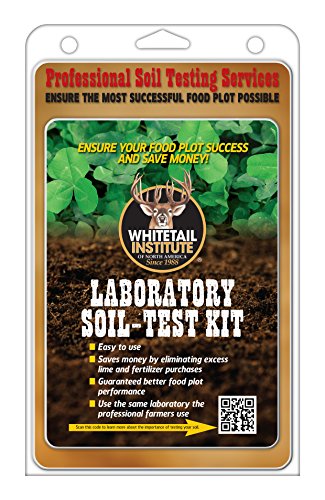
The Whitetail Institute soil test kit targets deer food plot planning. It uses laboratory analysis and includes professional consultation. The product description states that results arrive within one week. That combination can help hunters and land managers make a more informed plan for plot soil.
This kit makes more sense for a food plot than for a small houseplant. You still need to collect a representative sample from the planting area. A lab result can help show whether lime or fertilizer may be needed, but you should follow the report rather than add products by guesswork. The consultation feature adds value for users who are unsure how to read soil data.
Pros:
- Designed for deer food plot planning
- Uses laboratory soil analysis
- Includes professional consultation
- Offers a stated result time of about one week
- Useful for larger outdoor planting goals
Cons:
- Not an instant home test
- Less useful for casual houseplant care
- Requires mailing a sample
What Amazon Buyers Are Saying
Buyers interested in food plots tend to value the professional format and consultation. The key trade-off is speed, since the sample must travel to a lab. Review experiences may also depend on the quality of the sample and the buyer’s ability to apply the report to a specific plot. I would use this kit when planning matters more than instant results.
My Recommendation
This is a specialist choice for deer food plots and larger planting areas. I recommend it when professional guidance is more important than repeated home tests.
9. 2-in-1 pH and Nitrogen Soil Kit

This 2-in-1 soil test kit focuses on pH and nitrogen. The strips come separately sealed in foil, which can help protect unused tests from moisture. It is aimed at lawns, grass, flowers, vegetables, and other home planting areas. The format suits gardeners who want a quick answer about two common soil concerns.
The kit is easy to understand because it avoids a long list of readings. Nitrogen matters for leaf and grass growth, while pH affects how plants use nutrients. However, the kit does not check phosphorus or potassium. I would choose it for simple maintenance checks and pair it with a broader test when plants continue to struggle.
Pros:
- Focuses on pH and nitrogen
- Separately sealed strips help storage
- Quick for basic lawn checks
- Useful for flowers and vegetables
- Simple choice for new gardeners
Cons:
- Does not test phosphorus or potassium
- Strip colors may take practice to read
- Not suited to full nutrient diagnosis
What Amazon Buyers Are Saying
Shoppers who want a short testing process often like the narrow focus of this kit. Separate foil packaging is also a useful storage detail. The main limitation is clear: it covers only two factors. Buyers who expect a full NPK panel may find the range too limited.
My Recommendation
I recommend this kit for quick pH and nitrogen checks. It offers a clean, low-cost starting point, but a 4-in-1 kit is better for full garden planning.
10. AAwipes 4-in-1 Soil Test Kit

The AAwipes soil test kit measures pH, nitrogen, phosphorus, and potassium. It includes 40 tests and sampling accessories for garden, lawn, yard, and plant care. That makes it a complete basic option for people who want more than pH strips. The test count also supports checks across several planting areas.
I would use this kit when I want a direct look at the main nutrient levels before feeding plants. As with any color-based kit, sample quality and light affect the reading. Take samples from the root zone and avoid testing only one unusual spot. The broad panel makes it useful for routine seasonal checks, but a lab remains better for complex soil problems.
Pros:
- Tests pH and all three main NPK nutrients
- Includes 40 tests for repeat use
- Sampling accessories add convenience
- Works for lawns, yards, and gardens
- Useful before applying fertilizer
Cons:
- Color comparison needs careful attention
- Does not provide laboratory-level detail
- Requires several steps for each test
What Amazon Buyers Are Saying
Buyers generally seek this type of kit because it combines four useful readings in one package. The test count and sampling items can make routine garden testing easier. Common concerns include the time needed for each test and the challenge of matching close shades. I suggest using the same lighting and method for every test.
My Recommendation
AAwipes is a practical 4-in-1 choice for home gardeners. It earns a strong rating for coverage and value, especially when you need several tests during the growing season.
How to Choose the Top 10 Soil Tester Kits for 2026
The best soil tester depends on the question you need to answer. A houseplant owner may need moisture and pH checks. A vegetable gardener may need pH and NPK readings. A food plot manager may benefit more from a lab report. Use the factors below before choosing among the top 10 soil tester kits for 2026.
1. Match the Test Type to Your Plants
Start with your main goal. Soil pH strips work well when acidity is your only concern. A 4-in-1 kit gives more useful information for lawns, flowers, and vegetables. A reusable meter helps with moisture checks, but most basic meters do not provide a full nutrient report. For a stubborn lawn problem, choose lab testing rather than guessing.
2. Compare Test Count and Reading Method
Look at how often you plan to test. A 100-strip kit or 140-test kit suits several beds and repeated checks. A lab kit may offer more detail from one sample, but it does not provide instant results. Color tests need careful timing and light. Probe meters save time, yet their readings can change with soil contact, moisture, and placement.
3. Consider Sample Quality, Guidance, and Value
Even the best soil tester can give a poor result from a poor sample. Take soil from the root zone, remove stones and plant pieces, and mix samples from similar areas. Choose a kit with clear instructions. If you are unsure about fertilizer amounts, a lab kit with recommendations may offer better value than several quick tests. Never add fertilizer only because a plant looks weak.
Final Verdict: Which Should You Buy?
For most gardeners, the 140-Test Soil Kit is my top choice because it offers broad coverage and strong repeat value. MySoil is better for detailed lawn guidance, while SONKIR suits fast houseplant checks.
These top 10 soil tester kits for 2026 cover simple pH checks, NPK testing, reusable meters, and lab analysis. Choose the tool that matches your soil problem and testing routine.
FAQs Of top 10 soil tester kits for 2026
Which soil tester kit is best for lawns in 2026?
The 140-Test Soil Kit is a strong choice for routine lawn testing. MySoil is better when you want a lab report and tailored recommendations.
Are soil pH strips accurate enough for home gardens?
Soil pH strips can provide a useful basic estimate. Follow the instructions, use a clean sample, and confirm important results with a more detailed test.
Do soil meters test nitrogen, phosphorus, and potassium?
Some products list nutrient testing, but many simple probe meters focus on moisture, light, and pH. Check the product features before buying an NPK tester.
How often should I test garden soil?
Test before major planting or fertilizer use. Retest after amendments have had time to work, and test separate areas when soil conditions differ.
Should I buy a lab soil test or a home soil kit?
Choose a home kit for quick checks and repeat use. Choose a lab test when you need detailed results for a lawn, food plot, or serious soil problem.