
5 Best Drill For Drywall For 2026: Buying Guide
The five best drywall drilling picks for 2026 include hole saws, screw-driving tools, and anchor kits for clean wall work.
Hanging a TV, cutting a wide opening, or adding a cable route can turn into a messy job fast. A normal drill bit may tear paper, wander, or leave a hole that is too large. The right drywall tool gives you better control and helps prevent costly wall damage. My 5 best drill for drywall for 2026 list includes options for large holes, screw setting, masonry-backed walls, and wall anchors. Note that these are specialty drywall drilling tools and accessories, not complete cordless drills. You will need a compatible drill or impact driver for most of them.
See the differences between my top picks at a glance.
WOWSUPM 5-Inch Carbide Hole Saw

The WOWSUPM 5-inch carbide grit hole saw is the strongest match for large drywall openings in this group. Its wide cutting size suits jobs such as vent openings, pipe access, and cable passages. The carbide grit design aims to cut more than plain gypsum board. The listing also names brick, stucco, cement board, and Hardy plank as possible materials.
I like this design when a project may cross more than one surface. A pilot drill can help keep the cut centered as the saw enters the wall. Still, a five-inch cutter needs a drill with enough power and a steady grip. It is not the right choice for a small picture hook or a normal drywall screw.
Pros:
- Large five-inch cutting diameter for wide openings
- Carbide grit design suits more than basic drywall
- Useful for vents, pipes, and cable access
- Pilot drill helps start the cut with better control
- May work on brick, stucco, and cement board when used correctly
- Good choice for repair and remodeling work
Cons:
- Requires a compatible drill and careful handling
- Large size is excessive for small wall fasteners
- Hard materials may create dust and slow the cut
- Users must check the tool connection before drilling
What Amazon Buyers Are Saying
Buyer feedback for large hole saws often centers on cut size, starting control, and material limits. Shoppers who need a wide opening tend to value the single-purpose design. Common concerns with this type of tool include dust, heat, and the need to apply even pressure. I recommend reading the latest Amazon reviews for reports about fit, durability, and the exact wall material used.
My Recommendation
I recommend the WOWSUPM for a homeowner who needs a five-inch opening and may work on more than drywall. It offers more cutting range than a small general-purpose bit. Buy it only if your project needs this diameter and your drill can handle the load.
Rannb 5-Inch Hole Saw

The Rannb 5-inch hole saw targets large round holes in wood, plastic, drywall, and thin metal. That mix makes it useful for common home projects. You could use a tool like this for a wall pass-through, a light access opening, or a large cable route. Its five-inch size gives you a clean target when a small twist bit cannot do the job.
This is a better fit for simple DIY work than for heavy masonry. Drywall cuts need a light touch because the paper face can tear if the saw grabs. I would mark the center, support the wall area when possible, and let the cutter do the work. Always check the required arbor or pilot setup before starting.
Pros:
- Five-inch size handles wide round openings
- Listed for drywall, wood, plastic, and thin metal
- Useful for home repair and remodeling tasks
- Simple design is easy to understand
- Can serve more than one material type
- Helpful when a standard drill bit is too small
Cons:
- Not intended for thick concrete or hard masonry
- Large holes need careful layout before cutting
- May not suit compact drills with low power
- Users should confirm arbor and pilot compatibility
What Amazon Buyers Are Saying
Reviews for this kind of hole cutter usually focus on whether it cuts the stated materials and keeps a round edge. Buyers often care about the pilot point, the sharpness of the cutting edge, and how well the saw stays centered. Some users may find a five-inch cutter too large for normal wall work. Check current Amazon feedback for recent comments on fit, cutting speed, and long-term wear.
My Recommendation
The Rannb is worth considering when you want a basic five-inch cutter for drywall and light materials. It is less specialized than the carbide model, so I would keep it on drywall, wood, plastic, and thin metal. For occasional DIY use, it offers a practical balance of size and flexibility.
SALI 5-Inch Concrete Hole Saw Kit

The SALI 5-inch concrete hole saw kit is the specialist choice for walls that go beyond drywall. The listing includes a tungsten steel cutter, a 220 mm SDS-Plus shank connecting rod, and a 110 mm center positioning drill bit. These parts point to work on cinder block, brick, adobe, and similar masonry. It can help when drywall sits over a hard wall surface.
This kit is not a normal drywall drill bit. It is larger, heavier, and more demanding than a small twist bit. The SDS-Plus connection also means you need a compatible rotary hammer or tool setup. For plain sheetrock, this would be more tool than most people need. For masonry-backed walls, however, the included parts may make the job more complete.
Pros:
- Designed for large five-inch masonry openings
- Includes an SDS-Plus shank connection part
- Includes a center positioning drill bit
- Useful for brick, block, and adobe walls
- Can handle projects where drywall meets masonry
- Kit format reduces the need to source every part separately
Cons:
- Overbuilt for ordinary drywall alone
- Needs a compatible SDS-Plus tool setup
- Masonry drilling creates heavy dust and vibration
- Large cuts require strong support and careful marking
- Users should confirm the wall material before purchase
What Amazon Buyers Are Saying
Feedback on masonry hole saw kits often highlights the value of included parts and the ability to make a large opening. Buyers also tend to mention tool fit, dust, heat, and the effort needed in brick or block. These details matter more than a simple product photo. I suggest checking current Amazon reviews for reports from users who drilled the same material as your wall.
My Recommendation
I recommend the SALI kit only when your drywall project includes brick, block, adobe, or another hard backing. It is not my first choice for a clean sheetrock panel. If you already own an SDS-Plus tool and need a wide masonry opening, this kit deserves serious consideration.
Adjustable DIMPLER Drywall Bit
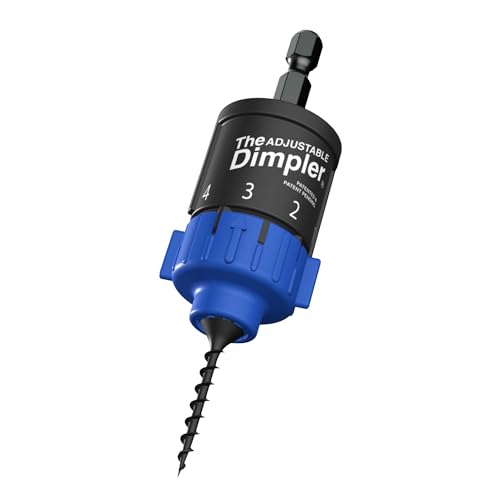
The Adjustable DIMPLER is different from the other picks. It does not cut a large hole. Instead, it turns a drill or impact driver into a drywall screw-setting tool. Its adjustable design helps control how deep the screw enters the panel. The magnetic screw holder can also make repeated installation faster.
This attachment makes sense for hanging drywall sheets or completing many screw connections. A screw that sits too deep can break the paper and weaken the hold. A screw that sits too high can stop the next layer from sitting flat. The DIMPLER aims to make that depth more consistent, but you still need to set the tool speed and pressure with care.
Pros:
- Helps control drywall screw depth
- Works with a drill or impact drill
- Magnetic holder helps keep the screw in place
- Useful for repeated screw installation
- Adjustable design suits different screw-setting needs
- Can reduce the need for a separate drywall screw gun
Cons:
- Does not drill large access holes
- Correct adjustment takes a short learning period
- Very high impact force may still damage drywall
- Performance depends on the drill or impact driver used
What Amazon Buyers Are Saying
Buyers of drywall screw attachments commonly discuss speed, depth control, and how well the bit stays on the screw. Positive experiences usually involve repeated work on drywall panels. Common complaints with adjustable attachments can include fit, adjustment, or magnetic holding strength. Read the latest product reviews to confirm how the attachment performs with your screw type and driver.
My Recommendation
The DIMPLER is my top pick for driving drywall screws, even though it is not a hole-cutting drill. It can save time on a panel job and help prevent overdriving. I recommend it for installers, remodelers, and DIY users who already own a compatible drill or impact driver.
Sunxeke 501-Piece Drywall Anchor Kit

The Sunxeke kit is not a drill, but it solves a common drywall problem: how to mount an item without a stud. The kit includes 501 pieces, with drywall anchors, toggle bolts, and screws in multiple sizes. That range can help with pictures, small shelves, decor, and other light wall items. It gives you more choices than a single-size anchor pack.
A good anchor still needs the right pilot hole. Use the size guide supplied with the kit, and do not guess when the load matters. Drywall anchors cannot replace a stud for heavy cabinets, large televisions, or grab bars. I see this kit as a useful partner to a drywall drill, not as a replacement for one.
Pros:
- Large 501-piece assortment
- Includes many anchor and screw sizes
- Useful for pictures, decor, and light wall items
- Toggle bolts offer another mounting option
- Helps keep common fasteners ready for home repairs
- Works well with a small pilot drill and screwdriver
Cons:
- Not a drill or hole-cutting tool
- Anchor strength depends on wall condition and installation
- Not suitable for every heavy-load application
- Many small parts need careful storage
- Users must match the pilot hole to the anchor
What Amazon Buyers Are Saying
Customers who buy large anchor assortments usually value the number of sizes and the convenience of having fasteners at home. Feedback often varies by wall thickness, anchor type, and the weight of the mounted item. Some buyers may prefer one stronger anchor style over a mixed kit. Check current Amazon reviews for comments that match your drywall thickness and planned load.
My Recommendation
The Sunxeke kit is a practical add-on for anyone doing regular wall work. It is worth buying for variety, not for heavy structural mounting. I would pair it with a quality drill bit, locate a stud when possible, and use the correct anchor for the load.
How to Choose the 5 Best Drill for Drywall for 2026
Choosing among the 5 best drill for drywall for 2026 starts with the job, not the product name. A tool for a five-inch opening is very different from a bit for a drywall screw. Think about the hole size, wall material, driver type, and load before you buy. These simple checks can prevent poor cuts, broken anchors, and wasted time.
1. Match the Tool to the Drywall Task
First, decide what you need to do. A hole saw makes a wide round opening. A screw-setting attachment helps drive many drywall screws at a steady depth. An anchor kit helps mount items to the finished wall. These tools all support drywall work, but they do not perform the same task.
For cable access or a vent, measure the opening first. A five-inch cutter may be useful, but it can also remove more wall than you need. For a picture or small shelf, a pilot bit and the right anchor make more sense. When you install drywall panels, a depth-control attachment can save more time than a large hole saw.
2. Check the Wall Material and Tool Connection
Plain drywall is soft. Brick, block, and cement board are much harder. Use a cutter made for the surface in front of you. The WOWSUPM model lists carbide grit and several hard materials. The SALI kit targets masonry and uses an SDS-Plus connection. Do not assume that a drywall-rated tool can cut concrete.
Next, check the connection. Some tools need a normal drill chuck. The SALI kit needs a compatible SDS-Plus setup. A large hole saw also needs a drill with enough power and a firm grip. If you use an impact driver, confirm that the attachment supports it. A poor fit can cause wobble, damage, or loss of control.
3. Compare Control, Safety, and Long-Term Value
Clean drywall work depends on control. Mark the center of the hole. Check for wires and pipes before drilling. Use eye protection and control dust with a vacuum or suitable mask. Start at a slow speed, especially when the cutter enters the paper face.
Also consider how often you will use the tool. An occasional DIY user may prefer the Rannb hole saw or Sunxeke anchor kit. A contractor or frequent remodeler may gain more from the carbide WOWSUPM cutter or DIMPLER attachment. The lowest price does not always give the best value. The right tool is the one that fits your wall, driver, and task.
Final Verdict: Which Should You Buy?
For large and mixed-material openings, I favor the WOWSUPM carbide hole saw. For repeated drywall screw work, the DIMPLER is the most useful. The SALI kit suits masonry, while Rannb fits simpler cuts and Sunxeke covers wall mounting.
The 5 best drill for drywall for 2026 are specialty tools, not complete drills. Choose by hole size, wall material, and task, then work slowly for a cleaner, safer result.
FAQs Of 5 best drill for drywall for 2026
What type of drill bit works best for drywall?
A small twist bit works for pilot holes, while a hole saw works for wide round openings. Choose the bit based on the hole size and the material behind the drywall.
Can I use a regular cordless drill on drywall?
Yes. A regular cordless drill can drive screws and many drywall bits. Large hole saws may need more power, a steady grip, and the correct arbor or connection.
Is the DIMPLER a complete drywall drill?
No. The DIMPLER is a screw-driving attachment. It fits a compatible drill or impact driver and helps control drywall screw depth.
Can these tools drill through drywall and brick?
Only models designed for hard materials should cut brick or block. The SALI kit targets masonry, while ordinary drywall hole saws may not handle it safely or effectively.
Are drywall anchors strong enough for a TV?
Some anchors support light or medium loads, but a stud or suitable structural mount is safer for a TV. Check the anchor rating, wall condition, and mounting instructions first.



One Comment