


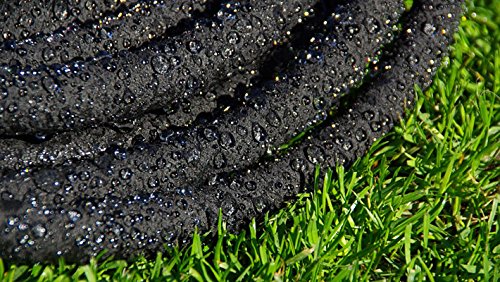
The best soaker hose for trees delivers slow, deep watering while saving water and protecting young roots.
A hot week can leave a tree’s soil dry even when the lawn still looks green. Hand watering takes time, and a spray nozzle often sends water away from the root zone. A good soaker hose solves that problem by releasing water slowly along the ground. I compared hose length, fittings, flexibility, water control, and ease of use to help you find the best soaker hose for trees, shrubs, beds, and young landscape plants.
Rocky Mountain Goods Soaker Hose

The Rocky Mountain Goods Soaker Hose is a sturdy choice for gardeners who want a simple hose for trees, flower beds, and shrubs. Its heavy-duty rubber body should handle normal outdoor use better than a thin, low-cost plastic hose. The 50-foot length works well around one large tree, several young trees, or a medium garden bed.
I also like the reinforced fittings because weak connectors can turn a watering job into a muddy mess. The included end cap lets you close the line or connect another hose when you need more reach. As with any soaker hose, I would start with low water pressure and check the soil after the first use. That small test helps prevent runoff and gives the tree a deeper drink.
Pros:
- Heavy-duty rubber construction for regular outdoor use
- 50-foot length suits trees, beds, and shrubs
- Reinforced fittings help reduce connector problems
- Included end cap supports future hose connections
- Slow watering can reduce waste compared with open spraying
- Easy design suits new gardeners
Cons:
- Rubber construction may feel heavier than a flat hose
- It may need time in the sun to relax after storage
- One 50-foot hose may not cover a large property alone
My Recommendation
I recommend this hose for homeowners who want a dependable, traditional design without a complex irrigation kit. It is especially useful for a mature tree with a broad root zone, a short row of shrubs, or a garden bed near an outdoor faucet. The hose can also grow with your yard because the end cap allows another section to be added later. For many users, this is a practical best soaker hose for trees when strength and simple setup matter most.
LINCHOC GARDEN 100-Foot Soaker Hose

The LINCHOC GARDEN 100-foot soaker hose targets large beds and wide landscapes. Its long length lets you water several trees from one connection point, which can save repeated trips with a short hose. The 5/8-inch size is a useful middle ground for many home watering systems, though actual flow will still depend on your faucet, pressure, and hose layout.
The flexible design is helpful when you need to curve the hose around trunks, planting islands, or winding borders. I would lay it in wide circles around the tree’s root area rather than press it against the trunk. A slow, even soak near the outer root zone is usually more useful than a wet spot right beside the bark. Before leaving this hose in place, check each section for puddles and adjust the pressure if water sprays instead of seeps.
Pros:
- 100-foot reach covers expansive landscapes
- 5/8-inch body fits common garden hose systems
- Flexible layout works around curved beds and tree groups
- Useful for several trees from one water source
- Can reduce the need to move a hose during watering
- Suitable for beds, borders, shrubs, and landscape rows
Cons:
- Long length may be more hose than a small yard needs
- A full line can be harder to move once filled with water
- Large layouts may need pressure testing for even coverage
My Recommendation
This model is best for a large yard, long planting bed, or group of trees spread across a broad area. I would choose it for gardeners who already have a useful outdoor faucet and want fewer hose moves. It is less appealing for a balcony or tiny bed, where extra length may create clutter. For expansive landscaping, this can be the best soaker hose for trees because it gives you room to build a single watering route.
ZGWDrip 10-Foot Tree Soaker Hose

The ZGWDrip 10-foot kit is made with individual trees in mind. Its compact size can circle a young tree or fit neatly around a shrub without leaving a large coil across the yard. The 1/2-inch hose format is easy to place in a small root zone, and the solid brass connectors add a reassuring touch at the points that often receive the most stress.
This design is a good match for targeted watering rather than broad lawn irrigation. Place the loop several inches away from the trunk, then widen the loop as the tree grows. The included irrigation parts can make setup easier for a new gardener, but I still recommend checking the ground by hand after watering. A damp surface does not always mean the deeper soil is wet, so use a small trowel or soil probe to confirm moisture below the mulch.
Pros:
- Compact 10-foot length suits one tree or shrub
- Designed for targeted tree watering
- Solid brass connectors offer a durable connection point
- Easy to arrange in a small circular layout
- Uses water near the intended root zone
- Good option for young trees and small planting areas
Cons:
- Short length will not cover large trees by itself
- Small kits may require extra parts for future expansion
- It may need repositioning as a tree’s root zone grows
My Recommendation
I would choose this hose for a homeowner caring for one young tree, patio tree, or small ornamental shrub. It is also a smart fit where neat appearance matters and a 50-foot hose would be excessive. The compact shape helps direct water without wasting hose around empty areas. If you need a focused best soaker hose for trees rather than a landscape-wide system, this ZGWDrip kit deserves close attention.
ZGWDrip 150-Foot Irrigation Kit

The ZGWDrip 150-foot kit is built for gardeners with many beds, long borders, or several trees that need a shared watering system. The generous length can reach across a large yard while the accessory kit helps with basic placement. A metal ground stake is useful because soaker hoses can shift after watering, mowing, or heavy rain.
This is more of a landscape irrigation solution than a single-tree hose. I would plan the route before connecting it and avoid sharp bends that can restrict flow. Long systems need careful pressure checks because the far end may receive less water than the section near the faucet. Start with one test cycle, compare the soil at both ends, and adjust the layout before using a timer or leaving the system unattended.
Pros:
- 150-foot length reaches large landscapes
- Useful for multiple trees, beds, and lawn borders
- Solid brass connectors add strength at key joints
- Metal ground stake helps hold the hose in place
- Accessory kit supports a more complete setup
- Can reduce hand watering across a large yard
Cons:
- Long hose may be difficult to store and move
- Far sections may need pressure and flow checks
- Setup takes more planning than a short tree hose
My Recommendation
This kit is best for property owners who want to water many trees or planting zones from one hose line. I would not buy it for one small tree, but it can be excellent for a new landscape with long borders. The included stake and accessories make it more adaptable than a basic hose. Among large systems, it may be the best soaker hose for trees when coverage and expansion matter more than compact storage.
Hourleey 100-Foot Flat Soaker Hose

The Hourleey flat soaker hose includes two 50-foot sections that link to form a 100-foot watering line. That split design gives you more control than one very long piece. You can use one section around a small bed or connect both when watering several trees. Its flat profile also stores neatly and can sit close to the soil under mulch.
The dual-layer design aims to balance flexibility with leak resistance. I like the linkable format for gardeners who change their layout from season to season. Flat hoses may need to be unrolled fully before they water evenly, so avoid tight loops and sharp folds. Once installed, keep the hose on level soil and cover it lightly with mulch if you want to protect it from sun and improve its appearance.
Pros:
- Two 50-foot sections offer flexible coverage
- 100-foot total length suits large beds
- Flat shape stores more easily than bulky round hose
- Linkable design adapts to changing garden layouts
- Dual-layer construction aims to limit leaks
- Can fit under a light layer of mulch
Cons:
- Flat hose may kink if stored in tight folds
- It should be laid out fully for more even flow
- Two connected sections add another joint to inspect
My Recommendation
I recommend the Hourleey for gardeners who want a long hose but do not always need the full length. It works well for tree rows, vegetable beds, and mixed borders where storage space is limited. The two-piece design is its main advantage because it gives you a smaller or larger watering path as needed. For flexible seasonal use, this is a strong candidate for the best soaker hose for trees.
Flat 50-Foot Soaker Hose

This 50-foot flat soaker hose offers a practical middle size for ordinary yards. It can reach around a mature tree, run along a garden bed, or serve a short row of shrubs without the extra weight of a 100- or 150-foot system. The quick-connect design should make setup and removal simple when you need to switch between watering areas.
The heavy-duty, leak-resistant design is useful for regular garden work, but placement still matters. Keep the hose flat and avoid dragging it over sharp stones or rough concrete. I would use a low-flow setting and watch the soil for the first several minutes. If you see standing water, reduce pressure or move the hose farther from the trunk so moisture spreads across more of the feeder-root area.
Pros:
- 50-foot size fits many home gardens
- Flat design is simple to store
- Quick-connect fitting supports easy setup
- Useful around trees, beds, lawns, and flowers
- Heavy-duty design suits repeated seasonal use
- Linkable format may support future expansion
Cons:
- Flat material can kink when handled carelessly
- One section may not cover a large landscape
- It may need anchoring in windy or sloped areas
My Recommendation
This hose is best for homeowners who need one versatile line for everyday watering. I would pick it for a small to medium yard with one or two trees and nearby flower beds. It offers a useful balance between reach, storage, and simple connection. If you want an affordable best soaker hose for trees that can also serve other garden areas, this 50-foot model is a sensible choice.
Flat 25-Foot Soaker Hose

The 25-foot flat soaker hose is the compact option in this group. It suits a small garden bed, one young tree, or a short line of flowers close to the faucet. A shorter hose is easier to place, easier to drain, and less likely to leave spare loops across a walkway.
Its quick-connect layout can help you move from one small area to another without much effort. The flat shape also takes little room in a shed or storage bin. I would keep the hose clear of sharp mulch, tools, and vehicle tires because even a tough garden hose can suffer damage from repeated crushing. For a small tree, place the hose in a loose circle around the outer root zone rather than directly against the trunk.
Pros:
- Compact 25-foot length suits small spaces
- Easy to move between nearby beds
- Flat profile saves storage room
- Quick-connect design makes setup simple
- Useful for young trees, flowers, and shrubs
- Less excess hose means less yard clutter
Cons:
- Limited reach for mature trees or large yards
- May require frequent repositioning
- Flat hose needs care to avoid folds and kinks
My Recommendation
I would choose this model for renters, patio gardeners, and homeowners with one small tree near a faucet. It is also useful as a spare hose for a new planting bed. The short reach keeps the setup tidy, but it will not replace a long landscape system. For close-range watering, this may be the best soaker hose for trees because it is easy to place and does not overwhelm a small yard.
Best For Comparison
| Best for | Why |
|---|---|
| One young tree or small shrub | The ZGWDrip 10-foot kit gives focused coverage and compact placement. |
| Large yards with many trees | The ZGWDrip 150-foot kit offers long reach and useful accessories. |
| Small to medium home gardens | The 50-foot flat hose balances reach, storage, and easy setup. |
How I Choose the Best Soaker Hose for Trees
A tree does not need a random splash of water at its trunk. Its active roots often spread outward beneath the canopy. For that reason, I look for a hose that can sit in a wide ring or gentle winding path across the root zone. The best soaker hose for trees should deliver water slowly enough to soak soil without creating a fast stream that runs down a slope.
I also consider the hose length. A 10-foot hose can work well for a young tree, while a mature tree may need a 25-, 50-, or 100-foot layout. More length is not always better. Long hoses take longer to place, need more storage space, and may show uneven flow if the water pressure is low.
Fittings matter, too. A leaking connector wastes water before it reaches the soil. Brass fittings often feel more solid, while reinforced plastic fittings can still work well when handled with care. I prefer a connection that tightens by hand, stays aligned, and does not require force that could damage the threads.
Finally, I consider storage. Flat hoses save space, but they can kink when folded too tightly. Round rubber hoses often feel more rugged, but they may take more room in a shed. Your yard, faucet, climate, and storage habits should guide the choice.
How to Use a Soaker Hose Around Trees
Start by checking the soil. Push a finger or small probe into the ground several inches from the trunk. If the soil feels cool and damp, wait. If it feels dry below the surface, a slow watering cycle may help. This simple check prevents the common mistake of watering on a fixed schedule when the tree does not need it.
Lay the hose in a broad ring around the tree. Do not wrap it tightly against the trunk. For a young tree, begin near the outer edge of the root ball and expand the ring as roots spread. For an established tree, place the hose beneath or near the outer canopy area, where many fine roots gather.
Turn the faucet on only part way. A soaker hose works best when water seeps from its openings rather than sprays or runs from the ends. Walk along the line and look for puddles, dry sections, or loose fittings. If the first section is much wetter than the last, lower the length, divide the zones, or check the water pressure.
Let the water soak slowly. Exact time depends on soil, weather, hose design, and tree size. Sandy soil drains fast, while clay soil absorbs water slowly and may need shorter cycles. After watering, check below the surface again. The goal is moist soil in the root zone, not a wet trunk or a flooded bed.
Mulch can help hold moisture. Keep mulch a few inches away from the trunk and avoid piling it against bark. A light mulch layer over the hose can reduce sun exposure and help the hose blend into the landscape. Do not bury the hose deep, since buried lines are harder to inspect and repair.
Soaker Hose Mistakes to Avoid
The first mistake is using full faucet pressure. High pressure may cause uneven watering, leaks, or end connections to pop loose. Begin slowly and increase the flow only when the hose needs it. A gentle start also makes it easier to spot problems before the area becomes muddy.
The second mistake is watering only at the trunk. Tree roots need room to breathe and spread. A hose pressed against bark can keep the trunk base too wet and may not reach the wider root area. Use a ring or a series of gentle curves instead.
The third mistake is leaving the hose in a tight coil. Kinks restrict flow and can cause some sections to receive far more water than others. Straighten flat hoses before use and keep round hoses in wide curves. If you store a hose for winter, drain it first and protect it from harsh weather.
The fourth mistake is assuming every part of a long hose waters equally. Long lines can lose pressure along the route. Test the soil at both ends during the first few cycles. If needed, divide the landscape into smaller zones or water one section at a time.
The last mistake is ignoring the weather. Rain, wind, heat, and soil type all affect water needs. A tree in a hot, exposed bed may need more attention than one in a cool, mulched area. I prefer a soil check over a rigid timer schedule.
Soaker Hose vs. Drip Irrigation for Trees
A soaker hose has tiny openings along its length and releases water across a broad line. It is easy to install and works well for rows, beds, and tree rings. It is often a good choice for people who want a simple system without many small parts.
Drip irrigation uses emitters or small outlets to send water to selected points. It can be very precise, especially in a landscape with plants that have different water needs. However, it may take more time to design, clean, and repair.
For one or two trees, a short soaker hose can be the easier option. For many trees with separate zones, a drip system may offer better control. The best soaker hose for trees is not always the most advanced product. It is the one that matches the space, pressure, soil, and care routine you can maintain.
How Much Water Do Trees Need?
Tree water needs vary by age, species, soil, weather, and recent rainfall. Young trees often need closer attention because their root systems are still small. Established trees may tolerate dry periods better, but newly planted or stressed trees still need careful monitoring.
Rather than rely on a single number, check the soil at several points. Water should move down into the root zone without creating runoff. If water sits on the surface, the soil may be compacted or the flow may be too high. Shorter cycles with a pause can help water move into heavy soil.
Newly planted trees need special care. Their original root ball can dry faster than the surrounding soil, especially during hot weather. A soaker hose can help, but position it so water reaches both the root ball and nearby soil. As the tree grows, widen the watering area.
Always follow local water rules during drought or restriction periods. A water-saving hose can reduce waste, but it does not remove the need to water responsibly. Repair leaks quickly, use rain when practical, and avoid watering during the hottest part of the day when evaporation is high.
Soaker Hose Care and Storage Tips
Flush a new hose briefly before placing it around a tree. This can remove loose material from the inside and help you see how the water moves. Inspect the end cap and connector before each season. Small leaks are easier to fix before the hose is covered with mulch.
Do not drag a filled hose across rough ground. Stones, concrete edges, and garden tools can damage the outer layer. Lift and move it when possible. If you need to cross a walkway, place the hose where it will not create a trip hazard.
At the end of the season, turn off the faucet and drain the hose fully. Store it out of freezing weather if the manufacturer recommends doing so. Water left inside can expand during a freeze and damage fittings or weak spots.
Keep the hose away from sharp chemicals, fuel, and hot surfaces. A shed or shaded storage area is better than a sunny driveway. Good storage costs little and can extend the useful life of the hose.
FAQs Of best soaker hose for trees
Is a soaker hose good for watering trees?
Yes. A soaker hose can water the soil slowly across a broad root area. Place it away from the trunk and check the soil to prevent overwatering.
What length soaker hose is best for trees?
A 10- or 25-foot hose often suits one young tree. A 50-foot hose works for larger trees and nearby beds, while 100 feet or more suits several trees or a large landscape.
Should I put a soaker hose around the tree trunk?
No. Keep the hose several inches or more away from the trunk. Use a wide ring near the outer root zone so water reaches the soil without keeping the bark wet.
Can I leave a soaker hose on all night?
It is safer to test the hose first and use a timer when possible. Soil type and water pressure vary, so an overnight cycle may cause runoff or overly wet soil.
Are flat soaker hoses better than round hoses?
Neither style is always better. Flat hoses store easily and work well in beds, while round rubber hoses may feel more durable. Choose the style that fits your layout and storage space.
Final Verdict: Which Should You Buy?
For most large yards, I favor the Rocky Mountain Goods hose for its sturdy rubber body, useful 50-foot length, and simple design. For one young tree, the compact ZGWDrip 10-foot kit is more focused.
The best soaker hose for trees is the one that matches your root zone, water pressure, and yard size. Check soil moisture, water slowly, and store the hose well for lasting value.
