


The best garden hose to bury underground is a durable PVC or polyethylene line rated for outdoor, below-ground use.
Have you ever dragged a long hose across the lawn, only to trip over it, mow through it, or fight a tangled coil? Burying a water line can make watering beds, filling ponds, and reaching a far spigot much easier. However, not every flexible hose belongs underground. A hose may work well above ground but crack, flatten, or leak when soil, roots, frost, and rocks press against it. I reviewed these seven options for flexibility, fittings, kink control, water flow, and practical use. I also explain which products suit buried service and which work better as short connections or temporary lines.
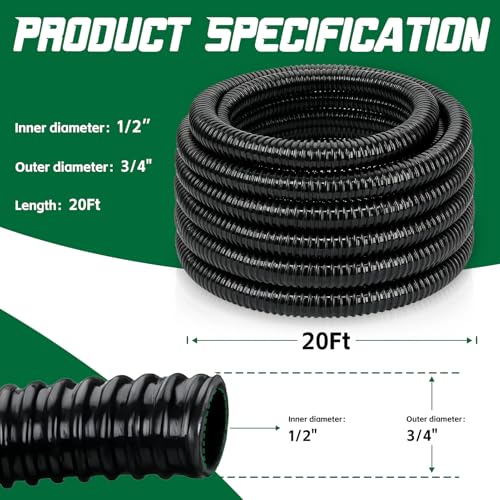
Pond Tubing 1/2-Inch x 20 Feet

This 20-foot black PVC pond tube is made for pumps, fountains, and waterfall systems. Its 1/2-inch size fits smaller water features and many compact pump outlets. The black color helps it blend into dark soil, mulch, rocks, and pond edges. I like this type of tubing when a project needs a neat, short run rather than a full garden hose.
The reinforced wall helps the tube resist kinks during setup. The package also includes four clamps, which can make basic connections faster and more secure. Still, I would treat it as pond or irrigation tubing first, not as a drinking-water hose. For underground use, place it inside a smooth trench and protect it from sharp stones, heavy roots, and deep frost.
Pros:
- Flexible PVC suits tight pond and garden layouts
- Reinforced design helps reduce kinks
- Black finish blends with soil and pond features
- Four included clamps support quick connections
- Useful for pumps, fountains, and waterfalls
- Short length works well for compact projects
Cons:
- Twenty feet may not cover a large yard
- Half-inch diameter can limit flow on long runs
- Not the best choice for normal outdoor drinking water
My Recommendation
I recommend this tubing for a small pond, fountain, pump, or short buried connection near a water feature. It can also work as a protected line between a rain barrel and a nearby garden zone. Its small diameter keeps it easy to hide, but it may feel restrictive if you need strong flow at the end of a long bed. If you want the best garden hose to bury underground for a compact pond project, this is a practical low-cost option when installed with proper protection.
Lefree 125-Foot Stainless Steel Garden Hose
 stainless steel garden hose” />
The Lefree stainless steel hose gives you a very long 125-foot reach. Its metal outer cover is designed to resist scuffs, sun exposure, and many common outdoor scrapes. That makes it appealing for large yards, garden paths, and work areas far from the faucet. The long length also reduces the need to join several short hoses.
However, a stainless steel garden hose is not automatically a buried water line. The metal skin may handle outdoor wear, but underground soil creates constant pressure and moisture. I would use this hose above ground, in a sleeve, or inside a protected service trench only after confirming its below-ground rating. It is especially useful as a surface supply hose that connects to a buried, approved irrigation line.
Pros:
- Extra-long 125-foot reach covers wide yards
- Metal outer layer helps resist surface scuffs
- Less need for multiple hose connections
- Useful along garden paths and large lawns
- Easy to spot against grass and soil
- Good option for regular surface watering
Cons:
- Stainless construction may add weight
- Metal can become hot in strong sun
- Should not be buried without clear manufacturer approval
My Recommendation
This Lefree hose is best for homeowners who need maximum reach above ground. I would choose it for watering a large garden, washing equipment, or connecting a distant tap while keeping the hose visible and accessible. I would not call it the best garden hose to bury underground unless the product instructions specifically approve burial. For a permanent buried system, use it as a short surface link to a rated irrigation pipe, and protect every fitting from soil movement.
LINCHOC GARDEN 100-Foot Soaker Hose

The LINCHOC GARDEN soaker hose is built to release water along its length. Its 5/8-inch size offers a useful balance between reach and flow for beds, rows, and broad planting areas. At 100 feet, it can cover a large landscape without many joins. This design places water close to plant roots instead of spraying leaves and paths.
A soaker hose can sit under mulch, but permanent burial needs care. If you bury it too deeply, roots and compacted soil may reduce its output. I prefer laying it on prepared soil, testing the flow, then covering it with a light layer of mulch. It is not a good pick for a pressurized line running under a driveway or for a connection that must remain dry inside.
Pros:
- Long 100-foot length suits wide planting beds
- Soaks soil near roots with less surface spray
- Five-eighths-inch size supports useful garden flow
- Can help reduce water waste in planted areas
- Works well under light mulch
- Simple layout for rows and borders
Cons:
- Perforations may clog in dirty water
- Not suitable for vehicle paths or deep trenches
- Water output may vary along a very long run
My Recommendation
Choose this hose for vegetable beds, flower borders, shrubs, and gentle root watering. It is the right tool when your goal is slow moisture, not a powerful stream at the far end. As a result, it can be a smart seasonal alternative to sprinklers. For the best garden hose to bury underground in a shallow, mulched bed, this soaker hose is worth considering, but I would not use it as a deep utility line or under hard surfaces.
Wocloer 1-1/2-Inch Pond Tubing
The Wocloer pond tube uses a large 1-1/2-inch diameter for high-volume water movement. Its ten-foot length is easy to manage around pumps, filters, waterfalls, and pond returns. The black PVC body stays visually quiet beside rocks and dark pond liners. The four included clamps add value when you need to secure the ends quickly.
This is a very different product from a normal garden hose. Its wide opening favors flow, not portability or a spray nozzle. I would use it for a pond circulation system or a short gravity-fed drain, then place it in a protective trench if it must pass underground. Measure every pump outlet and fitting first, because a large tube needs matching connectors and enough room for a smooth bend.
Pros:
- Large diameter supports high water volume
- Flexible PVC handles curved pond layouts
- Reinforced wall helps limit collapse and kinks
- Black finish blends with pond surroundings
- Four clamps are included for basic installation
- Useful for pumps, filters, and waterfalls
Cons:
- Ten-foot length is short for a large property
- Large fittings may cost more to replace
- Too large and specialized for normal lawn watering
My Recommendation
I recommend Wocloer tubing for pond owners who need a short, wide connection with strong flow. It is especially useful between a pump and waterfall, where a narrow hose could choke output. It is not the best garden hose to bury underground for a hose bib or sprinkler zone because it lacks the familiar garden-hose format. Still, inside a protected pond trench, it can offer excellent value for moving large amounts of water.
RAINPOINT 100-Foot Non-Expanding Hose

The RAINPOINT hose offers a 100-foot reach with a non-expanding design. Its TPE inner tube and 800D Oxford fabric cover aim to balance flexibility, low weight, and outdoor wear resistance. The listed 450 PSI burst rating provides a strong safety margin against sudden pressure spikes, although burst pressure is not the same as recommended working pressure. Three-quarter-inch fittings also match many common outdoor hose connections.
This hose may be easier to pull than a heavy rubber line, especially across a large yard. Its anti-kink build can make setup less frustrating around beds and corners. Even so, I would not bury the fabric cover directly in soil unless the maker clearly rates it for underground installation. Use it above ground, inside conduit, or as a removable connection to a true buried water line.
Pros:
- Long 100-foot reach helps cover large yards
- Non-expanding design stays steady during use
- TPE inner tube supports flexible handling
- 800D fabric cover helps resist outdoor wear
- Three-quarter-inch fittings suit common connections
- Listed 450 PSI burst rating adds confidence
Cons:
- Fabric outer cover can hold soil and moisture
- Not confirmed as a permanent buried hose
- Large length needs careful storage after use
My Recommendation
This RAINPOINT model suits users who need a lightweight, long hose for surface watering, camping, cleaning, or yard work. I like it for temporary routes because it avoids the heavy feel of many thick rubber hoses. For the best garden hose to bury underground, it becomes a secondary choice unless you run it through a suitable protective sleeve. Use a rated underground pipe for the permanent section, then connect this hose where you need easy removal.
13-Foot Heavy-Duty Garden Hose

This compact 13-foot garden hose is made for short connections. Its heavy-duty, all-season design can bridge the gap between a spigot and a reel, timer, sprinkler, or raised bed. The short length also creates less loop and less clutter than a 50- or 100-foot hose. That matters in tight patios, side yards, and small utility areas.
A short hose is easier to protect in a shallow sleeve or service channel. It may work well between an exposed faucet and a buried irrigation line, where you need a flexible final connection. Still, the listing does not by itself prove permanent underground service. Check the fittings, drain the hose before freezing weather, and never place it under a driveway without a proper conduit.
Pros:
- Compact 13-foot length reduces clutter
- Useful as a connector for reels and timers
- Heavy-duty build suits regular outdoor tasks
- All-season design supports varied weather use
- Kink-resistant shape helps water flow
- Easier to store and protect than a long hose
Cons:
- Too short for most large gardens
- May need an adapter for specialty fittings
- Not clearly rated for permanent burial
My Recommendation
I recommend this hose for a short underground transition or a protected connection near a wall, shed, or raised bed. It is simple, tidy, and less likely to form a messy coil. It can be the best garden hose to bury underground for a very short run when placed inside conduit and kept accessible at both ends. For a long buried route, however, choose a purpose-built irrigation line instead.
Watato 50-Foot Non-Expandable Hose

The Watato garden hose provides a middle ground between a short connector and a very long supply hose. Its 50-foot length can reach many flower beds, small lawns, campers, and backyard work areas. The non-expandable build keeps the hose at a steady length, while the flexible body helps it move around corners. Its 3/4-inch fittings should fit many common outdoor faucets and accessories.
Leak resistance and kink control are important when a hose must cross a busy yard. This model is easier to inspect than a buried line because you can see the full route and reach each connection. If you want to place it underground, use a smooth conduit and leave access points at both ends. Soil contact, frost, and trapped water can shorten the life of any hose not designed for burial.
Pros:
- Fifty-foot length fits many average yards
- Non-expandable body keeps a steady reach
- Flexible design helps with corners and beds
- Kink-free construction supports steady flow
- Three-quarter-inch fittings suit common faucets
- Useful for gardens, lawns, campers, and yards
Cons:
- May be heavy when filled and fully extended
- Should not sit under soil without protection
- Fifty feet may not reach distant garden zones
My Recommendation
Watato is a sensible choice for a normal backyard hose that may later connect to a buried irrigation point. Its length is useful without becoming hard to store, and its standard fitting size keeps setup simple. I would choose it for seasonal surface use or a sleeved transition, not as a direct buried water main. If you need the best garden hose to bury underground on a budget, this product can serve the accessible ends of the system while approved tubing handles the hidden route.
How to Choose the Best Garden Hose to Bury Underground
Choosing a buried water line starts with one important fact: most ordinary garden hoses are not designed for permanent underground service. A garden hose must handle bending and water pressure, but a buried line must also resist soil load, rocks, roots, moisture, frost, and accidental digging. Before you buy, read the product instructions and look for clear language about underground use. If the maker does not approve burial, use conduit or select irrigation tubing made for that job.
Check the Hose Material
Flexible PVC and polyethylene are common choices for buried irrigation work. They can resist moisture and remain flexible when installed correctly. Rubber hoses can be tough above ground, but they may be too costly or heavy for a full underground run. Fabric-covered hoses are convenient outdoors, yet their woven cover may absorb water and soil when buried. The best garden hose to bury underground should have a material and rating that match the location.
Match the Diameter to Water Demand
Diameter affects flow. A 1/2-inch tube may work for a small fountain or short drip zone. A 5/8-inch line suits many garden tasks. A 3/4-inch line can reduce pressure loss on a longer route. Large pond tubing, such as the 1-1/2-inch Wocloer option, moves much more water but needs matching fittings. Do not choose a wide hose only because it looks stronger. Make sure your pump, faucet, valves, and end device can use it.
Measure Length Before You Dig
Measure the route from the water source to the final outlet. Add a little extra length for bends and connection slack. Avoid sharp turns because they can pinch the hose and reduce flow. A long buried route may need a valve box, drain point, or more than one zone. I also mark the route with a simple sketch and photos before covering it. That small step can save a lot of trouble when planting, fencing, or digging later.
Consider Frost and Drainage
In cold areas, trapped water can freeze and expand. That pressure can split a hose, fitting, or valve. Install the line below the local frost depth when required, or design it so you can drain it fully before winter. A slight slope helps water move toward a drain point. Never assume that a flexible hose is freeze-proof just because it says all-season. Frost rules vary by region, so local building and irrigation guidance matters.
Protect the Hose From Soil and Tools
Prepare a smooth trench and remove sharp rocks. A layer of clean sand can cushion the line. You can also run the hose inside larger conduit, especially where it crosses a walkway or sits near future digging. Use warning tape above the buried route, not directly against the hose. Keep joints in accessible boxes when possible. A hidden connection may leak for weeks before you notice a wet patch or a rising water bill.
Review Fittings and Pressure
Fittings often fail before the hose. Use the correct size, secure clamps, and seal threaded joints with suitable tape or sealant. Do not confuse a burst-pressure number with a safe working-pressure number. Start with the water supply turned low, inspect every joint, and then raise pressure slowly. A pressure regulator can protect drip systems and delicate fittings. The best garden hose to bury underground is only as reliable as the connections on each end.
Think About Water Safety
Do not use pond tubing or an unknown garden hose for drinking water unless it carries a clear potable-water approval. Water that sits in a warm buried line may also taste stale. For outdoor drinking taps, use a product rated for potable water and follow local plumbing rules. Keep irrigation water separate from household plumbing where backflow could occur. A certified backflow preventer may be required by local code.
Best Uses for These Reviewed Hoses
These products do not serve the same purpose. The small 1/2-inch pond tube fits compact pumps and water features. The 1-1/2-inch Wocloer tube handles large pond flow. The LINCHOC soaker hose spreads water along beds, while the Lefree, RAINPOINT, Watato, and 13-foot hose work mainly as surface or connection hoses. That difference matters more than a flashy material claim.
| Best for | Why |
|---|---|
| Small ponds and fountains | The 1/2-inch pond tube is compact, flexible, and includes clamps for pump connections. |
| Large pond water movement | The Wocloer 1-1/2-inch tube supports high flow between pumps, filters, and waterfalls. |
| Garden bed watering | The LINCHOC 100-foot soaker hose delivers slow moisture along rows and borders. |
Installation Tips for a Buried Garden Hose
First, shut off the water and test the route above ground. Connect the hose, turn on the water, and inspect for leaks. This step is much easier before you fill a trench. Lay the line in a wide, gentle curve rather than forcing a tight corner. Then drain it and begin the installation.
Dig a clean trench suited to your climate and local rules. Remove stones, glass, roots, and scrap metal. Add cushioning material if the soil is rough. Place the line without stretching it tight. Flexible material can shift as temperatures change, so a little slack is helpful.
Cover the line with soft soil first. Press gently by hand so you do not crush the hose. Add warning tape above the route, then finish the backfill. Do not drive stakes, edging, or fence posts through the marked path. I suggest taking photos with a clear landmark in view. Those photos become a simple map for future repairs.
After installation, flush the line before connecting a sprinkler or drinking-water outlet. Check flow at the far end. Watch the ground for wet spots during the first few watering cycles. If pressure drops sharply, look for a kink, blocked filter, loose fitting, or undersized line. Small problems are much easier to fix during the first week than after a season underground.
Common Mistakes to Avoid
The most common mistake is burying a hose because it feels thick. Thickness alone does not prove that the wall can handle soil pressure or frost. Another mistake is placing connectors in the middle of a sealed trench. Keep joins above ground or inside accessible valve boxes.
Some people also bury soaker hose too deeply. Soil can block the tiny outlets and make watering uneven. Others use a narrow line for a long sprinkler run, then blame the sprinkler when the flow is weak. Plan the water demand first. A low-flow drip zone needs less water than a large spray head.
Finally, avoid burying a hose beneath concrete, asphalt, or a driveway without a protective sleeve. Repairs under hard surfaces are expensive. Install a larger conduit before paving, and leave a pull cord inside it for future changes. This simple habit can turn a difficult repair into a quick hose replacement.
FAQs Of best garden hose to bury underground
Can I bury a regular garden hose underground?
You can place some hoses underground for a short, protected route, but most regular garden hoses are not rated for permanent burial. Soil, frost, rocks, and trapped water may cause early failure. Use approved irrigation tubing or place the hose inside protective conduit after checking the product instructions.
What material is best for an underground garden water line?
Polyethylene and flexible PVC irrigation tubing are common choices for buried outdoor water lines. The correct material depends on pressure, temperature, local code, and the type of water. Choose a product clearly rated for underground service rather than relying on appearance alone.
How deep should I bury a garden hose?
Depth depends on local frost conditions and the risk of digging. In warm areas, a protected shallow trench may work for irrigation. In cold areas, install below the local frost line or make the system drainable. Always follow local rules and protect crossings with conduit.
Can I bury a soaker hose?
You can place a soaker hose under light mulch or shallow soil for garden beds. Deep burial may block its pores and create uneven watering. Do not use it under a driveway, walkway, or heavy soil unless the maker specifically approves that use.
Is a stainless steel hose good for underground use?
A stainless steel cover can resist many surface scrapes, but it does not automatically make a hose suitable for burial. Confirm the manufacturer’s underground rating. If no rating exists, use the hose above ground or inside a protective sleeve.
Final Verdict: Which Should You Buy?
For a small pond, the 1/2-inch PVC tube is my top pick. For garden beds, choose the LINCHOC soaker hose. For a true permanent buried line, use approved irrigation tubing rather than a standard hose.
The best garden hose to bury underground is the one with the right rating, size, and protection. Measure first, protect fittings, plan for frost, and test before backfilling.
