


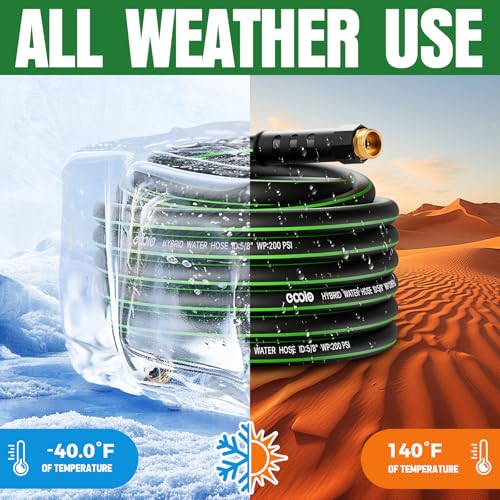
The best garden hose for winter combines cold-weather flexibility, strong fittings, easy storage, and reliable leak protection.
When frost arrives, a weak hose can turn stiff, split, or trap water near the faucet. I know how frustrating it feels to find a cracked hose when you need to rinse salt from a car or fill a birdbath. The right winter garden hose stays flexible in cold air and handles normal outdoor jobs with less fuss. In this guide, I compare eight popular hoses by material, length, fittings, flexibility, and winter storage needs. I also explain what matters most before you buy.
Heavy Duty 50-Foot Hybrid Garden Hose

This 50-foot hybrid hose is built for shoppers who want a solid everyday line without the bulk of a rubber hose. Its non-expandable design keeps the length steady while you water, wash, or rinse outdoor tools. The hybrid material should feel lighter and easier to guide than a thick traditional rubber hose. Its stated kink-resistant build also helps reduce those sharp bends that stop water flow.
The male-to-female fittings support a simple connection at the spigot and nozzle. That matters in winter because loose connections can leak, freeze, and place extra stress on the hose end. I like the 50-foot length for a small or medium yard because it offers reach without leaving a huge coil on the ground. Still, no hose should remain full of water during a hard freeze, even if the outer jacket handles cold weather well.
Pros:
- 50-foot length suits many home yards
- Non-expandable design gives steady reach
- Hybrid body balances weight and strength
- Kink resistance helps maintain water flow
- Leakproof-style fittings support cleaner connections
- Useful for watering, washing, and light winter cleanup
Cons:
- It still needs draining before freezing weather
- It may feel less soft than a lightweight fabric hose
- Fittings may need hand-tightening during regular use
My Recommendation
I recommend this hose for homeowners who want a practical 50-foot option for mixed outdoor work. It fits a buyer who values stable length, a strong feel, and fewer kinks over ultra-light weight. It can be a good choice for a cold-climate yard when you disconnect, drain, and store it correctly after use. As a contender for the best garden hose for winter, it offers a useful mix of reach and daily durability at a practical size.
Fatazoii 50-Foot Hot and Cold Rubber Hose

The Fatazoii hose stands out for its wide temperature range, listed from -50°F to 190°F. That range makes it appealing for households that need a hose in both cold winters and hot summer sun. The 5/8-inch inside diameter is a common garden-hose size, so it should provide a useful balance between water flow and manageable weight. Its rubber construction also suggests a sturdy feel for chores that are harder on thin vinyl hoses.
At 50 feet, this hose can cover a patio, driveway, garden bed, or front walkway with fewer moves. The hot-and-cold rating is helpful, but I would not treat it as permission to leave water trapped inside during a freeze. Water expands as it turns to ice, and that pressure can damage many hose materials or fittings. Drain it fully, remove it from the tap, and keep it in a sheltered place before temperatures fall below freezing.
Pros:
- Wide listed operating temperature range
- Rubber body feels suited to demanding outdoor work
- 5/8-inch size supports useful water flow
- 50-foot length covers common residential spaces
- Works for both hot and cold water tasks
- Good fit for buyers who prefer a traditional hose feel
Cons:
- Rubber hoses can weigh more than hybrid models
- It may be harder to coil in very cold air
- Temperature ratings do not replace winter draining
My Recommendation
This hose is best for users who want a robust rubber-style hose and a broad temperature rating. It makes sense for a driveway, workshop, large patio, or home where the hose sees frequent use. I would choose it when toughness matters more than carrying weight. For shoppers seeking the best garden hose for winter in a very cold area, this model is worth a close look, provided proper storage remains part of the plan.
Flexzilla 50-Foot All-Weather Garden Hose
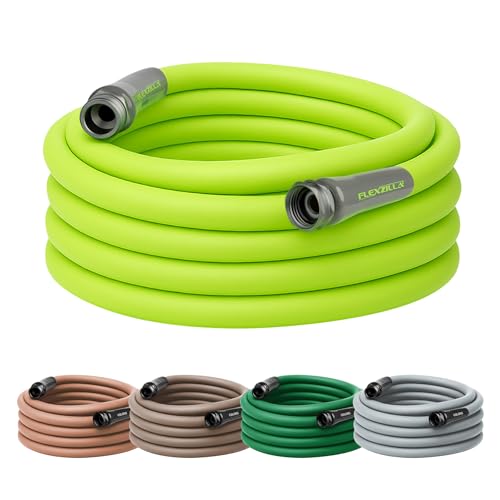
The Flexzilla 50-foot hose is known for a lightweight, flexible design that suits everyday outdoor jobs. Its all-weather positioning makes it attractive for buyers who do not want a stiff hose in cool weather. The 5/8-inch size is large enough for common sprinklers, spray nozzles, and wash tools. Leak-free connections are another useful detail because a poor washer or fitting can waste water and create a wet, icy spot near the tap.
I see this hose as a strong choice for people who move their hose often. A lighter body is easier to pull around shrubs, steps, and parked cars, and it can reduce arm strain during longer jobs. Flexibility helps with coiling, although cold temperatures can still make any hose less supple. I would drain it after each winter use and avoid dragging it over sharp edges, since even a durable outer layer can suffer cuts.
Pros:
- Lightweight feel makes it easy to carry
- Flexible body helps with coiling and routing
- 50-foot length works for most small and medium yards
- 5/8-inch diameter supports common watering tools
- All-weather design suits year-round household use
- Leak-free connections help limit drips at the ends
Cons:
- Lightweight construction may not feel as rugged as rubber
- It can still freeze if water remains inside
- Some users may want a longer hose for large lots
My Recommendation
I recommend this model for gardeners, older adults, and anyone who dislikes wrestling with a heavy hose. It is especially useful around raised beds, patios, and narrow paths where easy movement matters. Buyers who want the best garden hose for winter but also need a hose for spring and summer will appreciate its all-season design. Its value is strongest for users who store it well and want simple handling rather than maximum industrial strength.
BLENDLITE 100-Foot Hot and Cold Hose

The BLENDLITE offers 100 feet of reach, which is the main reason to consider it. A long hose can save time on a broad lawn, large driveway, or garden that sits far from the outdoor faucet. Its 5/8-inch diameter is a familiar size for general watering and cleaning. The listed -50°F to 190°F range also gives it a strong cold-weather selling point.
Long hoses bring both freedom and extra work. They can reach distant areas without joining two hoses, but they also hold more water and take longer to drain. I would lay this hose on a gentle slope after use, lift sections to remove trapped water, and coil it in a warm, dry storage spot. The red color can improve visibility on grass or snow, which may help prevent trips and accidental mower damage.
Pros:
- 100-foot reach covers large properties
- Hot-and-cold rating suits changing seasons
- 5/8-inch diameter supports everyday water flow
- Bright red color improves visibility outdoors
- Reduces the need to connect multiple hoses
- Useful for large lawns, driveways, and gardens
Cons:
- 100 feet can be heavy when full of water
- Long length takes more effort to drain and coil
- It needs generous storage space in winter
My Recommendation
This hose is best for people with large yards, long driveways, or faucets placed far from the work area. I would not pick it for a small balcony or compact garden because the extra length can become a storage burden. If you need the best garden hose for winter with maximum reach, the BLENDLITE is a useful option among these models. Its value depends on whether you truly need 100 feet and can store it indoors or under cover.
PLYPLYE 25-Foot Ultra-Light Garden Hose

The PLYPLYE is a compact 25-foot hose made for quick jobs close to the faucet. Its ultra-light design can be a real comfort when you only need to rinse a porch, water container plants, or wash a small vehicle. A shorter hose also creates less drag and is easier to coil after use. The gray finish looks neat and may hide light dust better than brighter colors.
This hose makes the most sense when you match its length to your space. A short hose will not cover a large yard, but it will not become a tangled heap beside a small patio either. For winter, a short length is easier to empty fully because less water remains in the tube. I would still disconnect both ends, drain it, and keep it away from direct snow, ice, and sharp frozen surfaces.
Pros:
- 25-foot length is easy to manage
- Ultra-light design reduces carrying strain
- Quick to coil and store after use
- Good for patios, balconies, and small yards
- Less internal water makes draining simpler
- Gray color gives it a clean, low-key look
Cons:
- Short length limits reach
- May not suit large lawns or long driveways
- Lightweight construction may need more careful handling
My Recommendation
I recommend the PLYPLYE for apartment patios, townhomes, small gardens, and light-duty users. It is also a smart pick for anyone who values easy storage more than long reach. It may not be the best garden hose for winter on a large property, but it can be the best fit for a small space where a 50-foot hose feels excessive. Its compact size offers good value when your outdoor jobs stay close to the tap.
CXEZSIK 50-Foot Lightweight Garden Hose

The CXEZSIK is a 50-foot, non-expanding hose that focuses on low weight and simple handling. Its no-knot positioning should appeal to people tired of stopping to untangle a hose before each use. The black finish gives it a simple look, while the leak-proof design aims to keep water at the nozzle instead of around the connections. A fixed length also makes it more predictable than an expanding hose.
I like the balance this type of hose offers for routine yard work. Fifty feet is long enough for many homes, but it is not as demanding to coil as a 100-foot model. Non-expanding hoses also avoid the repeated fill-and-shrink cycle that some users find inconvenient. In a winter climate, I would keep the hose off frozen ground and remove all water before storage, since “leak-proof” does not mean freeze-proof.
Pros:
- 50-foot length suits common household tasks
- Lightweight body is easier to pull and lift
- Non-expanding design provides steady dimensions
- No-knot focus helps reduce frustrating tangles
- Leak-proof design supports cleaner hose connections
- Black finish gives a discreet outdoor appearance
Cons:
- Black material may become hot in strong sun
- It still needs careful winter draining
- Lightweight hoses may not suit rough commercial use
My Recommendation
The CXEZSIK is best for homeowners who want a straightforward hose with moderate reach and easy handling. It works well for watering beds, rinsing outdoor furniture, and washing small vehicles. If tangles annoy you and you want the best garden hose for winter without carrying a heavy rubber model, this hose deserves consideration. It offers a sensible middle ground for normal home use, especially when stored in a shed or garage during freezes.
Flexzilla 100-Foot All-Weather Garden Hose

This 100-foot Flexzilla model combines long reach with the brand’s lightweight, flexible hose style. It is designed for users who need to cross a broad lawn or reach around a home without adding a second hose. The 5/8-inch diameter fits many common outdoor watering tools. Its all-weather design also makes it suitable for buyers who want one hose for several seasons.
The main benefit is convenience: one long hose can cover distant beds, gardens, and driveways in one run. The trade-off is weight, especially after the tube fills with water. I suggest using a hose reel or wide coil, because tight bends can stress any long hose. Before winter storage, empty it in sections and keep the coil protected from ice, snow, and sharp edges.
Pros:
- 100-foot length offers excellent reach
- Lightweight feel compared with many long rubber hoses
- Flexible body is easier to route around obstacles
- 5/8-inch size supports common watering equipment
- All-weather design fits year-round outdoor use
- Leak-free connections help reduce drips at the tap
Cons:
- Long length can be tiring to move when full
- Requires more space for neat storage
- May be too much hose for a small property
My Recommendation
I recommend this hose for large lots and users who want long reach without the feel of a very heavy rubber line. It is a good match for gardeners with several beds or a faucet at one side of the property. It may be the best garden hose for winter for someone who needs 100 feet and values flexible handling. Just remember that storage quality matters more as hose length increases.
SPECILITE 50-Foot Hot and Cold Hose

The SPECILITE is another 50-foot hose designed for hot and cold water use. Its listed range of -50°F to 190°F makes it appealing for people who face sharp seasonal changes. The 5/8-inch size suits normal garden tasks, while the blue color makes the hose easy to spot on a lawn or driveway. A 50-foot length also avoids the extra storage burden of a 100-foot hose.
This model may fit buyers who want a traditional home hose with a clear temperature-focused feature. I would use it for watering, rinsing, vehicle care, and cleaning outdoor surfaces. The temperature range describes the hose material’s intended conditions, not the safety of leaving pressurized water inside during a freeze. Disconnecting the hose from the spigot remains one of the most important winter steps.
Pros:
- Wide listed hot and cold temperature range
- 50-foot length fits many residential yards
- 5/8-inch diameter works with common accessories
- Blue color improves visibility outdoors
- Suitable for watering and general cleaning tasks
- Shorter than a 100-foot hose and easier to store
Cons:
- Temperature rating does not prevent ice damage inside
- It may feel heavier than an ultra-light hose
- Users with large yards may need more length
My Recommendation
The SPECILITE is best for homeowners who want a medium-length hose with a broad stated temperature range. It suits a standard yard, driveway, or patio where 50 feet is enough. For shoppers comparing the best garden hose for winter, this model offers a clear cold-weather feature without the bulk of a 100-foot line. Its overall value is strongest when you need one dependable hose for both hot summer days and cold-season chores.
What Makes a Garden Hose Good for Winter?
Winter hose shopping requires more than looking for the words “all-weather.” A hose can survive cold air yet fail when water freezes inside it. I look at the full system: tube material, fittings, flexibility, length, storage, and the user’s local climate.
Material: Rubber and hybrid hoses often feel stronger than basic vinyl. Flexible polymer hoses can be easier to carry and coil. The best choice depends on whether you value ruggedness or low weight.
Temperature rating: A listed temperature range can show that the material is made for broad conditions. It does not mean the hose can stay connected with water inside during a freeze. Ice expands, so trapped water can damage the tube, washers, and faucet connection.
Fittings: Brass, aluminum, and reinforced polymer fittings each have advantages. A secure fitting helps prevent leaks, but the washer inside the connection matters just as much. I check that the hose has a snug end and that replacement washers are easy to find.
Flexibility: Cold weather makes many materials less flexible. A hose that already feels stiff in mild weather may become awkward when temperatures drop. Flexible construction helps, but I still avoid sharp folds and tight knots.
Length: Buy only the length you need. A 25-foot hose is easy to drain and store. A 50-foot hose offers a useful balance for many homes. A 100-foot hose gives excellent reach but needs more space and more care.
Diameter: Most home garden hoses use a 5/8-inch inside diameter. This size gives useful flow for watering and washing. Larger diameters may move more water, but they also add weight. Smaller diameters can be easier to carry but may deliver less flow.
How to Protect a Garden Hose in Freezing Weather
Even the best garden hose for winter needs proper care. The most important step is to remove water before a hard freeze. Turn off the faucet, detach the hose, and hold one end lower than the other. Let gravity drain the tube.
Next, lift the hose in sections. Walk along its length and raise each loop so trapped water can move toward the open end. Do not yank the hose or bend it into tight corners. A gentle coil helps protect the inner tube and outer jacket.
Store the hose in a garage, shed, basement, or other covered space. Keep it away from direct sun, sharp tools, rodents, and chemicals. Do not leave it under a snow pile. Snow can hide damage, and repeated freeze-thaw cycles can make the hose stiff and brittle.
Disconnect the hose from the outdoor faucet before freezing weather. In many homes, the faucet connects to a pipe inside the wall. Water left in that pipe can freeze and cause a costly leak. If your home has a frost-free sillcock, follow the manufacturer’s instructions and still remove attached hoses before winter.
A hose reel can help, but use it correctly. Wind the hose in wide loops without crushing it. Do not force a cold, rigid hose onto a very small reel. If the hose feels frozen, let it thaw naturally in a warm place. Bending it while frozen can cause cracks.
Rubber vs. Hybrid vs. Lightweight Polymer Hoses
Rubber hoses have a long history because they can handle regular use and rough surfaces. They often feel heavy, especially when filled with water. That weight can be an advantage when you want a hose that stays in place, but it can tire your arms during long jobs.
Hybrid hoses combine materials to balance strength and weight. Many feel smoother than rubber while offering more toughness than thin vinyl. They can be a good middle choice for a homeowner who wants winter-ready performance without a bulky coil.
Lightweight polymer hoses are easy to carry and store. They work well for patios, small gardens, and users with limited lifting strength. Their light build may not suit sharp gravel, repeated dragging, or heavy commercial work. I would match this type with a gentle storage routine.
Expanding hoses are compact when empty, but they need careful use. They fill and grow under water pressure, then shrink after the water leaves. They can be convenient, yet they are not always the first type I choose for winter. A non-expanding hose has a steady shape and is often easier to drain in a controlled way.
How I Compare Winter Garden Hoses
I compare hoses by practical use, not only by a product label. First, I consider the stated material and temperature range. Then I look at how the length affects weight, storage, and drainage.
I also check the connection design. A hose with a good tube can still disappoint if the ends drip. A proper washer, strong crimp, and secure fitting all help. I prefer products that make sense for normal home tasks without promising impossible freeze protection.
Finally, I consider the buyer’s property. Someone with a small patio needs a different hose from someone with a large garden. The best garden hose for winter is not always the longest or toughest model. It is the hose that matches your reach, strength, climate, and storage space.
Best Features Comparison
| Best for | Why |
|---|---|
| Cold-weather durability | Fatazoii 50-Foot Rubber Hose offers a broad listed temperature range and a sturdy rubber-style body. |
| Easy daily handling | Flexzilla 50-Foot All-Weather Hose combines useful reach with a lighter, flexible design. |
| Large yards and long reach | BLENDLITE 100-Foot Hot and Cold Hose reaches distant areas without joining two hoses. |
Buying Tips for the Best Garden Hose for Winter
Before buying, measure the distance from the faucet to the farthest place you will water. Add a small amount for turns around corners, but avoid buying far more length than you need. Extra hose adds weight, cost, and storage work.
Think about your winter routine. If you disconnect and store the hose after every use, a flexible 25-foot or 50-foot model may serve you well. If you need to move water across a large property, a 100-foot model may save time despite its extra weight.
Check your outdoor faucet and hose thread before ordering accessories. Most garden hoses use a standard connection, but worn threads or missing washers can cause leaks. A small rubber washer is inexpensive and can make a big difference.
Consider who will use the hose. A heavy rubber hose may suit a strong user who values ruggedness. An older gardener may prefer a lightweight hose that does not fight back. A family with children may benefit from a bright color that is easier to see across a walkway.
Do not confuse cold-weather materials with a heated hose. A regular garden hose is not made to provide safe drinking water in all conditions. If you need water for livestock, pets, or drinking, choose a product specifically rated for that purpose and follow its instructions.
Common Winter Garden Hose Mistakes
One common mistake is leaving the hose connected to the faucet. Even a strong hose can trap water near the connection. Ice can place pressure on the faucet, pipe, or hose end.
Another mistake is storing the hose in a tight knot. Knots create sharp bends and can weaken the inner tube. Use a broad coil or a suitable reel instead.
Some users leave a spray nozzle attached for the whole winter. The nozzle can trap water and add weight to the hose end. Remove it, drain both pieces, and store them in a dry place.
Dragging a hose over ice or frozen gravel can also cause damage. The outer cover may scrape against rough surfaces while the cold makes the material less flexible. Lift the hose when possible, especially near steps and sharp corners.
Finally, do not judge a hose by length alone. A 100-foot hose may sound impressive, but it can be frustrating in a small yard. Choose the length that makes your work easier, not the number that looks largest on a product page.
FAQs Of best garden hose for winter
Can I leave a garden hose outside during winter?
You can leave a hose outdoors only if your climate stays above freezing and the hose remains empty. In freezing areas, disconnect it, drain it, and store it under cover. Water trapped inside can expand and cause damage.
What material is best for a winter garden hose?
Rubber and hybrid materials are often good choices because they can feel strong and flexible across changing conditions. A listed cold-temperature range is useful, but it does not replace draining. Choose the material that fits your strength and storage needs.
Is a 5/8-inch hose good for winter?
Yes. A 5/8-inch hose is a common size for home watering, washing, and outdoor cleaning. Its winter performance depends more on the material, fittings, and storage routine than on diameter alone.
Does a cold-weather hose resist freezing?
No regular garden hose should be treated as freeze-proof. Cold-weather construction may help the hose handle low air temperatures, but water inside can still freeze and expand. Always empty the hose before a hard freeze.
How should I store a garden hose in winter?
Disconnect it from the faucet, drain it fully, and coil it in wide loops. Store it in a garage, shed, or other dry place away from snow, ice, sunlight, and sharp tools. Let a frozen hose thaw before moving or coiling it.
Final Verdict: Which Should You Buy?
The Fatazoii 50-foot rubber hose is my top pick for cold-weather strength and its broad listed temperature range. Flexzilla is better for light handling, while BLENDLITE suits large yards. The best garden hose for winter is the one that matches your reach and storage plan.
Whatever model you choose, drain it before freezing weather. Proper winter care protects the hose, faucet, and pipes, and helps your purchase last for many seasons.
