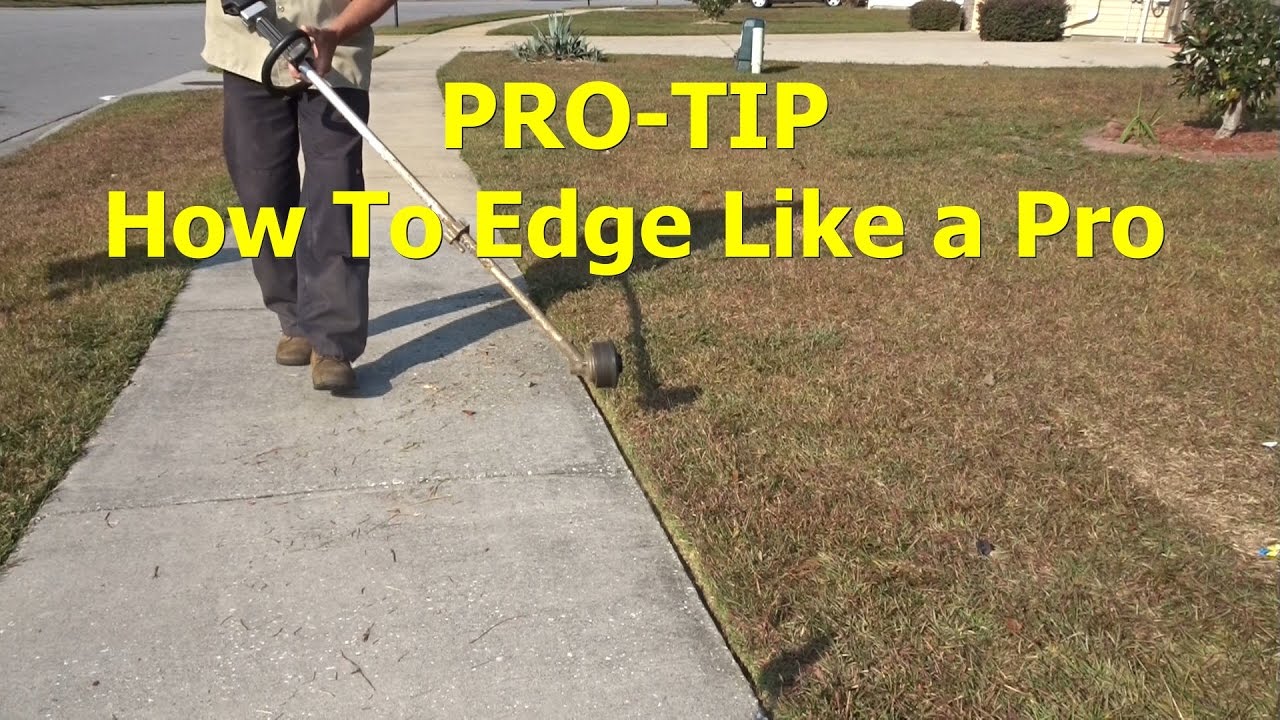
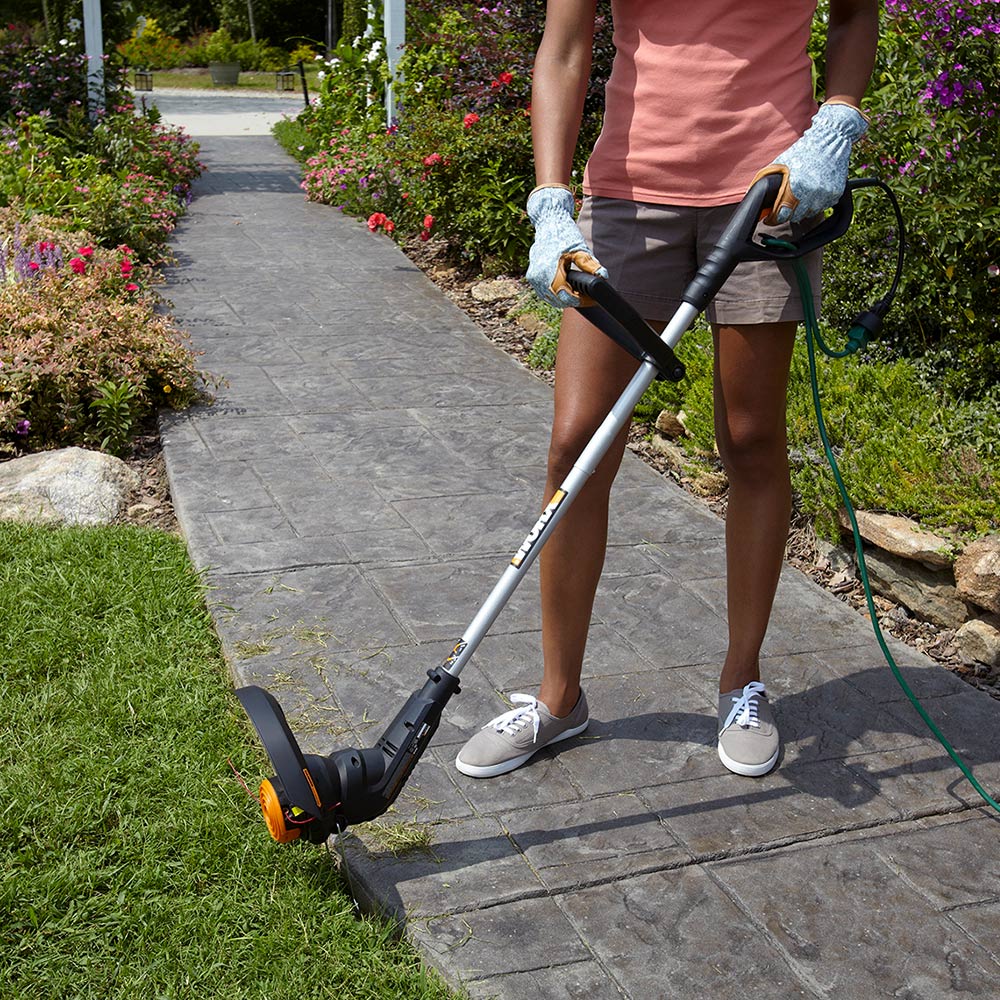
To edge with a string trimmer, rotate the trimmer head vertically, guide the cutting line along the edge of your driveway or sidewalk, and make slow passes while keeping the tool steady for a clean border.
Across the United States, many homeowners use string trimmers as a practical way to maintain crisp lawn edges around sidewalks, driveways, patios, and garden beds. A string trimmer can create a neat edge without requiring a dedicated lawn edger, but it requires the correct angle, cutting technique, and safety precautions.
The key to effective string trimmer edging is controlling the cutting line rather than simply cutting deeper into the grass. Proper technique helps create a defined boundary, reduces damage to turf, and prevents uneven or scalped areas along hard surfaces.
Edging with a string trimmer means using the tool to create a visible separation between grass and another surface, such as concrete, asphalt, pavers, or garden borders. Instead of cutting grass horizontally like normal trimming, the trimmer head is positioned vertically so the rotating line cuts along the edge.
A properly edged lawn has a cleaner appearance because it removes overgrown grass that spreads onto sidewalks and driveways. The process is different from trimming because the goal is to define a boundary rather than simply shorten grass blades.
Source: toolsengineers.com
String trimmer
A handheld outdoor power tool that uses rotating nylon line to cut grass and weeds.
Edging
The process of creating a sharp visual line between turf and non-grass surfaces.
Can Any String Trimmer Be Used for Edging?
Most handheld string trimmers can perform basic edging if the cutting head can be rotated or tilted into a vertical position. Some models include an edging guide or adjustable shaft designed to make this process easier.
Standard trimmers can work well for routine homeowner lawn maintenance, but properties that require deep, perfectly straight landscape borders may benefit from a dedicated lawn edger.
Suitable for
Sidewalk edges, driveway borders, small yards, and regular lawn maintenance.
Less suitable for
Very deep trenches, large commercial properties, or highly formal landscape designs.
What You Need Before Edging With a String Trimmer
Before starting, prepare the string trimmer, inspect the work area, and wear appropriate protective equipment. Good preparation prevents damage to landscaping and helps you maintain better control of the tool.
Remove objects such as sticks, rocks, toys, and loose debris from the edging path because the rotating line can throw small objects at high speed.
Source: fridayparts.com
Safety glasses
Protect your eyes from grass clippings and debris thrown by the trimmer line.
Closed-toe shoes
Help protect feet from accidental contact with debris or the cutting area.
Proper trimmer condition
Check the cutting line length, battery charge or fuel level, and general operation before use.
Identify the line you want to create before starting the trimmer. Existing sidewalks, driveways, and landscape borders provide natural guides.
If the grass has grown significantly over the hard surface, remove excess growth first with normal trimming before creating the final edge.
Inspect the border
Look for hidden stones, irrigation components, landscape fabric, or other obstacles.
How to Edge With a String Trimmer Step by Step
The basic technique involves changing the cutting head angle, positioning the trimmer correctly, and making controlled passes along the edge. Avoid rushing because speed often creates uneven lines.
Source: fridayparts.com
Step 1: Position the trimmer
Hold the trimmer normally, then rotate the cutting head so the string moves vertically against the lawn edge.
Step 2: Find the correct height
Keep the cutting line close to the edge without digging deeply into soil or damaging pavement.
Step 3: Walk slowly forward
Move steadily along the border while keeping the trimmer angle consistent.
Step 4: Clean up the edge
Remove loose grass clippings and inspect the line for uneven sections.
How to Hold a String Trimmer for Edging
Keep both hands on the trimmer handles and maintain a balanced stance. The cutting head should remain stable instead of bouncing along the surface.
Many users find it easier to edge while walking backward because they can see the cut line more clearly, but the safest method depends on the tool design and the individual’s control.
Maintain control
Use smooth movements instead of forcing the trimmer into the grass.
Tips for Creating a Cleaner String Trimmer Edge
A professional-looking edge comes from consistency rather than cutting aggressively. Small adjustments to speed, angle, and line length can noticeably improve the finished appearance.
Regular maintenance also makes edging easier because overgrown grass and worn trimmer line reduce cutting performance.
Source: lawnstarter.com
Use a consistent angle
Keeping the cutting head steady creates a straighter border.
Avoid cutting too deep
Removing too much soil can weaken lawn edges and create erosion problems.
Edge regularly
Frequent light maintenance is usually easier than correcting heavily overgrown borders.
Many edging problems happen because users treat a string trimmer like a shovel or power cutter. The tool is designed for controlled grass cutting, not removing large amounts of soil.
Moving too quickly
Fast passes often create uneven lines and missed grass.
Using excessive line length
Too much exposed line can reduce efficiency and make control harder.
Ignoring safety gear
Flying debris remains a risk even during short edging tasks.
Troubleshooting String Trimmer Edging Problems
If the finished edge does not look clean, check the most common causes first. Adjusting technique usually solves problems before changing equipment.
Source: lawnlove.com
Problem: Uneven edge
Cause may include inconsistent height or walking speed. Slow down and maintain a steady position.
Problem: Trimmer removes too much grass
The cutting head may be too low or angled too far into the lawn.
Problem: String breaks frequently
Hard surfaces, incorrect line size, or aggressive cutting can increase line wear.
Frequently Asked Questions
Q
Can I use a string trimmer instead of a lawn edger?
Yes. A string trimmer can handle many residential edging tasks, especially along sidewalks, driveways, and small garden borders. A dedicated edger may provide deeper and more uniform cuts for certain landscaping needs.
Q
Which direction should I move when edging with a string trimmer?
Many people prefer moving slowly in a direction that keeps the cutting path visible and comfortable. The best direction depends on your trimmer design, your control, and the work area.
Q
How often should I edge my lawn?
Most homeowners edge when grass begins growing over sidewalks, driveways, or landscape borders. The frequency depends on grass growth rate, climate, and lawn maintenance preferences.
Q
Why does my string trimmer not cut a clean edge?
Common causes include a worn cutting line, inconsistent angle, moving too quickly, or trying to cut through heavily overgrown grass in one pass.
Q
Is string trimmer edging safe around concrete and pavement?
Yes, but use caution. Contact with hard surfaces can wear down the line quickly and may throw debris, so protective equipment and controlled movements are recommended.
✦ Wrapping Up
Conclusion
Learning how to edge with a string trimmer allows homeowners to maintain clean lawn borders without purchasing a separate edging tool. The process depends on correct positioning, steady movement, and regular maintenance.
A quality edge comes from patience and control rather than aggressive cutting. By preparing the area, using safe techniques, and correcting common mistakes, a string trimmer can produce attractive lawn boundaries around many residential properties.
💡 Key Takeaway
Turn the trimmer head vertically, make slow controlled passes along the border, and focus on consistency to create cleaner lawn edges.
Affiliate Disclosure: As an Amazon Associate, we may earn a small commission on qualifying purchases made through links in this article — at no extra cost to you. When your lawn mower blades will not engage, it feels like the whole mowing day is wasted before it even starts. You pull the lever, flip the…
A well-maintained lawn mower spindle is one of the most crucial components in keeping your mower cutting cleanly, evenly, and efficiently. Yet, over time, even the best mowers experience spindle wear that leads to wobbling blades, uneven cuts, and noisy operation. Fortunately, replacing the spindle is a straightforward and highly rewarding fix — especially when…
Learn how to sharpen mulching blades safely and correctly. This guide explains tools, preparation, sharpening methods, blade balancing, common mistakes, and maintenance tips for a cleaner lawn cut.
Learn how many gallons of gas a lawn mower holds, including push mowers, riding mowers, and zero-turn models. Understand fuel tank sizes, usage rates, and safe refilling tips.
When your Craftsman lawn mower starts sputtering, losing power, or guzzling fuel faster than usual, the culprit is often something small but mighty—your air filter. The air filter is like the lungs of your mower. When it’s clean, your engine breathes easy. When it’s clogged, your engine struggles to perform. Many people overlook this simple…
A well-kept lawn is more than just curb appeal—it’s a reflection of care, consistency, and pride. Yet even the best lawn mower can lose its edge without proper upkeep. Over time, key components like blades, throttle cables, and air filters begin to wear down. When this happens, performance drops, fuel efficiency suffers, and the mower’s…