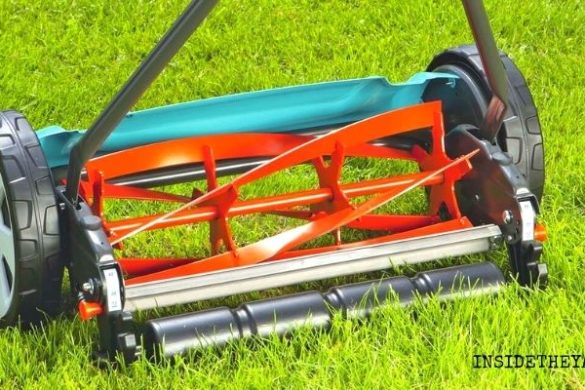
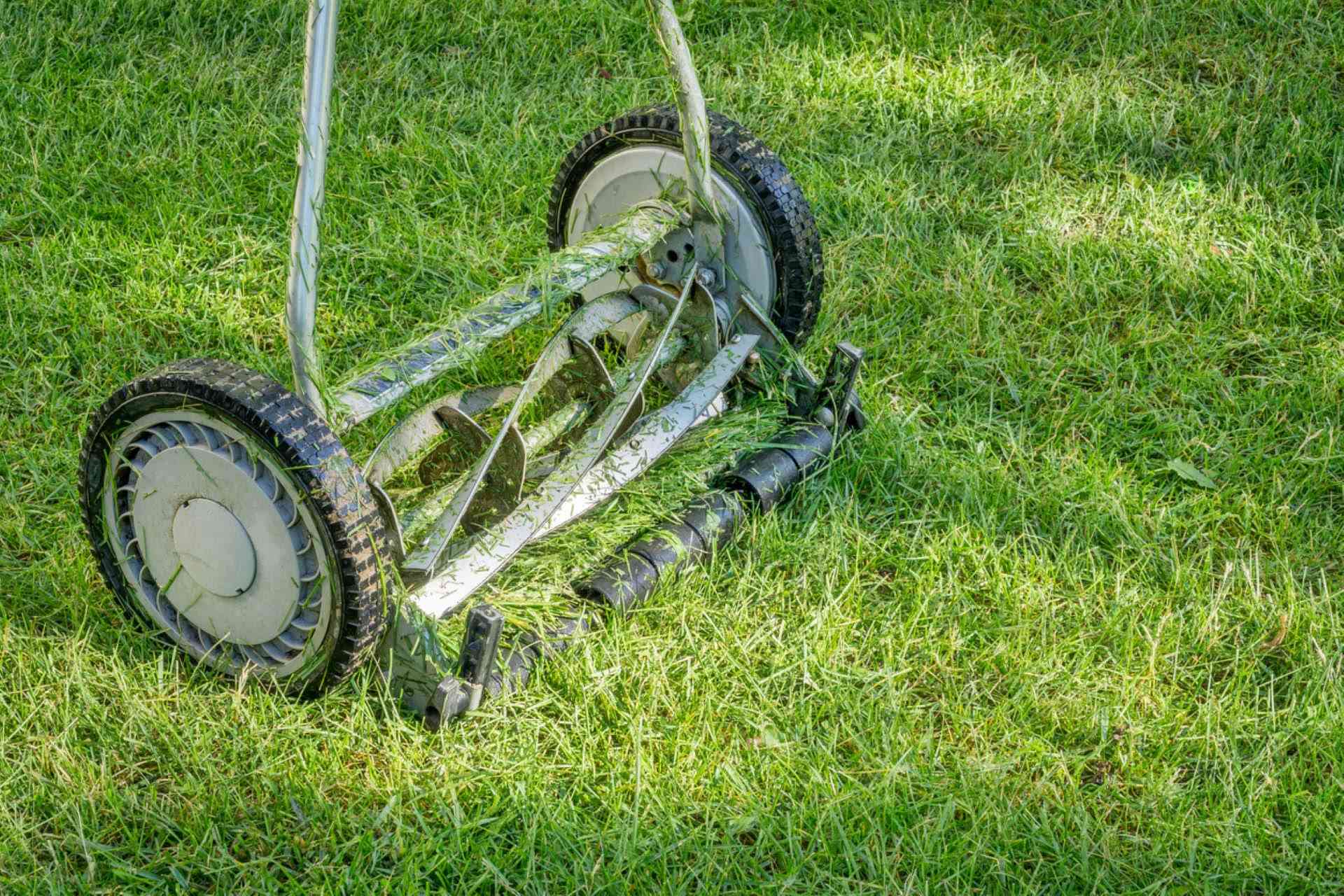
A reel mower works by using a rotating cylinder of blades that spins as you push the mower forward. The spinning blades pull grass against a stationary cutting bar, creating a scissor-like action that cleanly cuts each blade of grass.
Across many American lawns, especially small residential yards, homeowners use reel mowers as a simple way to maintain grass without gasoline engines, batteries, or complex mechanical systems. A reel mower relies on human pushing power to rotate the cutting reel, making the relationship between movement and cutting performance direct and easy to understand.
The main advantage of a reel mower comes from its cutting method. Unlike rotary mowers that use a high-speed horizontal blade to strike grass, a reel mower slices grass between two sharp surfaces. When properly adjusted and maintained, this method can produce a clean cut that supports a neat lawn appearance.
A reel mower is a manual or powered grass-cutting machine that uses a cylindrical reel of blades instead of a single spinning blade underneath a mower deck. The reel rotates vertically as the mower moves forward and cuts grass against a fixed metal blade called a bed knife.
The key difference between a reel mower and a rotary mower is the cutting action. A rotary mower uses impact from a fast-spinning blade, while a reel mower uses a precise slicing motion. This design is why reel mowers are commonly associated with golf course greens and carefully maintained lawns.
Source: insidetheyard.com
Reel blades
The curved blades arranged around the cylinder rotate forward and help capture grass during movement.
Bed knife
The stationary lower blade provides the cutting surface that the reel blades pass against.
Wheels and gears
The wheels transfer pushing motion into rotation of the cutting reel.
The Basic Cutting Principle
A reel mower works similarly to a pair of scissors. One blade surface moves while the other remains fixed. As grass enters the space between the reel and bed knife, the blades shear the grass instead of tearing it.
For this process to work efficiently, the reel and bed knife must be correctly aligned. If the blades are too far apart, grass may bend over instead of being cut. If they are too tight, the mower may become difficult to push and the blades may wear faster.
Clean cutting action
Sharp, properly adjusted blades create a smooth cut that reduces damaged grass tips.
How the Reel Mower Cutting Mechanism Works Step by Step
The operation of a reel mower begins when the user pushes the mower across the lawn. The forward movement turns the wheels, which rotate the reel through a gear system or direct connection depending on the mower design.
As the reel spins, the blades collect grass and move it toward the bed knife. The grass is trapped between the two cutting surfaces and sliced at a consistent height determined by the mower’s height adjustment setting.
Source: pediamower.com
Step 1: Pushing creates motion
The user’s forward movement turns the wheels and powers the reel rotation.
Step 2: Reel blades rotate
The cylindrical blades spin rapidly enough to guide grass toward the cutting edge.
Step 3: Grass is sliced
The reel blades pass the bed knife and cut grass using a scissor-like motion.
A reel mower depends on precise blade contact. The reel should lightly touch or closely pass the bed knife depending on the mower design. Proper adjustment allows cutting without excessive friction.
When the cutting surfaces become dull or incorrectly adjusted, the mower may leave uneven patches, push harder, or damage grass by pulling instead of slicing.
Signs of correct adjustment
The mower moves smoothly, cuts consistently, and does not leave uncut strips of grass.
How Reel Mowers Compare With Rotary Mowers
Reel mowers and rotary mowers both cut grass, but they are designed for different lawn conditions. A reel mower is designed for precision cutting, while a rotary mower is generally better suited for handling taller grass and less frequent mowing schedules.
Choosing between them depends on lawn size, grass type, mowing frequency, terrain, and how much maintenance the homeowner wants to perform.
Quiet operation, no fuel requirement for manual models, and a clean scissor-style cut when used correctly.
Reel mower limitations
Less effective on tall grass, weeds, uneven terrain, and lawns that are not mowed regularly.
Rotary mower advantages
Better suited for larger yards, rough conditions, and grass that has grown significantly between mowing sessions.
When a Reel Mower Works Best
A reel mower performs best on flat lawns where grass is maintained at a consistent height. Many homeowners with small yards prefer them because they are simple to operate and require less mechanical maintenance than engine-powered equipment.
Ideal conditions
Short grass, regular mowing schedules, and relatively smooth lawn surfaces.
How to Keep a Reel Mower Working Properly
A reel mower requires regular maintenance because its performance depends heavily on sharp and properly aligned cutting surfaces. Simple care routines can prevent poor cutting results and unnecessary wear.
If a reel mower stops cutting effectively, the cause is usually related to blade sharpness, adjustment, grass conditions, or mowing technique rather than a complicated mechanical failure.
Problem: Grass is bending instead of cutting
Possible causes include dull blades, incorrect blade spacing, or mowing grass that is too tall.
Problem: Mower is difficult to push
Possible causes include overly tight blade adjustment, debris buildup, or unsuitable lawn conditions.
Frequently Asked Questions
Q
Does a reel mower really cut grass better than a rotary mower?
A reel mower can produce a cleaner cut on properly maintained lawns because it slices grass instead of striking it. However, a rotary mower may perform better on tall, thick, or uneven grass.
Q
Do reel mowers need sharpening?
Yes. Reel mower blades need periodic sharpening or adjustment because cutting performance depends on sharp, properly aligned surfaces.
Q
Can a reel mower cut tall grass?
A reel mower can struggle with tall grass because the blades are designed for frequent trimming rather than cutting large amounts of overgrown growth.
Q
Why does my reel mower leave strips of uncut grass?
Uncut strips may result from dull blades, incorrect blade adjustment, uneven mowing speed, or grass conditions that prevent proper cutting.
Q
How often should I use a reel mower?
The ideal mowing frequency depends on grass growth and season, but reel mowers generally work best when used regularly enough to avoid removing excessive grass height at once.
✦ Wrapping Up
Conclusion
A reel mower works through a simple but precise cutting system: rotating blades move against a stationary bed knife to slice grass like scissors. This design explains why reel mowers can provide a clean lawn finish while remaining quiet and mechanically simple.
The best results come from matching the mower to the lawn. Homeowners with small, regularly maintained yards can benefit from the simplicity of a reel mower, while those managing tall grass or rough terrain may need a different mowing approach.
💡 Key Takeaway
Keep the reel blades sharp, maintain proper blade adjustment, and mow regularly to get the best performance from a reel mower.
A well-kept lawn is more than just curb appeal—it’s a reflection of care, consistency, and pride. Yet even the best lawn mower can lose its edge without proper upkeep. Over time, key components like blades, throttle cables, and air filters begin to wear down. When this happens, performance drops, fuel efficiency suffers, and the mower’s…
Learn how often you should replace lawn mower blades, the signs of wear, factors that affect blade life, and how to keep your mower cutting efficiently and safely.
Finding the right Replacement Battery Toro Lawn Mower option can feel confusing, especially when your mower refuses to start on a busy weekend. I know the feeling well because many homeowners only think about their battery when it fails at the worst moment. The good news is that you can avoid these annoyances by understanding…
If you’ve ever tried mowing your lawn and your mower sputtered, refused to start, or coughed out clouds of smoke, chances are the carburetor is the culprit. The Honda Lawn Mower Carburetor Replacement process might sound intimidating, but in reality, it’s one of the most rewarding repairs a homeowner can learn. Think of your mower’s…
Keeping a lawn mower in good shape is a lot like taking care of a car. When the parts wear out, the entire system struggles. Many homeowners notice their mower losing power, cutting unevenly, or becoming harder to control, but they brush it off until the machine finally breaks down at the worst moment. That’s…
If you’ve ever struggled to push your mower through thick grass or noticed uneven cuts even after a fresh blade sharpening, the problem might not be your mower’s engine or deck—it could be your tires. Many homeowners overlook the critical role that lawn mower tire replacement plays in keeping their machines running smoothly. Tires are…