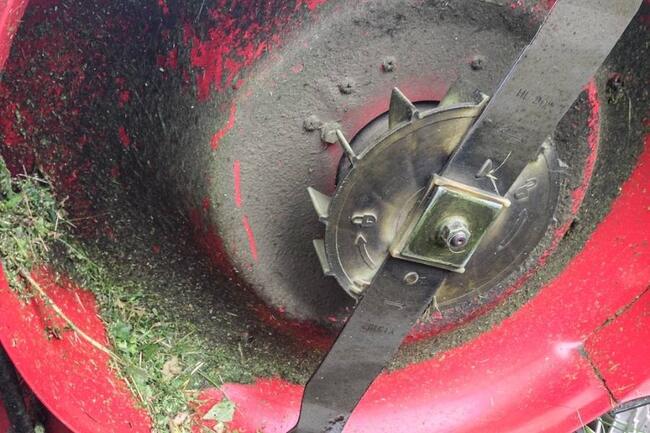
The sharp cutting edge of a mower blade should face the direction of rotation, while the raised or curved side of the blade usually faces upward toward the mower deck. Check the blade markings, cutting edge, and original installation position before tightening it.
Across the United States, homeowners often replace worn mower blades before the spring and summer mowing seasons begin. Whether you use a walk-behind mower in a suburban yard or a riding mower on larger property, installing the blade correctly is essential for a clean cut and safe operation.
A mower blade installed upside down can still spin, but it will not cut grass properly. The mower may leave uneven patches, tear grass instead of cutting it, vibrate excessively, or damage the blade and mower components. Learning how to tell which way mower blades go helps you complete blade changes correctly without unnecessary trial and error.
The correct direction depends on the mower design and blade type, but the same inspection methods work for most residential lawn mowers. Look for the sharpened edge, the lift wing, stamped markings such as ‘Bottom’ or ‘Grass Side,’ and the way the blade sits inside the mower deck.
How to Identify the Correct Direction for a Mower Blade
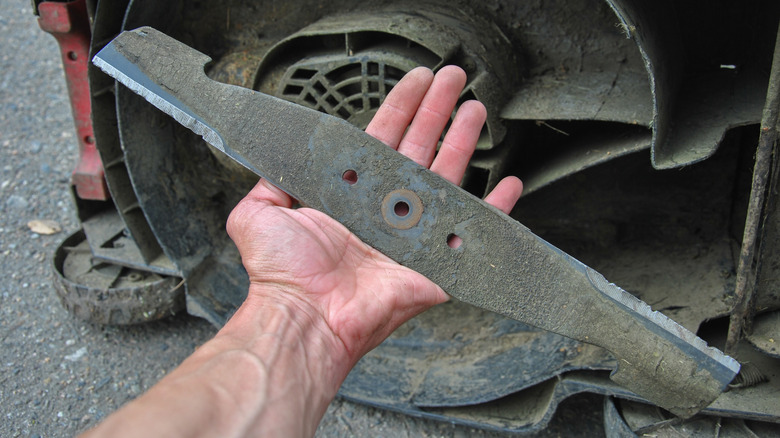
The easiest way to tell which way a mower blade goes is to identify the cutting edge and the lift wing. The cutting edge is the sharpened side that contacts the grass. The lift wing is the bent or curved section that creates airflow under the mower deck.
On most residential lawn mowers, the sharp edge faces downward toward the grass and leads into the direction of rotation. The raised portion faces upward because it helps lift grass before cutting and moves clippings through the deck.
Source: www.slashgear.com
Find the sharp edge
The sharpened edge is the side that cuts grass. It should face the direction the blade moves as it spins.
Look for the lift side
The curved or raised rear section of many blades faces upward toward the mower deck.
Check blade markings
Many replacement blades include labels such as ‘Bottom,’ ‘Grass Side,’ or arrows showing the correct installation position.
Why Blade Direction Matters
A mower blade is engineered to create a specific airflow pattern while cutting. Installing it upside down reverses the cutting angle and reduces the blade’s ability to lift and slice grass effectively.
The result is often a rough-looking lawn, repeated passes over the same area, and increased stress on the mower because the blade is not operating as designed.
Correct installation result
Grass is cut evenly, clippings move efficiently, and mower operation is smoother.
Incorrect installation result
The mower may tear grass, leave uncut strips, or produce unusual vibration.
Steps to Install a Lawn Mower Blade the Right Way
Before installing a mower blade, prepare the mower safely and confirm that the replacement blade matches the mower model. Blade size, center hole design, and mounting system must be compatible.
Follow these steps to reduce the chance of installing the blade backward or damaging the mower.
After installation, inspect the blade before reconnecting power. The blade should sit flat against the mounting surface, with no gaps or loose movement.
When the mower is lowered and operated, watch for signs of proper function. A correctly installed blade should cut consistently without excessive shaking or unusual sounds.
Signs of correct installation
Even grass cutting, normal mower sound, and smooth blade operation.
Signs of incorrect installation
Severe vibration, poor cutting, scraping sounds, or grass that appears torn.
Common Mistakes When Installing Mower Blades
Many blade installation problems happen because the blade looks similar from both sides. Taking a few extra seconds to identify the cutting edge and lift side can prevent installation errors.
Source: storage.googleapis.com
Installing the blade upside down
This reverses the cutting angle and can reduce mowing performance.
Ignoring blade rotation direction
A blade that faces the wrong way will not cut efficiently even if it is securely attached.
Using the wrong replacement blade
A blade with incorrect dimensions or mounting holes may not fit safely.
Working without safety precautions
Always disconnect power before touching mower blades because blades can move unexpectedly.
What If You Installed the Blade Backward?
If the mower runs but cuts poorly after a blade change, turn off the mower and inspect the blade orientation. Do not continue mowing if there is strong vibration or unusual noise.
Remove the blade and reinstall it correctly if the cutting edge or lift wing is facing the wrong direction.
Poor grass appearance
Grass may look shredded, uneven, or have missed sections.
Mower vibration
Excess vibration can indicate installation problems or a damaged blade.
Mower Blade Direction Differences You Should Know
Not every mower blade rotates the same way. Some blades rotate clockwise and others counterclockwise depending on mower design. The important factor is not the clock direction itself but whether the cutting edge meets the grass first during rotation.
Before installing a blade, check the mower manual or observe the original blade position. This is especially important for riding mowers with multiple blades because each spindle may have a specific blade design.
Source: swipegarden.com
Walk-behind mowers
Most use a single horizontal blade, and correct edge direction is usually easy to identify.
Riding mowers
Many have multiple blades that may require specific orientation on each spindle.
Mulching blades
These blades often have more complex curves and must be installed according to their markings.
When the Old Blade Is Not Available as a Reference
If the original blade is missing, use the markings on the replacement blade and compare the shape of the cutting edge and lift wing. The manufacturer instructions should be the final reference when available.
Use documented instructions
The mower manual provides the most accurate installation guidance for a specific model.
Safety Checks Before Using a Mower After Blade Installation
A correctly installed blade should also be a safely installed blade. Before mowing, complete a quick inspection to confirm that the blade and mower are ready for operation.
Source: nurserylady.com
Check blade tightness
A loose blade can create dangerous movement and damage mower parts.
Inspect for damage
Replace blades with cracks, severe bends, or damaged cutting edges.
Test carefully
Start the mower in a safe area and stop immediately if unusual vibration or noise occurs.
When to Replace Instead of Reinstall
A blade that is bent, cracked, or heavily worn may not become safe or effective through sharpening alone. Replacement is usually the better option for damaged blades.
Replace damaged blades
Structural damage can create safety risks during operation.
Frequently Asked Questions
Q
Which side of a mower blade faces down?
The sharpened cutting edge normally faces downward toward the grass, while the raised lift portion faces upward toward the mower deck. Always confirm with the mower manual because blade designs vary.
Q
How can I tell if my mower blade is upside down?
A mower blade may be upside down if the sharp edge is facing away from the direction of rotation, the lift wing points downward, or the mower leaves uneven and torn grass after installation.
Q
Does a lawn mower blade have a front and back?
Yes. The blade has a cutting side and a lift side. The cutting side contacts grass during rotation, while the lift side helps create airflow under the mower deck.
Q
Can a mower blade be installed backward?
Yes. Many mower blades can physically attach in the wrong position, but the mower will usually cut poorly and may vibrate more than normal.
Q
Should I sharpen a mower blade before installing it?
A new blade usually does not require sharpening. A used blade should be inspected for wear and damage before deciding whether sharpening or replacement is appropriate.
✦ Wrapping Up
Conclusion
Knowing how to tell which way mower blades go prevents common installation mistakes and helps your mower perform as designed. The key signs are the blade’s sharp cutting edge, the raised lift wing, and any manufacturer markings.
Before mowing, always confirm the blade is secure, correctly positioned, and free from damage. A few minutes spent checking installation can improve cutting quality and reduce unnecessary mower problems.
💡 Key Takeaway
Install mower blades with the sharp cutting edge facing the direction of rotation and the raised lift side facing upward toward the mower deck. When uncertain, follow the mower manufacturer’s instructions for your exact model.
Learn how many gallons of gas a lawn mower holds, including push mowers, riding mowers, and zero-turn models. Understand fuel tank sizes, usage rates, and safe refilling tips.
When your Toro lawn mower not starting ruins a weekend mowing plan, it can feel like your trusty machine has betrayed you. You pull the cord again and again—nothing. The good news? Most Toro mowers fail to start for simple reasons: stale fuel, a dirty air filter, a bad spark plug, or an overlooked safety…
Learn how much gas a lawn mower holds, including average fuel tank sizes for push mowers, riding mowers, and zero-turn mowers. Find practical capacity examples and fuel tips.
Every homeowner knows that a lawn’s beauty depends on more than just regular mowing — it depends on the quality of the blade beneath the deck. If you own a Craftsman 21-inch lawn mower, chances are you’ve admired its powerful cut, precise handling, and easy maintenance. But even the best mower loses its magic when…