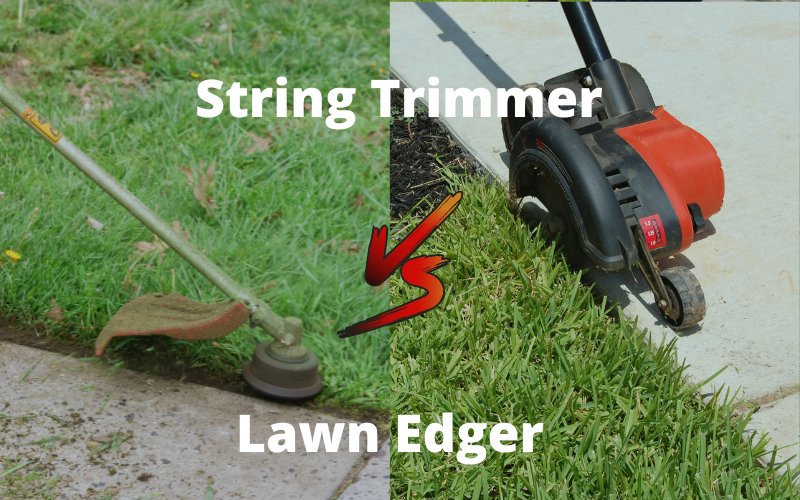
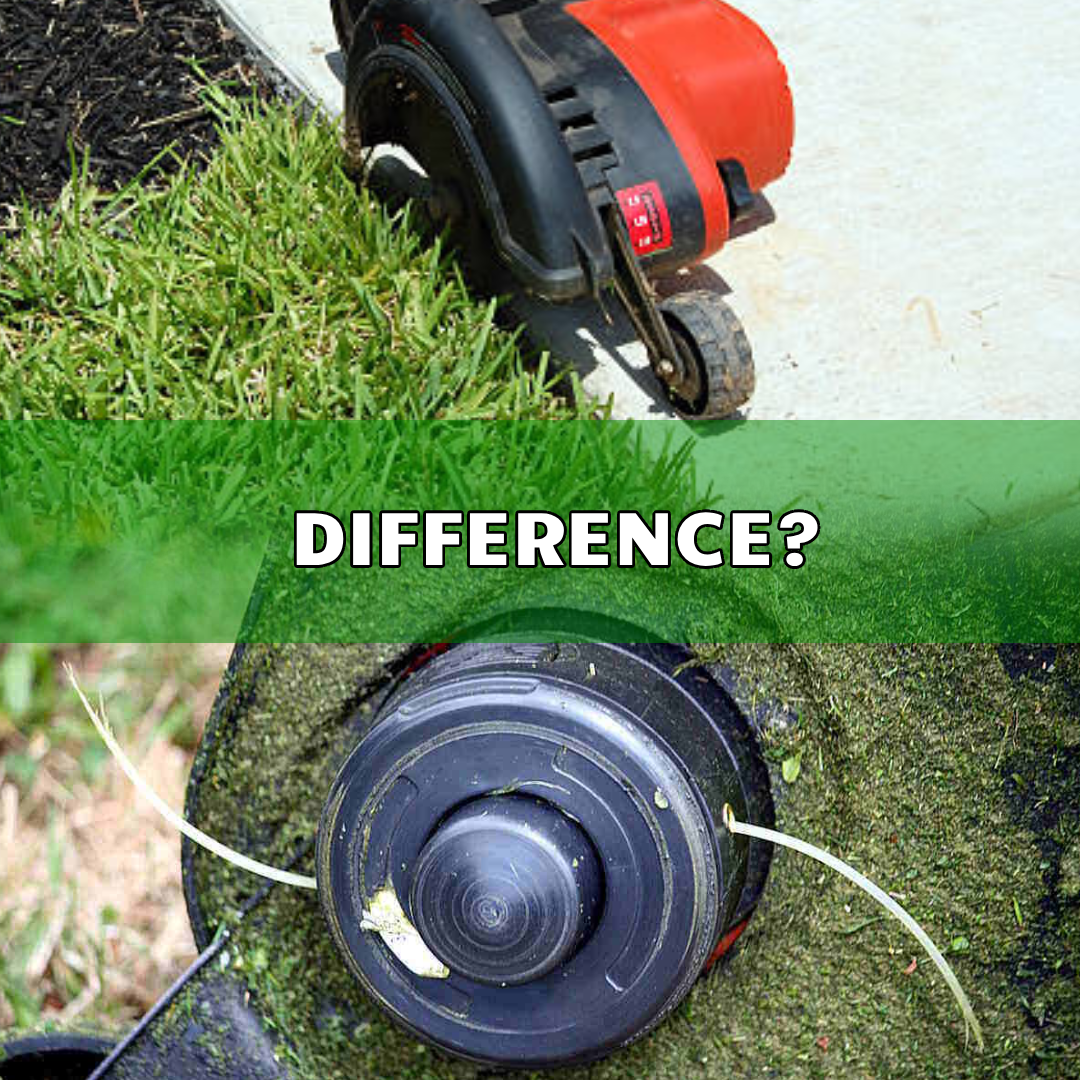
An edger is designed to create clean, straight borders along sidewalks, driveways, and garden beds, while a weed eater is designed mainly for cutting grass and weeds in hard-to-reach areas. A weed eater can sometimes edge a lawn, but an edger produces a more precise and professional-looking border.
In the United States, homeowners often use both lawn edgers and weed eaters as part of regular yard maintenance. These tools may look similar, but they perform different jobs. A weed eater, also called a string trimmer, uses a spinning nylon line to cut grass and weeds around obstacles, while an edger uses a blade or dedicated edging mechanism to create a defined separation between turf and hard surfaces.
Understanding the difference between an edger and a weed eater helps homeowners choose the right equipment for their lawn goals. If you want clean lines along a driveway in suburban yards or a sharp edge around flower beds, an edger is usually the better tool. If you need to trim overgrown grass around fences, trees, or landscape features, a weed eater is more versatile.
What Is the Difference Between an Edger and a Weed Eater?
The main difference between an edger and a weed eater is their purpose. An edger is built to shape and maintain lawn boundaries, while a weed eater is built to cut vegetation where a lawn mower cannot easily reach.
A lawn edger focuses on accuracy. It cuts vertically along the edge of sidewalks, driveways, patios, and garden beds to create a neat boundary. A weed eater focuses on flexibility by using a rapidly spinning string to trim grass, weeds, and small plants in uneven areas.
Edgers commonly use a metal blade or specialized edging wheel, while weed eaters use a nylon cutting line.
Best environment
Edgers work best on straight borders, while weed eaters work best around obstacles and irregular spaces.
How an Edger Works
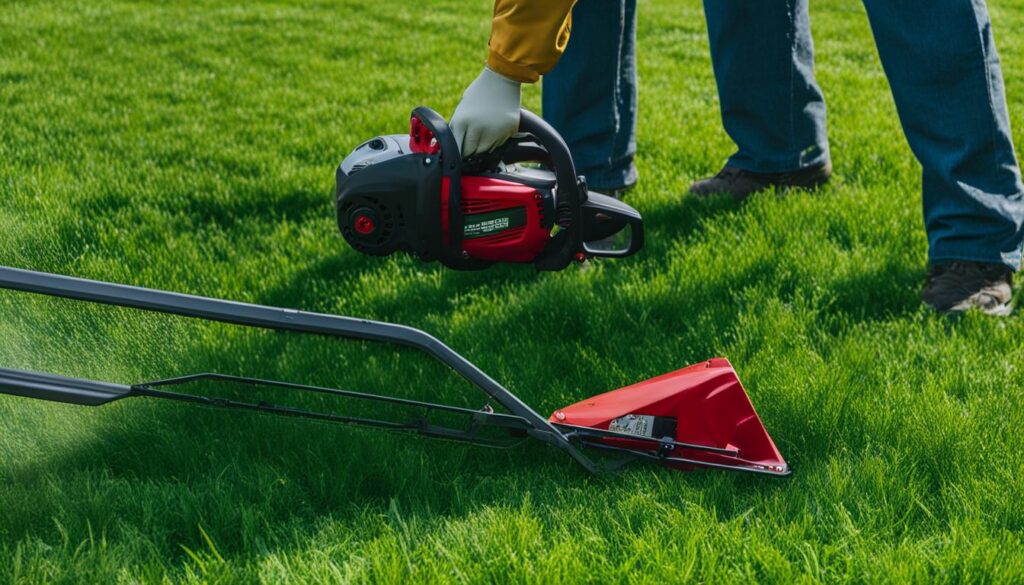
A lawn edger positions its cutting blade vertically to slice through grass that has grown over sidewalks, driveways, or garden borders. Many models include a guide wheel that helps maintain a straight path.
The result is a cleaner separation between grass and non-grass surfaces. This makes the lawn appear more maintained and prevents grass from spreading onto walkways.
Creates straight lines
The vertical blade design helps produce consistent edges.
Designed for borders
Edgers are most effective where a visible boundary is needed.
How a Weed Eater Works
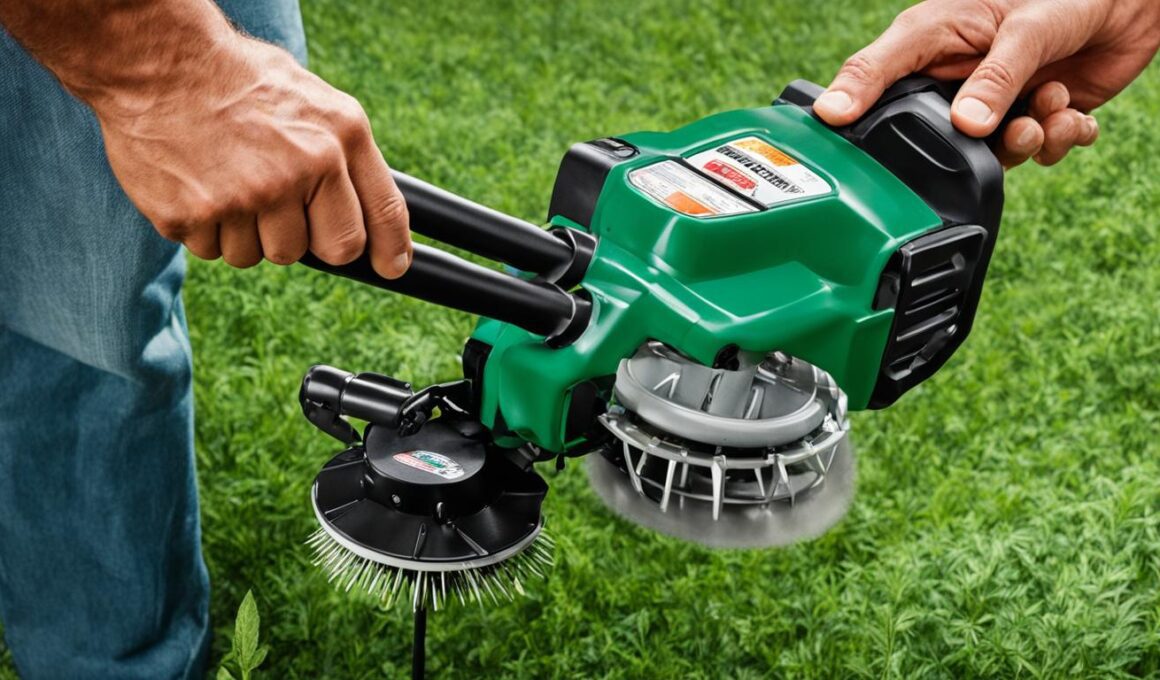
A weed eater uses a rotating nylon string head that cuts grass and weeds through speed rather than a rigid blade. The flexible string allows it to reach areas where lawn mowers cannot operate.
Because the cutting line is lightweight and flexible, a weed eater is useful for trimming around trees, fences, walls, and landscaping features.
Flexible cutting
The string head can follow uneven ground and tight spaces.
Multi-purpose trimming
It can handle grass, weeds, and light vegetation maintenance.
Edger vs Weed Eater: Key Differences at a Glance
The best choice depends on the type of lawn work you need to complete. A weed eater offers more general trimming ability, while an edger provides better control for creating professional-looking lawn borders.
An edger provides cleaner, straighter lines because it is designed specifically for border cutting.
Versatility
A weed eater handles more types of trimming tasks and reaches more difficult areas.
Maintenance needs
Edgers may require blade care, while weed eaters require replacement string and head maintenance.
Comparison Table: Lawn Edger vs Weed Eater
The following comparison shows how each tool fits common lawn care situations.
Edger
Best for sidewalks, driveways, patios, and decorative lawn borders where straight lines matter.
Weed eater
Best for trimming grass around fences, trees, flower beds, and uneven areas.
Can You Use a Weed Eater as an Edger?
A weed eater can be used for basic edging by rotating the tool vertically and trimming along a lawn border. However, this technique requires more skill and usually produces less consistent results than using a dedicated edger.
For occasional lawn maintenance, a weed eater may be enough. For homeowners who want sharp, defined edges along multiple walkways or garden areas, an edger provides better control.
Source: everythingbackyard.net
When a weed eater works
It can handle small edging jobs when precision is less important.
When an edger is better
A dedicated edger is preferred for frequent maintenance and straight borders.
Common Problems When Edging With a Weed Eater
Using a weed eater for edging can create uneven lines because the cutting height and angle depend heavily on user control. The string can also wear down quickly when it contacts concrete or hard surfaces.
Uneven edges
Keeping a consistent angle can be difficult over long distances.
Faster string wear
Contact with sidewalks and driveways may shorten string life.
Which Tool Should You Choose for Your Lawn?
Choose an edger if your main goal is maintaining clean borders. Choose a weed eater if you need a flexible tool for trimming grass and weeds throughout your yard.
Many homeowners find that owning both tools provides the most complete lawn care setup because edging and trimming solve different problems.
Source: images.squarespace-cdn.com
Choose an edger if
You want straight lines along driveways, sidewalks, and landscape beds.
The size and layout of your property influence which tool provides the most value. A small yard with minimal edging may only require a weed eater, while a larger landscaped property may benefit from a dedicated edger.
Lawn design
Properties with many sidewalks and borders benefit more from edging tools.
Maintenance frequency
Frequent lawn care may justify having separate tools for separate jobs.
Safety Tips When Using Edgers and Weed Eaters
Both tools can throw debris at high speed, so proper protective equipment and safe operating habits are important. Always follow the instructions provided by the specific tool manufacturer.
Source: everythingbackyard.net
Wear eye protection
Safety glasses help protect against flying grass, stones, and debris.
Check the area first
Remove objects that could be struck by the cutting system.
Maintain equipment
Inspect blades, strings, guards, and handles before use.
Signs You Are Using the Wrong Tool
If you struggle to create clean borders with a weed eater or spend too much time trimming large areas, the tool may not match the task. Selecting equipment based on the job usually improves efficiency and results.
Poor edge quality
A dedicated edger may be needed for sharper lawn boundaries.
Frequently Asked Questions
Q
Is an edger better than a weed eater?
Neither tool is better for every situation. An edger is better for creating clean lawn borders, while a weed eater is better for general trimming and reaching difficult areas.
Q
Can a string trimmer replace an edger?
A string trimmer can perform basic edging tasks, but it usually cannot create the same level of straight, consistent edges as a dedicated edger.
Q
Do I need both a lawn edger and a weed eater?
Many homeowners benefit from having both because they serve different purposes. However, smaller yards may only need one versatile tool.
Q
How often should I edge my lawn?
The frequency depends on grass growth, weather, and lawn appearance goals. Many homeowners edge when grass begins growing over sidewalks or borders.
Q
Why does my weed eater not make clean edges?
Uneven technique, worn string, incorrect angle, and thick grass can all reduce edging quality when using a weed eater.
✦ Wrapping Up
Conclusion
An edger and a weed eater are related lawn care tools, but they are designed for different tasks. A weed eater provides flexibility for trimming grass and weeds, while an edger specializes in creating clean and defined lawn borders.
The right choice depends on your property layout and maintenance goals. If your priority is a sharp-looking lawn edge, choose an edger. If you need a versatile trimming tool, a weed eater is usually the more practical option.
💡 Key Takeaway
Use a weed eater for general grass and weed control, and use an edger when you need precise, professional-looking lawn boundaries.
Learn how to start a gas lawn mower safely with this step-by-step guide. Find preparation tips, starting procedures, troubleshooting advice, and common mistakes to avoid.
Accidentally put gas oil mix in your lawn mower? Learn what happens, how to remove the wrong fuel, how to restart safely, and when repairs may be needed.
Learn the correct type of gas for a Honda lawn mower, including recommended gasoline grades, ethanol limits, fuel storage tips, and common mistakes to avoid.
If you have ever pushed your mower out on a warm weekend, only to hear a strange squeal or feel the blades stop spinning, you already know how frustrating a worn belt can be. Many homeowners face the same problem every year. A belt that slips, cracks, or snaps can stop the whole mowing job…
If your mower has been leaving behind uneven patches, torn grass tips, or brown streaks after mowing, chances are your blade has lost its edge. Replacing it isn’t just about better looks — it’s about keeping your lawn healthy and your mower running smoothly. In my years of working with budget-friendly lawn tools, one name…
A lawn mower may look simple from the outside, but inside, every part has a job. The engine, the blades, the fuel system, and even the small rope you pull to bring the machine to life. When that rope wears out, starting the mower turns into a difficult task. Many people only realize how important…