Most residential lawn mowers in the United States hold between 0.25 and 2 gallons of gasoline. Typical push mowers usually hold about 0.25 to 0.5 gallons, while riding lawn mowers commonly hold 1.5 to 3 gallons or more depending on the model.
In the United States, homeowners often use gasoline-powered lawn mowers to maintain small suburban yards, larger properties, and seasonal landscaping areas. Knowing the mower’s fuel tank capacity helps you buy the right amount of gasoline, avoid unnecessary refueling stops, and store fuel safely.
A lawn mower’s gas capacity depends mainly on its design, engine size, and intended use. Walk-behind push mowers have smaller tanks because they are designed for shorter mowing sessions, while riding mowers and zero-turn models require larger fuel tanks to cover more lawn area without frequent stops.
Average Gas Tank Capacity of Different Lawn Mower Types
The amount of gas a lawn mower holds varies significantly by mower type. Manufacturers design fuel tanks based on engine size, mowing time, and the expected area the machine needs to cover.
A small residential push mower may only need enough fuel for a typical backyard, while a riding mower requires a larger tank because it operates for longer periods and covers more ground.
Source: storables.com
Push lawn mowers
Most gas-powered walk-behind mowers hold approximately 0.25 to 0.5 gallons of fuel. Many homeowners can mow an average residential lawn on one tank.
Self-propelled lawn mowers
Self-propelled models often have similar tank sizes to standard push mowers, usually around 0.3 to 0.6 gallons depending on engine design.
Riding lawn mowers
Residential riding mowers commonly hold about 1.5 to 3 gallons, although larger models may have bigger tanks.
Zero-turn mowers
Zero-turn mowers designed for larger properties often have fuel capacities from 3 gallons to more than 10 gallons.
Why lawn mower fuel tanks are different sizes
Fuel tank size is matched to the mower’s engine requirements and operating purpose. A larger engine generally consumes more fuel, so manufacturers provide a larger tank to maintain practical mowing times.
Engine size
Larger engines typically require more fuel during operation.
Mowing area
Machines built for larger lawns need enough fuel to reduce interruptions.
How to Find Your Lawn Mower’s Exact Gas Capacity
The most accurate way to determine how much gas your lawn mower holds is to check the owner’s manual or the manufacturer’s specifications. Different models from the same brand can have different fuel tank sizes.
If you do not have the manual, you can often find the model number on the mower deck, frame, or engine label and use it to locate official specifications.
Source: hitchesguide.com
Check the owner’s manual
The manual usually lists fuel capacity along with recommended gasoline type and maintenance instructions.
Look for the model number
The mower model number allows you to identify exact specifications.
Avoid guessing from appearance
Two mowers with similar sizes may have different fuel tank designs and capacities.
A correctly filled mower tank should have enough fuel for normal operation without gasoline reaching the filler neck. Leaving a small amount of space allows fuel expansion during warm weather.
No fuel spills
Gasoline should remain inside the tank during and after refueling.
Normal engine operation
The mower should run smoothly without fuel starvation caused by an empty tank.
How Long Does a Tank of Gas Last in a Lawn Mower?
A full tank of gasoline can last anywhere from about 30 minutes to several hours depending on mower type, engine size, mowing conditions, and operating speed.
Fuel capacity alone does not determine runtime. A mower with a larger tank may still use more gasoline because it has a larger engine or is designed for heavy-duty work.
Source: themowersguide.com
Small push mower example
A push mower with a 0.4-gallon tank may complete a typical small yard before needing a refill.
Riding mower example
A riding mower with a 2-gallon tank may operate for multiple mowing sessions depending on lawn size and conditions.
Factors that affect gasoline consumption
Fuel usage changes based on grass height, terrain, mowing speed, engine condition, and how frequently the mower is started and stopped.
Tall or wet grass
Difficult mowing conditions can increase engine workload and fuel use.
Poor maintenance
Dirty air filters, old spark plugs, or engine problems may reduce efficiency.
Common Mistakes When Filling a Lawn Mower Gas Tank
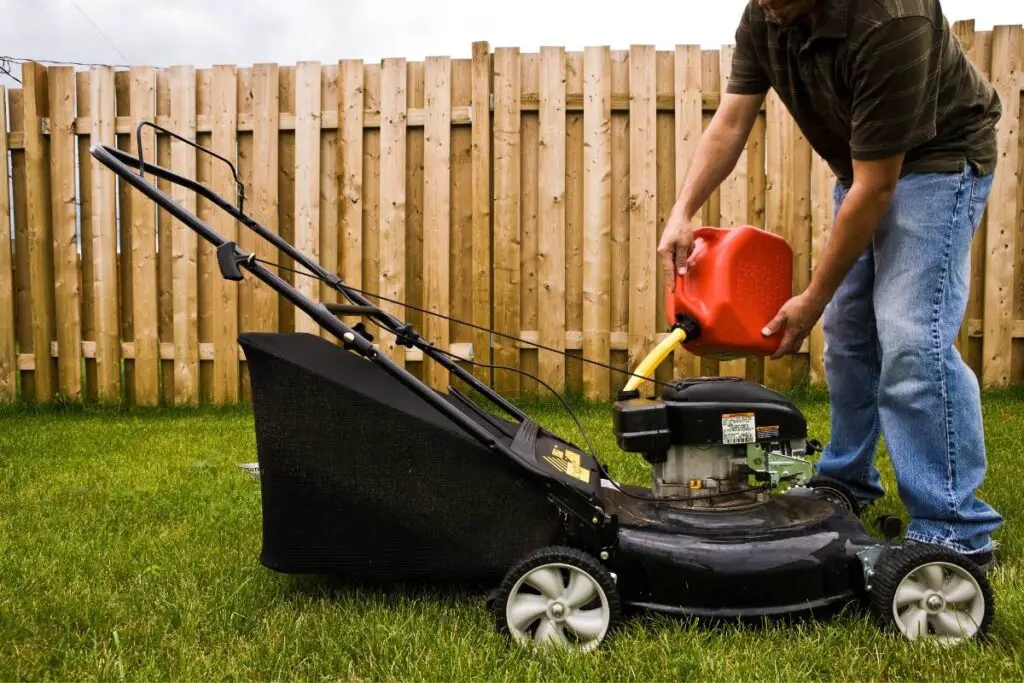
Proper refueling helps protect the mower engine and reduces safety risks. Many fuel-related problems happen because of incorrect storage, overfilling, or using unsuitable gasoline.
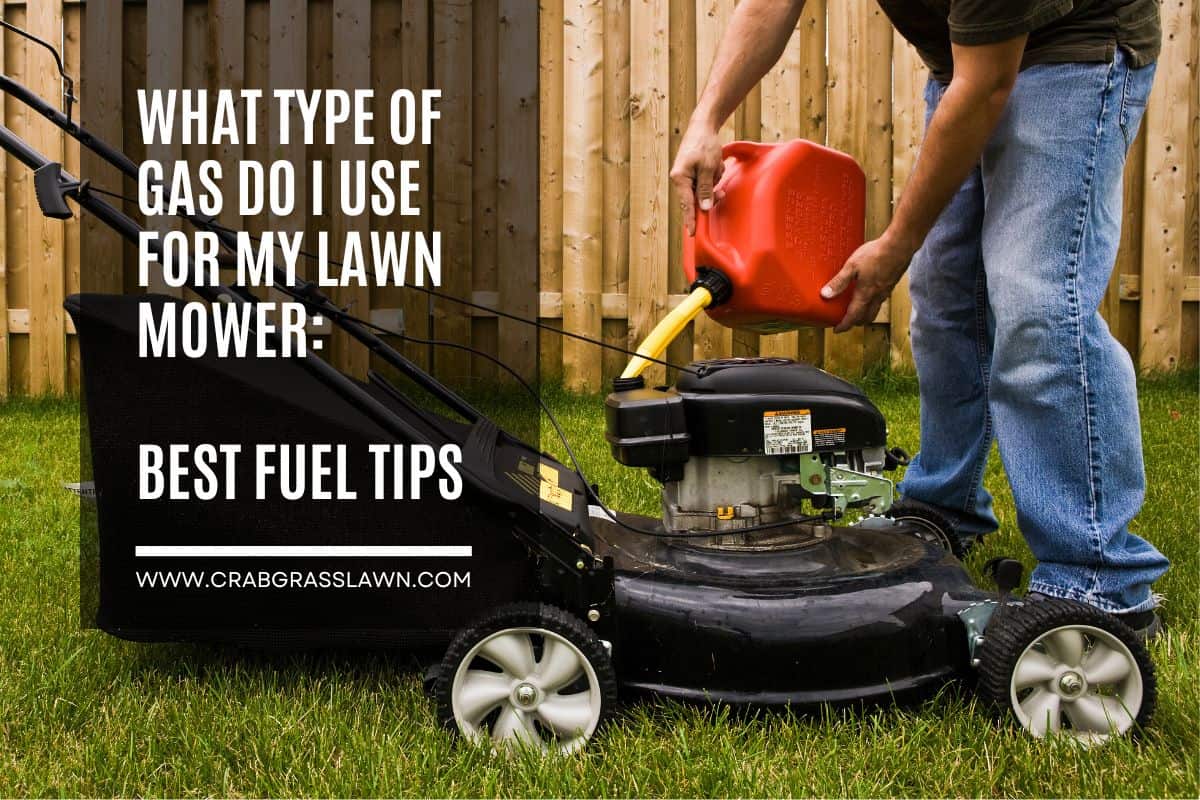
Source: crabgrasslawn.com
Overfilling the tank
Filling beyond the recommended level can cause spills and leave little room for fuel expansion.
Using old gasoline
Gasoline that has been stored too long can degrade and create starting or performance problems.
Adding fuel while the engine is hot
Refueling should be done safely with the engine turned off and cooled when possible.
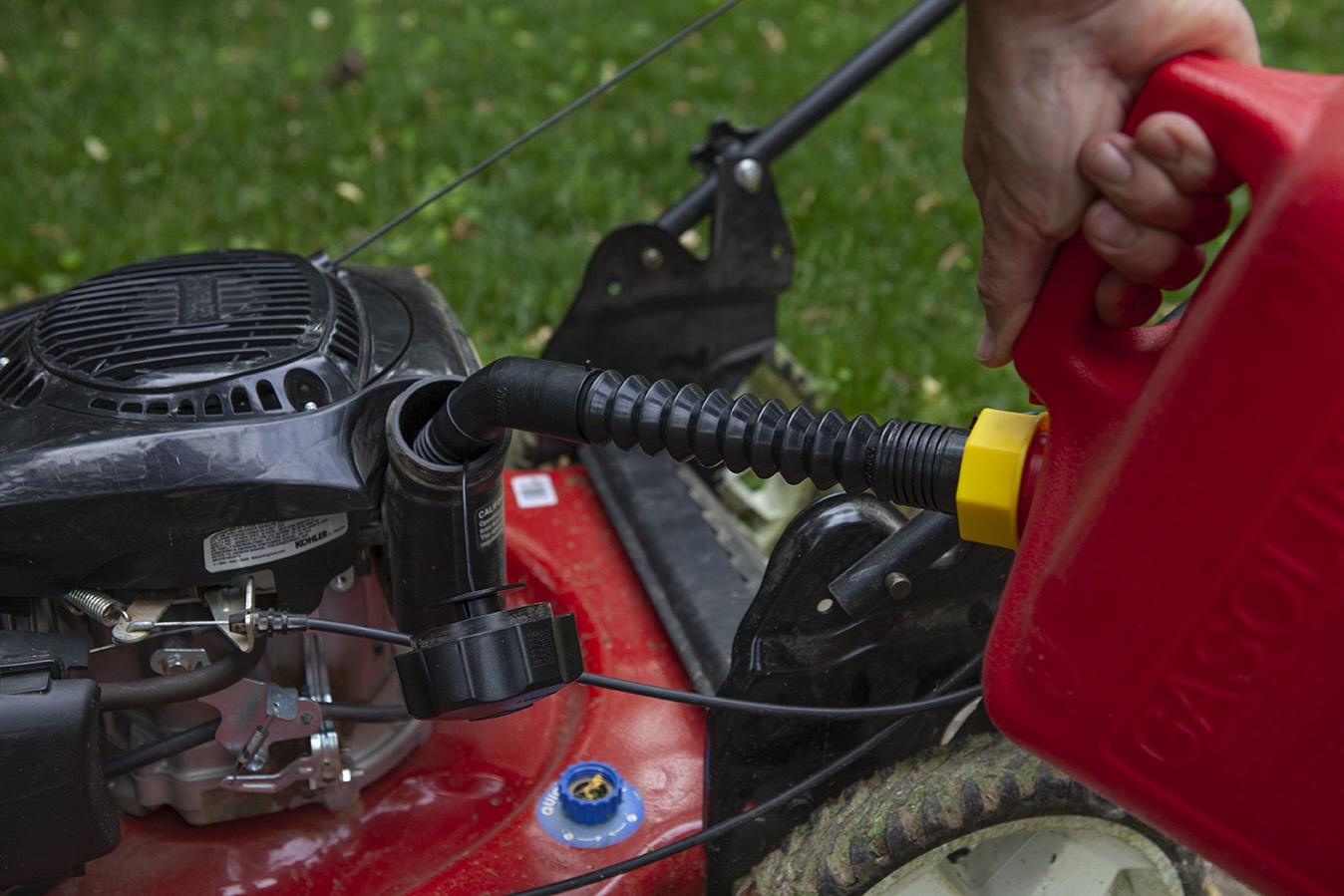
Turn off the mower, allow hot components to cool, use an approved fuel container, and avoid spilling gasoline around the engine or lawn area.
Use the correct fuel container
Approved gasoline containers help reduce spills and improve storage safety.
Store fuel properly
Keep gasoline in a suitable container away from heat sources and open flames.
Gas Capacity Comparison Table for Lawn Mowers
The following table shows common estimated fuel capacities by mower category. Actual capacity depends on the specific model and manufacturer design.
Source: nurserylady.com
Walk-behind push mower
Typical capacity: about 0.25 to 0.5 gallons.
Riding mower
Typical capacity: about 1.5 to 3 gallons.
Zero-turn mower
Typical capacity: about 3 to 10+ gallons.
Choosing the right amount of gasoline to buy
For regular lawn care, buying only the amount of fuel you expect to use soon can help reduce storage problems. Many homeowners purchase gasoline in small approved containers rather than keeping large amounts on hand.
Small yards
A smaller fuel container is usually enough for occasional mowing.
How many gallons of gas does a push lawn mower hold?
Most push lawn mowers hold about 0.25 to 0.5 gallons of gasoline. The exact amount depends on the mower model and manufacturer specifications.
Q
How much gas does a riding lawn mower hold?
Most residential riding lawn mowers hold approximately 1.5 to 3 gallons of gasoline. Larger commercial models may have significantly bigger fuel tanks.
Q
Can you put too much gas in a lawn mower?
Yes. Overfilling a lawn mower fuel tank can cause gasoline spills and reduce the space needed for fuel expansion. Fill only to the recommended level.
Q
How often should I refill my lawn mower?
Refill frequency depends on tank size, mowing conditions, engine size, and lawn area. A small push mower may need fuel after one or more mowing sessions, while riding mowers usually run longer.
Q
Where can I find my lawn mower fuel tank capacity?
The owner’s manual is the best source for fuel capacity information. You can also check the manufacturer’s website using your mower’s model number.
✦ Wrapping Up
Conclusion
Most lawn mowers hold between 0.25 and 3 gallons of gasoline, with larger commercial machines holding more. The correct fuel capacity depends on the mower type, engine size, and manufacturer design.
Understanding your mower’s gas tank size helps you plan mowing sessions, avoid unnecessary refueling, and maintain safer fuel practices.
💡 Key Takeaway
Check your mower’s owner’s manual or model specifications to find the exact fuel capacity before filling the tank.
Affiliate Disclosure: As an Amazon Associate, we may earn a small commission on qualifying purchases made through links in this article — at no extra cost to you. When your lawn mower blades will not engage, it feels like the whole mowing day is wasted before it even starts. You pull the lever, flip the…
If your lawn mower turns over but will not start, you’re not alone. Picture this: the weekend sun is shining, the grass is knee-high, and you’re ready to mow. You pull the cord or turn the key — and the mower cranks but refuses to roar to life. That sputtering silence can be maddening, especially…
If you have ever pushed your mower out on a warm weekend, only to hear a strange squeal or feel the blades stop spinning, you already know how frustrating a worn belt can be. Many homeowners face the same problem every year. A belt that slips, cracks, or snaps can stop the whole mowing job…
When you’re ready to mow your lawn and your lawn mower blades are not engaging, it can be one of the most frustrating moments of the week. You’ve planned your afternoon, the sun’s shining, the grass is tall, and then—nothing. The engine roars, but the blades refuse to spin. That feeling of confusion is universal…
You’re ready to tackle the lawn, the grass looks wild, and you’re feeling productive—until you grab the starter handle and realize your lawn mower cord is not pulling. It either locks solid or moves just an inch before refusing to budge. That sinking frustration hits instantly. It feels like your weekend just got derailed before…
A broken or frayed lawn mower pull cord can turn what should be a relaxing Saturday chore into an instant frustration. You walk out with your coffee, ready to tidy the lawn, give the cord a pull—and nothing. The handle flies off, the rope snaps, or the recoil spring fails to retract. Suddenly, mowing becomes…