
How Much Does An Electric Lawn Mower Cost: Price Guide
An electric lawn mower usually costs $100 to $900 in the United States, depending on its power source, cutting width, drive system, and features. Basic corded models often cost $100–$250. Battery-powered push mowers commonly cost $200–$600, while self-propelled models often range from $400–$900.
Electric riding mowers cost much more, usually $2,500–$7,000 or more. You may also need to budget for a replacement battery, which can cost $100–$600 depending on the mower and battery size.
These are typical U.S. planning ranges before sales tax, delivery, accessories, and seasonal discounts. Prices change by brand, model, battery capacity, and retailer.

Electric Lawn Mower Cost by Type
The mower type has the biggest effect on the purchase price. A small corded mower may cost less than half as much as a high-power battery mower with self-propulsion.
| Electric mower type | Typical U.S. price | Best suited for |
|---|---|---|
| Basic corded mower | $100–$250 | Small, flat yards near an outlet |
| Cordless battery push mower | $200–$600 | Small to medium yards |
| Cordless self-propelled mower | $400–$900 | Sloped or larger yards |
| High-voltage battery mower | $600–$1,200+ | Large yards and thick grass |
| Electric riding mower | $2,500–$7,000+ | Large properties |
| Robotic mower | $800–$3,500+ | Regularly cut lawns with defined borders |
The table gives broad retail ranges, not a quote for a specific model. Bundles may include one or two batteries, a charger, a grass bag, and other accessories. A mower with no battery may look cheaper but cost more after you add the required battery and charger.
Corded electric lawn mowers
Corded mowers are usually the least expensive electric option. They draw power from a standard household outlet and do not need a rechargeable battery.
A corded mower can work well for a small, level lawn. The main limits are the outdoor extension cord, the location of the outlet, and the need to keep the cord away from the blade. A suitable outdoor-rated cord may add $20–$60 to the initial cost.
Battery-powered push mowers
Battery push mowers are the most common choice for homeowners who want to avoid gasoline. Many cost between $200 and $600.
The battery and charger may be included, but not always. Check the product listing carefully. Some tool brands sell a lower “tool-only” price that excludes both items.
Self-propelled battery mowers
Self-propelled models use a motor to drive the wheels. They often cost $400–$900.
This feature can help on hills, large lawns, or thick grass. It also uses more battery power. If your yard is small and flat, a push mower may provide better value.
Electric riding mowers
Electric riding mowers can cost $2,500–$7,000 or more. Commercial-grade equipment may cost more.
The price reflects the larger battery pack, stronger drive system, wider cutting deck, onboard charger, and riding hardware. These mowers make more sense for large properties where a walk-behind mower would take a long time.

What Affects the Price of an Electric Lawn Mower?
Battery size, mower power, cutting width, drive system, and included equipment are the main price factors. A higher price does not always mean a better fit for your yard.
Battery capacity
battery capacity is often shown in watt-hours, or Wh. A larger battery can support longer mowing time, but it also raises the purchase price and replacement cost.
Some brands use voltage and amp-hours instead:
Watt-hours = volts × amp-hours
For example, a 40-volt, 5-amp-hour battery has about 200 watt-hours of stored energy. This number helps you compare batteries across different systems.
Actual mowing time varies. Wet grass, tall grass, hills, blade speed, grass type, and self-propulsion can all reduce runtime.
Cutting width
A wider deck can reduce mowing time. Common walk-behind electric mowers have cutting widths of about 14 to 22 inches.
A smaller deck may cost less and fit narrow gates. A wider deck may cost more but cover more ground with each pass. Measure your gate and storage area before buying.
Push versus self-propelled drive
A push mower depends on your effort. A self-propelled mower uses battery power to move itself.
Self-propelled drive is useful when:
- The lawn has hills.
- The mower is heavy.
- The grass is thick.
- The user has limited strength.
- The property is large.
It may not be worth paying extra for a flat yard that takes only 20 minutes to mow.
Motor and blade system
Brushless motors are common in midrange and premium battery mowers. They may offer better efficiency and longer service life than older motor designs, but the motor label alone does not prove better cutting performance.
Look at the full system:
- Motor output
- Blade speed
- Deck design
- Battery voltage
- Battery capacity
- Warranty terms
- Availability of replacement parts
Battery and charger inclusion
Always confirm what comes in the box. A mower listed at $300 may require a $150 battery and a $100 charger.
A complete battery mower purchase may include:
- Mower body
- Battery
- Charger
- Grass catcher
- Mulching plug
- Side-discharge chute
- Hardware and instructions
Some brands let one battery work with other outdoor tools. That can lower the cost of future purchases if you already own compatible equipment.

How Much Does an Electric Mower Cost to Run?
Electric mowers usually cost only a few cents per mowing session in electricity. The larger long-term expense is often the battery, not the power used from the outlet.
Use this simple formula:
Electricity cost = energy used in kilowatt-hours × your electricity rate
Example electricity calculation
Assume a mower uses 0.6 kilowatt-hours during one mowing session, and the household electricity rate is $0.18 per kilowatt-hour.
0.6 kWh × $0.18 = $0.11
The session would use about 11 cents of electricity before charging losses. If charging losses raise the total energy drawn to 0.7 kWh, the cost would be about 13 cents.
Your actual cost depends on your utility rate and how hard the mower works. The U.S. Energy Information Administration publishes average residential electricity prices, but local rates can vary widely by state, utility, and time of use.
A gas mower also has fuel and oil costs. An electric mower does not need gasoline, engine oil, spark plugs, or carburetor service. However, it does have battery and electronic components that may be costly to replace.
Annual operating cost example
This is a hypothetical example:
- 30 mowing sessions per year
- 0.7 kWh used per session
- Electricity rate of $0.18 per kWh
30 × 0.7 × $0.18 = $3.78 per year
That figure covers electricity only. It does not include blade sharpening, battery replacement, repairs, or the original purchase price.

What Is the Total Cost of Owning an Electric Lawn Mower?
The total ownership cost includes the mower, battery, charger, maintenance, electricity, and eventual battery replacement. Looking only at the shelf price can hide the real cost.
Use this basic five-year estimate:
Five-year cost = purchase price + accessories + maintenance + electricity + replacement parts
For battery models, add a replacement battery if the original battery may not last through the full ownership period.
Hypothetical five-year cost example
Suppose you buy:
- Battery push mower: $450
- Extra battery: $180
- Replacement blade: $35
- Outdoor storage cover: $30
- Electricity for five years: $20
- Replacement battery during year five: $180
Estimated five-year total:
$450 + $180 + $35 + $30 + $20 + $180 = $895
This is only an example. Your cost may be lower if the mower includes a long-lasting battery, or higher if you need a second battery and paid repairs.
Common additional costs
Budget for these items when comparing models:
| Item | Typical planning cost |
|---|---|
| Outdoor extension cord | $20–$60 |
| Replacement blade | $15–$50 |
| Extra battery | $100–$400+ |
| Battery charger | $50–$200+ |
| Storage cover | $20–$60 |
| Replacement grass bag | $30–$100 |
| Professional repair | Varies by part and labor |
Prices differ by brand and model. Use the manufacturer’s parts list to confirm compatibility before ordering.
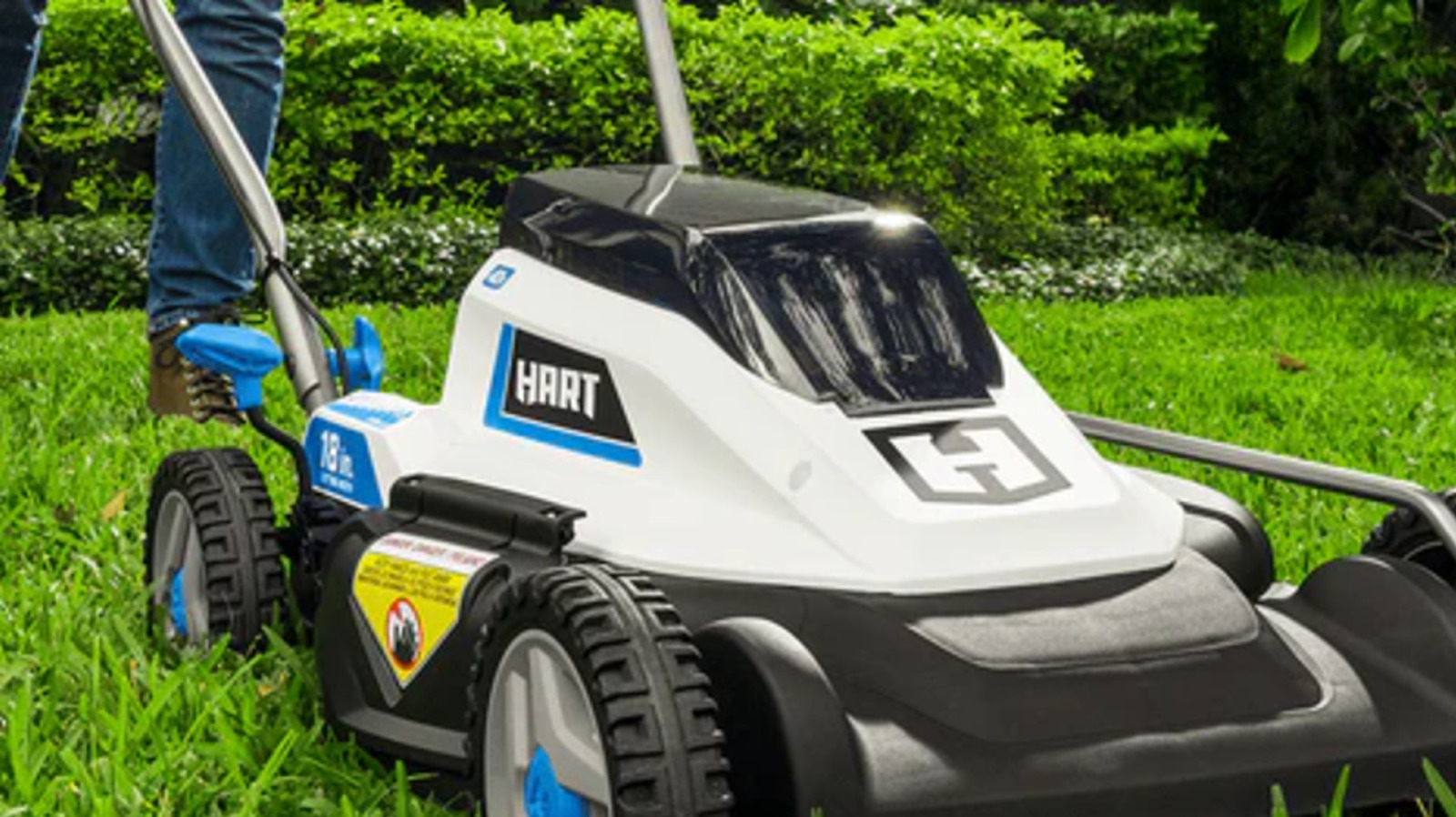
Is an Electric Lawn Mower Cheaper Than a Gas Mower?
An electric mower may cost more at first but less to operate and maintain. The result depends on the mower price, mowing frequency, battery life, and whether you already own compatible batteries.
Gas mowers often have lower purchase prices at the entry level. They also require gasoline and routine engine maintenance. Electric mowers generally have fewer routine service items but may need an expensive battery later.
Electric mower advantages
- No gasoline storage
- No oil changes
- No spark plug replacement
- Lower operating noise
- Easy starting
- Little routine engine maintenance
- No direct exhaust from the mower during use
Electric mower limits
- Battery runtime can limit large jobs
- Batteries lose capacity over time
- Replacement batteries can be expensive
- Charging requires safe, dry storage
- Performance may drop in very tall or wet grass
- Corded models restrict movement
For a small U.S. suburban yard, a battery mower can be cost-effective when convenience and low maintenance matter. For several acres, a riding mower or commercial machine may be more practical.

How Much Should You Spend on an Electric Lawn Mower?
Spend based on lawn size, terrain, grass conditions, and how often you mow. Do not buy a large, expensive mower simply because it has the highest battery voltage.
For a small lawn
A mower costing $150–$350 may be enough for a small, flat yard.
Consider:
- Corded models if an outlet is nearby
- Compact battery models
- A 14- to 18-inch cutting deck
- A single included battery
- Push drive instead of self-propulsion
For a medium lawn
A budget of $300–$700 often provides more useful choices.
Look for:
- A wider cutting deck
- A larger battery
- Adjustable cutting height
- A removable battery
- A second-battery option
- A strong warranty
For a large or sloped lawn
Expect to spend $600–$1,200 or more for a walk-behind mower with enough battery capacity and drive power.
A self-propelled mower may be worth the extra cost on slopes. If the lawn is very large, compare the price of extra batteries with an electric riding mower.
For multiple acres
For large properties, electric riding equipment may cost $2,500–$7,000 or more. Before buying, check:
- Claimed mowing area per charge
- Charge time
- Battery replacement cost
- Deck width
- Service support
- Storage and charging requirements
- Whether the mower can handle your slope

How to Choose an Electric Lawn Mower Within Your Budget
Start with the lawn, not the brand. The correct mower should finish the job without frequent charging, unsafe cord handling, or excessive physical strain.
1. Measure the lawn
Estimate the grass area, not the full property size. Exclude the house, driveway, garden beds, patios, and other areas you do not mow.
A rough lawn measurement helps you compare the manufacturer’s claimed coverage with your actual needs.
2. Check the terrain
Flat lawns need less drive power. Hills and uneven ground increase the load on the mower and may reduce battery runtime.
If the slope is steep, read the owner’s manual before purchase. Follow the manufacturer’s instructions for mowing across or up and down slopes.
3. Confirm battery coverage
Look for the claimed coverage per charge, but treat it as an estimate. Manufacturers may test under specific grass height, speed, and weather conditions.
A mower that barely covers your lawn may force you to stop and recharge. A model with extra capacity costs more but may save time.
4. Compare the complete package
Compare the full checkout cost:
- Mower
- Battery
- Charger
- Delivery
- Sales tax
- Extra battery
- Replacement parts
A lower tool-only price is not always the lower total price.
5. Check service and parts
Before buying, confirm that the company sells replacement batteries, blades, bags, and chargers in the United States. A low-cost mower becomes a poor value if common parts are unavailable.
6. Read the warranty conditions
Check the separate warranty periods for the mower, motor, battery, and charger. Some warranties exclude normal battery capacity loss, water damage, misuse, or commercial use.

Common Mistakes That Increase Electric Mower Costs
The most common buying mistake is choosing a mower by its advertised price without checking the battery, charger, and lawn conditions.
Buying a tool-only mower by accident
Some product listings show a mower body without the battery or charger. Read the package contents before you compare prices.
Choosing too little battery capacity
A small battery may be fine for a small lawn. On thick grass or a large lawn, it can lead to multiple charging sessions and slower work.
Paying for features you will not use
Self-propulsion, dual batteries, large decks, and app controls add cost. They make sense only when they solve a real problem in your yard.
Ignoring storage conditions
Lithium-ion batteries should be stored according to the manufacturer’s instructions. Extreme heat, freezing conditions, moisture, and physical damage can shorten battery life or create safety risks.
Do not charge a damaged, swollen, wet, or unusually hot battery. Follow the manual and contact the manufacturer if the battery shows signs of damage.
Mowing wet grass
Wet grass can clog the deck, reduce cutting quality, and increase the load on the motor. It can also make slopes more dangerous.
Wait for the grass to dry when possible. Turn off the mower, remove the battery or disconnect power, and follow the manual before clearing a blockage.
Using the wrong extension cord
For corded models, use an outdoor-rated cord with the size and length recommended by the manufacturer. Inspect it before use and replace it if the insulation is cut, crushed, or worn.
Keep the cord behind you and away from the cutting path. Never mow over it.

Where to Find Reliable Electric Mower Price Information
Manufacturer pages and major U.S. retailers are useful for current prices, but the final amount can change with sales, bundles, and regional availability.
Check:
- The manufacturer’s U.S. product page
- The owner’s manual
- Authorized U.S. dealers
- Major home improvement retailers
- Replacement battery listings
- Warranty terms
- Product recall notices from the U.S. Consumer Product Safety Commission
The U.S. Department of Energy provides general information about battery technologies and energy use. The U.S. Energy Information Administration provides residential electricity price data. These sources can help with operating-cost estimates, but they do not set the retail price of a specific mower.
When comparing prices, record the model number and package contents. Two listings with similar names may include different battery sizes or different accessories.

Frequently Asked Questions
Are electric lawn mowers worth the money?
They can be worth the money for homeowners who want low routine maintenance, easy starting, and no gasoline. They are less suitable when the lawn is very large, the grass is routinely overgrown, or charging access is limited.
How long do electric mower batteries last?
Battery life depends on the chemistry, storage, charging habits, temperature, workload, and model. A battery may continue to work for years but hold less charge over time. Check the warranty and replacement price before buying.
Does an electric mower need oil?
No. A battery or corded electric mower does not use engine oil. It still needs basic care, including blade inspection, deck cleaning, fastener checks, and safe battery storage.
Can an electric mower cut tall grass?
Many can cut moderately tall grass, but tall or wet grass uses more energy and may clog the deck. Raise the cutting height, mow more slowly, and avoid removing too much grass at once. Follow the owner’s manual.
Are electric riding mowers cheaper to operate?
They may use less routine maintenance and no gasoline, but their purchase price and battery replacement cost are high. The financial advantage depends on annual mowing hours and how long you keep the mower.
What is the cheapest electric lawn mower?
Basic corded models are usually the cheapest, often around $100–$250. A cordless mower may have a higher upfront cost but offer more freedom from an extension cord.
Final Cost Guide
For most U.S. homeowners, a realistic budget is:
- $100–$250 for a basic corded mower
- $200–$600 for a battery push mower
- $400–$900 for a self-propelled battery mower
- $2,500–$7,000+ for an electric riding mower
The best value comes from matching battery capacity and mower size to the lawn. Include the battery, charger, accessories, electricity, maintenance, and possible battery replacement when calculating the true cost.
For a small, flat yard, start by comparing complete cordless packages in the $300–$500 range. For hills or larger lawns, consider spending more on battery capacity and self-propulsion. Before checkout, verify the included battery, replacement-part availability, warranty, and manufacturer’s coverage estimate.


