
How Wide Are Zero Turn Mowers: Size Guide
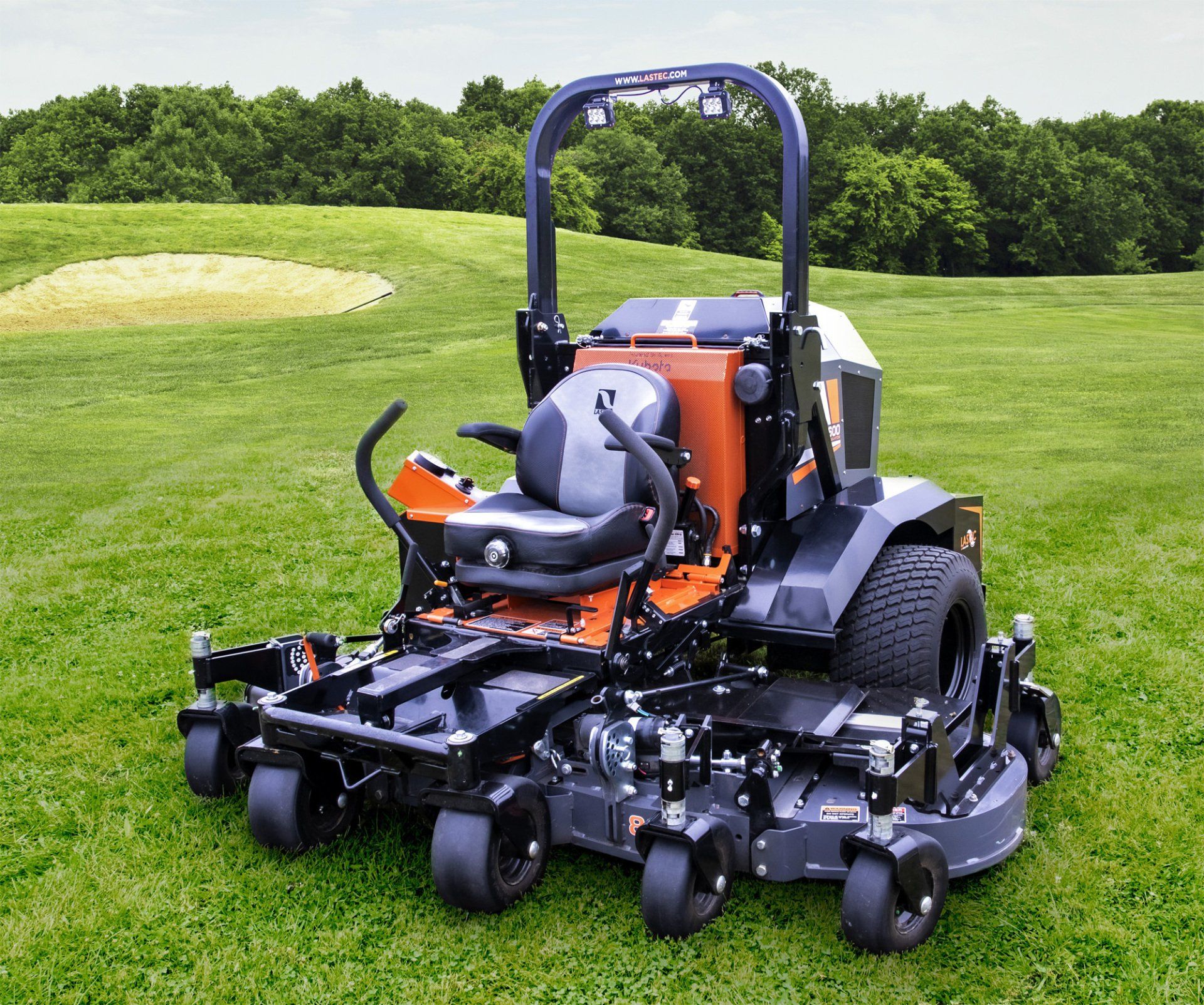
A zero-turn mower in the United States is usually about 4 to 6 feet wide, including the mower deck. Small residential models may be only 36 to 42 inches wide, while large commercial machines can reach 72 inches or more.
The deck size is not always the same as the mower’s full width. Tires, the discharge chute, and the mower frame can add several inches. Before buying, measure the mower’s maximum operating width, not just the advertised cutting width.
Quick Answer: Typical Zero-Turn Mower Widths
Most zero-turn mowers fall into these size groups:
| Mower type | Common deck width | Approximate overall width |
|---|---|---|
| Small residential | 30–36 inches | 36–42 inches |
| Compact residential | 42 inches | 42–48 inches |
| standard residential | 46–54 inches | 48–60 inches |
| Large residential | 54–60 inches | 56–66 inches |
| Commercial | 48–72 inches | 52–80 inches or more |
These figures are planning ranges, not exact measurements for every model. A mower with a 48-inch deck may have an overall width close to 50 inches, while another may be wider because of its tire layout or side-discharge chute.
For an exact answer, check the manufacturer’s specification sheet or owner’s manual. Look for terms such as:
- Overall width
- Width with chute
- Width without chute
- Width with deck
- Transport width
- Width with discharge chute raised or lowered
Deck Width and Overall Width Are Different
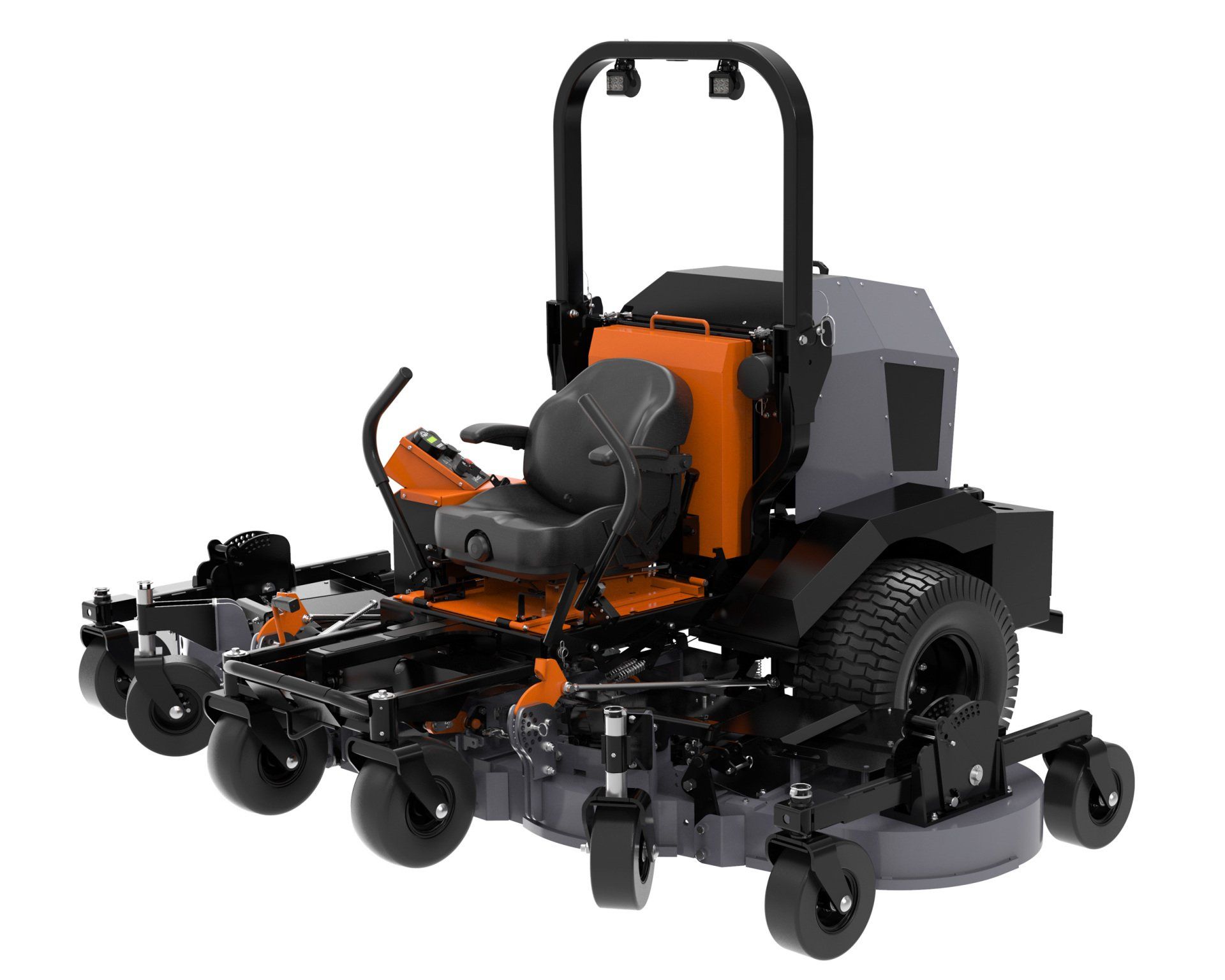
The deck width tells you how much grass the blades can cut in one pass. The overall width tells you how much space the machine needs to pass through.
For example, a mower may have a 54-inch cutting deck but require about 60 inches of clearance when its tires, frame, and discharge chute are included. The deck is only one part of the machine’s footprint.
The most useful measurements are:
- Cutting width: The nominal width of the mower deck.
- Overall machine width: The width across the tires and frame.
- Maximum width: The widest point, often including the side-discharge chute.
- Transport width: The width when the chute is folded, removed, or placed in its approved transport position.
Manufacturers do not always display these measurements in the same way. One brand may list width without the chute, while another may list the widest operating configuration. Compare like with like before choosing a mower for a gate, shed, or trailer.
How Wide Is a Zero-Turn Mower by Deck Size?
The deck size gives a useful first estimate, but it does not guarantee the mower’s actual width.
30- to 36-inch zero-turn mowers
Small zero-turn mowers are often 36 to 42 inches wide overall. They are designed for smaller residential lawns, narrow gates, and areas where a traditional riding mower may not fit.
Their smaller deck can help with:
- Narrow side yards
- Small gates
- Tight storage areas
- Lawns with many trees or landscaping beds
The trade-off is mowing time. A narrow deck covers less ground with each pass, so it may take longer to mow a large property.
42-inch zero-turn mowers
A 42-inch zero-turn mower commonly needs about 42 to 48 inches of clearance. Some compact models are close to the deck width, while others are wider because of the tires or frame.
A 42-inch model may fit through many standard backyard gates, but you should measure the opening first. Gate posts, hinges, latches, and uneven ground can reduce the usable space.
46- to 54-inch zero-turn mowers
This is one of the most common size ranges for American homeowners. A mower in this group may be about 48 to 60 inches wide, depending on its design.
A 48- or 54-inch mower can reduce mowing time on a medium or large lawn. However, it may not fit through a typical narrow gate. The chute can also extend beyond the deck and become the widest point.
60-inch zero-turn mowers
A 60-inch mower often measures about 60 to 66 inches wide, although some models may be narrower or wider.
This size is common for large residential properties, landscaping work, and commercial mowing. It needs more room to turn, store, transport, and move between buildings.
72-inch and larger zero-turn mowers
Large commercial zero-turn mowers may be 72 to 80 inches wide or more. These machines are built to cover large areas quickly.
They usually require:
- A wide trailer or loading ramp
- Large storage doors
- More turning space
- Careful route planning around trees and structures
- A suitable tow vehicle and trailer setup
A 72-inch deck does not automatically mean the mower is exactly 72 inches wide. The full machine can be several inches wider.

What Makes a Zero-Turn Mower Wider?
Several parts can affect the final measurement. The mower deck is often the widest part, but not always.
The discharge chute
A side-discharge chute can extend beyond the deck. It may add a few inches to the mower’s maximum width when lowered for mowing.
Some models have a chute that:
- Folds upward
- Hinges inward
- Can be removed for storage
- Stays within the deck’s width
- Extends beyond the deck
Do not assume that a folded chute makes the mower legal or safe to operate in that position. Use the configuration allowed by the owner’s manual.
The tires
Large rear tires improve traction and ride comfort, but they can extend beyond the deck. The tire width matters most when the mower must pass through a tight opening.
The mower frame
The engine platform, control levers, suspension parts, and side guards can add to the overall width. The frame may also be wider than the deck near the rear wheels.
The deck’s side profile
Some decks have a rounded or raised shape. Others have side guards or anti-scalp wheels that extend near the edges. These parts can affect clearance even when they do not appear significant.
The control levers
Control levers usually do not determine the mower’s maximum width, but they can affect storage space. Foldable or adjustable levers may reduce the space needed inside a shed or trailer.
How to Measure Your Space Before Buying
Measure the narrowest passage the mower must use. This may be a gate, shed door, garage opening, trailer ramp, or path between buildings.
Follow these steps:
-
Measure the opening at its narrowest point.
Measure between gate posts, door trim, hinges, and other fixed objects. -
Measure the mower’s widest operating configuration.
Include the discharge chute if it is lowered during mowing. -
Allow extra clearance.
A mower that is exactly as wide as the opening may scrape posts or damage the chute. -
Check the approach angle.
A straight opening may be wide enough, but a sharp turn can make the usable space smaller. -
Measure the storage door and trailer.
Do not check only the lawn gate. The mower must also fit where you store and transport it. -
Check the floor and ramp.
A narrow ramp, raised threshold, or uneven surface can create a safety problem even when the width is sufficient.
A practical planning rule is to leave at least 4 to 6 inches of total extra space beyond the mower’s maximum width when possible. That gives roughly 2 to 3 inches per side for steering and measurement error. More room is better for slopes, rough ground, and tight turns.
Example clearance calculation
Suppose a mower is listed as 58 inches wide at its widest point.
- Gate opening: 64 inches
- Mower width: 58 inches
- Total extra space: 6 inches
- Approximate side clearance: 3 inches per side
That may work on level ground if the mower is driven straight through. A 60-inch gate would leave almost no room for error, even though the mower is technically narrower than the opening.

Will a Zero-Turn Mower Fit Through a Standard Gate?
Some small zero-turn mowers fit through common residential gates, but many 48-, 54-, and 60-inch models do not.
Gate widths vary widely across U.S. properties. A small pedestrian gate may be less than 40 inches wide, while a wider landscaping or double gate may provide 60 inches or more. Never rely on the phrase “standard gate” without taking a measurement.
Use this guide as a rough planning tool:
| Gate opening | Mower size that may fit |
|---|---|
| 36 inches | Some very narrow stand-on or compact equipment; few zero-turn models |
| 40 inches | Some 30- to 36-inch zero-turn mowers |
| 48 inches | Many compact 36- to 42-inch models |
| 60 inches | Some 48- to 54-inch models |
| 72 inches | Many 54- to 60-inch models |
| 80 inches or more | Most residential models and some commercial models |
The mower’s published overall width must be smaller than the opening. A deck that is 42 inches wide does not prove that the entire machine will fit through a 42-inch gate.
If the mower does not fit, possible solutions include:
- Using a wider gate
- Choosing a smaller deck
- Mowing the enclosed section with a walk-behind mower
- Using a trailer to move the mower around the property
- Selecting a model with a documented narrow transport configuration
Do not remove safety guards, wheels, or structural parts just to make the mower fit. Any modification can affect safe operation and may conflict with the manufacturer’s instructions.

How Much Space Does a Zero-Turn Mower Need to Store?
A mower needs more storage space than its width alone suggests. You need room to enter, turn, park, and perform basic maintenance.
For storage planning, account for:
- Mower width
- Mower length
- Height of the rollover protection system, if equipped
- Room for the discharge chute
- Clearance from walls and other equipment
- Space to lift the seat or access the engine
- Room to remove the mower safely
A compact mower may fit in a small shed, but a large commercial model may need a garage, equipment bay, or covered storage area.
The mower’s length is also important. Zero-turn machines often have a long wheelbase and rear engine platform. A shed may be wide enough but too short to close the door.
When planning storage, leave enough room to walk around the mower. Do not block emergency exits, electrical panels, fuel storage, or fire equipment.

How Wide Should Your Zero-Turn Mower Be?
Choose deck width based on the lawn, access points, and storage area—not mowing speed alone.
Choose a narrow model when:
- Your gates are under 48 inches wide.
- The property has tight passages.
- The lawn has many small sections.
- You store the mower in a compact shed.
- You need to navigate between trees, fences, or garden beds.
Choose a mid-size model when:
- Your main access route is at least 60 inches wide.
- You have a medium or large lawn.
- You want a balance between mowing speed and maneuverability.
- Your storage area can handle a mower around 5 feet wide.
Choose a large model when:
- You mow several acres or large open areas.
- The property has wide gates and few tight spaces.
- You have suitable storage and transport equipment.
- Faster coverage matters more than access to narrow areas.
A wider deck can reduce the number of mowing passes. But a deck that cannot reach part of the lawn creates extra work. The best size is the largest mower that can safely access, store, and service every area you need to mow.

Zero-Turn Mower Width Compared With Other Mowers
Zero-turn mowers are not always wider than lawn tractors. Their width depends on the deck and chassis design.
| Equipment | Common deck or cutting width | Typical overall width |
|---|---|---|
| Walk-behind mower | 21–30 inches | 21–32 inches |
| Small riding mower | 30–42 inches | 36–48 inches |
| Compact zero-turn mower | 30–42 inches | 36–48 inches |
| Residential zero-turn mower | 46–60 inches | 48–66 inches |
| Commercial zero-turn mower | 48–72 inches | 52–80 inches or more |
| Garden tractor | 42–54 inches | Often about 48–65 inches |
These ranges overlap. A 42-inch zero-turn mower may be similar in width to a small riding mower. A 60-inch zero-turn mower may be much wider than the lawn tractor used on the same property.
The zero-turn advantage is not that the mower is narrow. Its main advantage is the ability to turn with a very small radius by controlling the drive wheels independently.

Does the Turning Radius Change the Required Width?
A zero-turn mower can turn in place, but it still needs enough physical space to pass between objects.
Zero-turn steering helps when mowing around:
- Trees
- Fence corners
- Garden beds
- Poles
- Building edges
However, the deck still extends to the side and front. A tight turn can cause the deck to swing toward a fence, wall, or tree.
The mower also needs room to make a clean turn at the end of each mowing pass. If the path is narrow, the mower may require several corrections. This can increase the risk of striking landscaping or scalping the grass.
Zero-turn capability improves maneuverability. It does not reduce the machine’s body width.

Common Mistakes When Measuring Zero-Turn Mower Width
Measuring only the deck
The deck is not always the widest part. Include the chute, tires, and frame.
Trusting a rounded product name
A “48-inch mower” may have a 48-inch deck but a greater overall width. Product names usually refer to cutting width, not the full machine.
Ignoring the discharge chute
The chute may add width when lowered. Check whether the manufacturer lists width with and without the chute.
Measuring the gate but not the posts
Hinges, latches, fence boards, and uneven posts can reduce the usable opening.
Forgetting the trailer
A mower can fit the property but fail to fit safely on the trailer. Check trailer deck width, ramp width, tie-down points, and load capacity.
Assuming a narrow transport width is a mowing width
Some mower specifications describe a folded or adjusted configuration. Confirm that the mower can be operated safely in that configuration.
Ignoring slope and ground conditions
A mower that fits on level pavement may be harder to control on grass, gravel, or a slope. Avoid using a narrow passage where loss of control could cause a collision or rollover.

Safety Checks Before Moving a Zero-Turn Mower Through a Narrow Space
Before driving through a tight opening:
- Clear people, pets, tools, and loose objects from the route.
- Lower or position the discharge chute as instructed by the manual.
- Drive slowly.
- Keep the deck raised when appropriate for the route.
- Avoid sudden lever movements.
- Check both sides and behind the mower.
- Do not allow anyone to ride on the mower.
- Use ramps rated for the mower’s weight when loading a trailer.
- Follow the manufacturer’s rules for slopes, loading, and transport.
Never use a mower on a slope or ramp beyond the limit stated in its operator’s manual. A zero-turn mower can lose traction quickly, especially on wet grass or uneven ground.
If the opening is too narrow to pass with a safe margin, do not force the mower through. Change the route or use a smaller machine.
Key Takeaways
- Most zero-turn mowers are about 36 to 80 inches wide, depending on their deck and class.
- Common residential models are usually 42 to 66 inches wide overall.
- Commercial models may reach 72 inches wide or more.
- A mower’s deck width and total machine width are different measurements.
- The discharge chute, tires, and frame can add several inches.
- Measure the narrowest gate, door, path, and trailer opening before buying.
- Leave extra clearance instead of choosing a mower that barely fits.
- Check the manufacturer’s exact width specification for the model and configuration.
Frequently Asked Questions
Are zero-turn mowers wider than riding lawn mowers?
Sometimes. A compact zero-turn mower can be similar in width to a small riding mower. Larger residential and commercial zero-turn models are often wider, especially when equipped with 54-, 60-, or 72-inch decks.
Will a 42-inch zero-turn mower fit through a 48-inch gate?
Many 42-inch models may fit, but you must check the mower’s overall width. If the mower is 46 inches wide, a 48-inch gate leaves only 1 inch on each side, which is not a comfortable or reliable clearance.
How wide is a 60-inch zero-turn mower?
A 60-inch zero-turn mower is often about 60 to 66 inches wide overall. Exact width depends on the deck design, tires, frame, and discharge chute.
Can I remove the discharge chute to make a mower narrower?
Some manufacturers allow the chute to be removed or folded for storage or transport. Others require it to remain installed during operation. Follow the owner’s manual, and do not remove safety equipment simply to pass through a narrow opening.
What is the narrowest zero-turn mower available?
The narrowest models are usually compact residential machines with decks around 30 to 36 inches. Their total width may be roughly 36 to 42 inches, but exact dimensions vary by manufacturer and model.
How much extra space should I leave around a zero-turn mower?
For a gate or doorway, aim for at least 4 to 6 inches of total extra clearance beyond the mower’s widest point. More space is helpful when the ground is uneven or the approach requires a turn.
Conclusion
Zero-turn mower width depends on more than the number printed on the deck. Small models may fit through openings around 40 inches wide, while common residential machines often need 48 to 66 inches. Commercial models may require 6 feet or more.
Measure the mower’s widest documented configuration, compare it with the narrowest access point, and leave room for safe control. The right mower is not simply the one with the biggest deck. It is the one that can mow the property efficiently and still fit through every gate, door, path, trailer, and storage area it must use.


