
How Wide Are Commercial Lawn Mowers: Size Guide
Commercial lawn mowers in the United States are usually 30 to 72 inches wide, measured by the mower deck. The most common commercial sizes are 48, 52, 60, and 72 inches.
A small commercial walk-behind mower may be about 30 to 36 inches wide. A commercial zero-turn mower often ranges from 42 to 72 inches. Large riding mowers and wide-area machines can be wider than 72 inches.
The cutting deck width is not always the same as the mower’s total outside width. The discharge chute, tires, handles, and side guards may add several inches.

What Does “Mower Width” Mean?
“Mower width” can mean two different things:
- Cutting width: The width of grass cut in one pass.
- Overall width: The widest outside measurement of the complete mower.
Manufacturers often advertise the cutting deck size. A mower called a 60-inch mower usually has a 60-inch cutting deck. Its full body may be wider when the discharge chute is down.
This difference matters when you need to:
- Fit through a gate
- Enter a shed or trailer
- Load the mower safely
- Drive between trees or buildings
- Store the mower indoors
- Meet a transport width limit
For planning, use the mower’s overall width, not only its deck size.
Deck width versus overall width
A 60-inch deck does not guarantee that the machine is exactly 60 inches wide. Some models have a deck that extends beyond the tires. Others have tires, guards, or a discharge chute that make the mower wider.
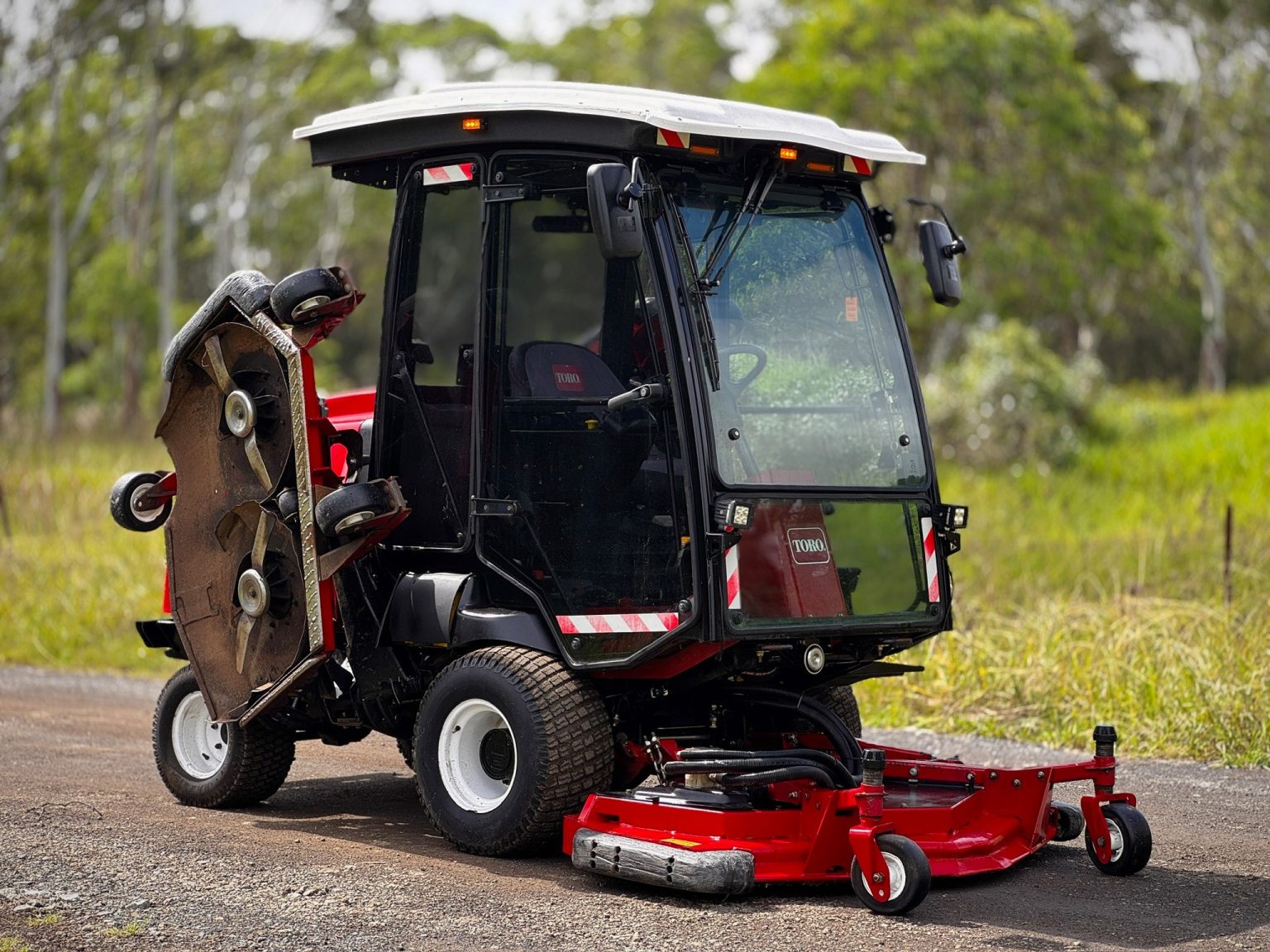
The chute may also fold upward on some models. That can reduce transport width, but the mower may still be too wide for a gate or trailer when the chute is lowered.
Always check the manufacturer’s specification sheet or operator manual for:
- Width with the chute down
- Width with the chute raised
- Width with the discharge deflector installed
- Width with the deck at its widest point
- Overall length and height

Typical Commercial Lawn Mower Widths
The table below shows common width ranges in the U.S. commercial mower market. These are practical ranges, not fixed industry standards.
| Commercial mower type | Common cutting width | Approximate overall width |
|---|---|---|
| Small commercial walk-behind | 30–36 inches | 32–42 inches |
| Wide commercial walk-behind | 48–60 inches | 50–66 inches |
| Stand-on mower | 36–60 inches | 38–66 inches |
| Small zero-turn mower | 42–48 inches | 44–52 inches |
| Mid-size zero-turn mower | 52–60 inches | 54–66 inches |
| Large zero-turn mower | 61–72 inches | 63–78 inches |
| Commercial riding mower | 48–72 inches | 52–78 inches |
| Wide-area mower | 72 inches or more | 75 inches or more |
The actual width depends on the brand, deck design, tire size, discharge setup, and optional equipment.
30- to 36-inch commercial mowers
Small commercial mowers are often 30 to 36 inches wide. They work well on:
- Narrow gates
- Small lawns
- Courtyards
- Residential-style properties
- Areas with many trees or tight turns
Their narrow deck helps them reach places that larger zero-turn mowers cannot. The trade-off is slower coverage on large, open lawns.
42- to 48-inch commercial mowers
Mowers in the 42- to 48-inch range are common for smaller lawn-care routes. They offer a useful balance between access and productivity.
A 48-inch mower may fit through many standard backyard gates, but you should never assume that it will. Gate openings, fence posts, and chute position can reduce the available space.
52- to 60-inch commercial mowers
The 52- to 60-inch range is common for full-time lawn-care work. These machines can cover more ground per pass while still fitting many residential properties.
A 60-inch deck cuts a path that is 5 feet wide in theory. Overlap, obstacles, and turning space reduce the real area covered per pass.
61- to 72-inch commercial mowers
Large commercial mowers often use decks from 61 to 72 inches. They are suited to:
- Large lawns
- Sports fields
- Parks
- Business campuses
- Open acreage
- Large contract properties
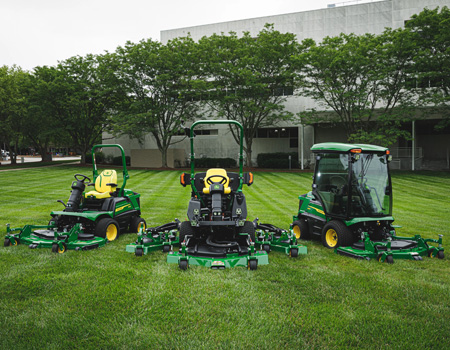
These mowers need more room to turn. They may also fail to fit through common gates, narrow bridges, or enclosed trailers.

How Wide Is a Commercial Zero-Turn Mower?
A commercial zero-turn mower is usually 42 to 72 inches wide, with 52 to 60 inches being common.
Zero-turn mower width depends on:
- Deck size
- Fixed or floating deck design
- Tire width
- Discharge chute position
- Side guards
- Rollover protection structure
- Seat and frame design
A 60-inch zero-turn mower may have an overall width near or above 60 inches. A 72-inch model may need more than 6 feet of clear space.
Common zero-turn sizes
- 42-inch: Better for small properties and narrow access
- 48-inch: A useful mid-size option for mixed residential work
- 52-inch: Common for commercial routes
- 60-inch: Productive on larger properties
- 72-inch: Best for open areas with few obstacles
A larger deck can reduce mowing time on open ground. It can also make the mower harder to transport and less useful in tight spaces.
How Wide Is a Commercial Walk-Behind Mower?
Commercial walk-behind mowers commonly measure 30 to 60 inches at the cutting deck.
Small models may be about 30 or 36 inches wide. Larger hydrostatic walk-behind units may use decks from 48 to 60 inches.
Walk-behind mowers can be easier to move through narrow gates than riding machines. However, the handle, controls, sulky, and discharge chute can increase the total width.
If a walk-behind mower uses a sulky or stand-on attachment, measure the complete setup. The attachment may change both the width and the turning clearance.

How Wide Is a Commercial Stand-On Mower?
Commercial stand-on mowers are often 36 to 60 inches wide. Some models are designed for narrow access, while others use large decks for open properties.
Stand-on mowers may offer good visibility around trees and landscaping. They can also be easier to step on and off than a seated mower. Width still varies by deck and frame design.
Before choosing one, measure:
- The mower with the discharge chute in its normal position
- The entry gate
- The trailer door
- The storage door
- The narrowest path on the property
A stand-on mower that fits the deck measurement may not fit the full machine through a tight opening.
What Size Commercial Mower Fits Through a Gate?
The gate opening must be wider than the mower’s maximum overall width. Leave extra clearance for safe movement and uneven ground.
Use this simple calculation:
Required gate width = mower width + clearance on both sides
For example, if a mower is 62 inches wide and you want 3 inches of clearance on each side:
62 + 3 + 3 = 68 inches
A gate should therefore provide at least 68 inches of clear opening.
Practical clearance guide
- 1 to 2 inches per side: Very tight
- 3 to 6 inches per side: More practical
- More than 6 inches per side: Easier and safer
Measure the gate at its narrowest point. Posts, hinges, sloped ground, and an open door can reduce the usable width.
Do not measure only the fence panel. The clear opening between the posts is what matters.
How to Choose the Right Commercial Mower Width
The best width depends on the property, not just the largest deck you can afford.
Choose a narrow mower when:
- Gates are narrow
- The property has many trees
- Landscaping creates tight turns
- You mow small residential lots
- Storage space is limited
- You often load through a narrow trailer door
Choose a medium-width mower when:
- You serve mixed residential properties
- Some yards are open and others are tight
- You need a balance of speed and access
- Your normal gate openings are at least 60 inches wide
Choose a wide mower when:
- Most properties are open
- You maintain large lawns or fields
- You have wide gates and roads
- Your trailer and storage area can handle the machine
- Fewer turns will save meaningful time
A wider mower does not always finish a property faster. Trees, fences, flower beds, slopes, and frequent turns may reduce its advantage.
A simple productivity estimate
A mower’s theoretical mowing capacity can be estimated with this formula:
Acres per hour = speed in miles per hour × cutting width in feet ÷ 8.25
This is a theoretical estimate. Real output is lower because of turns, overlap, obstacles, stops, and terrain.
For example, a 60-inch mower has a 5-foot cutting width. At 5 miles per hour:
5 × 5 ÷ 8.25 = about 3.03 theoretical acres per hour
The actual result may be much lower on a complex residential property.

How to Measure a Commercial Mower Correctly
Measure the mower before buying a trailer, gate, shed, or storage rack.
- Park the mower on level ground.
- Lower the discharge chute to its normal operating position.
- Measure the widest point from left to right.
- Include the tires, chute, guards, and accessories.
- Measure again with the chute raised if the manufacturer permits transport in that position.
- Compare the measurement with the narrowest opening you must use.
- Add operating clearance for slopes, turns, and uneven ground.
Use the manufacturer’s published dimensions as a second check. If your measurement differs, verify which configuration the specification uses.
Some specifications list the width with the discharge chute raised. Others list the width with the chute down. These numbers are not interchangeable.
Transporting a Commercial Mower
A mower may fit through a property gate but still fail to fit safely on a trailer.
Check the:
- Trailer deck width
- Trailer door opening
- Ramp width
- Tie-down access
- Wheel-well location
- Total machine weight
- Clearance beside the mower
- Width of the mower with attachments installed
Keep the mower centered and secure it according to the operator manual. Use ramps rated for the mower’s weight. Do not rely on the parking brake alone.
Before loading, remove loose items and confirm that the ramp has a stable connection. Keep people clear of the loading path.
For road travel, follow the trailer manufacturer’s instructions and applicable state and local requirements. Width rules can vary by state and by the type of vehicle or trailer.

Common Mistakes When Comparing Mower Widths
Mistake 1: Treating deck width as total width
A 60-inch deck may produce a 60-inch cut, but the complete mower can be wider. Check the maximum outside measurement.
Mistake 2: Ignoring the discharge chute
The chute often extends beyond the deck. It can be the widest part of the mower.
Mistake 3: Measuring a gate at the wrong point
A gate may look wide at the top but be narrower near the ground or posts. Measure the smallest clear opening.
Mistake 4: Forgetting attachments
Grass catchers, mulching kits, sulkies, lights, side guards, and other accessories may change the usable width.
Mistake 5: Buying the widest mower for every property
A large deck helps on open lawns. It can waste time on small yards with many obstacles.
Mistake 6: Assuming all models with the same deck size match
Two 60-inch commercial mowers can have different overall widths. Frame layout, tire size, and chute design all matter.
Frequently Asked Questions
Are commercial lawn mowers wider than residential mowers?
Often, yes. Commercial mowers commonly use decks from 48 to 72 inches, while many residential riding mowers use smaller decks. However, some commercial walk-behind and stand-on mowers are narrow.
Is a 60-inch mower really 60 inches wide?
Not always. A 60-inch label usually refers to the cutting deck. The mower’s full width may be greater because of the chute, tires, or frame.
What is the most common commercial mower width?
Commercial mower widths of 48, 52, and 60 inches are common in the United States. The right size depends on property access and mowing conditions.
Will a 48-inch commercial mower fit through a 48-inch gate?
Do not assume it will. The full mower may be wider than the deck, and the gate opening may be smaller than its stated size. Measure both carefully.
Is a wider commercial mower always faster?
No. A wider mower can cover more open ground per pass, but it may be slower around trees, beds, fences, and narrow paths. Actual productivity depends on the property layout and operating speed.
Conclusion
Commercial lawn mowers are generally 30 to 72 inches wide, with 48- to 60-inch models common for many professional mowing jobs. Large zero-turn and riding mowers may reach 72 inches or more.
Use the cutting width to compare mowing capacity. Use the overall width to plan gates, trailers, storage, and transport. Before buying, measure the mower with the discharge chute and accessories in place, then compare it with the narrowest opening on your route.


