
How Much Does A John Deere Riding Lawn Mower Weigh: Weight
A John Deere riding lawn mower usually weighs about 400 to 1,000 pounds in the United States. Smaller 100 Series lawn tractors often fall near the lower end. Larger lawn tractors, garden tractors, and zero-turn mowers can weigh much more.
The exact weight depends on the model, engine, mower deck, tires, fuel level, and installed accessories. For transport, trailer capacity, and storage, use the shipping or operating weight listed for your exact John Deere model. Do not rely on a general class estimate.

Typical John Deere riding mower weights
Most John Deere riding mowers fit into one of these broad weight groups:
| John Deere mower type | Typical weight range | Common use |
|---|---|---|
| Compact lawn tractor | 400–550 lb | Small and medium residential yards |
| Larger lawn tractor | 500–750 lb | Bigger yards and regular lawn care |
| Garden tractor | 650–1,000+ lb | Heavy attachments and demanding work |
| Residential zero-turn mower | 500–800 lb | Fast mowing around open lawns |
| Commercial zero-turn mower | 800–1,300+ lb | Frequent or professional mowing |
These are practical planning ranges, not specifications for every model. A mower with a wider deck, stronger frame, larger engine, or heavy rear tires will often weigh more than a similar-looking machine.
The weight can also change when you add a grass bagger, front blade, rear spreader, ballast, snowblower, or filled tires. For that reason, the listed mower weight may not equal the weight of the machine as it sits on your trailer.
Examples by John Deere mower series
John Deere publishes specifications for its product lines, but the details can change by model year and configuration. The following estimates help show how weight generally increases across the range.
John Deere 100 Series lawn tractors
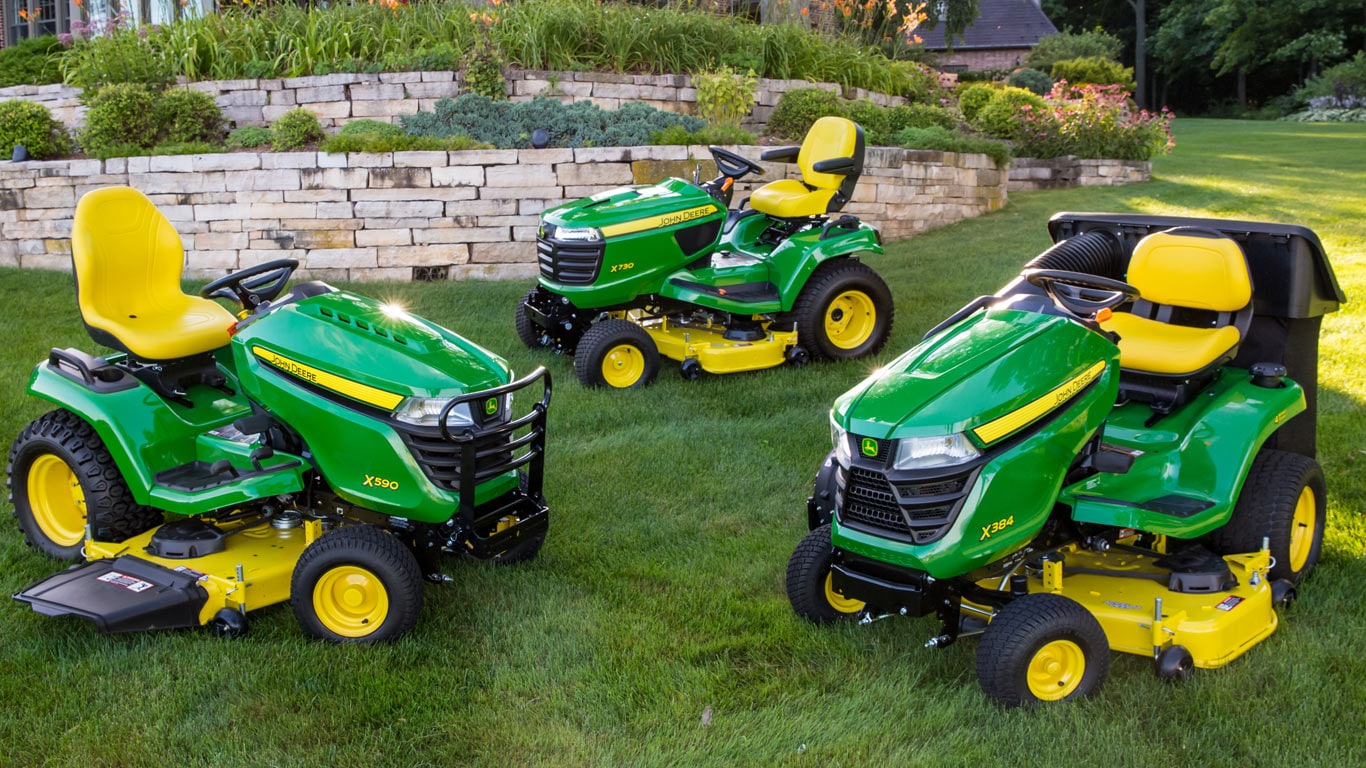
The 100 Series is John Deere’s residential lawn tractor line. Many models weigh roughly 400 to 550 pounds before added attachments, depending on the model and deck.
These tractors are built mainly for mowing grass. Their lighter frames make them easier to move than larger garden tractors, but they may have less capacity for heavy ground-engaging work.
John Deere 300 Series lawn tractors
The 300 Series generally uses a heavier frame and more substantial components than the 100 Series. Many models fall in the 500- to 700-pound range, although the exact figure depends on the model and equipment.
A heavier tractor can provide more stability and support for certain attachments. It also requires more trailer capacity and more room for safe loading.
John Deere 500 Series lawn and garden tractors
The 500 Series includes larger machines designed for more demanding residential work. A typical mower in this group may weigh about 650 to 900 pounds, with some configurations weighing more.
These tractors can have heavier frames, larger tires, stronger transmissions, and wider mower decks. Those features improve capability but add weight.
John Deere zero-turn mowers
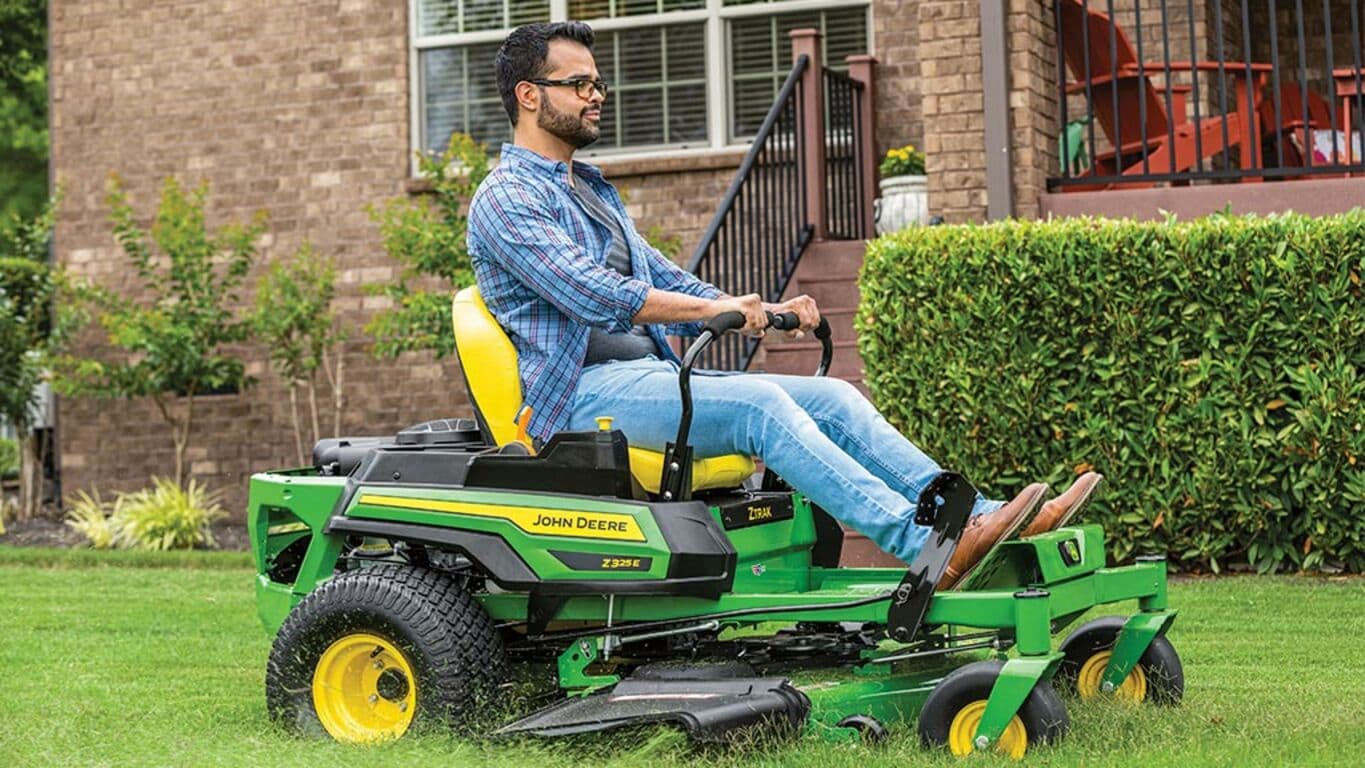
John Deere zero-turn mowers vary widely. Residential Z300 Series models may weigh around 500 to 750 pounds, while larger Z500, Z700, and commercial machines can weigh 800 to more than 1,200 pounds.
A zero-turn mower may weigh more than a lawn tractor with a similar cutting width. Its frame, hydraulic drive system, fuel tank, seat, and commercial-grade components all affect the final number.
What counts as the mower’s weight?
The word “weight” can mean more than one thing in a John Deere specification sheet. Understanding the difference helps prevent trailer and lifting mistakes.
Shipping weight
Shipping weight is the weight used for packaging, transport, or delivery. It may include protective materials, fluids, pallets, or other shipping components.
Shipping weight is useful when planning delivery. It may not show the exact weight of the assembled mower after setup.
Operating weight
Operating weight is closer to the machine’s ready-to-use weight. Depending on the manufacturer’s method, it may include items such as fuel, oil, the mower deck, and standard equipment.
Always check what the listed specification includes. Two manufacturers may use different testing or reporting methods.
Dry weight
Dry weight usually means the mower without fuel and sometimes without other fluids. It can be lower than the weight you will see when the mower is ready to mow.
A full fuel tank adds several pounds. Gasoline weighs about 6 pounds per U.S. gallon, although the exact amount varies with fuel blend and temperature.
Accessory weight
A bagger, mulch kit, front blade, snowblower, rear hitch, wheel weights, or filled tires can add significant weight. A bagger full of wet grass is especially heavy.
For transport, calculate the weight of:
- The mower
- The mower deck
- Fuel and fluids
- The operator, if the trailer rating requires it
- Attachments
- Tools and loose equipment
- Any cargo stored on the trailer
How to find the exact weight of your John Deere mower
The most reliable answer comes from the model identification label and the official John Deere documentation.
1. Find the model number
Look for the model number on the mower’s identification label. Common locations include:
- Under the hood
- Near the frame
- Under the seat
- On the rear body panel
- Near the operator’s platform
- On the frame of a zero-turn mower
A model name alone may not be enough. For example, a mower can have different weights based on the deck size, transmission, engine, or model-year revision.
2. Record the serial number
The serial number helps identify the exact production version. John Deere may update specifications during a model run, so the serial number can matter when parts or specifications differ.
3. Check the owner’s manual
Search the official John Deere website for the model and download the owner’s manual or technical specification sheet. Look for terms such as:
- Weight
- Shipping weight
- Machine weight
- Operating weight
- Technical specifications
- Dimensions and weight
4. Ask a John Deere dealer when the data is unclear
A John Deere dealer can often confirm the specification from the model and serial number. This is helpful when the mower has an attachment package or when the online listing does not state whether the deck is included.
5. Weigh the mower when precision matters
If you need an exact figure, use a certified truck scale or a suitable platform scale. Keep the mower secure, shut off, and unloaded from the trailer before weighing it.
Do not use a household bathroom scale. It is not designed for the concentrated load of a mower tire and may fail or give a false reading.

Why the mower’s weight matters
The mower’s weight affects transport, storage, towing, ground pressure, and safe operation.
Trailer capacity
Your trailer must support the mower’s actual loaded weight. Check both:
- Payload capacity: how much cargo the trailer can carry
- Gross vehicle weight rating: the maximum permitted weight of the trailer, cargo, and equipment
A trailer rated for 1,000 pounds may not safely carry a 900-pound mower after fuel, ramps, and attachments are added.
Use the lower rating when the trailer, hitch, vehicle, or tires have different limits. The tow vehicle and hitch also need enough capacity for the loaded trailer.
Ramp strength and angle
A heavy mower places a strong load on ramps. Use ramps rated above the mower’s total weight, with enough width for the tires.
Park the towing vehicle and trailer on firm, level ground. Engage the parking brake, keep the loading path clear, and use tiedowns after the mower is in place.
Lawn damage
A heavy mower can leave ruts when the soil is soft. Weight is only part of the issue. Tire width, tire pressure, turf condition, and the number of passes also affect ground pressure.
Avoid mowing wet soil when possible. A lighter mower may still damage a wet lawn if its tires slip or sink.
Storage and floor loads
A concrete garage floor normally handles a riding mower, but elevated platforms, wooden ramps, trailer floors, and storage lifts have separate weight limits.
Do not place a mower on a storage lift unless the lift rating exceeds the mower’s full loaded weight. Include fuel, attachments, and any added ballast in the calculation.
Towing attachments
A mower’s own weight does not tell you how much it can safely tow. Towing capacity depends on the model, hitch, terrain, attachment, load, and manufacturer instructions.
Never assume that a heavier tractor can tow any load. Use the towing limits in the operator’s manual.

A simple weight calculation for transport
Use this calculation before loading a John Deere mower:
Total transport weight = mower weight + fuel + attachments + loose cargo
For example, this hypothetical load might look like:
| Item | Estimated weight |
|---|---|
| John Deere mower | 650 lb |
| Fuel and fluids | 25 lb |
| Grass bagger | 70 lb |
| Tools and tiedowns | 30 lb |
| Estimated total | 775 lb |
This example does not identify a particular John Deere model. It shows why a mower listed at 650 pounds may require a trailer rated well above 650 pounds.
Leave a practical safety margin. Do not load a trailer to its exact limit, especially if the mower’s actual operating weight is uncertain.
What makes one John Deere mower heavier than another?
Several parts and design choices change the final weight.
Mower deck width
A 48-inch or 54-inch deck generally uses more steel than a smaller deck. The wider deck may add weight and may also change the mower’s balance during loading.
Frame and chassis
A heavier frame can support larger engines, stronger transmissions, and more demanding attachments. It also increases the machine’s total weight.
Engine and fuel system
Larger engines often weigh more. A larger fuel tank can add weight when full.
Transmission or drive system
Hydrostatic systems and zero-turn hydraulic drives include pumps, motors, lines, and related parts. These components can add weight compared with a simpler drive system.
Tires and ballast
Large turf tires, aggressive tires, wheel weights, and liquid ballast can raise the mower’s weight. Filled tires are not always included in a basic published specification.
Bagger and attachments
A rear bagger, snowblower, front blade, spreader, or collection system can change both total weight and balance. Remove attachments when possible before loading or servicing the mower.
Common mistakes when estimating John Deere mower weight
Using the deck size as the weight
A 42-inch mower is not automatically lighter than every 48-inch mower. Frame design, engine size, transmission, and accessories can outweigh the effect of deck width.
Confusing engine size with machine weight
Horsepower and engine displacement do not provide a reliable way to calculate total mower weight. A smaller engine in a heavy chassis may weigh more than a larger engine in a lighter machine.
Ignoring fuel and attachments
A published number may exclude a full bagger, wheel weights, or a snow attachment. Calculate the configuration you will actually move.
Trusting an online listing without checking the model year
Retail listings and used-equipment advertisements can contain errors. They may also combine information from different models.
Use the official John Deere manual or dealer records when safety or transport capacity depends on the number.
Loading without securing the mower
A mower can roll or shift even when the trailer looks level. Follow the operator’s manual and trailer instructions. Use suitable tiedowns at approved points, block the wheels when appropriate, and shut off the engine before transport.
Frequently asked questions
How much does a John Deere lawn tractor weigh with the deck?
Many John Deere lawn tractors weigh approximately 400 to 750 pounds with the mower deck, depending on the series, deck width, engine, and equipment. Confirm the exact figure for the model and serial number.
How much does a John Deere zero-turn mower weigh?
A John Deere zero-turn mower may weigh about 500 to more than 1,200 pounds. Residential models are usually lighter than commercial models, but the deck, fuel, seat, frame, and hydraulic system all affect the final weight.
Can a pickup truck carry a John Deere riding mower?
Some pickup trucks can carry a riding mower, but the answer depends on the truck’s payload rating, bed length, wheel-well spacing, ramps, and tie-down points. Check the truck’s door-jamb payload label rather than relying on its advertised towing capacity.
How much trailer capacity is needed for a riding mower?
Choose a trailer with a payload rating above the mower’s loaded weight, including fuel, attachments, ramps, and cargo. A trailer rated at 1,500 pounds or more may work for many residential mowers, but the exact requirement depends on the machine.
Does a full fuel tank add much weight?
Yes. Gasoline weighs about 6 pounds per U.S. gallon. A mower with a 2-gallon tank can weigh roughly 12 pounds more when full, before considering the tank itself.
Where is the weight listed on a John Deere mower?
Check the official product page, owner’s manual, technical specification sheet, or dealer records. The model and serial number are the best way to match the published weight to the exact mower.
Key takeaways
- Most John Deere riding mowers weigh about 400 to 1,000 pounds.
- Residential lawn tractors often fall between 400 and 750 pounds.
- Zero-turn and garden tractors can weigh 500 to more than 1,200 pounds.
- Weight changes with the mower deck, fuel, tires, bagger, ballast, and other attachments.
- For transport, use the mower’s actual loaded weight, not only its base specification.
- Confirm the exact number with the model, serial number, owner’s manual, or a John Deere dealer.
Conclusion
A reasonable estimate for a John Deere riding lawn mower is 400 to 1,000 pounds, but the exact weight depends on the model and configuration. Smaller 100 Series tractors tend to be lighter, while larger garden tractors and commercial zero-turn mowers can weigh well over 1,000 pounds.
Before buying a trailer, ramp, lift, or storage system, locate the exact model and serial number. Then verify whether John Deere lists shipping weight, dry weight, or operating weight, and add fuel and attachments to get the real transport figure.


