John Deere 997 Problems: Causes And Fixes
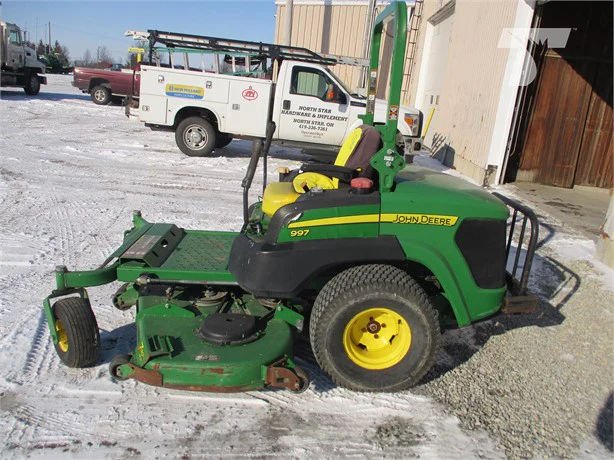
The John Deere 997 is a heavy-duty zero-turn mower built for large lawns, estates, commercial work, and rougher mowing conditions. Its diesel engine, strong frame, hydraulic drive system, and wide cutting deck give it more strength than a typical residential mower. Still, even a well-built machine can develop problems.
Common John Deere 997 problems include hard starting, overheating, PTO failure, deck vibration, uneven cutting, hydraulic leaks, weak drive performance, electrical faults, and expensive repairs caused by poor maintenance. Many issues start small. A dirty radiator screen, worn belt, loose wire, or plugged fuel filter can turn into a costly repair if ignored.
This guide explains the most common John Deere 997 problems, what causes them, how to check them, and when to stop DIY work. It is written for homeowners, experienced mower owners, and family members helping a senior choose or maintain a commercial-grade mower. Always match the repair to your skill level, yard size, slope, storage space, and budget.

John Deere 997 Problems: Quick Answer
The most common John Deere 997 problems are overheating, hard starting, PTO or clutch failure, deck belt and spindle wear, hydraulic leaks, weak hydrostatic drive, uneven cutting, and electrical faults. The best first steps are to inspect the air and fuel filters, clean the radiator screen, check engine oil and coolant, inspect belts, and test the battery. Follow the operator’s manual before servicing.

A John Deere 997 can last for many years with regular service. Its diesel engine and commercial frame are designed for long work cycles, but parts such as blades, belts, battery cables, pulleys, spindle bearings, tires, and hydraulic hoses still wear out.
A used 997 may be a good fit for a large, open yard or mowing business. It may be too large for a small residential lawn, narrow gate, steep hillside, or garage with limited room. A push mower, self-propelled mower, battery mower, or smaller zero-turn may cost less and be easier to use.
Why John Deere 997 Problems Happen
Most John Deere 997 problems come from heat, dirt, age, poor storage, skipped service, or worn parts. A commercial mower may run for many hours each week. Grass dust and dry debris can collect around the engine, radiator, deck, and cooling screens.

The 997 uses a diesel engine and hydrostatic drive. Hydrostatic drive uses hydraulic fluid and pumps to send power to the wheels. It gives smooth speed control, but it depends on clean fluid, good filters, tight hoses, and proper cooling.
Terrain also matters. Hills place more load on the engine and drive system. Wet grass adds weight to the deck and can clog the discharge path. Long, dry grass can create heavy dust. These conditions do not always cause an instant failure, but they can shorten belt, filter, blade, and cooling-system life.
Problems caused by skipped maintenance
A neglected mower often shows more than one symptom. For example, a dirty radiator screen can cause high engine temperature. Continued overheating may then damage hoses, seals, wiring, or engine parts.
Old diesel fuel can also create trouble. It may cause poor starting, smoke, injector problems, or uneven engine operation. Water in the fuel can damage the injection system, which is one of the more costly systems to repair.
Problems caused by age and hours
The age of a John Deere 997 matters, but service hours matter too. A clean, well-serviced high-hour mower may be a safer buy than a low-hour mower that sat outside with old fuel and little care.
Look for service records, cold-start behavior, oil leaks, worn steering components, tire wear, deck noise, and damage around the frame. A fresh paint job can hide rust or repairs, so inspect the underside and engine bay.
Common John Deere 997 Symptoms and Causes
The symptom often points to the system that needs attention. Use the table below as a starting point, not as a substitute for the service manual.
| Symptom | Likely causes | First checks |
|---|---|---|
| Engine cranks but will not start | Weak battery, fuel blockage, air in fuel, glow plug fault | Battery voltage, fuel level, filters, glow plug system |
| Engine starts hard when cold | Weak glow plugs, poor battery, thick oil, old fuel | Glow plug operation, battery cables, oil grade |
| Engine overheats | Clogged radiator screen, low coolant, damaged fan, dirty fins | Coolant level, screens, fan, radiator airflow |
| PTO will not engage | Blown fuse, safety switch, clutch fault, low voltage | Fuses, seat and brake switches, clutch connector |
| Deck vibrates | Bent blade, damaged spindle, loose pulley, worn belt | Blade condition, spindle play, pulley alignment |
| Uneven cut | Dull blades, low tire, deck out of level, worn deck parts | Tire pressure, blade height, deck pitch |
| Mower pulls to one side | Tire pressure mismatch, linkage issue, transaxle problem | Tire pressure, control levers, drive linkage |
| Weak drive on hills | Low fluid, clogged filter, hot hydraulic system, worn pump | Fluid, filter, leaks, cooling area |
| Oil or hydraulic leak | Damaged seal, loose fitting, cracked hose, worn gasket | Clean area, run briefly, locate fresh fluid |
| Electrical parts work on and off | Corrosion, loose ground, damaged harness | Battery terminals, grounds, connectors |
The key takeaway is simple: check easy items first. Many starting, PTO, and overheating complaints begin with dirt, weak voltage, low fluid, or a loose connector.
John Deere 997 Engine Problems
The engine is usually reliable when it receives clean fuel, clean air, correct oil, and steady cooling. Diesel problems can become expensive when a mower continues to run with low oil pressure, overheating, or contaminated fuel.

Hard starting or no-start condition
A John Deere 997 that cranks but does not start may have a fuel, electrical, or glow plug problem. Start with the battery. A diesel engine needs strong cranking speed, especially in cold weather.
Check the following:
- Battery charge and terminal condition
- Battery cables and ground connection
- Fuel level and fuel shutoff position
- Fuel filter condition
- Air in the fuel line
- Glow plug operation
- Engine stop solenoid
- Safety switches and fuses
If the engine does not crank, inspect the seat switch, brake switch, PTO switch, ignition circuit, and battery connections. A safety switch is designed to prevent unsafe starting. Do not bypass one as a permanent repair.
If the engine cranks quickly but does not fire, look more closely at fuel delivery and glow plug operation. A clogged filter can restrict diesel flow. Water in the fuel can also cause hard starting and rough running.
Rough running, smoke, or loss of power
Black smoke often means the engine is receiving too much fuel or not enough air. A dirty air filter, blocked intake, overloaded deck, or injector issue may be involved.
White smoke can occur during cold starting, but continued white smoke may point to poor combustion, coolant entry, or an injector problem. Blue smoke often suggests that the engine is burning oil.
A dirty air filter is a simple repair. Engine smoke that continues after filter service needs professional diagnosis. Avoid guessing with expensive injector parts.
Engine overheating
Overheating is one of the most important John Deere 997 problems to address quickly. Continued operation at high temperature can damage the engine.
Common causes include:
- Grass and dust packed into the radiator screen
- Low coolant
- Damaged radiator cap
- Blocked radiator fins
- Loose or damaged cooling fan belt
- Faulty fan or water pump
- Poor airflow around the engine
- Heavy grass and high ambient heat
Turn off the mower and let it cool before opening the cooling system. Hot coolant can cause serious burns. Clean the screen and radiator area with care. High-pressure water can bend fins or push debris deeper into the radiator, so use low pressure or compressed air when appropriate.
⚠️ Safety Warning: Never remove a radiator cap from a hot engine. Wear eye protection when blowing out grass and dust, and keep your face away from the airflow path.
Oil leaks and low oil pressure
Small oil leaks often come from filters, drain plugs, valve covers, seals, or damaged hoses. Clean oil from the engine before searching for the source. A dirty engine can make every leak look larger than it is.
Check the oil level on level ground. Use the oil grade listed in the John Deere manual for your temperature range. Do not overfill the crankcase.
Stop the engine if an oil-pressure warning appears, if the engine makes knocking sounds, or if the oil level drops quickly. This is a repair-shop issue unless you have the correct tools and diesel experience.
John Deere 997 PTO and Deck Problems
The cutting deck contains many moving parts. Blades, spindles, pulleys, belts, idlers, and the electric PTO clutch all face heavy loads. Deck problems can create poor cutting, vibration, noise, and belt failure.

PTO will not engage
The PTO turns the mower blades on and off. If the PTO does not engage, the cause may be electrical or mechanical.
Check:
- PTO switch and fuse
- Battery voltage
- Seat, brake, and neutral safety switches
- Wiring near the clutch
- PTO clutch connector
- Belt condition and routing
- Clutch air gap, if specified in the manual
A weak battery or poor ground can prevent the clutch from pulling in. A failed clutch may click, remain silent, or blow a fuse. If the clutch becomes hot or smells burnt, stop using the mower.
Deck belt comes off or breaks
A belt that repeatedly comes off is rarely fixed by installing another belt. Look for a bent pulley, seized spindle, weak idler spring, incorrect belt routing, damaged belt guard, or deck impact.
Grass buildup under the deck can also increase belt load. Clear the deck after the engine is off, the key is removed, and the blades have stopped. Replace a belt with the exact part number or approved equivalent listed for your deck.
Deck vibration
Strong vibration is a warning sign. A bent blade may result from hitting a rock, stump, edging block, or hidden object. A damaged spindle bearing can also create wobble.
Do not run the deck to “see if it smooths out.” Shut down the engine and inspect the blades, blade bolts, spindle housings, pulleys, and deck shell. Replace damaged blades as a matched set when appropriate, and balance blades according to the manual.
Uneven cut and striping problems
Uneven cutting can come from simple setup issues. Check tire pressure first. A low tire changes deck height on one side.
Other causes include:
- Dull or bent blades
- Deck not level
- Incorrect front-to-rear deck pitch
- Worn deck wheels
- Clogged discharge area
- Cutting too fast in tall grass
- Mowing wet turf
- Worn spindle or deck mounts
Lawn striping is the light-and-dark pattern made when grass bends in different directions. A heavy zero-turn can create stripes, but cut quality still depends on blade sharpness, deck setup, grass type, and mowing speed.
| Deck symptom | Common cause | Useful action |
|---|---|---|
| One side cuts lower | Low tire or uneven deck | Set tire pressure and level deck |
| Tips look ragged | Dull blades or wet mowing | Sharpen or replace blades; mow dry |
| Uncut strips remain | Blades too dull or speed too high | Reduce speed and inspect blade overlap |
| Belt squeals | Worn belt, seized pulley, debris | Stop and inspect pulleys and belt path |
| Deck shakes | Bent blade or bad spindle | Remove power and check blade play |
| Grass clumps | Wet turf, plugged deck, poor discharge | Mow when dry and clear deck safely |
Start with tire pressure and blade condition. These checks cost little and solve many cut-quality complaints.
John Deere 997 Hydrostatic Drive Problems
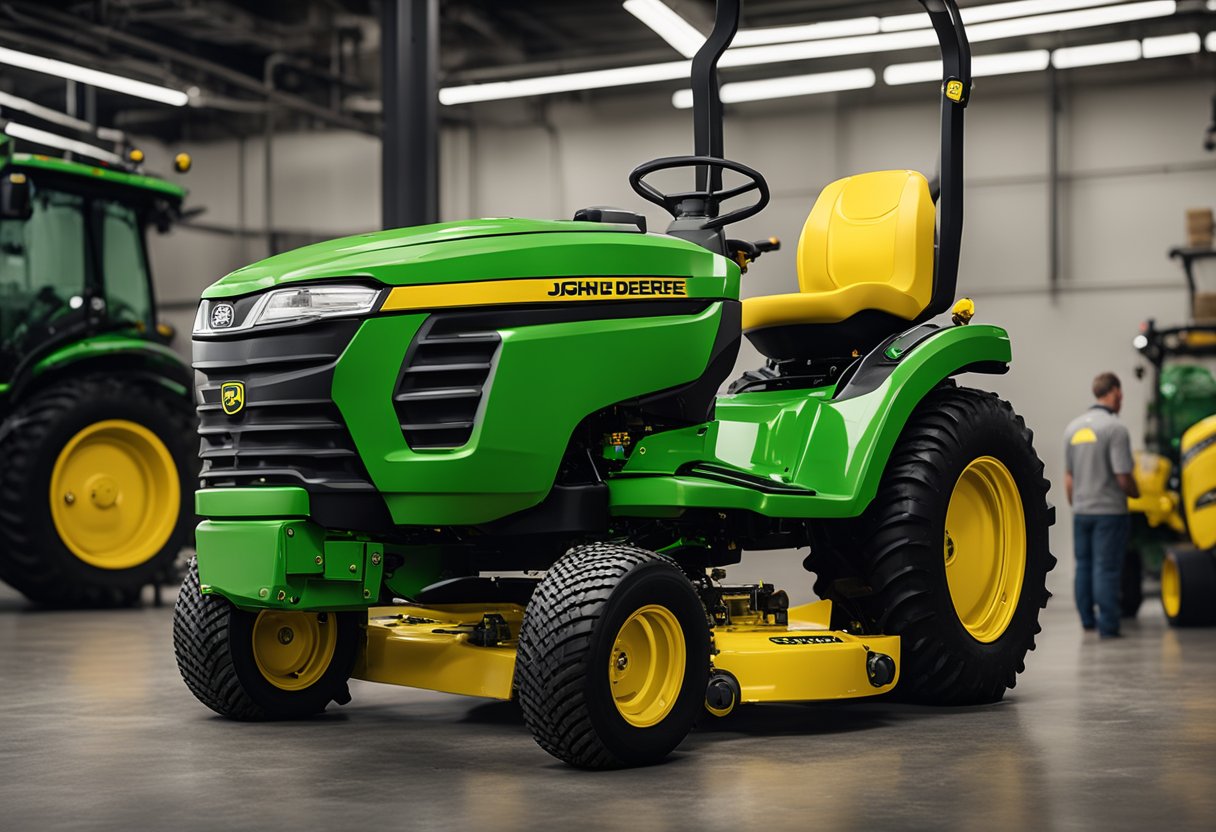
The hydrostatic drive system is a major reason buyers choose a 997. It gives separate control of the left and right drive wheels, which lets the mower turn within its own footprint. It also adds service needs that a simple push mower does not have.
Mower moves slowly or loses power
Weak drive performance may result from low hydraulic fluid, a plugged filter, a damaged hose, air in the system, poor cooling, worn linkage, or an aging pump or motor.
First inspect for leaks. Look around hoses, fittings, filters, pumps, and drive motors. Fresh oil is easier to spot after the area has been cleaned.
Check the fluid level and type listed in the manual. Using the wrong fluid can affect seals and system performance. Do not mix products unless the manual allows it.
If the mower works when cold but becomes weak after long use, heat may be involved. Clean the cooling area and avoid mowing beyond the machine’s condition. A worn hydrostatic pump may need a trained technician.
One side drives differently
A mower that pulls left or right may have unequal tire pressure or a control-linkage adjustment issue. It may also have a problem inside one transaxle or drive motor.
Check:
- Rear tire pressure
- Control lever position
- Linkage hardware
- Parking brake release
- Fluid level
- Signs of a leaking drive motor
Do not adjust the drive system by guesswork. Small changes can affect neutral position and safety. Use the model-specific service procedure.
Hydraulic leaks
Hydraulic oil can damage turf and create a slipping hazard. A small leak can become a major loss of pressure.
Place cardboard under the parked mower to help locate drips. Do not use your hand to search for a pressurized leak. Hydraulic fluid can enter skin through a tiny opening and cause a medical emergency.
🔧 Quick Fix: If the mower suddenly loses drive, stop on level ground, shut it down, and check for a low fluid level or fresh hose leak. Do not keep driving while the pump whines.
John Deere 997 Electrical Problems
Electrical issues often appear as intermittent faults. The mower may start one day, fail the next, or lose the PTO after vibration. Corrosion and loose grounds are common on machines stored outdoors.
Battery drains or will not charge
A weak battery may be caused by age, low use, a charging-system fault, or a parasitic drain. Check the battery terminals for white or green corrosion. Clean and tighten them with the battery disconnected.
A battery that repeatedly goes flat may need a charging-system test. Do not replace the battery several times without finding the cause.
Cold weather increases starting demand. A mower stored in an unheated shed may need a fully charged battery and the correct winter service plan. Follow the battery maker’s charging instructions.
Fuses blow repeatedly
A blown fuse protects the circuit. Replacing it with a larger fuse can damage the wiring or start a fire.
A repeated fuse failure may mean:
- Shorted wire
- Failed PTO clutch
- Damaged switch
- Pinched harness
- Water in a connector
- Wrong accessory connection
Inspect wiring near the deck, seat, engine, battery, and frame. Look for rubbed insulation and loose plugs. Use the correct fuse rating listed in the manual.
Safety switches and interlocks
The John Deere 997 uses safety systems to help prevent unintended movement or blade operation. A seat switch, brake switch, neutral switch, or PTO circuit can stop the mower from starting.
These switches can wear out or collect dirt. Test them as the manual directs. Never defeat a safety interlock for normal operation.
John Deere 997 Problems in Hot, Wet, Cold, and Hilly Conditions
Weather and terrain change the load on a mower. The same 997 may run well on a dry, flat field but struggle on a wet slope or in tall summer grass.

| Condition | Possible mower stress | Better practice |
|---|---|---|
| Hot weather | Overheating and belt load | Clean screens often and take breaks |
| Wet grass | Clogging, sliding, poor cut | Wait for dry turf |
| Cold weather | Hard starting and weak battery | Use correct oil and a strong battery |
| Dry grass and dust | Plugged screens and air filters | Clean the intake and radiator area |
| Tall grass | Engine and deck overload | Cut in stages and reduce speed |
| Slopes | Loss of traction or rollover risk | Follow slope limits and mow with care |
Never mow wet grass on a slope. A zero-turn mower can lose traction faster than many users expect. If a yard has steep areas, measure the slope and compare it with the operator’s manual before buying or operating the mower.
A riding mower may be a better fit for some hills, while a walk-behind mower may give better control in tight or sloped spaces. A zero-turn is not automatically the best choice for every large yard.
John Deere 997 Troubleshooting Steps
Use a simple order: safety, visual inspection, fluids, electrical checks, then system testing. This prevents wasted parts and reduces risk.

Step 1: Park and secure the mower
Park on a flat surface. Lower the deck, set the brake, turn off the engine, remove the key, and wait for moving parts to stop.
Wear safety glasses, hearing protection, work gloves, and closed-toe shoes. Keep children and pets away.
Step 2: Record the symptom
Write down when the problem happens. Note whether the mower is cold or hot, moving or stopped, cutting or traveling, and level or uphill.
These details help separate fuel, cooling, deck, electrical, and hydraulic faults.
Step 3: Check simple items
Inspect:
- Engine oil
- Coolant level
- Hydraulic fluid
- Fuel level and fuel quality
- Air filter
- Fuel filter
- Radiator screen
- Battery terminals
- Belts and pulleys
- Tire pressure
Step 4: Test one system at a time
Do not change the filter, adjust the linkage, replace the clutch, and change the wiring at once. Make one repair, then test safely. This keeps the cause clear.
Step 5: Use the correct parts
Confirm the mower model, deck size, engine type, serial number, blade style, belt number, filter number, and fluid specification. John Deere 997 versions and deck configurations can differ.
| DIY task | Skill level | Stop and seek help when |
|---|---|---|
| Clean radiator screen | Beginner | Fins are damaged or coolant leaks |
| Replace air filter | Beginner | Intake housing is damaged |
| Replace blades | Intermediate | Blade bolts are seized or spindle is loose |
| Replace belt | Intermediate | Routing is unclear or pulley is damaged |
| Test battery voltage | Beginner | Wiring is burnt or shorted |
| Service fuel system | Intermediate | Air will not bleed or injectors are suspect |
| Repair hydrostatic drive | Advanced | Pump, motor, or pressure testing is needed |
| Repair engine internals | Advanced | Low compression or oil-pressure failure appears |
Most owners can handle cleaning, inspection, filters, and blades. Hydraulic, fuel-injection, and internal engine work may need a qualified repair shop.
John Deere 997 Maintenance Schedule
Regular maintenance prevents many John Deere 997 problems. Use the owner’s and engine manuals for exact intervals because schedules vary by model, engine, deck, and operating conditions.
| Maintenance item | Why it matters | When to check |
|---|---|---|
| Engine oil and filter | Protects moving engine parts | At the manual interval |
| Air filter | Maintains airflow and power | Often in dusty conditions |
| Fuel filter | Protects injectors and fuel flow | At the manual interval |
| Radiator screen | Prevents overheating | Before every mowing session |
| Coolant | Supports engine temperature control | At scheduled checks |
| Hydraulic fluid and filter | Protects pumps and drive motors | At the manual interval |
| Blades | Supports a clean cut | Before mowing and after impacts |
| Belts and pulleys | Prevents deck failure | Regular visual inspection |
| Battery and terminals | Supports starting and safety circuits | Monthly or before storage |
| Grease points | Reduces wear and noise | As listed in the manual |
Dusty lots, dry climates, and frequent commercial use may require more frequent cleaning. Keep a simple log with the date, hour meter reading, oil type, filter part number, and repair notes.
Fuel care
Use fresh diesel from a clean source. Store fuel only in approved containers and follow local rules. Fuel stabilizer may help during storage when the product is approved for diesel and used at the label rate.
Do not store old fuel in an unapproved container. If fuel looks cloudy or contains water, ask a service professional about safe draining and disposal.
Blade and deck care
Sharp blades reduce the effort needed to cut grass. They do not make a dull, damaged deck safe. Inspect blade bolts, spindle bearings, deck hangers, and discharge guards.
Use the correct mowing height for the turfgrass and season. Cutting too low can stress grass during drought and heat. Cutting too much at once can overload the mower.
Storage care
Before long storage, clean the deck, remove packed grass, service fluids as directed, protect the battery, and store the mower indoors if possible. Keep the machine dry and away from fuel ignition sources.
A shed must have enough door width, floor strength, and ventilation. Measure the mower and the doorway before purchase. A large zero-turn that cannot fit through the gate is a poor match, even if the yard is large.
🌿 Eco or Disposal Note: Recycle lithium-ion batteries at a designated battery drop-off. Take old gas, diesel, and oil to a household hazardous-waste site. Donate or recycle a usable mower instead of sending it to a landfill.
Repair Costs and Ownership Value
Repair cost depends on the failed part, labor rate, model year, deck size, and access to parts. A filter or belt is usually far less costly than a hydrostatic pump, diesel injector, radiator, or engine repair.

A used John Deere 997 can be worth repairing when the frame is sound, the deck is usable, the engine has good compression, and the drive system works correctly. It may not be worth repairing when several major systems fail at once.
Before buying a used mower, budget for immediate service:
- Engine oil and filter
- Fuel filter
- Air filter
- Hydraulic inspection
- Blade sharpening or replacement
- Belt inspection
- Battery testing
- Tire and deck checks
Do not judge value by purchase price alone. Add transport, storage, parts, labor, fuel, and time. A smaller electric mower may be cheaper for a small yard, while a commercial diesel mower may make sense for a large property or mowing business.
When a 997 may be too much mower
A 997 may be a poor fit for:
- Small yards with narrow gates
- Lawns with many trees and tight corners
- Steep slopes
- Users uncomfortable with lever steering
- People without indoor storage
- Buyers with a limited repair budget
- Neighborhoods with strict gas-equipment rules
For a small, flat yard, a battery mower or self-propelled mower may be easier. For a senior, controls, seat access, vibration, noise, and safe slope handling matter as much as cutting width.
Pros and Cons of the John Deere 997
The 997 offers commercial strength, but it has trade-offs. This table can help buyers decide whether the platform suits the yard and user.

| Pros | Cons |
|---|---|
| Diesel power and strong work capacity | More complex than a push mower |
| Zero-turn maneuverability | Can be costly to repair |
| Comfortable commercial mowing platform | Large size needs storage space |
| Built for frequent use | Diesel noise may bother neighbors |
| Wide deck options may reduce mowing time | Not ideal for steep or wet slopes |
| Strong used-market interest in good units | Age and hours can hide wear |
The 997 suits owners who mow large, open areas and can handle commercial mower maintenance. It is less suitable for a small lawn, a tight lot, or a buyer seeking low-cost ownership.
How to Prevent the Most Common 997 Failures
Prevention is less expensive than repeated emergency repair. A short inspection before mowing can catch many problems while they are still small.

Use this routine:
- Walk around the mower.
- Check for leaks under the engine and drive system.
- Inspect the radiator screen.
- Check engine oil and coolant.
- Look at belts and deck pulleys.
- Check tire pressure.
- Confirm guards and discharge parts are installed.
- Test the brakes and controls.
- Remove sticks, wire, rocks, and toys from the lawn.
- Stop immediately if vibration, smoke, warning lights, or unusual noise appears.
Mow at a steady speed. Avoid hitting curbs, tree roots, and hidden objects. Keep blades sharp, but do not remove safety guards to improve discharge.
💡 Pro Tip: Take a photo of the belt routing and wiring before disassembly. Also write down the exact model and serial number before ordering parts. This simple habit prevents many wrong-part repairs.
When to Call a John Deere Repair Shop
Some problems need trained service equipment. A repair shop is the safer choice when diagnosis involves fuel injection, compression, hydraulic pressure, engine timing, or internal electrical faults.

Call a professional if:
- The engine loses oil pressure
- Coolant enters the oil
- The mower overheats after cleaning
- The hydrostatic drive is weak or noisy
- A hydraulic leak sprays under pressure
- The PTO clutch repeatedly blows fuses
- The engine has severe smoke or knock
- The frame or deck is cracked
- The mower moves with the controls in neutral
- You cannot confirm a safe repair
If the mower moves unexpectedly, stop using it. Transport it safely rather than driving it onto a trailer under uncertain control.
A dealer may have model-specific service information and diagnostic tools. An independent outdoor power equipment shop may offer lower labor rates. Ask for a written estimate and confirm whether replacement parts are new, rebuilt, or used.
Choosing Between Repair and Replacement
Repair the mower when the core systems are healthy and the problem is limited to normal wear parts. Consider replacement when repair costs approach the value of the machine or when several major systems show damage.
Think about the whole yard:
- A large, flat lawn may justify a commercial zero-turn.
- A small yard may favor a battery or self-propelled mower.
- A steep lawn may need a different mower design.
- A tight lot may work better with a smaller deck.
- A noise-sensitive neighborhood may favor an electric model.
- A senior user may need easier access and simpler controls.
- A gift buyer should confirm storage, transport, and maintenance support.
Alternative equipment includes gas riding mowers, smaller zero-turn mowers, battery riding mowers, robotic mowers, reel mowers, and walk-behind electric mowers. String trimmers, edgers, and leaf blowers still help with areas the 997 cannot reach.
John Deere 997 FAQs
Q: What is the most common John Deere 997 problem?
A: Overheating, deck wear, hard starting, PTO faults, hydraulic leaks, and electrical problems are common concerns. The exact cause depends on the mower’s age, hours, service history, deck, weather, and use.
Q: Why does my John Deere 997 crank but not start?
A: Check the battery, fuel supply, fuel filter, glow plug system, fuses, safety switches, and stop solenoid. If the engine cranks strongly but will not fire after basic checks, a diesel technician should test fuel delivery and compression.
Q: Why does a John Deere 997 overheat?
A: A plugged radiator screen, dirty radiator fins, low coolant, a damaged fan, or heavy mowing load can cause overheating. Stop the mower, let it cool, and inspect the cooling system. Do not open a hot radiator.
Q: Why will the PTO not engage?
A: A blown fuse, weak battery, faulty switch, safety interlock, damaged wire, or failed PTO clutch may be responsible. Check the manual for the correct test procedure and fuse rating.
Q: How often should I service a John Deere 997?
A: Follow the operator’s manual and engine manual for exact hour-based intervals. Inspect the radiator screen, leaks, belts, blades, and fluids before each mowing session. Dusty and commercial use may require more frequent cleaning.
Q: Is a used John Deere 997 worth buying?
A: It can be worth buying for a large, open yard or commercial workload when the engine, deck, hydrostatic drive, and frame are sound. It may not be worth buying for a small yard, tight gate, steep slope, or limited repair budget.
Q: How long does a John Deere 997 last?
A: Service life varies with hours, maintenance, storage, terrain, and repairs. A well-maintained mower can serve for many years, but wear parts and major systems eventually need service. Hour-meter readings alone do not show the full condition.
Q: Can I use a John Deere 997 on hills?
A: Use it only within the slope limits and procedures in the operator’s manual. Never mow wet grass on a slope. A large zero-turn may lose traction or become difficult to control on terrain that looks manageable.
Q: What should I check before buying a used 997?
A: Start it cold, inspect for smoke and leaks, test the PTO, drive straight and in reverse, check deck vibration, examine the frame, inspect the radiator, review service records, and confirm the serial number and parts availability.
Q: Are John Deere 997 repairs expensive?
A: Some repairs are routine, such as filters, belts, blades, and batteries. Hydrostatic, injector, electrical harness, radiator, and engine repairs can cost much more. Get an estimate before approving major work.
Q: Why does my 997 leave an uneven cut?
A: Check tire pressure, blade sharpness, deck level, deck pitch, spindle condition, and mowing speed. Wet grass and tall turf can also cause clumps or missed strips.
Q: Can I store a John Deere 997 outside?
A: Indoor storage is better. Outdoor storage increases exposure to rain, sun, dust, corrosion, and rodents. If outdoor storage is unavoidable, use a suitable cover, protect the battery, and follow the fuel and fluid storage instructions.
Q: What safety gear should I use?
A: Wear safety glasses, hearing protection, work gloves, long pants, and closed-toe shoes. Clear debris first, keep children and pets away, and disconnect the spark plug or remove the battery before servicing when the design allows. For this diesel mower, follow the manual’s specific service steps.
Q: Are there local rules for using a diesel mower?
A: Some cities, counties, HOAs, and planned communities limit gas or diesel equipment, operating hours, or noise. Check local noise ordinances, HOA rules, fuel storage laws, and any gas-equipment restrictions before buying or using the mower.
Final Thoughts
John Deere 997 problems are often manageable when found early. Clean cooling screens, fresh filters, correct fluids, sharp blades, good battery connections, and regular inspections prevent many failures.
The 997 suits a large, open yard, acreage, or commercial mowing workload. It is less suitable for a small lot, steep slope, narrow gate, limited storage area, or buyer who wants simple and low-cost maintenance. Before buying a used unit, inspect the engine, deck, drive system, frame, electrical system, and service records as one complete machine.
Treat unusual heat, vibration, smoke, hydraulic leaks, and loss of control as warnings. Follow the owner’s manual, use the correct parts, and call a qualified technician when the repair involves pressure, fuel injection, internal engine work, or unsafe movement.
Affiliate disclosure: This article may contain affiliate links. If you buy through a link, we may earn a commission at no extra cost to you. Product availability, specifications, compatibility, and prices can change, so confirm details with the manufacturer, dealer, product page, and owner’s manual before purchasing parts or equipment.