Best Soil Scoop: Find The Right Garden Tool
The best soil scoop makes potting, transplanting, and moving loose soil faster, cleaner, and much easier.
If you have ever spilled potting mix across the floor, strained your wrist with a blunt hand shovel, or struggled to fill a small planter, you know the value of a good scoop. A well-made soil scoop helps you move soil with better control. It can also reduce waste around containers and garden beds. I compared nine popular options for grip, size, material, digging ability, ease of cleaning, and value. The list includes small plastic scoops, a heavy-duty steel model, bonsai tools, and a food-safe scoop that may suit special garden tasks.
See the differences between my top picks at a glance.
| Product | Material | Best Use | Main Strength | Size/Capacity | Check Price |
|---|---|---|---|---|---|
| 2-in-1 Plastic Garden Scoop | Plastic | Potting and light digging | Two-piece function | Not stated | View on Amazon |
| Home-X Two-Scoop Set | Plastic | Small pots and bonsai | Two sizes | 6½ and 6¼ inches | View on Amazon |
| Fiskars FiberComp Scoop | Fiber composite | General potting | Light and rustproof | Not stated | View on Amazon |
| Baolaili Bonsai Scoop | Plastic | Bonsai and indoor plants | Compact grip | Not stated | View on Amazon |
| Vikan Remco 16-oz Scoop | Food-safe plastic | Clean, measured scooping | BPA-free design | 16 oz | View on Amazon |
| Garden Weasel Steel Scoop | Steel | Hard soil and large pots | Heavy-duty build | Oversized | View on Amazon |
| Second 2-in-1 Plastic Scoop | Plastic | Soil transfer | Mini scoop included | Not stated | View on Amazon |
| Haliaeetus Stainless Scoop | Stainless steel | Compost and big pots | One-cup volume | 1 cup | View on Amazon |
| Sifter Soil Scoop | Plastic | Succulents and fine mix | Built-in sifter | 2.95 x 2.95 x 8.66 in | View on Amazon |
| Sol Soils 8-inch Scoop | Not stated | Transplanting and repotting | Simple control | 8 inches | View on Amazon |
2-in-1 Plastic Garden Soil Scoop

This 2-in-1 garden soil scoop targets everyday potting work. Its plastic body keeps the tool light in the hand. The design includes a larger scoop and a mini scoop for different jobs. That makes it useful when you switch from filling a planter to working around a small plant.
I would use it for loose potting mix, compost, perlite, and light garden soil. Plastic will not rust, and it should rinse clean with little effort. It is not the right tool for prying packed clay or stones. Still, its two-part design gives indoor gardeners useful flexibility at a low tool count.
Pros:
- Two scoop sizes for varied plant work
- Lightweight plastic construction
- Useful for potting and soil transfer
- Easy to rinse after use
- Compact for indoor storage
Cons:
- Plastic may flex under heavy force
- Not suited to hard, compact soil
- Product dimensions are not clearly listed
What Amazon Buyers Are Saying
Buyer feedback commonly focuses on the convenience of having two scoop sizes in one product. Users who pot houseplants value the light feel and easy handling. As with many plastic hand tools, some buyers may find it less suitable for forceful digging or dense soil. Check current reviews for the latest comments on strength and fit.
My Recommendation
This is a practical choice for light potting work and indoor plants. I recommend it when versatility matters more than digging power.
Home-X Two-Scoop Set
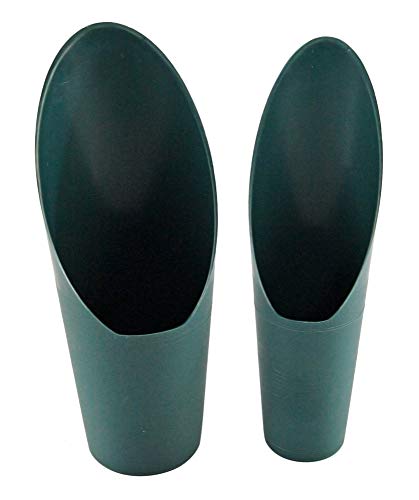
The Home-X set gives you two small scoops in different sizes. The listed sizes are 6½ by 2½ inches and 6¼ by 1¾ inches. That difference helps when you handle both larger containers and narrow bonsai pots. The green plastic also gives the tools a clear look in a crowded shed.
These scoops suit transplanting, weeding, potting, and small soil jobs. Their compact shape offers better control than a large garden trowel near delicate roots. They will work best with loose mix rather than hard ground. For someone building a basic indoor gardening kit, two sizes add real value.
Pros:
- Includes two useful scoop widths
- Good control in small containers
- Suitable for bonsai and houseplants
- Light and easy to store
- Useful for several light garden tasks
Cons:
- Plastic may not handle hard digging
- Small size limits each load
- Not ideal for moving large amounts of soil
What Amazon Buyers Are Saying
Amazon buyers often like the choice of two sizes and the compact shape. The set appeals to people who work with potted plants, seedlings, and bonsai. Common concerns with small plastic scoops center on load size and strength during tough work. The listed dimensions make the intended light-duty use clear.
My Recommendation
I recommend this set for indoor gardeners who want simple tools for small pots. It is a strong value pick when two sizes help your routine.
Fiskars FiberComp Soil Scoop

The Fiskars FiberComp soil scoop uses a fiber composite body. Fiskars describes it as lightweight and rustproof. That makes it a useful middle ground between a thin plastic scoop and a metal hand shovel. The hand-shovel shape should feel familiar during planting and potting.
I like this model for gardeners who want a durable tool without metal care. The hang hole helps with storage after cleaning. It should handle loose soil, potting mix, and routine planting well. I would still avoid using it as a lever in packed ground, since no small scoop should replace a digging spade.
Pros:
- Lightweight fiber composite body
- Rustproof material
- Useful for planting and potting
- Hang hole supports easy storage
- Recognizable hand-shovel format
Cons:
- Not designed for deep digging
- Composite has less bite than steel
- Capacity details are not stated here
What Amazon Buyers Are Saying
Buyer discussions often praise the low weight and the fact that the material does not rust. Many gardeners look for those traits when they leave tools in a shed or use them with wet mix. Some users may want a sharper edge or more force for firm soil. Read current buyer comments if heavy outdoor use is your main goal.
My Recommendation
This is one of the best soil scoop choices for balanced everyday use. I would buy it for regular potting, planting, and easy storage.
Baolaili Bonsai Soil Scoop

The Baolaili bonsai scoop keeps the design simple. It uses a black plastic body with an ergonomic grip. Its compact profile fits the close work that bonsai and indoor plant care often require. You can guide soil around roots without the bulk of a full-size garden trowel.
This scoop makes sense for small amounts of soil, grit, sand, and planting mix. Plastic keeps it light and easy to wash. Its main limit is force, so I would not choose it for rocky beds or packed clay. For careful bonsai work, the simple shape may be exactly what you need.
Pros:
- Compact size for bonsai pots
- Ergonomic grip design
- Lightweight plastic construction
- Easy to clean
- Good control around plant roots
Cons:
- Limited for large containers
- Plastic is not ideal for hard soil
- Capacity is not stated
What Amazon Buyers Are Saying
Feedback for small bonsai tools tends to focus on control, size, and ease of use. Buyers who work with succulents and bonsai often prefer a narrow scoop that does not disturb nearby roots. The main concern is usually the limited load per scoop. Consider your pot size before ordering.
My Recommendation
I recommend it for bonsai, succulents, and indoor plants. It is less useful as an all-purpose outdoor garden scoop.
Vikan Remco 16-Ounce Scoop

The Vikan Remco 63002 is a 16-ounce plastic hand scoop made for food service and kitchen use. Its BPA-free, food-safe design may appeal to gardeners who want a clean scoop for seed, soil, or amendments. The green color also supports quick tool identification. Its measured capacity gives each load a more consistent size.
This is not a classic digging trowel. It works best for transferring loose material from a bag or bin. The smooth plastic should clean with ease, which helps when you keep different materials separate. I would choose it for neat scooping, not for breaking soil or working around tough roots.
Pros:
- 16-ounce listed capacity
- BPA-free food-safe plastic
- Easy to clean
- Useful for measured transfers
- Color-coded design
Cons:
- Not a digging tool
- May feel large for tiny pots
- Less suited to firm outdoor soil
What Amazon Buyers Are Saying
Buyers often value this type of scoop for its sturdy plastic feel, smooth cleaning, and useful capacity. Its food-service purpose attracts people who need a clean transfer tool. Some gardeners may find the shape less precise than a narrow potting scoop. Use it when volume and hygiene matter more than root-level detail.
My Recommendation
This is a specialized pick. I recommend it for clean, repeated transfers of loose material rather than normal digging.
Garden Weasel Oversized Steel Scoop

The Garden Weasel oversized scoop is the heavy-duty option in this group. Its steel body gives it more strength than the plastic models. The oversized shape should move more soil with each pass. That makes it useful for large containers, raised beds, and bags of potting mix.
I would pick this tool when you need to dig as well as scoop. Steel can handle more pressure, but it also adds weight. Clean and dry it after wet use to help limit corrosion. Its larger profile may feel awkward in a tiny bonsai pot, yet it is a strong choice for demanding garden work.
Pros:
- Heavy-duty steel construction
- Moves larger amounts of soil
- Useful for digging and planting
- Good fit for large pots and beds
- Mini-shovel shape offers leverage
Cons:
- Heavier than plastic scoops
- May be too large for small pots
- Needs proper drying after wet use
What Amazon Buyers Are Saying
Buyer feedback commonly highlights the strong steel build and larger scoop area. Gardeners who move soil, mulch, or potting mix tend to value its capacity. The most likely trade-off is weight, especially during long sessions. Buyers with small containers may prefer a narrower tool.
My Recommendation
This is my choice for tough soil work and large containers. It earns a high rating for strength, but it is more tool than many indoor gardeners need.
Second 2-in-1 Plastic Soil Scoop

This second 2-in-1 garden scoop follows the same useful idea: one larger plastic scoop and one mini scoop. It targets soil digging, transporting, cultivation, and potting. The plastic format keeps the tool easy to carry. It also suits gardeners who want a simple pair for indoor and outdoor container work.
The smaller piece should help with narrow pots and detail work. The larger piece can speed up filling planters with loose mix. I would keep both tools for light tasks and avoid twisting them in hard soil. Since the listing does not state full dimensions, check the current product page before buying.
Pros:
- Includes a larger and mini scoop
- Useful for potting and transport
- Lightweight design
- Easy to clean
- Good for basic plant care
Cons:
- Plastic limits heavy digging
- Dimensions are not clearly stated
- May overlap with other two-scoop tools
What Amazon Buyers Are Saying
Reviews for this type of product usually value the two-tool format and low weight. Buyers often use the smaller scoop for tight spaces and the larger one for soil transfer. The main concern remains long-term strength under hard use. Look for recent comments about flexibility and size before placing an order.
My Recommendation
This is worth considering if you want a flexible plastic set for light work. Compare its current price with the Home-X set before choosing.
Haliaeetus Stainless Steel Soil Scoop
 stainless steel potting soil scoop” style=”max-width:100%;height:auto;”>
The Haliaeetus potting scoop uses stainless steel and has a listed one-cup capacity. Its bend-proof design aims to support repeated soil transfer. The wooden handle adds a warmer feel than an all-plastic tool. This combination suits gardeners who want strength and a comfortable grip.
A one-cup load can make it efficient for compost, potting soil, and larger containers. Stainless steel also makes sense for damp garden materials when you clean it after use. The bigger bowl may not fit well between small leaves or close roots. For general planting and bulk potting, it offers a useful balance of volume and control.
Pros:
- Stainless steel scoop body
- Listed one-cup capacity
- Bend-proof design claim
- Comfortable wood handle
- Useful for compost and potting
Cons:
- Large capacity may be too much for small pots
- Wood needs more care than plastic
- Product is less suited to fine bonsai work
What Amazon Buyers Are Saying
Buyers looking at this model tend to focus on its large volume, metal body, and wood handle. Those features can reduce the number of trips from a soil bag to a planter. Some gardeners may prefer a lighter plastic scoop for long indoor sessions. Check current reviews for handle comfort and finish quality.
My Recommendation
I recommend this scoop for compost bins, large planters, and repeated potting. It is a strong alternative to a small hand trowel when capacity matters.
Garden Soil Scoop With Built-In Sifter

This plastic soil scoop adds a built-in sifter to the hand-shovel design. The listed dimensions are 2.95 by 2.95 by 8.66 inches. That feature may help separate larger bits from potting mix as you fill a container. It is especially interesting for succulent, cactus, and other plants that need careful control of their growing medium.
The sifter can save a separate step during small planting tasks. Its plastic body should stay light and resist rust. A built-in screen can also slow the work if the mix is wet or packed. I would choose it for loose, dry material and avoid forcing large clumps through the openings.
Pros:
- Built-in soil sifter
- Useful for succulents and potted plants
- Listed compact dimensions
- Rust-free plastic construction
- Combines scooping and screening
Cons:
- Wet soil may clog the sifter
- Less useful for hard digging
- Screen size may not suit every mix
What Amazon Buyers Are Saying
People interested in this design usually like the idea of screening soil without carrying another tool. The compact form suits small pots and indoor work. A common limitation with any sifter scoop is clogging when soil holds too much moisture. Use dry or lightly moist material for the smoothest results.
My Recommendation
This is a smart niche pick for fine potting mix and small plants. Buy it if the built-in sifter solves a real part of your routine.
Sol Soils 8-Inch Potting Scoop

Sol Soils Granola Guy’s Scrumptious scoop measures 8 inches and targets transplanting, potting, repotting, and plant care. Its simple form should feel easy to control in a container. The listing also names soil and sand as suitable materials. That broad use makes it a practical option for routine plant care.
This scoop sits between a tiny bonsai tool and a large garden shovel. Its length can help keep your hand away from soil and plant leaves. The listing does not state the material, so I would inspect the current details before buying. It is best for gardeners who want a straightforward tool without extra parts.
Pros:
- Useful 8-inch length
- Designed for potting and repotting
- Suitable for soil and sand
- Simple design is easy to learn
- Good middle size for container plants
Cons:
- Material is not stated here
- May not suit hard ground
- No built-in sifter or size options
What Amazon Buyers Are Saying
Buyers who choose a simple potting scoop often value its control and easy use. An 8-inch tool can feel more comfortable than a very short scoop during repotting. The main point to confirm is the body material and how it handles repeated use. Current Amazon reviews can help clarify that detail.
My Recommendation
I recommend it for basic repotting and plant care. It is a sensible choice when you want a medium-length scoop without extra features.
How to Choose the Best Soil Scoop
Choosing the best soil scoop starts with the work you do most often. A bonsai grower needs control. A vegetable gardener may need strength. Someone who fills many pots may care most about capacity. I suggest matching the scoop to your soil, container size, hand comfort, and cleaning routine.
1. Match the Scoop to Your Soil and Pot Size
Loose potting mix works well with plastic, composite, and light metal scoops. Hard soil needs a stronger edge, such as steel. Small pots need a narrow bowl so you can avoid leaves and roots. Large planters benefit from an oversized or one-cup scoop that moves more material at once.
2. Check Material, Grip, and Cleaning Needs
Plastic does not rust and feels light. Fiber composite offers a similar low-care benefit with a more solid feel. Steel can handle more force, but you should dry it after use. A wood handle may feel warm and comfortable, yet it needs more care than molded plastic. Look for a grip that feels secure when your hand is wet or gloved.
3. Compare Capacity, Features, and Long-Term Value
A large scoop saves trips but may feel clumsy in a small pot. A mini scoop gives control but takes longer to fill a large planter. Extra features can help when you will use them. A built-in sifter suits fine mixes, while two sizes suit varied plant care. Do not pay more for features that will stay unused. The best soil scoop gives the right mix of strength, control, and useful capacity.
Final Verdict: Which Should You Buy?
For most gardeners, I recommend the Fiskars FiberComp Soil Scoop. It is light, rustproof, easy to store, and suited to daily potting. Choose the Garden Weasel for hard soil or the Home-X set for small pots and bonsai.
The best soil scoop should fit your plants, soil, and hand. Choose a strong steel model for force, or a light plastic scoop for clean indoor work and easy care.
FAQs Of best soil scoop
What is the best soil scoop for indoor plants?
The Fiskars FiberComp is a strong all-around choice. The Home-X set is better for small pots, bonsai, and tight spaces.
Is a plastic soil scoop strong enough for potting mix?
Yes. Plastic works well with loose potting mix, compost, and light soil. It is not ideal for prying hard or rocky ground.
What is the best soil scoop for hard soil?
A steel model, such as the Garden Weasel oversized scoop, is better for firm soil and heavier digging.
Are soil scoops useful for bonsai?
Yes. A narrow, small scoop gives better control around bonsai roots. The Home-X set and Baolaili scoop suit this task.
How should I clean and store a soil scoop?
Brush or rinse off soil after use. Dry steel and wood parts well, then store the scoop in a dry place.

2 Comments