
Craftsman Lawn Mower Not Starting: Quick Fixes That Work
A Craftsman lawn mower that will not start can turn a simple Saturday yard job into a frustrating guessing game. The good news is that most no-start problems have clear causes. An empty tank, stale fuel, a wet spark plug, a clogged air filter, a weak battery, or a safety switch can often explain the problem.
Start with the simple checks before removing parts. Think of the mower like a small chain: fuel, air, spark, and safety controls must all work together. If one link fails, the engine may crank but not run—or may not crank at all.
This guide covers Craftsman push mowers, self-propelled mowers, riding mowers, and many battery models. It is written for new homeowners, DIY users, and anyone helping a senior or family member get a mower running again.
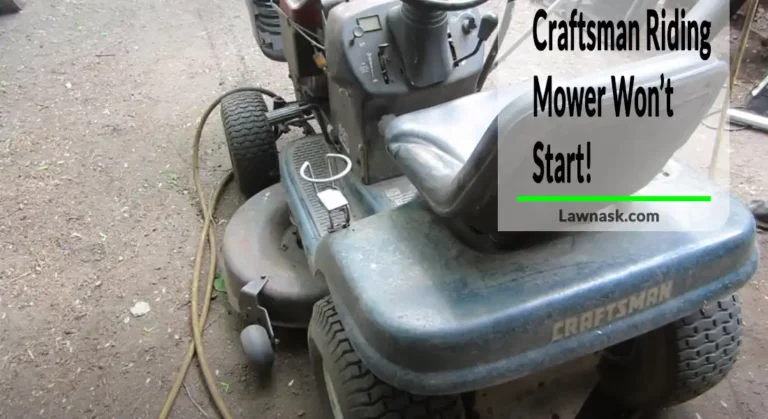
Why a Craftsman mower may not start
The main reason a Craftsman mower will not start is that the engine is missing fuel, air, spark, or a safe start signal. A mower that cranks but does not run has a different problem from one that makes no sound at all.

A gas Craftsman mower needs a clean fuel supply, fresh air, ignition spark, and proper engine speed. A battery mower needs a charged battery, a working safety key, a closed handle or control bar, and a sharp start command. A riding mower adds seat, brake, blade, and parking-brake switches.
Cold weather, wet grass, long storage, and poor fuel storage can make the issue worse. Grass clippings can also block the deck, bind the blade, or prevent a safety system from working.
The first question: does the engine crank?
“Cranking” means the engine turns when you pull the starter cord or turn the key. This one detail narrows the search.
| What happens | Most likely area | First checks |
|---|---|---|
| Nothing happens | Battery, switch, fuse, cable, or safety control | Battery, key, brake, handle, fuse |
| A click but no crank | Weak battery, bad solenoid, poor cable | Battery charge and cable ends |
| Engine cranks but will not run | Fuel, air, spark, or choke | Fuel, spark plug, air filter |
| Engine starts and then dies | Fuel flow, choke, carburetor, or safety switch | Fuel cap, filter, carburetor |
| Engine runs but blade will not engage | Blade control, belt, clutch, or switch | Control cable, belt, deck |
The takeaway is simple: do not begin by replacing random parts. Find out whether the engine turns first, then test the matching system.
Quick answer: how to fix a Craftsman mower that will not start
Check the fuel, oil level, battery, safety controls, air filter, and spark plug in that order. Use fresh fuel, charge or replace the battery if needed, clear debris, and confirm the handle or brake control is engaged. If the engine cranks but still will not start, inspect the spark and fuel system. Disconnect the spark plug wire or remove the battery before servicing, and follow the owner’s manual.

A basic fix may take 10 minutes. A carburetor cleanout, failed ignition coil, damaged wiring harness, or internal engine problem may need a repair shop. Do not bypass a safety switch. It protects the operator from an unexpected blade start.
Start with these symptoms
The sound and timing of the failure often reveal more than the mower’s age. Notice what happens when you pull the cord, press the start button, or turn the key.

A mower that ran last week may have a simple fuel issue. A mower that stopped after hitting a stump may have a bent blade, damaged crankshaft, loose wire, or blocked deck. A mower that sat all winter may have stale fuel or a discharged battery.
The engine is silent
If the engine makes no sound, check the safety controls first. A push mower may need the control bar held against the handle. A riding mower may need the brake pedal pressed, the parking brake set, and the blades switched off.
On an electric Craftsman mower, remove and reinstall the battery. Check the charge indicator and inspect the battery contacts. A battery can show some charge but still lack enough power under load.
You hear a click
A click often points to low battery power or a problem with the starter circuit. On a riding mower, check the battery terminals, ground cable, fuse, and starter solenoid. Corrosion can block current even when the battery appears charged.
Do not hold the key for long periods. Short attempts reduce starter heat and protect the battery.
The engine cranks but does not start
This symptom usually points to fuel, air, or spark. Confirm that the fuel shutoff is open if the mower has one. Check that the choke is set for a cold engine and moved off after the engine starts.
A flooded engine may smell strongly of gas. Let it sit for several minutes, then follow the manual’s starting procedure. Do not keep pumping the primer bulb again and again.
The engine starts and then stops
A mower that starts and dies may have a blocked fuel cap vent, dirty carburetor, clogged air filter, or fuel line restriction. It may also have a safety switch that loses contact when the mower vibrates.
If it stops when you engage the blade, inspect the blade area only after removing the spark plug wire or battery. Never place your hand under the deck while the blade can move.
Common causes and matching fixes
Most Craftsman mower starting problems fall into a few groups. Use the table below as a fast guide, then work through the detailed checks.

| Cause | Common sign | Correct action |
|---|---|---|
| Empty or stale fuel | Cranks but will not run | Drain old fuel and add fresh fuel |
| Low oil | Engine may refuse to start | Check oil on level ground |
| Dirty air filter | Starts poorly or smokes | Clean or replace the filter |
| Bad spark plug | No ignition or rough start | Inspect, gap, or replace it |
| Flooded engine | Strong fuel smell | Wait and use the clear-flood procedure |
| Dead battery | Clicks or stays silent | Charge, test, or replace battery |
| Safety switch fault | No crank or blade lockout | Inspect controls; do not bypass |
| Blocked carburetor | Starts only with spray or dies | Clean or service carburetor |
| Clogged deck | Blade will not turn freely | Remove power and clear grass |
| Damaged belt or cable | Blade or drive does not work | Inspect and replace as required |
The fastest path is to match the symptom to the system. A new spark plug will not fix a dead battery, and a new battery will not fix varnish in a carburetor.
Step-by-step gas mower troubleshooting
Work from easy checks to more involved checks. Keep the mower on a flat surface, remove the key, and disconnect the spark plug wire before touching the blade, belt, or underside of the deck.
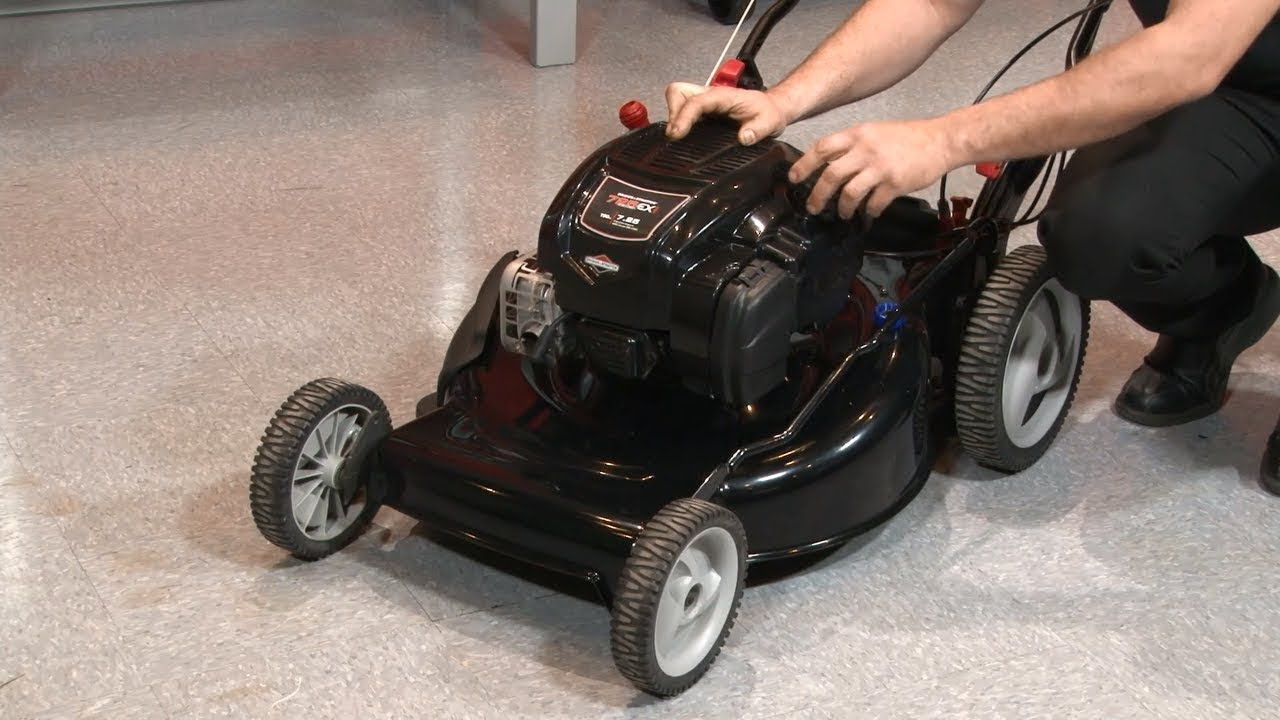
1. Check the fuel
Use the correct fuel listed in the Craftsman manual. Fresh gasoline is important because fuel can degrade during storage. Old fuel may smell sour, look dark, or leave gum in the carburetor.
If the tank is empty, add a small amount of fresh fuel. Avoid overfilling. Wipe any spill before starting the engine.
If the mower sat for several months, drain the old fuel into an approved container. Take old gasoline to a household hazardous-waste site or a local fuel recycling point. Never pour it onto soil or into a storm drain.
A fuel stabilizer can help during storage, but it does not restore badly degraded fuel. Add stabilizer when the fuel is fresh and follow the product label.
🔧 Quick Fix: If the engine starts briefly and dies, loosen the fuel cap for one test. If it then keeps running, the cap vent may be blocked. Replace the cap if cleaning does not solve the issue.
2. Check the oil level
Many four-stroke mower engines use a low-oil protection system. If the oil is too low, the engine may refuse to start or may shut down.
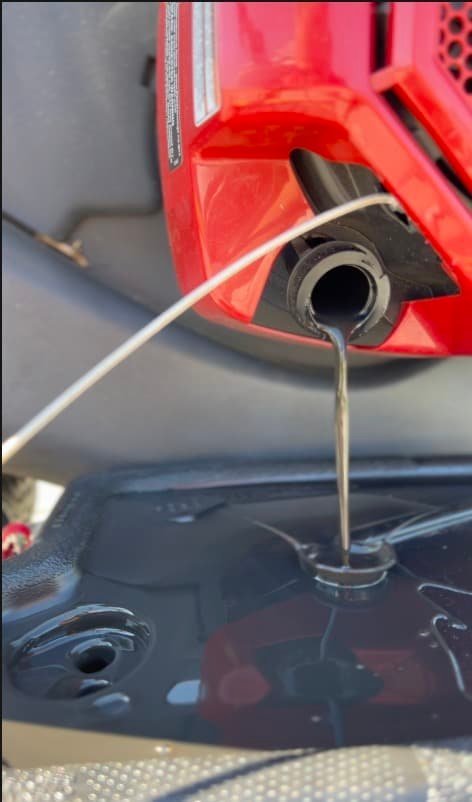
Park the mower on level ground. Remove the dipstick, wipe it clean, reinstall it as the manual directs, and check the level. Add the correct oil type in small amounts.
Do not overfill. Too much oil can cause smoke, hard starting, and engine damage. If the oil looks milky, smells like gasoline, or contains metal, stop troubleshooting and seek professional help.
3. Inspect the spark plug
The spark plug creates the ignition spark. Remove the plug wire by gripping the boot, not the wire. Use the correct socket and compare the plug with the manual’s part number.
A wet plug may mean the engine is flooded. A black, sooty plug can point to poor air flow or a rich fuel mixture. A cracked insulator, badly worn electrode, or heavy oil fouling means replacement is usually safer than cleaning.
Use the specified plug gap. Do not guess based on a similar mower. Craftsman engines may use different plugs based on engine brand and model.
4. Test for spark safely
A spark tester is the safest simple tool for checking ignition. Connect it as directed, keep the plug away from spilled fuel, and crank the engine. A visible, regular spark suggests the ignition system may be working.
Do not hold the spark plug with your bare hand while testing. Keep fuel vapors away from sparks, cigarettes, heaters, and open flames.
If there is no spark, possible causes include a damaged plug, loose wire, failed ignition coil, faulty stop switch, or incorrect flywheel brake position. Electrical testing beyond a basic check may be best for a repair shop.
5. Inspect the air filter
The air filter keeps dust from entering the engine. A clogged filter limits air and can make starting difficult. Remove it according to the manual.
Foam filters may be washable and lightly oiled if the manual allows it. Paper filters are usually replaced rather than washed. Never run the mower without its filter in dusty conditions.
A clean filter helps protect the engine, especially in dry climates, sandy soil, and lawns with bare spots.
6. Check the primer bulb and choke
Some Craftsman push mowers use a primer bulb. Press it only the number of times listed in the manual. Too many presses may flood the engine.
A choke reduces air flow for a cold start. Once the engine runs, move the choke to the run position. Leaving the choke on can cause smoke, rough running, and plug fouling.
A cracked primer bulb, loose fuel line, or stuck choke linkage can also stop the engine. Replace damaged rubber parts instead of using tape as a long-term fix.
7. Inspect the carburetor and fuel line
The carburetor mixes fuel and air. Small passages can clog when gasoline dries inside them. This is common after winter storage.
Look for cracked fuel lines, loose clamps, or signs of leakage. Do not spray carburetor cleaner into the air intake while the engine is hot or near an ignition source.
A carburetor may need removal and cleaning. Take photos before disconnecting springs and linkages. If you are not comfortable rebuilding small-engine parts, a repair shop can often diagnose the issue quickly.
Fixing a Craftsman battery or electric mower
Battery and corded electric mowers have fewer engine parts, but they still have safety systems and power problems. The main difference is that they need electrical energy instead of gasoline and spark.

Check the battery and charger
Remove the battery and inspect the contacts. Look for dirt, moisture, heat damage, or swelling. Do not use a battery that is cracked, leaking, or unusually hot.
Charge the battery with the matching Craftsman charger. Confirm the voltage and battery platform. Batteries from different voltage systems may not be compatible, even if they look similar.
A battery that loses power quickly may be near the end of its service life. Store lithium-ion batteries in a dry place at moderate temperatures. Do not leave them in a hot vehicle or charge them on a wet surface.
Check the start controls
Most battery mowers require a safety key, lock button, or control bar sequence. Follow the exact order in the manual. Some models will not start if the handle is folded or the battery door is not fully closed.
Clear packed grass from the deck. A locked blade can trigger overload protection. Remove the battery before turning the mower over or reaching near the blade.
Corded mower checks
A corded mower may not start because of a damaged extension cord, tripped outlet, failed ground-fault interrupter, or unsuitable cord size. Use only the cord type and length allowed by the manual.
Keep the cord behind you and away from the blade. Corded mowers suit small, open yards near a safe outdoor outlet. They are less convenient for large lawns, many trees, or yards with narrow gates.
Riding mower starting problems
A Craftsman riding mower has more switches than a push mower. The seat switch, brake switch, blade switch, reverse-control system, neutral switch, ignition switch, fuse, and solenoid may all affect starting.
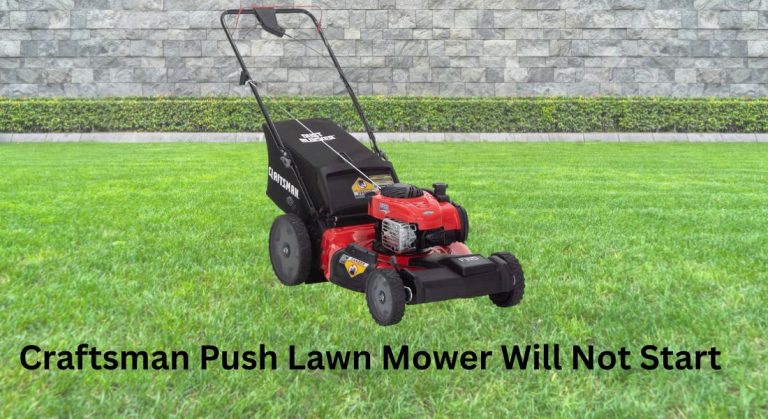
Set the parking brake and place the transmission in neutral. Turn the blade switch off. Sit fully on the seat and press the brake pedal as the manual directs.
Check the battery terminals for corrosion. A wire brush can clean light corrosion after the cables are disconnected. Reconnect the positive and negative cables correctly.
Look at the main fuse. Replace it only with the specified type and rating. If the new fuse fails at once, stop. A short circuit may need electrical diagnosis.
When the riding mower cranks but will not run
Check fuel quality, oil level, air filter, and spark plug. Also inspect the fuel shutoff valve and fuel filter if equipped.
A riding mower can collect grass and moisture under the hood. Clean debris with a brush or compressed air after disconnecting the battery. Avoid forcing water into electrical connectors.
When the blades will not engage
A mower may start but refuse to turn the blades because of a control switch, clutch, belt, or safety interlock. Do not keep pulling the engagement lever if the belt squeals or the blade area is jammed.
Remove the key and disconnect the battery before inspecting the deck. Replace a worn belt with the correct part number. A belt that repeatedly slips may point to a seized spindle or bent pulley.
What tools and parts help most
You do not need a full mechanic’s toolbox for basic Craftsman mower troubleshooting. A few simple tools can identify many problems without guesswork.

| Tool or part | Main use | Helpful for |
|---|---|---|
| Spark plug socket | Remove and install plugs | Gas push and riding mowers |
| Spark tester | Check ignition spark | Crank-but-no-start problems |
| Battery charger | Restore battery power | Riding and battery mowers |
| Multimeter | Test voltage and continuity | Batteries, fuses, switches |
| Socket set | Remove covers and terminals | Riding mower service |
| Fresh fuel container | Replace old gasoline | Seasonal storage problems |
| Replacement air filter | Restore air flow | Dusty or dirty engines |
| Work gloves and glasses | Protect hands and eyes | All service work |
Use the model number from the mower’s frame or engine when ordering parts. Confirm the spark plug, air filter, blade, belt, battery voltage, and charger compatibility on the product page and in the manual.
Prevention is easier than repair
Good storage and regular care prevent many no-start problems. The best routine depends on whether you use a gas push mower, self-propelled mower, riding mower, or battery mower.

After each mowing session
Clear grass from the deck, wheels, cooling fins, and discharge chute. A packed deck can hold moisture and encourage rust. Use a brush or blower after removing the spark plug wire or battery.
Check for loose hardware and damaged cables. Look at the blade for bends, cracks, and severe wear. A dull blade can tear turfgrass and overload the mower.
Do not mow wet grass on slopes. Wet turf can reduce traction and increase the risk of slipping, especially with a heavy riding mower.
Every 25 hours or during the season
The exact interval varies by model, so use the manual. In general, inspect or clean the air filter, check the oil, sharpen or replace the blade, and inspect the drive belt.
A mower blade is a wear part. It may need service more often in sandy soil or yards with hidden sticks. Balance the blade after sharpening.
Check self-propelled cables and drive wheels. If the mower moves slowly, the issue may be a stretched cable, worn belt, dirty wheel, or transmission problem rather than the engine.
Before winter storage
For a gas mower, follow the manual’s fuel instructions. Some engines are stored with treated fuel, while others are stored with the tank and carburetor drained.
Change oil if the manual recommends it. Clean the deck and dry the mower fully. Store it under cover in a dry, ventilated space away from flames and heat.
For a battery mower, remove the battery and store it as the manufacturer directs. Keep the battery and charger dry. Recycle lithium-ion batteries at a designated drop-off. Do not place them in household trash.
| Service item | Why it matters | Signs it needs attention |
|---|---|---|
| Spark plug | Provides ignition | Hard starting, misfire, no spark |
| Air filter | Protects air intake | Dirt, smoke, poor power |
| Mower blade | Cuts grass cleanly | Ragged tips, vibration, cracks |
| Drive belt | Powers wheels or deck | Squeal, slipping, no movement |
| Battery | Supplies starting power | Click, weak crank, short runtime |
| Fuel system | Delivers clean fuel | Start-and-die, varnish smell |
Takeaway: blades, belts, spark plugs, filters, and batteries wear out first. Replacing a wear part can cost less than replacing the mower, but only if the deck, engine, and frame remain sound.
Safety rules you should not skip
Small engines and mower blades can cause serious injuries. Use eye protection, hearing protection, closed-toe shoes, and work gloves when appropriate.
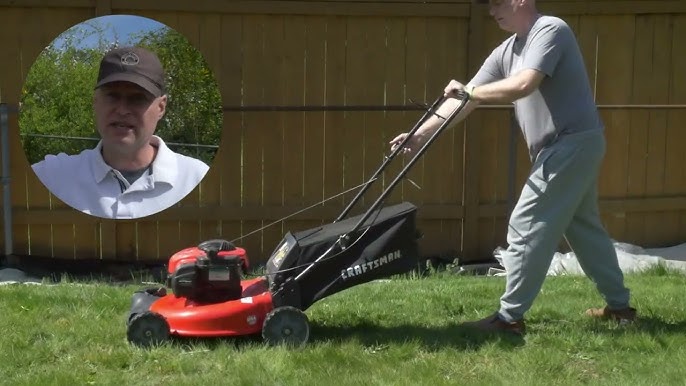
Clear stones, sticks, toys, wire, and other debris before mowing. Keep children and pets away from the work area. Never mow wet grass on slopes, and never reach under a deck while the blade can move.
Disconnect the spark plug wire on gas mowers. Remove the battery on electric mowers. Remove the ignition key from riding mowers. Never refuel a hot engine, and do not smoke near gasoline.
⚠️ Safety Warning: Never bypass a seat switch, blade switch, handle control, or other safety device. If a switch seems faulty, repair it with the correct part. A bypass can allow the blade or mower to move unexpectedly.
Store fuel only in an approved container and follow local fuel-storage rules. Keep it away from children, flames, furnaces, and direct sun.
When a repair shop is the better choice
A repair shop makes sense when the mower has an internal engine problem, repeated electrical failures, or a damaged crankshaft. It is also a good choice if you lack a safe work area or do not know how to handle gasoline.

Seek professional help if you find:
- Metal in the oil
- A bent crankshaft after striking an object
- A cracked fuel tank
- A failed ignition coil with complex wiring
- A carburetor that still will not work after proper cleaning
- Severe vibration after blade replacement
- A battery that swells, smokes, or overheats
- A riding mower that moves or starts without the correct control input
Compare the repair estimate with the mower’s age, deck condition, engine compression, and replacement cost. A basic push mower may not justify a large repair bill. A well-kept riding mower may be worth repairing if the frame, transmission, and deck are solid.
Choosing an alternative if repair is not worthwhile
A no-start mower may be a sign that it is time to change mower types. The right choice depends on lot size, terrain, storage, noise limits, and the user’s strength.

| Mower type | Good fit | Main drawback |
|---|---|---|
| Push gas mower | Small to medium yards and long sessions | Fuel, noise, and engine upkeep |
| Battery push mower | Small yards and quiet neighborhoods | Battery and charger cost |
| Self-propelled mower | Medium yards or users who need less pushing | Heavier and more complex |
| Riding mower | Larger yards with open access | Needs storage and more service |
| Zero-turn mower | Large open yards and fast mowing | Poor fit for tight spaces and slopes |
| Reel mower | Small, flat yards and quiet mowing | Needs frequent mowing and sharp blades |
| Robotic mower | Suitable lawns with planned setup | High setup cost and boundary work |
For a senior, a lightweight battery mower may be easier than a heavy gas mower, but slope and battery weight still matter. For a hilly lawn, traction and operator control are more important than cutting width. For a small yard, a reel mower or compact battery push mower may be easier to store.
Measure the yard, gate width, slope, and storage area before buying. Check local noise rules, gas-equipment restrictions, HOA rules, and battery disposal programs.
🎁 Gift-Buyer Note: If you are buying for a senior or new homeowner, ask about yard size, slopes, storage, hand strength, and access to an outdoor outlet. A smaller mower that is easy to start may be more useful than a wider or more powerful model.
How long should a Craftsman mower last?
A Craftsman mower can last many seasons when the engine, deck, frame, battery system, and storage conditions remain sound. There is no single life span for every model because use, soil, climate, service, and storage all matter.

A mower used weekly on a flat small yard may face less stress than one used on rough ground with wet, tall grass. Sandy soil can wear blades and deck parts. Cold storage can affect batteries. Hot, damp storage can increase corrosion.
Signs it may be time to replace the mower include a badly rusted deck, repeated engine failures, unsafe controls, severe vibration, unavailable parts, or a repair estimate close to the cost of a suitable replacement.
A newer mower is not automatically better for every user. A simple push mower may be easier to maintain than a complex riding mower. Compare the total cost of batteries, belts, blades, fuel, service, and storage.
Common mistakes that make starting problems worse
Many owners create extra trouble by skipping the basic checks. Avoid these common errors:

- Adding more fuel without checking old fuel. Fresh fuel cannot clean a clogged carburetor.
- Using the wrong spark plug. Confirm the part number and gap.
- Overfilling the oil. Too much oil can cause smoke and hard starting.
- Spraying starting fluid carelessly. It can create fire risk and may harm some engines.
- Pulling the starter cord repeatedly. This can flood the engine and tire the operator.
- Turning the mower over with the plug connected. The blade may move unexpectedly.
- Bypassing safety switches. This removes an important layer of protection.
- Using a mismatched battery or charger. Voltage and platform compatibility matter.
- Ignoring vibration. It may point to a bent blade, spindle, or crankshaft.
- Storing gasoline in an unsafe container. Follow fire and fuel-storage rules.
A calm process saves time. Write down what you checked and what changed. This record helps a repair technician if you need one.
A simple maintenance schedule
Use this schedule as a starting point, then follow the Craftsman manual for your exact model. Severe dust, heat, slopes, and frequent mowing may require more frequent service.
| Timing | Checks and service |
|---|---|
| Before each use | Fuel or battery, oil, safety controls, debris, blade condition |
| After each use | Clear deck, clean cooling areas, inspect for damage |
| Monthly in season | Air filter, spark plug, cables, belt, tire pressure |
| Midseason | Sharpen or replace blade, inspect drive system |
| Before storage | Fuel plan, oil service, battery removal, full cleaning |
| After storage | Fresh fuel if needed, battery charge, controls, tires, deck |
The most important habit is checking the mower before the problem becomes urgent. A few minutes of care can reveal a loose cable, low oil, or damaged blade before it causes a breakdown.
Frequently asked questions
Q: Why will my Craftsman lawn mower not start after sitting?
A: Stale fuel, a clogged carburetor, a weak battery, or a dirty spark plug is common after storage. Check fuel, oil, battery charge, air filter, and spark in that order. Follow the manual’s storage and restart instructions.
Q: Why does my Craftsman mower crank but not start?
A: The engine may lack clean fuel, air, or spark. Check the fuel quality, choke, primer bulb, air filter, and spark plug. A flooded engine may need time to clear before another start attempt.
Q: Why does my mower start and then die?
A: A blocked fuel cap vent, dirty carburetor, clogged air filter, restricted fuel line, or faulty safety switch may be responsible. If loosening the fuel cap helps, replace the cap if cleaning does not solve the issue.
Q: Why does my Craftsman riding mower only click?
A: A weak battery, corroded terminal, failed solenoid, bad ground, or safety switch may cause a click without cranking. Clean and tighten the battery connections, test the battery, and confirm the brake and blade controls are set correctly.
Q: Can bad gas stop a lawn mower from starting?
A: Yes. Gasoline can lose quality and leave deposits in the carburetor. Drain old fuel safely, add fresh fuel, and use stabilizer during future storage according to the product label.
Q: Should I replace or clean the spark plug?
A: Replace a cracked, badly worn, or heavily fouled plug with the exact specified part. A lightly dirty plug may be cleaned for testing, but the correct gap and part number still matter.
Q: Why will my battery Craftsman mower not start with a charged battery?
A: Check the safety key, control bar, battery contacts, battery door, and deck for blocked grass. The battery may show charge but fail under load. Test it with the correct equipment or ask a service center to inspect it.
Q: Is it safe to turn a lawn mower on its side?
A: Follow the owner’s manual. Gas can leak into the air filter or muffler if the mower is positioned incorrectly. Always remove the spark plug wire or battery before clearing the deck, and keep hands away from the blade.
Q: Can a dirty air filter prevent starting?
A: Yes. A severely blocked filter can limit air flow and upset the fuel mixture. Clean or replace it as the manual allows. Do not run a gas mower for normal use without its air filter.
Q: Should I use starting fluid on a Craftsman mower?
A: Avoid using it unless the engine manual specifically allows it and you understand the fire risk. Fuel-system diagnosis, a spark test, and proper cleaning are safer ways to find the cause.
Q: When should I call a professional?
A: Call a repair shop for internal engine damage, severe vibration, fuel leaks, electrical shorts, swollen batteries, or a mower that remains unsafe after basic checks. Professional service is also wise if you are not comfortable handling gasoline or electrical tests.
Final thoughts
The best way to fix a Craftsman lawn mower that will not start is to move through the basics in a set order: safety controls, fuel or battery, oil, air filter, spark plug, and then the carburetor or electrical system. This approach reduces wasted money and helps you spot serious faults early.
A small push mower may need only fresh fuel and a new plug. A riding mower may need battery and interlock testing. A battery mower may need a matching charger, clean contacts, or a replacement battery. Always confirm the model number, part number, voltage, blade type, and service steps in the manual.
If repair costs are high, compare the mower’s condition with alternatives such as a battery push mower, self-propelled mower, reel mower, riding mower, or robotic mower. Choose for the yard and the user—not just for engine size or cutting width.
📜 Check Local Rules: Before replacing a gas mower with another gas model, confirm HOA rules, city noise ordinances, gas-equipment restrictions, and fuel-storage laws. Donate or recycle a usable mower, and take old fuel, oil, and lithium-ion batteries to approved disposal locations.
Affiliate disclosure: This article may contain affiliate links. If you buy through one of those links, we may earn a commission at no extra cost to you. Product availability, specifications, compatibility, and prices can change, so confirm details on the manufacturer’s product page and in the owner’s manual before purchasing.

One Comment