


The best soaker hose for grass delivers even watering, saves time, and helps keep lawns green without waste.
A dry lawn can look tired even after a long day of watering. Spray from a regular hose often runs off hard soil, misses low spots, or loses water to wind. A soaker or sprinkler hose solves that problem by placing water close to the grass where roots need it. I tested these options by looking at coverage, handling, setup, water control, and daily value. Below, I explain which model fits a small patch, a wide lawn edge, or a full yard care routine.
Sprinkler Hose 50 FT with Holes

This 50-foot flat sprinkler hose is a useful choice for narrow lawn strips, garden borders, and small to medium yards. Its hole pattern lets water rise and spread across the soil rather than flow from one end like a plain garden hose. I like this style for grass because it can cover a long line while staying low to the ground. The flat shape also makes it easy to place along a lawn edge before mowing.
The hose works best when you lay it flat and remove sharp bends before turning on the water. You can use it as a gentle sprinkler hose with the holes facing up, or turn it over for a slower soaking effect. The 50-foot length gives good reach without becoming too hard to move. As with most flat hoses, water pressure and placement affect the spray pattern, so I would start with moderate pressure and adjust from there.
Pros:
- 50-foot length suits many small and medium lawn areas
- Flat design stores neatly in a shed or garage
- Holes spread water along the full hose length
- Useful beside grass borders, beds, and walkways
- Simple layout makes setup quick for routine watering
- Can provide a soft spray that is less harsh than a jet
Cons:
- Flat hoses need careful placement for even coverage
- Very low water pressure may reduce the spray height
- Sharp bends can restrict water flow
My Recommendation
I recommend this model for homeowners who want a simple, affordable way to water a lawn edge or a modest grass patch. It is especially useful when a round hose feels bulky or when a sprinkler wastes water beyond the target area. The 50-foot size gives a practical balance between reach and easy storage. If you want the best soaker hose for grass in a flat sprinkler style, this is a sensible starting point for basic lawn care.
It also suits renters and new gardeners who do not want to build a permanent irrigation system. Place it across dry grass, run it for a set time, then move it to the next section. This method takes a little planning, but it can water more gently than a hand-held nozzle. Its overall value is strongest for small lawns and straight planting borders where a flat hose can lie without many twists.
LINEX 50-Foot Sprinkler Soaker Hose

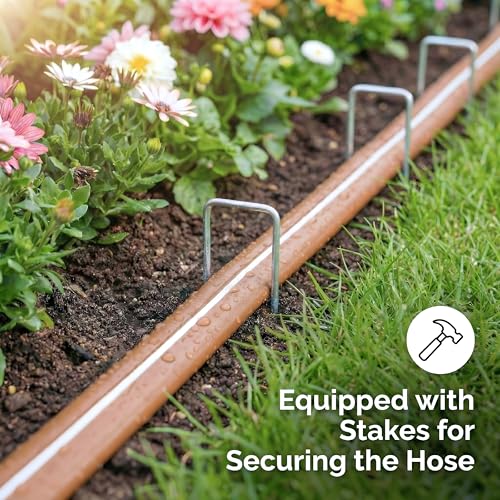
The LINEX 50-foot sprinkler soaker hose adds hose stakes to a familiar flat-hose design. Those stakes help hold the hose in place when the water starts to push against the line. That small detail matters on sloped lawns, windy days, and beds with loose soil. I find a secured hose easier to manage because it stays where I put it instead of curling toward a path.
This hose can serve lawn edges, flower beds, vegetable rows, and other areas that need a broad water pattern. The 50-foot length is long enough for many home projects but still light enough to move without much effort. The best results come from laying the hose in a straight line and checking the wet area after several minutes. If one section receives more water than another, a small change in position or pressure can improve the result.
Pros:
- Includes stakes to help prevent unwanted movement
- 50-foot reach works well around common home gardens
- Supports lawn and garden watering with one hose
- Flat body is easier to coil than many thick round hoses
- Gentle water pattern can reduce soil disturbance
- Useful for borders, rows, and long narrow lawn sections
Cons:
- Stakes add a few extra setup steps
- May not cover a wide lawn from one position
- Spray performance depends on available water pressure
My Recommendation
The LINEX is best for people who need a hose that stays in place. I would choose it for a lawn with a slope, a busy walkway nearby, or a garden where the hose may shift during use. The included stakes make it easier to create a steady watering route. For many users, that control is more useful than a few extra feet of hose.
This model is also a good fit for someone who waters both grass and plants. It can follow a bed edge in spring and move to dry lawn areas in summer. I would still avoid dragging it over rocks or sharp corners, since flat hoses perform best when treated gently. For shoppers seeking the best soaker hose for grass with simple positioning support, the LINEX offers strong everyday value and is widely available through online retail channels.
75-Foot Flat Sprinkler Soaker Hose

This 75-foot flat sprinkler soaker hose is designed for shoppers who need more reach. It can follow a long lawn edge, stretch across a larger bed, or water several sections without moving as often. That extra length saves time when the faucet sits far from the grass. I see it as a practical choice for medium to large home yards where a 50-foot hose leaves too much uncovered.
Long hoses need a little more planning, especially when the lawn has bends or narrow corners. Lay the hose in a broad line, keep the path free of kinks, and make sure the far end has room to spread water. The flat body packs away well after it dries. However, the hose may need more pressure to maintain a strong pattern across its full length, so I recommend testing it before leaving it unattended.
Pros:
- 75-foot length covers more ground from one setup
- Good for long lawn edges and larger planting areas
- Flat design takes less storage space than rigid sprinklers
- Spreads water from many openings along the hose
- Reduces the need to move the hose during one watering session
- Useful when the outdoor faucet is far from the target area
Cons:
- Longer length can be harder to arrange neatly
- May need steady water pressure for an even spray
- More likely to kink if folded or stored while wet
My Recommendation
I recommend this 75-foot model for a larger yard, a long strip of grass, or a garden with several rows in one direction. It is a strong choice when moving a hose every few minutes feels tiring. The extra reach can make a real difference for people with one outdoor faucet. It may be the best soaker hose for grass when coverage matters more than compact handling.
This hose suits users who plan their watering route before turning on the tap. It is less ideal for a tiny lawn with many tight corners, where a shorter model will be easier to control. Check the wet pattern near both ends during the first use, then adjust the hose or water flow as needed. When matched with a suitable faucet and good layout, this hose gives useful coverage at a reasonable cost.
Watoo Reinforced 50-Foot Hose

The Watoo hose stands out for its reinforced flat construction, heavy-duty focus, and included stakes. It is made for yard watering where a basic thin hose may feel too delicate. The product is described as offering both sprinkler and soaker functions, which gives you more flexibility in how you place it. I like that dual purpose for lawns because grass may need broad spray in one spot and slow soaking near a dry border.
The hose stakes help keep the line steady, while the reinforced body may offer more confidence during regular outdoor use. Still, no flat hose likes hard folds, stones, or rough dragging. I would lay it out by hand, check the connections, and use a timer or phone reminder rather than forgetting it in the yard. The high-pressure spray claim should be treated as pressure dependent, since every home faucet and supply line performs differently.
Pros:
- Reinforced design is suited to frequent yard use
- Offers sprinkler and soaker watering styles
- Includes stakes for more stable placement
- 50-foot size is manageable for most home lawns
- Works around grass, beds, borders, and small orchard areas
- Heavy-duty feel may appeal to users who want extra structure
Cons:
- Reinforced construction may feel less flexible than a lighter hose
- Needs careful handling around sharp objects
- Spray height and coverage vary with water pressure
My Recommendation
The Watoo is best suited to homeowners who want one hose for more than one watering task. Choose it if you care about a reinforced body, secure placement, and the option to switch between a sprinkler-like spray and a soaking layout. It is a good match for a working backyard where the hose sees regular use during warm months. The stakes are helpful when children, pets, wind, or foot traffic could move the line.
I would call this a strong all-around candidate for the best soaker hose for grass, especially for buyers who value versatility. It is not the smallest or simplest option, but its wider use case can justify that trade-off. Keep it clean, drain it after use, and store it out of direct sun when the season ends. Availability and price may change, so compare the current Amazon offer before ordering.
DXront 50-Foot Sprinkler Soaker Hose

The DXront 50-foot sprinkler soaker hose focuses on efficient lawn and garden watering. Its holes distribute water along the pipe, which can reduce the need to stand in one place with a hand nozzle. That makes it useful for a dry grass patch, a flower bed, or a row of young plants. The 50-foot length keeps the hose practical for everyday handling and storage.
I would use this model when I want a simple watering system without installing underground lines. Place it where the soil needs moisture, turn the tap on slowly, and watch how the water spreads. A slow start helps reveal leaks, loose fittings, or a poor layout before the lawn becomes saturated. The product’s water-saving benefit depends on good timing, proper pressure, and avoiding runoff from compacted soil.
Pros:
- 50-foot length offers useful reach without excess bulk
- Multiple holes distribute water across the target area
- Suitable for lawn, garden, and flower-bed watering
- Simple design is approachable for first-time users
- Can reduce hand watering and repeated hose movement
- Flat format stores easily after the hose dries
Cons:
- Water savings depend on careful timing and soil condition
- May require repositioning for a wide lawn
- Uneven ground can affect the spray pattern
My Recommendation
I recommend the DXront for a new gardener or homeowner who wants a low-fuss lawn watering tool. It gives you a direct way to water without buying a large sprinkler or building a permanent system. The design makes sense for people who prefer steady coverage over a strong, narrow stream. It is also useful for seasonal watering when you do not need irrigation equipment all year.
For the best soaker hose for grass, efficient placement matters as much as the hose itself. I would use this model early in the morning or near sunset, while following local watering rules. Check the soil below the surface with a finger or small trowel instead of judging only by the top color. With sensible use, the DXront offers a practical mix of reach, control, and value.
Gilmour 50-Foot Black Weeper Hose

The Gilmour 50-foot black flat weeper hose takes a more traditional soaker approach. Instead of sending water upward like a sprinkler, it releases water slowly through the hose wall. That makes it especially useful for garden beds, shrubs, flower borders, and grass areas that need gentle root-level moisture. I like this style near plants because it keeps water close to the soil and creates less splash.
The flat body is flexible and easy to place along a row or edge. It can also work under mulch, where slow watering may help reduce evaporation and keep the surface calmer. For grass, I would place it along a dry strip and move it as needed rather than expect one line to water a whole open lawn. Use low to moderate pressure and follow the manufacturer’s care guidance, since excessive pressure can shorten the life of a weeper hose.
Pros:
- Slow weeping action supports gentle root-level watering
- Useful for grass edges, flower beds, and vegetable rows
- Flat profile fits neatly along planting lines
- Creates less spray and splash than an overhead sprinkler
- Black color blends well with soil and mulch
- 50-foot length is easy to move and store
Cons:
- Not the best choice for tall overhead spray coverage
- Slow output may take longer to water dry soil
- Needs careful pressure control to avoid uneven flow
My Recommendation
The Gilmour is best for users who want a true weeping soaker hose rather than a sprinkler hose. I would choose it for a narrow grass border, newly planted areas, shrubs, or beds where water should stay near the roots. It is also a good option for people who dislike strong spray and soil splash. Its calm watering style can feel like a slow rain falling close to the ground.
For an open lawn, the Gilmour may need several positions to reach all the grass. That is a fair trade for precise, gentle watering along edges and beds. If your priority is root-zone moisture and a low-profile hose, it may be the best soaker hose for grass in this group. Its established brand name, useful length, and broad garden use make it a solid value when the current price fits your budget.
Best-For Comparison
| Best for | Why |
|---|---|
| Small lawns and narrow grass strips | The 50-foot flat sprinkler models are easy to place, move, and store. |
| Large yards and long borders | The 75-foot hose gives more reach and reduces the need for repositioning. |
| Root-level watering near beds and edges | The Gilmour weeper hose delivers a slower flow with less splash. |
How I Chose the Best Soaker Hose for Grass
Choosing a soaker hose for grass is not only about length. I look at how evenly the hose can wet the soil, how easy it is to place, and how well it fits a normal home watering routine. A hose that looks good in a product photo may still disappoint if it kinks, shifts, or sprays outside the target area. I also consider storage, fittings, pressure needs, and the time required to water a full lawn.
I favor products that make the job easier without promising magic. A soaker hose cannot fix compacted soil, poor drainage, or a damaged lawn on its own. It can, however, place water more gently and help you build a repeatable routine. That repeatable routine often matters more than a dramatic burst of water.
Hose Length
A 50-foot hose works well for a small yard, a side strip, or a short flower border. It is easier to carry and less likely to become tangled. A 75-foot hose helps when one faucet must serve a longer stretch of lawn. The longer the hose, the more important it becomes to plan the route before connecting the water.
Do not assume that a longer hose always gives better coverage. A long line may lose pressure toward the far end, especially when the home water supply is weak. Measure the area first, then buy enough length to reach it with only a small amount of extra hose. Too much slack can create loops that block water or become a trip hazard.
Sprinkler Hose Versus Weeper Hose
A sprinkler hose sends water upward through holes. It can cover a broader surface and may work well for grass, beds, and low plants. A weeper hose releases water through its wall at a slower rate. It fits root-level watering and narrow rows better than large open areas.
Neither style wins for every yard. If you need to cover a straight strip of grass, a sprinkler hose may save time. If you need calm moisture near a bed edge, a weeper hose may give better control. The best soaker hose for grass depends on the shape of your lawn and how quickly the soil absorbs water.
Water Pressure and Coverage
Water pressure affects every soaker and sprinkler hose. Too little pressure may leave the far end dry. Too much pressure may create a hard spray, stress the fittings, or produce runoff on compacted soil. I recommend opening the faucet slowly and watching the full hose before setting a timer.
Walk the area after the first watering. Look for dry spots, puddles, and water running toward a sidewalk. Move the hose closer to dry areas and reduce the flow if water starts to run off. A short test can prevent waste and helps you learn how the hose behaves in your yard.
How to Use a Soaker Hose on Grass
First, mow and clear the lawn area if needed. Remove sticks, sharp stones, and tools that could damage the hose. Lay the hose in a straight line or gentle curve, then connect it to the faucet. If the hose has stakes, place them carefully without pinching the hose.
Turn on the water at a low setting. Wait a few minutes while the hose fills and check the spray or seepage. Then use a soil check to see how far the water has moved below the surface. Grass roots need moisture in the root zone, not just a wet top layer.
Watering too fast can create runoff. Watering too often can encourage shallow roots. Local climate, grass type, soil, shade, and rainfall all matter. Follow local outdoor watering limits, and adjust your schedule after rain or during a heat wave.
How Long Should a Soaker Hose Run?
There is no single time that works for every lawn. A thin sandy soil may drain quickly, while clay soil may absorb water slowly. Hose hole size, water pressure, weather, and placement also change the result. Start with a short test, then check the soil below the surface.
A simple rain gauge or small container can help you compare output over time. The goal is even moisture, not a soaked sidewalk. If puddles form, pause the water and allow the soil to absorb it before continuing. A timer can help prevent accidental overwatering once you learn the right setting.
Storage and Care Tips
Drain the hose after each use. Water left inside can add weight and make storage harder. Rinse away soil and grass, then let the hose dry before placing it in a cool, shaded area.
Avoid tight folds and sharp bends. Store the hose in broad loops rather than small coils. Keep it away from lawn chemicals, rodents, direct heat, and sharp tools. At the start of each season, inspect the connector and the full hose for cracks, leaks, or blocked openings.
Common Mistakes to Avoid
- Using high pressure without checking the hose pattern
- Leaving a hose on hard concrete where vehicles can crush it
- Placing a sprinkler hose with holes facing the wrong direction
- Expecting one short hose to cover a large open lawn
- Watering by the clock without checking soil moisture
- Storing the hose wet, tightly folded, or in direct sun
- Dragging the hose over stones, wood edges, or rough pavement
Can a Soaker Hose Save Water?
A soaker hose can help save water when it places moisture close to the target and limits overspray. It does not save water automatically. Runoff, leaks, poor pressure, and long watering times can still waste water.
The best approach combines the right hose with good timing. Water when wind and heat are lower, avoid watering during rain, and use a timer after testing the soil. Keep the hose near the grass or plants that need water. These simple steps can improve efficiency more than buying a longer hose.
Are Soaker Hoses Safe for New Grass?
Yes, a soaker hose can work well for new grass if you use gentle flow and keep the seedbed evenly moist. New seed often needs more frequent light watering than mature grass. A sprinkler-style hose may help cover a broad seeded area, while a weeper hose may work better along a narrow patch.
Do not use a strong spray that washes seed away. Watch for puddles and bare spots. Once the grass grows and roots develop, adjust the schedule toward deeper and less frequent watering, based on local conditions and the needs of the grass type.
Can I Leave a Soaker Hose on the Lawn?
You can leave it in place during a watering session, but I would not leave it outside for weeks without inspection. Foot traffic, lawn equipment, pets, sunlight, and weather can damage the hose. A mower can cut a hose in seconds if the line is not moved first.
Use visible markers or stakes when needed. Remove the hose before mowing and store it after the soil receives enough water. This habit protects both the hose and your lawn equipment.
FAQs Of best soaker hose for grass
What is the best soaker hose for grass?
The best soaker hose for grass depends on lawn size and watering style. A 50-foot sprinkler hose suits small and medium areas, while a 75-foot model gives more reach. A weeper hose works best for slow root-level watering near borders and beds.
Should the holes face up or down?
For a sprinkler pattern, place the holes facing up. For slower soaking near the soil, turn the hose so water moves into the ground. Always follow the product instructions and test the pattern before a full watering session.
Do soaker hoses work on lawns?
Yes, soaker hoses can work on lawns, especially along narrow strips and dry borders. A sprinkler hose may cover open grass more quickly. Large lawns may need several placements or a different irrigation method.
Can I connect two soaker hoses?
Many hoses can connect with standard garden fittings, but added length can reduce pressure. Test the far end before relying on the setup. Keep the connected lines straight and check for leaks at every joint.
How do I stop a soaker hose from moving?
Use hose stakes where available, or place the line along a bed edge. Straighten the hose before turning on the water. Avoid sudden high pressure, since a fast surge can make a flat hose shift or curl.
Final Verdict: Which Should You Buy?
For most homeowners, the Watoo reinforced 50-foot hose is the best soaker hose for grass because it combines reach, stakes, and sprinkler-soaker flexibility. Choose the Gilmour for gentle root watering or the 75-foot model for long lawn edges.
The right hose makes lawn care calmer and more precise. Match the length to your yard, test the flow, and water with care for greener grass and less waste.
