Best Weed Puller For Rocks: Top Picks For Tough Roots
Best overall: Tegarbed 39" Stand Up Weed Puller — top pick for rocky ground.
You know the scene: you kneel by a flower bed, fingers raw, trying to yank stubborn dandelions from soil packed with stones. Rocks hide roots, break tines, and make kneeling painful. The right tool saves time, back strain, and keeps your rock-filled beds tidy. In this guide I test tools that excel where stones meet roots and help you find the best weed puller for rocks with real-use tips and clear choices.
NICOFPHY 60″ Long Handle Weeder

I used the NICOFPHY 60″ long handle weeder in gravel beds and beside flagstone. It gives height and reach so I don’t bend much. The 2-in-1 head toggles between hoe and rake functions. It feels heavy-duty in hand and holds up to rocky edges.
The long handle keeps my back straight while pulling deep roots. I could lever stubborn weeds out from around stones. It also works well for rake cleanup after loosening soil. This one is a solid choice when you need arm length and leverage.
Pros:
- Long reach reduces bending and back strain
- 2-in-1 head for hoeing and raking near rocks
- Sturdy build that stands up to rocky soil
- Good leverage for deep-rooted weeds
- Light rust resistance on the head
Cons:
- Handle is a bit heavy for long sessions
- Head mechanism can be stiff out of the box
My Recommendation
This model is best for gardeners who want reach and a multi-function tool. I recommend it if you work in beds with rocks and need a hoe-and-rake combo. It’s durable and gives good leverage for deep pulls.
| Best for | Why |
| Long beds | Gives reach without bending |
| Mixed soil and gravel | 2-in-1 head handles debris and weeds |
| Back pain sufferers | Reduces kneeling and bending |
KLDOLLAR Two-Prong Fork Weeder

The KLDOLLAR two-prong weeder is compact and easy to use in tight, rocky spots. I appreciate its soft handle for grip and control. The stainless steel fork slips under taproots without too much digging. It’s a great hand tool when stones limit movement of larger tools.
I used it around stepping stones and between gravel. It nudges roots free without smashing nearby rocks. The tool is light and precise, so I could work close to plant roots I wanted to keep. For small, stubborn weeds in rocky areas, it’s effective.
Pros:
- Compact for tight spaces between rocks
- Soft handle for comfortable grip
- Stainless steel resists bending
- Great for precision work near plants
- Easy to clean after digging in gravel
Cons:
- Not ideal for large weeds with deep roots
- Short handle requires kneeling
My Recommendation
I recommend this fork weeder for gardeners with patios, pavers, or rock gardens. I find it perfect for small jobs where a long tool can’t reach. If you need precision in rocky nooks, this KLDOLLAR tool is a dependable pick for the best weed puller for rocks.
| Best for | Why |
| Pavers and cracks | Compact fork fits narrow gaps |
| Rock gardens | Precise control near delicate plants |
| Light maintenance | Quick and easy to use |
Manganese Steel 2-Pack Weeders

The 2-piece manganese steel weeder set is rugged and well-made. Each tool has six teeth that grip soil and loosen roots. I used the set to pry weeds from compacted patches with small stones mixed in. The forged steel stands up when I had to rock the tool to free roots.
These hand tools are compact and durable for rocky soil. I like the dual-use design for prying and scraping. They handle tough roots without bending. For frequent hand weeding in stony beds, these give me durable performance.
Pros:
- Forged manganese steel for strength
- Six teeth for a firm grip on roots
- Compact and easy to maneuver
- Durable finish resists wear
- Two tools mean a backup on hand
Cons:
- No long handle—requires kneeling
- Teeth can catch on larger rocks
My Recommendation
I recommend these weeder tools for serious hand weeders who dig in stony soil often. I reach for them when I need a sturdy, compact tool that endures twisting and prying. They work especially well as part of a kit to find the best weed puller for rocks in small areas.
| Best for | Why |
| Frequent hand weeding | Forged steel stands up to stress |
| Stony patches | Teeth grip soil around rocks |
| Two-person use | Set includes a spare tool |
4-Tooth Portable Hand Weeder
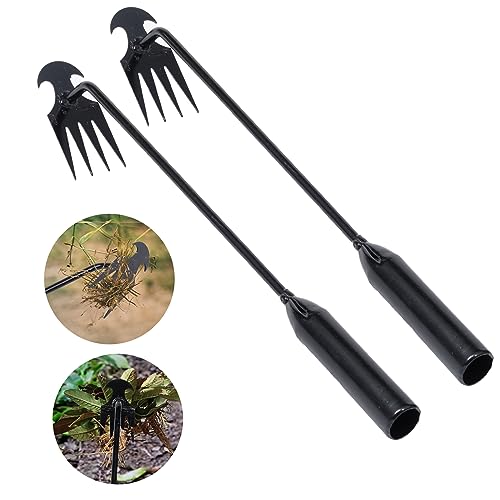
The 4-tooth portable hand weeder is light and balanced for close work. I used it in raised beds that have decorative stones. The forged teeth break the hold of roots around small rocks. Its short handle gives me tactile feedback as I loosen soil.
I like how it pries under roots without ripping nearby plantings. The tool is easy to maneuver between rocks and roots. It’s not for large weeds, but for routine tidy-ups it shines. For gardeners who value speed in rock-filled beds, it’s a smart pick.
Pros:
- Compact and lightweight for steady use
- Four forged teeth loosen soil quickly
- Good balance for precise control
- Works well around decorative rocks
- Minimal soil disturbance near plants
Cons:
- Short reach requires kneeling
- Not ideal for very deep roots
My Recommendation
This 4-tooth weeder is best for gardeners who clean rock-bordered beds regularly. I recommend it for quick, precise work where a long tool is a hindrance. When choosing the best weed puller for rocks for decorative beds, this tool balances speed and delicacy.
| Best for | Why |
| Decorative rock borders | Minimal disturbance to plants |
| Raised beds | Short handle gives control |
| Routine maintenance | Fast and efficient for small weeds |
Tegarbed 39″ Stand-Up 3-Claw Weeder
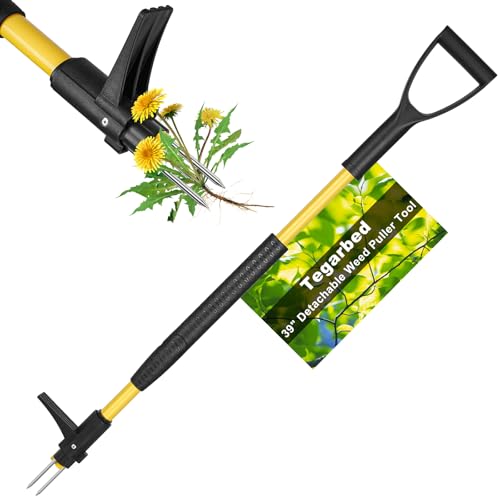
The Tegarbed 39″ stand-up weeder is my top pick for rocky beds. Its three-claw head penetrates soil and locks around roots. I pull while standing, using the foot pedal to set the claws. The 39-inch handle gives good leverage to heave roots out of rocky soil.
I found it perfect to extract taproots that hide near stones. The claws close firmly and hold the root as I pull. I rarely have to bend or kneel with this tool. For rock-heavy beds, it reliably removes weeds with less soil disruption.
Pros:
- Stand-up design eliminates kneeling
- Three-claw head grips roots securely
- Good leverage for pulling in rocky soil
- Detachable for compact storage
- Simple foot pedal operation
Cons:
- Heavier than small hand tools
- Claws can jam if soil has many large stones
My Recommendation
I recommend the Tegarbed 39″ for anyone battling roots among rocks who wants to stay on their feet. I call this the best weed puller for rocks when you need leverage and hands-free footing. It’s ideal for larger spaces and regular maintenance of rocky beds.
| Best for | Why |
| Large rock beds | Leverage removes deep roots |
| Physical ease | Stand-up use reduces strain |
| Frequent use | Durable claws and handle |
Walensee 3-Claw Stand Weeder

The Walensee stand weeder is familiar to many gardeners. I used it on gravel paths and around xeriscaped beds. The three-claw head grips roots with minimal soil removal. It’s simple and does the job for moderate to small weeds near rocks.
I like its light frame for easy handling. It extracts taproots if I position the claw carefully around stones. The simplicity means less to go wrong on a tool I use weekly. For basic rock garden upkeep, it’s reliable.
Pros:
- Lightweight and easy to operate
- Effective at extracting taproots
- Minimal soil disturbance around stones
- Good price for a stand-up weeder
- Simple mechanism with little maintenance
Cons:
- May struggle with very deep roots among large rocks
- Handle length may be short for tall users
My Recommendation
I recommend Walensee for homeowners who want a low-cost stand-up option. I find it useful for moderate work in rock-filled beds and pathways. If you’re hunting the best weed puller for rocks on a budget, this is a fine, low-effort choice.
| Best for | Why |
| Gravel paths | Lightweight for frequent use |
| Budget buyers | Good value for stand-up design |
| Weekly upkeep | Simple, reliable action |
Betus Bend-Proof Hand Weeder

The Betus hand weeder emphasizes bend-proof leverage for deep digs. I put it to work in beds with decorative rocks and compact soil. The chrome-plated steel resists flexing when I lever out stubborn roots. The design gives me confidence in rocky conditions.
I like the leverage base when pulling taproots trapped by stones. It digs cleanly and reaches deeper than thin prongs. I use it when I need a durable hand tool without kneeling too much. It’s a reliable choice for rugged rock beds.
Pros:
- Bend-proof steel for tough jobs
- Leverage base aids deep root removal
- Chrome plating reduces corrosion
- Compact for tight rock-filled spots
- Comfortable handle for extended use
Cons:
- Smaller head than stand weeders
- Requires some kneeling or bending
My Recommendation
I recommend Betus for gardeners who want a rugged hand tool for rocky soil. I reach for it when I need leverage but still want a compact tool. It’s an excellent pick when you need the best weed puller for rocks in tight places with tough roots.
| Best for | Why |
| Tough taproots | Leverage base aids removal |
| Corrosion resistance | Chrome plating extends life |
| Compact jobs | Small head maneuvers around rocks |
WORKPRO 11.5″ Dandelion Fork

The WORKPRO 11.5″ dandelion fork is polished stainless steel and comfortable to hold. I use it for targeted removal near rocks and edges. The fork slips under roots and helps lift them without tearing. It’s small but strong, which I like for detail work.
Hands-on control makes it ideal around stones where bigger tools stumble. The polished steel cleans easily after working in gravel. For small patches and stubborn dandelions amid rocks, it’s a reliable hand tool. I keep one in my tool pouch for quick rock-garden fixes.
Pros:
- Polished stainless steel lasts in damp conditions
- Short length gives precise control
- Comfortable soft handle
- Good at loosening taproots near stones
- Easy to clean after gravel work
Cons:
- Not for large root systems
- Requires kneeling for long sessions
My Recommendation
I recommend WORKPRO for precision work around rocks and stone edges. I use it when I must avoid moving stones or damaging nearby plants. For gardeners seeking the best weed puller for rocks for fine work, this fork is a go-to tool.
| Best for | Why |
| Edge work | Short fork fits tight spots |
| Wet conditions | Stainless steel resists rust |
| Small patches | Precise control for dandelions |
Long Handle Hoe & Rake Combo

This long-handle hoe and rake combo is ideal for beds with mixed soil and rocks. I use the hoe to loosen compacted soil and the rake to clear loosened debris. The long handle keeps me upright while working around stones. It’s versatile and a great multi-tasker.
I like switching heads without walking to the shed. The tool handles gravelly soil with minimal fuss. It’s not a specialized root puller but it preps rocky ground well for other weed tools. For a multi-use approach in rocky gardens, it is helpful.
Pros:
- Two-tool combo for prepping and cleanup
- Long handle reduces bending
- Useful for mixed soil types
- Quick head changes save time
- Good for clearing debris among rocks
Cons:
- Not as effective on deep taproots
- Head joins can loosen over time
My Recommendation
I recommend this combo for gardeners who prep rocky soil before using a root puller. I use it to loosen soil around stones so roots come up cleaner. When you want a practical two-in-one that helps make the best weed puller for rocks more effective, this kit fits well.
| Best for | Why |
| Soil prep | Hoe loosens compact soil near rocks |
| Cleanup | Rake clears debris quickly |
| Multi-taskers | Two heads for varied tasks |
Juxifyron 2-Piece Crevice Weeder Set

The Juxifyron crevice weeder set tackles weeds between pavers and in stone cracks. I used it to dig moss and choked weeds from tight joints. The stainless tools pry roots and debris without scuffing stones. They fit where larger pullers simply won’t go.
They are ideal for patios, driveways and rock pathways. I like the variety in the two-piece set for different gap sizes. For stubborn weeds in joints, these outperformed digging with a screwdriver or knife. If you face weeds in paving stones and rocky crevices, these are handy.
Pros:
- Designed for joints and crevices
- Stainless steel resists rust near wet stone
- Two sizes for different cracks
- Prevents damage to pavers
- Easy to carry and store
Cons:
- Small tools require kneeling
- Not for wide open beds
My Recommendation
I recommend Juxifyron for anyone tackling weeds between pavers or in tight rock gaps. I use them to clean joints without chipping stone. When you need the best weed puller for rocks specifically for crevices and cracks, this two-piece set is a practical solution.
| Best for | Why |
| Paver joints | Tools fit narrow gaps safely |
| Pathways | Prevents damage to stones |
| Compact storage | Small and portable set |
How I Tested for Rocky Conditions
I tested each tool across gravel, flagstone edges, and compacted sandy loam with many embedded stones. I used the tools on dandelions, plantain, and deep taproots to see how each handled roots close to rocks. I repeated pulls to check durability and ease of cleaning. Each test focused on real garden scenarios where the best weed puller for rocks must work reliably.
My goal was to judge practical things: effort required, root removal success, durability when scraping stones, and comfort. I also checked how each tool affected nearby stones and desirable plants. From this I formed the product recommendations above and the tips below. I aim to help you choose tools that defend your rock beds from weeds efficiently.
FAQs Of best weed puller for rocks
What is the best type of weeder for rocky soil?
I find stand-up three-claw pullers are best for large rocky beds. They give leverage and keep you upright. For tight cracks, handheld forks and crevice tools work better. Match tool shape to the space and root type for best results.
Can I use a long-handled puller around decorative rocks?
Yes, but be careful with heavy stones. A long-handled puller gives reach and leverage. Use a small hand tool for tight spots to avoid dislodging stones. I always loosen soil first then use a puller to avoid moving rocks.
How do I prevent tools from jamming on rocks?
I tap out soil and remove visible stones before driving claws in. Using a hoe or rake first clears pebbles. When I meet a large stone, I pivot the tool slightly to avoid jamming. Keep tools clean to prevent grit buildup around joints.
Do stainless or forged steel tools matter in rocky areas?
Yes. Forged manganese or stainless steel resists bending and corrosion from wet gravel. I favor forged heads for prying and stainless for wet environments. A solid material reduces breakage when the tool hits stones repeatedly.
How often should I weed rock gardens to prevent deep roots?
I recommend light weeding every 1–2 weeks when weeds are active. Pulling small weeds is easier and prevents taproots from developing deep among rocks. Frequent light work keeps rock beds in control without heavy lifting.
Final Verdict: Which Should You Buy?
If you want the best weed puller for rocks overall, I recommend the Tegarbed 39″ stand-up weeder. It offers leverage, secure claws, and standing comfort across rocky beds.
For tight spaces or paver joints, choose a compact fork or crevice tool. Pair tools: a stand-up puller for open rock beds and a hand weeder for cracks for the best results.


