
Gas in Oil Lawn Mower: Causes, Fixes, and Prevention Guide

Gas in lawn mower oil usually means gasoline has leaked past the carburetor and entered the crankcase, often because of a stuck carburetor float, a leaking fuel valve, or incorrect storage. The fix usually involves finding the fuel leak, draining contaminated oil, and replacing it with the correct fresh oil.

Across the United States, homeowners commonly discover a fuel smell when checking their push mower or riding mower before spring and summer lawn care. If the engine oil smells like gasoline or the oil level appears higher than normal, fuel may have mixed with the oil inside the crankcase.

Gasoline contamination reduces oil’s ability to protect engine parts because fuel thins the lubricant. Continuing to run a mower with diluted oil can increase wear on internal components, so identifying the cause and correcting the problem should happen before regular mowing continues.
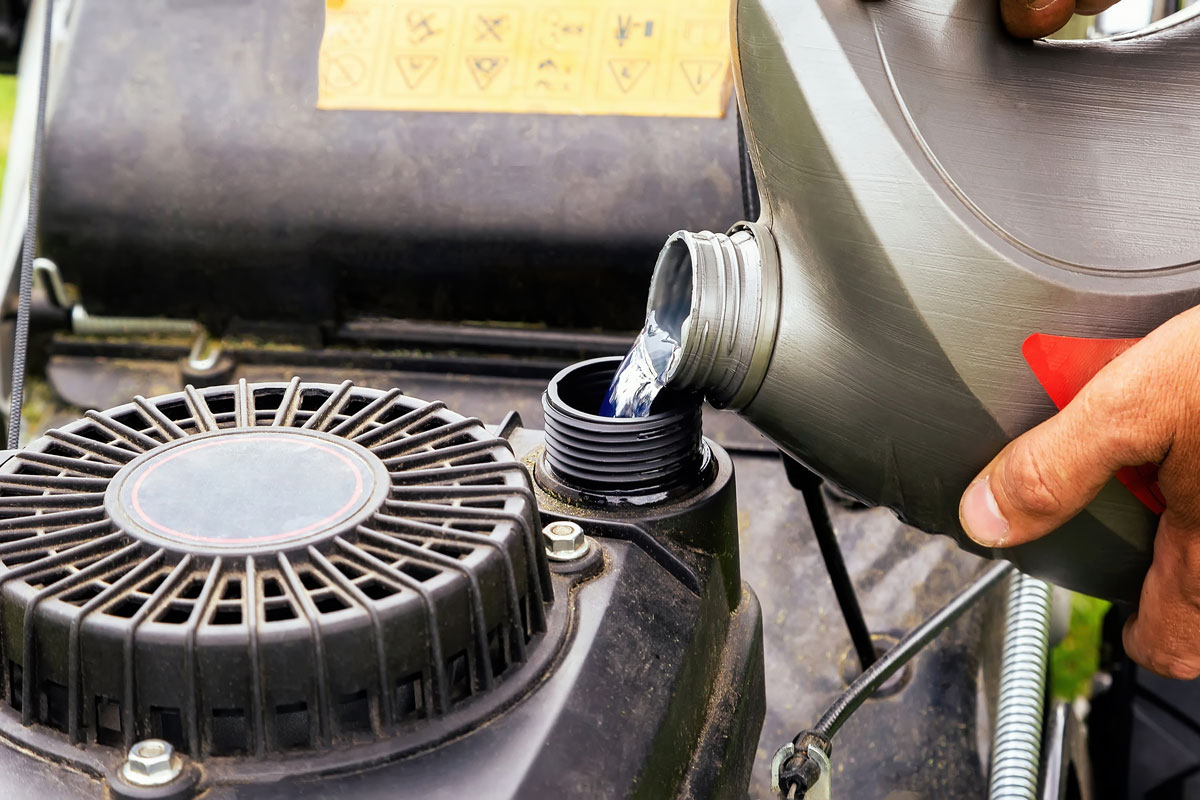
What’s The Best Oil For Honda Lawn Mower? – GardenTabs.com
Source: gardentabs.com

Why Is There Gas in My Lawn Mower Oil?

Gas gets into lawn mower oil when gasoline bypasses the normal combustion process and reaches the engine crankcase. In most small gasoline engines, the carburetor controls fuel delivery, but a failure in the fuel system can allow fuel to continue flowing even when the engine is not running.

Read More:  Honda Lawn Mower Replacement Blades

The most common cause is a carburetor problem. A stuck float or faulty needle valve can allow excess gasoline to enter the carburetor and eventually drain into the cylinder and crankcase. Fuel may pass through the piston rings and mix with the engine oil.

Other causes include leaving the fuel valve open during storage, using incorrect starting procedures, or a damaged fuel shutoff system on some mower models.

Lawn Mower Gas In Oil at Shanita Parker blog
Source: storage.googleapis.com
  • Stuck carburetor float

    A float that cannot move correctly may fail to stop fuel flow, causing gasoline to overflow and reach the engine oil.

  • Leaking carburetor needle valve

    A worn or damaged needle valve may allow fuel to pass continuously even when the engine is off.

  • Improper storage

    Storing a mower with fuel left in the system without following manufacturer recommendations can increase the chance of fuel leaks.

How Gasoline Moves Into the Engine Oil

A four-stroke lawn mower engine normally keeps fuel and oil separate. Gasoline enters the combustion chamber, while oil stays in the crankcase to lubricate moving parts. When excess fuel enters the cylinder, some gasoline can seep past the piston rings and mix with the oil below.

  • Normal operation

    Fuel burns in the combustion chamber while oil protects engine components.

  • Problem condition

    Uncontrolled fuel flow allows gasoline to contaminate the oil and reduce lubrication quality.

Signs Your Lawn Mower Has Gas Mixed With Oil

The easiest way to identify gasoline contamination is by checking the oil’s smell, appearance, and level. These signs can help determine whether fuel is entering the crankcase before more serious engine problems develop.

Read More:  Lawn Mower Using Too Much Oil: Causes And Fixes
Lawn Mower Gas Oil Mix at Erin Love blog
Source: storage.googleapis.com
  • Strong gasoline smell

    Oil that smells noticeably like gasoline is one of the most common indicators of fuel contamination.

  • Oil level is higher than expected

    A rising oil level may mean gasoline has been added to the crankcase without an actual oil refill.

  • Thin oil texture

    Fuel-diluted oil may feel thinner than normal because gasoline reduces the oil’s viscosity.

  • Engine performance issues

    A mower may run poorly, smoke, lose power, or become difficult to start when fuel system problems exist.

Gas Smell in Oil Versus Normal Oil Odor

Fresh engine oil has a distinct petroleum smell, but a strong gasoline odor is different and usually indicates contamination. If you are unsure, compare the smell and consistency with new oil from the same type of container.

How to Fix Gas in Oil Lawn Mower Problems

The repair process starts with stopping engine operation and removing contaminated oil. Running a mower with gasoline-diluted oil can increase friction and reduce protection for internal engine parts.
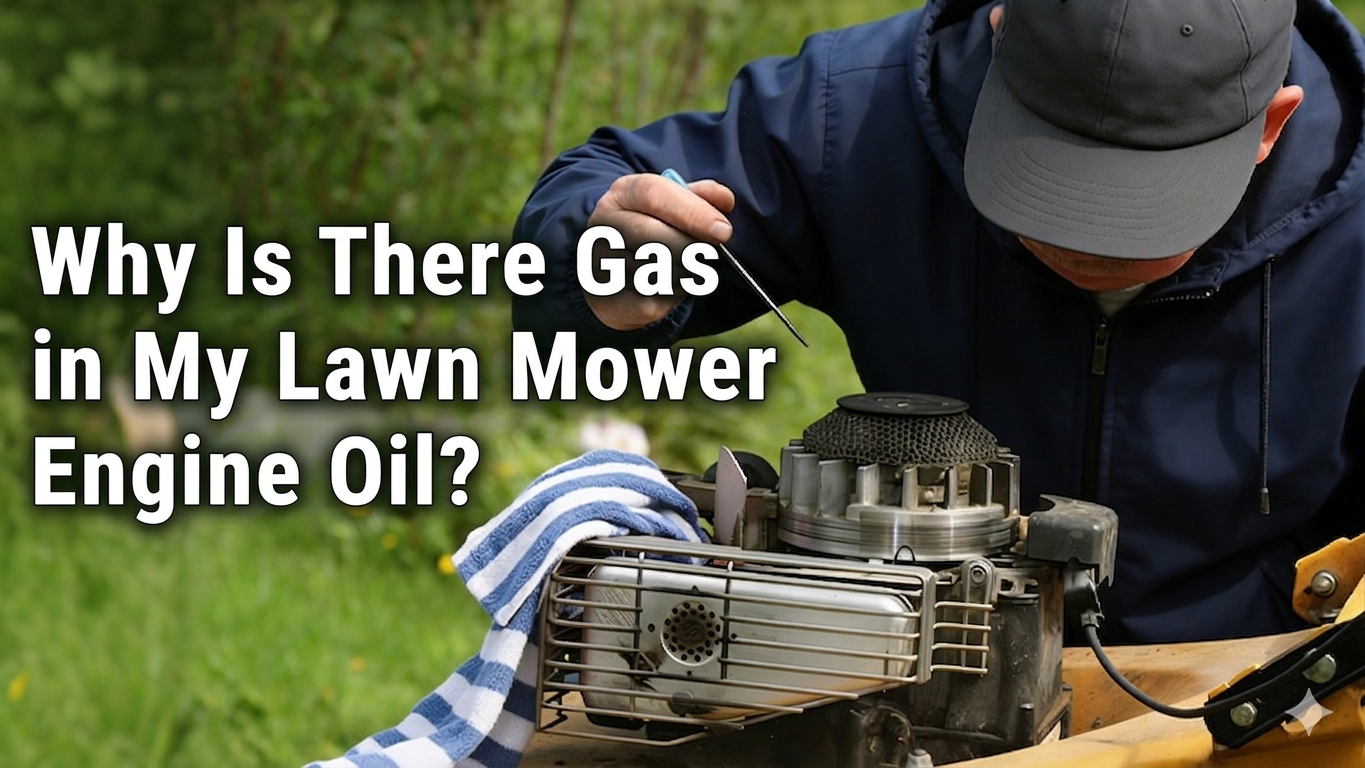
Engine Oil Smells Like Gas? How to Fix?
Source: fridayparts.com
  • Step 1: Stop using the mower

    Turn off the engine and avoid further operation until the fuel contamination issue is corrected.

  • Step 2: Find the fuel leak source

    Inspect the carburetor, float, needle valve, fuel lines, and shutoff valve if equipped.

  • Step 3: Drain contaminated oil

    Remove the old oil according to the mower manufacturer’s instructions and dispose of it properly.

  • Step 4: Add fresh oil

    Refill the engine with the correct oil type and amount listed in the owner’s manual.

When Carburetor Repair May Be Needed

If gasoline continues entering the oil after an oil change, the underlying fuel delivery problem has not been solved. Cleaning the carburetor or replacing damaged carburetor components may be necessary.

  • Consider professional help

    Seek small-engine repair assistance if the fuel leak cannot be identified or if the mower continues showing contamination signs.

Read More:  How Do You Start a Gas Lawn Mower? A Step-by-Step Guide

Gas in Oil Lawn Mower Causes Compared

Different fuel system failures create similar symptoms. This comparison can help narrow down the likely cause before replacing parts.

Premium Photo | A gardener fills a lawn mower with a mixture of ...
Source: freepik.com
  • Cause: Stuck float

    Common symptoms include fuel overflow, gasoline smell, and oil level increase.

  • Cause: Faulty needle valve

    A leaking valve can allow continuous fuel flow into the carburetor.

  • Cause: Open fuel valve during storage

    Fuel may slowly leak through the system while the mower is not being used.

How to Prevent Gasoline From Entering Lawn Mower Oil

Regular maintenance and proper storage practices can reduce the risk of gasoline contamination. Follow the mower manufacturer’s instructions because fuel systems differ between models.

  • Maintain the carburetor

    Keep the fuel system clean and address starting or running problems early.

  • Store correctly

    Use the recommended storage procedure for your specific mower model.

  • Check oil regularly

    Frequent oil checks can reveal unusual smells or rising levels before major damage occurs.

Frequently Asked Questions

Can I run a lawn mower with gas in the oil?

It is not recommended. Gasoline reduces oil lubrication ability, which may increase wear on engine components. Fix the fuel contamination issue and replace the oil before continued use.

Why does my lawn mower oil smell like gasoline?

A gasoline smell usually means fuel has mixed with the engine oil. Common causes include a leaking carburetor float, faulty needle valve, or fuel system problem.

Will changing the oil fix gas in a lawn mower oil problem?

Changing the oil removes the contaminated lubricant, but it does not repair the cause. If the fuel leak remains, gasoline may contaminate the new oil again.

How can I tell if my mower has too much oil because of gas contamination?

Check the oil level using the mower’s recommended procedure. If the level is unexpectedly high and the oil smells like gasoline, fuel may have entered the crankcase.

Should I replace the carburetor if my mower has gas in oil?

Not always. Some problems can be fixed by cleaning or replacing individual carburetor components. The correct repair depends on the specific failure and mower model.

✦ Wrapping Up

Conclusion

Gas in oil lawn mower problems usually point to a fuel system issue that allows gasoline to enter the crankcase. The most common solutions involve repairing the fuel leak, replacing contaminated oil, and maintaining the mower correctly.

Checking oil condition regularly and addressing fuel system problems early can help protect your mower engine and prevent unnecessary repairs.

💡 Key Takeaway

If your lawn mower oil smells like gasoline or the oil level has increased, stop using the mower, identify the fuel source, replace contaminated oil, and correct the underlying fuel system problem before mowing again.

Similar Posts

Leave a Reply

Your email address will not be published. Required fields are marked *