
How Much Weight Can A Riding Lawn Mower Pull: Towing Guide
A riding lawn mower can usually pull about 200 to 500 pounds on level ground, including the trailer, cart, and cargo. Some lawn tractors can handle more, while many zero-turn mowers should not tow a load at all unless the owner’s manual specifically allows it.
The exact limit depends on the mower model, hitch, transmission, tires, slope, and trailer. The owner’s manual is the final authority. Never use a general weight range as a replacement for the manufacturer’s towing limit.

Quick Answer: Typical Riding Mower Towing Limits
Most residential riding mowers fall into these rough ranges:
| Mower type | Common rated towing range | Best use |
|---|---|---|
| Small rear-engine rider | 100–250 lb | Light garden cart, bags, or tools |
| Lawn tractor | 250–500 lb | Yard cart, spreader, or small utility trailer |
| Garden tractor | 500–1,000 lb or more | Heavier carts and approved attachments |
| Residential zero-turn mower | 0–250 lb | Only when the manual permits towing |
| Commercial zero-turn mower | Model-specific | Approved accessories and light trailers |
These figures are general planning ranges, not universal ratings. A mower with a strong engine may still have a low towing limit because of its frame, hitch, brakes, transmission, or steering design.
A safe load must include the empty trailer or cart:
Total towed weight = trailer weight + cargo weight
For example, a 120-pound cart carrying 250 pounds of soil weighs 370 pounds in total. A mower rated for 250 pounds should not pull it.
The rating may also refer to one of two different measurements:
- Towed weight: The full weight rolling behind the mower.
- Tongue weight: The downward force placed on the mower hitch.
Confusing these two numbers is a common cause of overloads.

What Determines How Much a Riding Mower Can Pull?
The mower’s towing capacity is limited by more than engine power. A mower may have enough horsepower to move a heavy load but still lack the traction, braking, frame strength, or transmission capacity to control it safely.
Manufacturer rating
Manufacturers may list towing capacity in the owner’s manual, product specifications, or attachment guide. Look for terms such as:
- Maximum towing capacity
- Maximum trailer weight
- Maximum drawbar load
- Maximum hitch load
- Maximum tongue weight
- Approved rear attachments
Use the rating for the exact model and model year. A similar-looking mower may use a different transmission, frame, hitch, or axle.
Hitch and frame strength
The hitch transfers the trailer’s pulling force into the mower frame. A light-duty hitch may bend or loosen under a load that the engine can move easily.
An aftermarket hitch does not automatically increase towing capacity. It may make attachment easier, but it cannot strengthen the mower’s transmission, brakes, axle, or frame.
Transmission and drive system
A hydrostatic transmission can move a cart smoothly, but that does not mean it is designed for heavy towing. Pulling a large load up a slope can create heat and stress in the drive system.
A manual or geared transmission also has limits. Low gear helps control speed, but it does not make an overloaded mower safe.
Traction and tires
The rear tires must produce enough grip to move the load. Wet grass, loose soil, mud, gravel, and leaves can reduce traction sharply.
Wheel weights and filled tires may increase grip on some tractors, but they also add stress to the axle and transmission. Use them only when approved by the manufacturer.
Slope and surface
A load that is manageable on flat pavement may be unsafe on a hill. Slopes increase the risk of:
- Wheel spin
- Loss of steering control
- Overheating
- Trailer pushing the mower downhill
- Jackknifing
- Rollover
For safe planning, treat hills, soft ground, and rough terrain as conditions that require a much lighter load.
How to Find Your Mower’s Real Towing Capacity
The most reliable method is to check the official documentation in a set order.
1. Identify the exact mower
Write down the:
- Brand
- Model number
- Serial number, if available
- Model year
- Engine type
- Transmission type
The model number is often printed under the seat, on the frame, near the hood, or beside the rear wheel.
2. Read the owner’s manual
Search the manual for:
- Towing
- Trailer
- Cart
- Hitch
- Drawbar
- Maximum load
- Rear attachment
- Gross vehicle weight
- Tongue weight
Read the warnings around the number. The rating may apply only to a specific attachment or only to flat, firm ground.
3. Check the attachment manual
A cart or trailer may have its own load limit. The safe load is the lower of the two ratings:
Allowed load = lower rating of the mower, hitch, trailer, and attachment
For example:
- Mower rating: 500 lb
- Hitch rating: 400 lb
- Trailer rating: 300 lb
The maximum total trailer weight is 300 pounds, before considering slope or surface conditions.
4. Weigh the trailer and cargo
Do not estimate heavy materials by appearance. Soil, mulch, gravel, firewood, and wet leaves can weigh more than expected.
A truck scale, platform scale, or manufacturer weight specification can help. Remember to include:
- Trailer or cart
- Cargo
- Tie-downs
- Toolboxes
- Covers
- Any material stuck to the bed
5. Inspect the hitch and attachment
Before towing, check that:
- The hitch is properly bolted
- The pin is fully inserted
- The retaining clip is installed
- The cart or trailer is level
- The tires are inflated correctly
- The load cannot slide out
- The trailer does not contact the mower during turns
Do not attach a load to the mower deck, front bumper, steering parts, or an improvised frame point.

How to Calculate a Safe Towed Load
Use this simple calculation:
Cargo limit = mower’s allowed total trailer weight − empty trailer weight
Example calculation
Assume:
- Mower rating: 400 lb
- Empty cart: 110 lb
- Cargo: 250 lb
The total weight is:
110 lb + 250 lb = 360 lb
The load is below the 400-pound rating by 40 pounds. That may be acceptable on level, firm ground if the mower manual and cart manual allow it.
Now consider a heavier load:
- Empty cart: 150 lb
- Cargo: 300 lb
- Total: 450 lb
A mower rated for 400 pounds should not pull this load.
Tongue-weight example
A trailer places some of its weight on the hitch. If a 400-pound loaded trailer places 10% to 15% on the hitch, the downward force could be about 40 to 60 pounds.
That estimate is only a planning guide. The mower manual may set a different hitch limit. Never exceed the listed tongue-weight rating.
Too little tongue weight can make a trailer sway. Too much can reduce front-wheel traction and make steering difficult.
How Much Can a Riding Mower Pull Uphill?
A riding mower should pull far less on a slope than on flat ground. There is no safe universal percentage reduction because slope, surface, load shape, tire condition, and mower design all change the result.
The safest approach is:
- Avoid towing on steep slopes.
- Reduce the load on mild slopes.
- Travel straight up or down only when the manual permits it.
- Never tow across a slope if the mower manual warns against it.
- Use a lower speed and avoid sudden stops.
- Keep the trailer load low and centered.
- Stop if the drive wheels spin or the mower struggles.
A trailer can push the mower when traveling downhill. This can cause loss of control even when the mower pulled the load uphill without trouble.
Do not rely on engine sound alone. A mower may sound normal while the transmission, belt, axle, or hitch is under excessive stress.

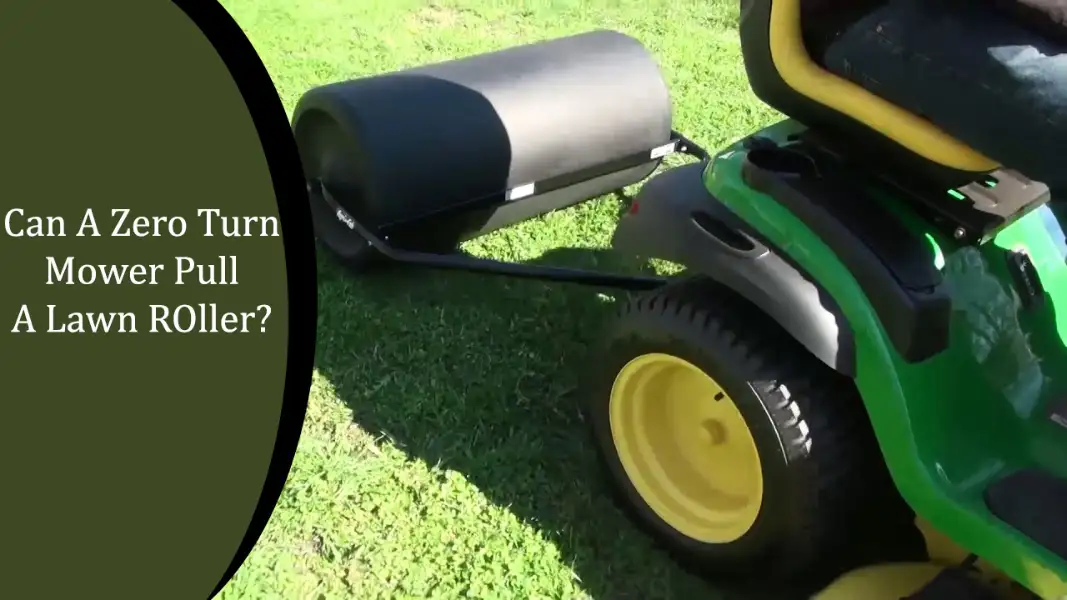
Can a Zero-Turn Mower Pull a Trailer?
Some zero-turn mowers can pull approved carts or accessories, but many are not designed for general towing. Their steering system turns the rear drive wheels independently, and their weight distribution differs from that of a lawn tractor.
Before towing with a zero-turn mower, confirm that the manual allows:
- A rear hitch
- A cart or trailer
- The intended trailer weight
- The intended slope and surface
- The required speed limit
- Any approved attachment type
If the manual does not state that towing is allowed, treat the mower as not rated for towing. Do not assume that a bolt-on hitch makes it suitable.
A zero-turn mower may be appropriate for pulling a light, approved spreader or small cart on flat ground. It may not be appropriate for hauling firewood, gravel, wet soil, or a loaded utility trailer.

What Can a Riding Lawn Mower Safely Pull?
A properly rated mower can often pull light yard equipment such as:
- Empty or lightly loaded lawn carts
- Broadcast spreaders
- Tow-behind aerators
- Small lawn rollers
- Leaf collectors
- Utility carts
- Approved sprayers
The attachment must match the mower. A lawn roller, for example, can become very heavy when filled with water. A cart filled with wet soil may exceed its rating even when it looks only partly full.
Avoid towing:
- Passenger vehicles
- People or pets
- Boats
- Large utility trailers
- Heavy logs
- Stuck vehicles
- Loads with wheels that do not roll freely
- Homemade attachments without a verified rating
A riding mower is not a road vehicle. Its brakes, steering, lights, frame, and tires are not designed for highway towing.

How to Tow Safely With a Riding Mower
Follow the mower and trailer manuals first. These steps provide a basic safety check.
Before moving
- Check the mower’s towing limit.
- Check the cart or trailer’s load limit.
- Weigh or estimate the full loaded weight carefully.
- Keep the load low and centered.
- Secure loose cargo.
- Check tire pressure.
- Inspect the hitch, pin, and frame.
- Remove bystanders and pets from the area.
- Confirm that the trailer can turn without hitting the mower.
While towing
- Drive slowly.
- Use flat, firm ground when possible.
- Make wide turns.
- Leave extra stopping distance.
- Avoid sudden starts and stops.
- Keep both hands on the steering controls or wheel.
- Watch for trailer sway.
- Stop if the mower loses traction or steering feels light.
After towing
Inspect the mower and hitch for:
- Bent metal
- Loose bolts
- Cracked welds
- Damaged hitch holes
- Hot or unusual-smelling transmission parts
- Worn belts
- Tire damage
If the mower struggles, slips, overheats, or makes a new noise, stop using the load until the cause is found.
Common Mistakes That Reduce Towing Safety
Counting only the cargo
A 300-pound cargo load in a 100-pound cart weighs 400 pounds. The cart counts.
Treating horsepower as towing capacity
Horsepower helps create motion. It does not prove that the frame, transmission, tires, brakes, or hitch can control the load.
Using the hitch rating as the mower rating
A hitch may be rated for more than the mower can safely tow. Use the lowest rating in the system.
Ignoring wet materials
Wet mulch, soil, grass, and leaves can weigh much more than dry material. If the material may hold water, use a scale or carry less.
Towing too fast
A trailer can bounce, sway, or push the mower during a turn or stop. Speed makes each problem worse.
Towing across a hill
Side slopes can reduce traction and raise rollover risk. Use the route recommended by the mower manual.
Adding a hitch without checking the manual
An aftermarket hitch may fit physically but still void an attachment limit or create unsafe frame stress.

A Practical Decision Table
Use this table as a starting point, then confirm the exact limit in the owner’s manual.
| Situation | Practical approach |
|---|---|
| Flat, dry lawn with a light empty cart | Usually suitable if the manual permits towing |
| Flat ground with a full garden cart | Check the total weight carefully |
| Wet grass or loose soil | Reduce the load substantially |
| Mild slope | Use only an approved light load and low speed |
| Steep slope | Avoid towing |
| Zero-turn mower without a stated towing rating | Do not tow |
| Trailer rating lower than mower rating | Follow the trailer’s lower rating |
| Mower struggles or loses traction | Stop and reduce the load |
| Unknown trailer weight | Weigh it before towing |
The table does not replace the manufacturer’s instructions. It helps identify when a normal rating may not apply.

Frequently Asked Questions
Can a riding lawn mower pull 1,000 pounds?
Some heavy-duty garden tractors may have a documented capacity near or above 1,000 pounds, but many residential lawn tractors cannot. A 1,000-pound trailer also creates high braking and slope risks. Use that figure only when the exact mower and trailer manuals support it.
Can a riding mower pull a loaded dump cart?
Yes, if the mower and cart are both rated for the full loaded weight. Keep the load below the cart’s limit, secure it, and avoid slopes. A dump cart filled with wet soil or gravel can exceed its rating quickly.
Can I pull a trailer with a lawn tractor?
Many lawn tractors are designed to pull small carts and approved attachments. Confirm the maximum total trailer weight, hitch limit, terrain limits, and speed restrictions before use.
Does a riding mower need trailer brakes?
Small lawn carts usually do not have separate brakes, but the lack of trailer brakes increases the stopping burden on the mower. Do not tow a large or heavy trailer unless the mower and trailer system is specifically designed for it.
How do I know if my mower is overloaded?
Warning signs include wheel spin, weak steering, front-wheel lift, belt smell, transmission heat, poor braking, hitch movement, trailer sway, and difficulty moving on level ground. Stop immediately if any of these occur.
Final Recommendation
A typical riding lawn mower can often pull 200 to 500 pounds total, but the correct answer for your mower may be lower or higher. Count the trailer, follow the lowest rating among all components, reduce the load for hills or soft ground, and use only approved hitches and attachments.
Before towing, find the exact model manual and confirm the maximum trailer weight and tongue weight. If the manual gives no towing rating, do not assume the mower is suitable for pulling a trailer.


