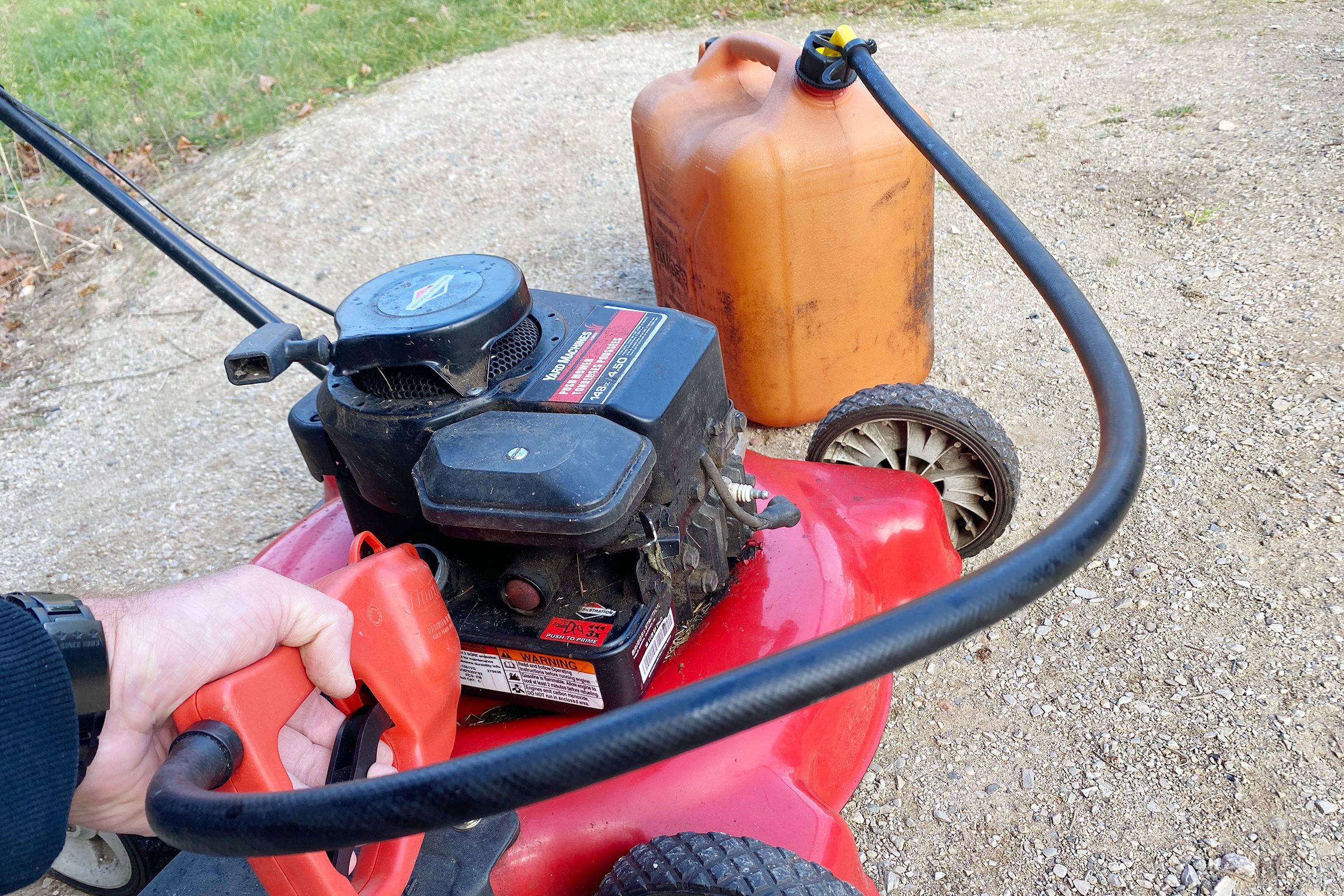
Remove old gas from your lawn mower, dispose of it according to local hazardous waste rules, and refill the tank with fresh gasoline before running the engine.
In many parts of the United States, lawn mowers sit unused during cold winter months and are often started again in spring with fuel that has degraded during storage. If gasoline has been sitting in your mower for several months, it may no longer burn properly and can cause hard starting, rough running, clogged fuel components, or engine failure.
The best approach depends on how old the gasoline is, whether the mower still runs, and whether the fuel contains water or contaminants. Removing questionable fuel and replacing it with fresh gasoline is usually safer than trying to make a small engine operate on degraded fuel.
How to Decide What to Do With Old Gas in a Lawn Mower
The first step is determining whether the gasoline is still usable. Fresh gasoline generally works best for small engines because volatile compounds evaporate over time, leaving behind fuel that burns less efficiently.
Gasoline that has been stored for a long period may develop a sour smell, darker color, or visible contamination. If the mower struggles to start or runs poorly after sitting, old fuel is one possible cause.
Source: storage.googleapis.com
Use slightly old gas only in limited situations
Gasoline that has been stored for a short period in a sealed container may still work, especially if it looks and smells normal. Avoid relying on questionable fuel in a mower that is already having problems.
Remove severely degraded fuel
Gas that smells stale, contains water, or has been sitting through multiple seasons should be removed before operating the mower.
Signs That Lawn Mower Gas Has Gone Bad
Old gasoline often shows physical and performance changes. Checking the fuel before starting the engine can help prevent unnecessary damage.
Strong sour or varnish-like odor
A chemical smell different from fresh gasoline can indicate fuel degradation.
Dark or cloudy appearance
Discolored fuel may contain degraded compounds or contamination.
Engine problems
Hard starting, sputtering, stalling, or uneven operation can occur when old fuel reaches the carburetor.
How to Remove Old Gas From a Lawn Mower Safely
Removing old fuel is usually the safest solution when gasoline has degraded. Work outdoors or in a well-ventilated area, keep gasoline away from flames, and use approved fuel containers.
The exact process varies by mower design, but most walk-behind lawn mowers can be drained by using a fuel siphon, removing the fuel line, or carefully emptying the tank according to the manufacturer’s instructions.
Source: hitchesguide.com
Prepare the equipment
Gather an approved gasoline container, fuel siphon if needed, gloves, and a clean work area away from ignition sources.
Remove the old gasoline
Transfer the fuel into the approved container without spilling it onto the ground or allowing it to enter drains.
Refill with fresh fuel
Add fresh gasoline recommended for your mower and avoid mixing large amounts of bad fuel with new fuel.
After draining the fuel, check the mower’s fuel system for signs of contamination. If the engine still will not start after fresh fuel is added, the carburetor, spark plug, air filter, or fuel lines may need inspection.
Check the fuel filter if equipped
A clogged filter can restrict fuel flow and create symptoms similar to bad gasoline.
Old gasoline should not be poured onto the ground, into storm drains, or placed in regular household trash. Gasoline is considered a hazardous household material in many locations because it can contaminate soil and water and create fire risks.
Many communities in the United States provide household hazardous waste collection programs that accept old gasoline. Contact your local waste management department for specific disposal instructions.
Source: gardencomposer.com
Use approved disposal locations
Take old gasoline to a facility or collection event that accepts household hazardous waste.
Keep gasoline contained
Transport fuel in a proper gasoline container with a secure cap.
Can You Make Old Gas Usable Again?
Fuel additives may help maintain gasoline quality before it becomes severely degraded, but they cannot fully restore gasoline that has already broken down or become contaminated.
If the fuel is only slightly aged and still looks and smells normal, some owners mix it with fresh gasoline. However, heavily degraded fuel should be removed rather than reused.
Source: mybackyardlife.com
Fuel stabilizer works best before storage
Adding stabilizer to fresh gasoline before storing a mower can slow fuel degradation.
Bad fuel cannot always be repaired
Once gasoline has separated, absorbed water, or formed deposits, replacement is usually the safer option.
How to Prevent Old Gas Problems in Your Lawn Mower
Preventing stale gasoline is easier than repairing fuel-related problems. Proper storage practices help keep the mower ready for the next cutting season.
Before long-term storage, many mower owners either use fuel stabilizer with fresh gasoline or follow the manufacturer’s recommendations for draining the fuel system.
Source: dryerenthusiast.com
Store fresh gasoline
Avoid leaving old fuel in the mower for long periods when possible.
Use fuel stabilizer correctly
Follow the stabilizer manufacturer’s instructions and add it before the fuel becomes old.
Store fuel properly
Keep gasoline in approved containers away from heat and ignition sources.
Frequently Asked Questions
Q
How long does gasoline last in a lawn mower?
Gasoline quality can decline during storage, especially when exposed to heat, air, or moisture. Many small-engine problems occur after fuel has been left unused for extended periods.
Q
Can I mix old gas with new gas in my lawn mower?
Mixing may be possible when gasoline is only slightly aged and free from contamination, but severely degraded fuel should be removed instead of diluted with fresh gasoline.
Q
What happens if I run a lawn mower with old gas?
Old gas can cause difficult starting, poor engine performance, clogged fuel system components, and increased maintenance needs.
Q
Can I pour old lawn mower gas into my car?
Using questionable mower gasoline in a vehicle is generally not recommended. Cars have different fuel systems, and contaminated or degraded fuel may create problems.
Q
Should I drain gas from my lawn mower before winter storage?
Follow the mower manufacturer’s storage instructions. Many owners use stabilized fuel or drain the fuel system before long periods of inactivity.
✦ Wrapping Up
Conclusion
When you have old gas in a lawn mower, the safest solution is usually to remove fuel that has degraded and replace it with fresh gasoline. Trying to run an engine on poor-quality fuel can create avoidable starting and performance issues.
Proper fuel storage, regular maintenance, and careful disposal practices can help keep your mower reliable and reduce future fuel problems.
💡 Key Takeaway
If your lawn mower has old gas, inspect the fuel first, remove questionable gasoline safely, refill with fresh fuel, and dispose of the old gasoline through an approved household hazardous waste program.
It’s a bright Saturday morning, the grass is waving at you, and your trusty DeWalt gas mower sits waiting. You pull the cord—nothing. You press the electric start—silence. That sinking feeling in your stomach grows. You’re not alone; “DeWalt Gas Lawn Mower Not Starting” is one of the most common issues homeowners face during mowing…
There’s nothing more frustrating than being ready to mow on a sunny weekend morning, only to find your Troy-Bilt mower’s pull cord snapped in half. You stand there, handle in one hand, and frustration in the other. This is a common scenario that turns a simple task into a mechanical puzzle. The Troy Bilt lawn…
Lawn mower carburetor adjustment screws explained in a simple guide. Learn what each screw does and tune your engine for smoother, reliable performance.
Maintaining a pristine lawn isn’t just about cutting grass—it’s also about keeping your mower in top shape. One often-overlooked part that can drastically impact performance is the rear flap. A damaged or missing rear flap, also called a trailing shield, can turn a simple mowing session into a messy chore, scattering grass clippings, dirt, and…
When you’re ready to trim the lawn and your Ryobi lawn mower won’t start, frustration sets in fast. You might press the start button, squeeze the handle, and hear—nothing. Maybe it clicks once and stops, or maybe it’s completely silent. Either way, your weekend plans just got delayed. Don’t worry—this happens more often than you…

:max_bytes(150000):strip_icc()/GettyImages-1440604227-00557bb23ed64612aeb825f019f14cea.jpg "How to Safely Dispose of Old Gasoline From Your Lawn Mower, According ...")