
5 Best Gas For MIG Welding Mild Steel 2026: Best Guide
The best gas for MIG welding mild steel in 2026 is a clean 75% argon and 25% carbon dioxide blend.
Many new welders buy the right welder and wire, then struggle with poor penetration, excess spatter, or unstable arcs. The shielding gas often causes the trouble. I reviewed the supplied gas, wire, and welder options to show what fits mild-steel MIG work best. I also explain when to use 75/25 gas, pure carbon dioxide, or flux-core wire. This guide to the 5 best gas for MIG welding mild steel 2026 helps you choose a setup that matches your metal thickness, shop size, skill level, and budget.
See the differences between my top picks at a glance.
PrimeWeld 75/25 MIG Gas Bottle
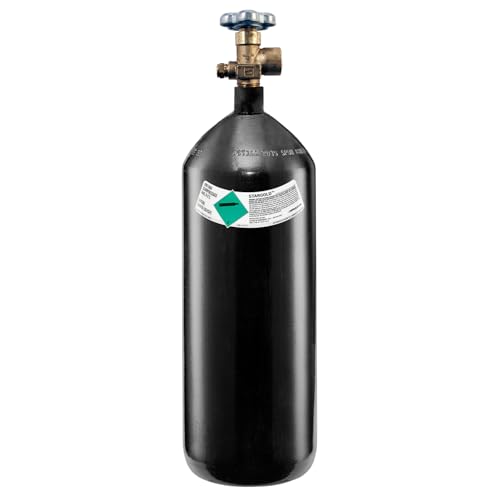
The PrimeWeld bottle contains the gas blend I recommend most for solid-wire MIG welding on mild steel. Its mix uses 75% argon and 25% carbon dioxide. This blend gives a stable arc and helps limit spatter on common steel jobs. The listed 40 cubic foot size also suits many home shops and portable welding carts.
The DOT 3AA cylinder design and CGA 580 valve fit common industrial gas connections, but I still advise checking your regulator before ordering. Gas suppliers may also have rules for refills and exchanges. Keep the cylinder upright, secure it with a chain, and inspect the hose for leaks before you weld. A sound bottle cannot fix poor settings, dirty steel, or a bad ground clamp, so use it as part of a complete setup.
Pros:
- Excellent 75/25 blend for mild-steel MIG work
- Helps create a smooth and easy-to-control arc
- Usually produces less spatter than pure carbon dioxide
- 40 cubic feet suits many home and repair shops
- Ready-to-use cylinder format saves setup time
- Useful match for ER70S-6 solid welding wire
Cons:
- A 40 cubic foot bottle needs more frequent refills than a larger cylinder
- It requires a compatible regulator and gas hose
- Gas availability and refill cost vary by location
What Amazon Buyers Are Saying
Buyers commonly focus on the convenience of receiving a filled cylinder rather than searching for a local gas supplier first. Product feedback may also mention the bottle condition, packaging, valve fit, and whether the buyer can exchange or refill it nearby. Those points matter because a gas cylinder is not a one-time purchase if you weld often.
Before relying on any individual review, I suggest checking the newest customer comments and the seller details. Delivery rules can change for compressed gas. Also confirm that the listed cylinder size, fill status, and valve type match your equipment and local refill options.
My Recommendation
This is my top pick when you want a practical gas bottle for clean MIG welding on mild steel. The 75/25 mix is forgiving for many beginner and intermediate jobs. I would buy it when I already have a compatible regulator and a nearby refill plan. It earns the highest rating in this guide to the 5 best gas for MIG welding mild steel 2026.
BIG RED ER70S-6 MIG Welding Wire

The BIG RED spool uses ER70S-6 solid wire in a 0.035-inch diameter. That wire size works well for many medium mild-steel repairs when the welder can provide the needed current and wire speed. ER70S-6 includes deoxidizing elements that help it handle light mill scale better than some general-purpose wire. It still performs best on clean steel.
This product is not shielding gas, but it is an important partner for the best gas for MIG welding mild steel 2026. Solid wire needs external gas to protect the molten weld pool. Pairing ER70S-6 with a 75/25 argon and carbon dioxide blend often gives a smooth arc and manageable spatter. Check your machine drive roll, liner, contact tip, and polarity before feeding a new spool.
Pros:
- Common ER70S-6 chemistry suits mild-steel fabrication
- 0.035-inch wire supports many medium-duty jobs
- Solid wire works well with standard gas-shielded MIG
- Deoxidizers help with minor surface contamination
- Large 11-pound spool can reduce spool changes
- Useful for flat, horizontal, and other suitable positions
Cons:
- It cannot weld as a gasless wire by itself
- 0.035-inch wire may be too large for thin sheet metal
- The spool needs dry storage to prevent rust and feeding problems
What Amazon Buyers Are Saying
Customer feedback for MIG wire often centers on smooth feeding, bead appearance, spool condition, and the amount of cleanup after welding. Buyers may also comment on whether the wire runs well in their specific welder. These experiences can differ when machines use different liners, drive rolls, contact tips, and settings.
I would treat comments about low spatter as setup-dependent rather than guaranteed. Gas flow, stick-out, voltage, wire speed, travel speed, and base-metal cleanliness all affect spatter. Check recent reviews for packaging and wire consistency, then test the spool on scrap steel before starting a visible project.
My Recommendation
I recommend this wire for welders who already have a gas-capable machine and want a common 0.035-inch option for mild steel. It is a sensible companion to the PrimeWeld 75/25 bottle. It is not a substitute for gas, so do not buy it for gasless work. For the right machine and thickness, it offers good practical value.
Hobart Handler 125 MIG-Ready Welder
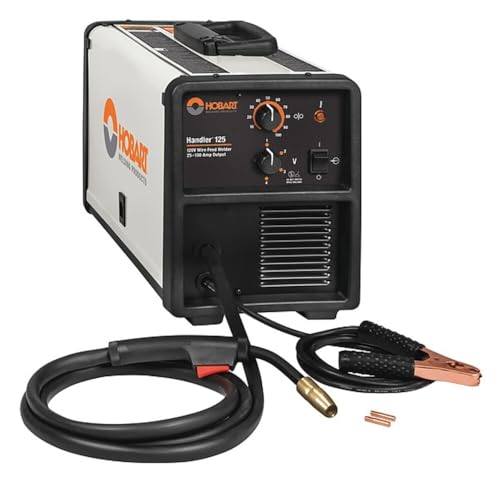
The Hobart Handler 125 is a compact wire-feed welder rated for work from 25 to 130 amps. The listed design includes four voltage settings, a built-in contactor, a quick-release drive roll, and a factory gas solenoid for MIG conversion. Its stated capacity reaches 1/8-inch steel, which makes it a practical choice for light repair and home projects.
This model arrives in the supplied listing as a flux-core wire-feed welder, so buyers should understand the gas conversion step. With the proper regulator, hose, solid wire, and polarity, a gas-capable setup can produce cleaner beads than flux-core wire in suitable indoor conditions. Gas shielding also needs a calm work area because wind can blow protection away from the weld pool.
Pros:
- Compact format suits many home workshops
- Four voltage settings offer simple control
- Built-in gas solenoid supports MIG conversion
- Quick-release drive roll makes wire changes easier
- Useful current range for light mild-steel work
- Can support both flux-core and gas-shielded processes with the right setup
Cons:
- It is not a complete gas MIG setup out of the box
- Its 1/8-inch steel rating limits heavy fabrication
- Four voltage steps give less fine control than advanced machines
- Buyers may need extra gas hardware and solid wire
What Amazon Buyers Are Saying
Buyers of compact wire-feed welders commonly value easy controls, small size, and useful results on home repairs. Reviews may discuss the machine’s performance on thin steel, ease of wire loading, and learning curve. Some users also compare flux-core welding with gas-shielded MIG and note that each process suits different work areas.
The most useful feedback usually identifies the wire type, material thickness, and power source used. A small welder can perform well within its rated range but struggle when the user expects deep penetration on thick plate. I recommend reading current reviews for packaging, accessories, and support, then following the manual for polarity and duty-cycle limits.
My Recommendation
This is a good starting platform for a home user who wants a simple wire-feed machine and may later add shielding gas. It makes sense for light mild-steel work, small repairs, brackets, and hobby projects. I would not choose it for heavy structural welding. It belongs in this review as supporting equipment, not as a gas product.
findmall ER70S-6 0.030-Inch Wire

The findmall spool uses 0.030-inch ER70S-6 solid wire and contains 44 pounds. The smaller diameter can suit lighter mild-steel work when the welder has the correct settings and drive components. It can also help users who want a balance between heat control and welding speed. The large spool is aimed at shops that use wire often.
Like the BIG RED wire, this product does not provide shielding gas. It needs a gas bottle and regulator for standard solid-wire MIG welding. The 0.030-inch size may pair well with a 75/25 blend for thin to medium steel, but the machine must support the spool size and weight. Confirm that your spool holder can safely handle this large roll before purchase.
Pros:
- 0.030-inch diameter can suit lighter steel work
- ER70S-6 is a common choice for mild-steel MIG
- 44-pound quantity reduces frequent spool replacement
- Solid wire works with standard gas-shielded MIG setups
- Useful for shops with steady wire consumption
- Large supply may lower interruptions during long projects
Cons:
- The large spool may not fit small home welders
- It requires external shielding gas and compatible hardware
- Long storage needs careful protection from moisture
- Some machines may need a different spool adapter
What Amazon Buyers Are Saying
Reviews for large welding-wire spools often focus on wire cleanliness, smooth feeding, spool fit, and the value of buying in bulk. Buyers may also discuss whether the roll arrived secure and whether it worked with their machine. These details matter more with a 44-pound spool because an incompatibility can create a costly return or storage problem.
I suggest checking the newest buyer comments for spool dimensions and machine fit. Do not assume that every compact welder can carry a large roll. Also remember that smooth feeding depends on the liner, drive roll pressure, contact tip, and wire path, not only on the wire brand.
My Recommendation
I recommend this wire for a busy shop or experienced user who knows the spool will fit the machine. The 0.030-inch size can be useful for lighter mild-steel MIG jobs, while the large quantity suits regular production. For occasional home repairs, the spool may be more than you need. Pair it with the best gas for MIG welding mild steel 2026, and store it in a dry place.
Understanding the Five Best Gas Choices
The supplied products include one gas cylinder, two solid-wire spools, and one wire-feed welder. They do not represent five different gas bottles. I will not label wire or a welder as shielding gas. Instead, this section explains the five practical gas choices that matter when comparing the 5 best gas for MIG welding mild steel 2026.
For most home and repair work, a 75% argon and 25% carbon dioxide blend remains the best starting point. Pure carbon dioxide costs less in many areas and can provide strong penetration, but it often creates a harsher arc and more spatter. A higher-argon blend can reduce spatter and heat, but it may not suit every transfer mode or thickness.
Tri-mix gas can help special applications, but it usually targets stainless steel rather than ordinary mild steel. Helium blends can add heat and improve penetration in selected work, yet they cost more and demand good control. Flux-core wire is the fifth practical option because it removes the need for a gas bottle, although it is a separate welding process and often creates more smoke and slag.
1. 75% Argon and 25% Carbon Dioxide
This is the standard recommendation for many short-circuit MIG jobs on mild steel. Argon helps make the arc smooth, while carbon dioxide adds penetration and supports a stable weld pool. The mix often produces less spatter than pure carbon dioxide. It also works well with common ER70S-6 solid wire.
Use this blend indoors or in a sheltered space. Set the flow rate based on the nozzle, cup, joint, and work area. Too little flow can expose the weld pool to air. Too much flow can create turbulence and waste gas. Always test the bead on scrap before welding the final joint.
2. Pure Carbon Dioxide
Pure carbon dioxide can weld mild steel and often costs less per bottle. It can provide good penetration, which may help on thicker material. The tradeoff is a rougher arc, more spatter, and more cleanup. It may also require different voltage and wire-speed settings than a 75/25 mixture.
I would choose pure CO2 when price, penetration, or local supply matters more than bead appearance. It can make sense for farm repairs and heavy shop work. It is less attractive for thin sheet metal, visible welds, or beginners who want the easiest arc to control.
3. Higher-Argon Blends
Gas blends with more argon can lower spatter and create a softer arc. They may suit thin mild steel and applications where appearance matters. The exact mix affects penetration, transfer mode, and machine settings. Do not assume that a blend made for aluminum or stainless steel will automatically work best on mild steel.
Read the gas label and match it to your process. Your welder manual and welding procedure should guide the final choice. If the blend needs spray transfer, your machine must have enough output and the material must support that mode. A higher argon content does not remove the need for correct voltage, wire speed, and stick-out.
4. Tri-Mix and Specialty Gas
Tri-mix blends often combine argon, carbon dioxide, and helium. They are widely linked with stainless-steel welding and special production work. They can offer a useful balance of arc stability, heat, and penetration. For basic mild steel, however, they may cost more than needed.
I would not buy specialty gas until I know why the standard 75/25 blend fails. Check the joint design, ground, wire, polarity, surface, and settings first. Many poor welds come from setup errors rather than from the gas itself. Ask a local gas supplier or qualified welding technician before changing to a specialty mix.
5. Flux-Core Wire Without External Gas
Self-shielded flux-core wire gives you a gas-free option. The flux inside the wire creates shielding as it burns. This works well outdoors because a breeze is less likely to remove a gas cloud. It also suits repairs where carrying a cylinder is not practical.
Flux-core welding has clear tradeoffs. It creates slag that you must remove, and it often makes more smoke and spatter than gas-shielded MIG. You must use the correct polarity for the wire. This method is not the same as using solid wire with shielding gas, so select the process before you buy wire.
How to Choose the 5 Best Gas for MIG Welding Mild Steel 2026
Choosing the 5 best gas for MIG welding mild steel 2026 means matching the gas to your wire, machine, material, and work area. A good gas cannot overcome a dirty joint or wrong settings. Use the points below to build a balanced setup instead of buying a cylinder based only on price.
1. Match the Gas to the Wire and Transfer Mode
Start with the wire label. ER70S-6 solid wire normally needs an external shielding gas. A 75/25 argon and carbon dioxide mix gives many users a reliable starting point for mild steel. Flux-core wire may use no external gas, but only when the wire label says it is self-shielded.
Next, check the machine output and transfer mode. Small home welders often use short-circuit transfer. This mode works well with common mild-steel wire and a 75/25 blend. Spray transfer requires more power and a suitable gas mix, so do not copy industrial settings on a compact 125-amp welder.
2. Check Cylinder Size, Valve, and Refill Access
A small bottle costs less to buy and is easier to move. It also runs empty sooner. A larger cylinder can reduce refill trips, but it needs more floor space and a strong cart. The 40 cubic foot PrimeWeld bottle suits many portable setups, but frequent welders may prefer a larger cylinder from a local supplier.
Check the valve and regulator connection before ordering. The listed PrimeWeld bottle uses a CGA 580 valve. Your regulator must match that connection. Ask the seller or gas supplier about fill status, exchange policy, delivery rules, and local refills. Never transport or store a cylinder loose in a vehicle.
3. Compare Cleanliness, Wind, and Total Cost
Gas-shielded MIG works best on clean steel in a sheltered area. Wind can disturb the gas shield and cause porosity. If you weld outside, use a wind screen or choose self-shielded flux-core wire when the job allows it. Do not simply increase gas flow to fight strong wind. High flow can cause turbulence and make the shield worse.
Compare the full cost, not only the bottle price. Include the regulator, hose, cart, refills, wire, contact tips, and storage. Pure CO2 may cost less in some areas, while 75/25 may save cleanup time. A large wire spool can offer value, but only if your welder can hold it safely and you use enough wire before it becomes old or rusty.
Gas Settings for Mild-Steel MIG Welding
Gas flow is often measured in cubic feet per hour. The right setting depends on the nozzle, joint, indoor air movement, stick-out, and gas mix. Many small indoor jobs start in a moderate range, but I will not give one number as a universal rule. Follow the welder manual and adjust while watching the arc and bead.
Place the nozzle close enough to protect the pool without dragging it through the joint. Keep the gun angle steady. Listen for a smooth frying sound when the settings are close. Popping, pinholes, a dull bead, and heavy spatter can point to low flow, leaks, poor grounding, dirty steel, incorrect polarity, or wrong voltage and wire speed.
Use leak-detection solution on fittings when the system is off and pressurized. Never use a flame to find a gas leak. Inspect the hose, regulator, cylinder valve, and gun connection. Open the cylinder valve slowly. Secure the bottle upright and keep it away from heat, sparks, impact, and oil contamination.
Safety Tips for MIG Gas and Mild Steel
Wear a correct welding helmet, gloves, a flame-resistant jacket, and closed leather footwear. Remove paint, oil, and coatings when safe to do so. Coated steel can release harmful fumes. Use local exhaust or suitable ventilation. A small fan should not blow across the weld pool because it can remove shielding gas.
Keep the cylinder chained to a cart or fixed support. Close the valve when you finish welding. Do not lift a cylinder by its valve or use it as a roller. Keep oxygen cylinders away from fuel gas and oil. Follow the cylinder label, supplier instructions, and current workplace safety rules.
Use a dry, clean ground connection. Keep the work clamp close to the weld when possible. Check the machine duty cycle and let it cool. Never weld a sealed container unless a qualified professional has made it safe. These basic steps protect both the operator and the weld quality.
Which Product Fits Which Welder?
For a beginner with a gas-capable machine, I would choose the PrimeWeld 75/25 bottle and a suitable ER70S-6 spool. The BIG RED 0.035-inch wire fits many medium mild-steel jobs. The findmall 0.030-inch wire makes more sense for lighter work and high-volume users with a compatible spool holder.
For a small home machine, the Hobart Handler 125 offers a simple base. Buyers should remember that the listed unit is a flux-core wire-feed welder with gas-conversion features. You still need the right hose, regulator, solid wire, and machine setup for gas-shielded MIG. Always verify the final configuration in the manual.
For outdoor work, self-shielded flux-core wire may beat every bottle because wind can ruin a gas shield. For neat indoor beads on mild steel, the 75/25 blend remains easier to recommend. This difference explains why the best gas for MIG welding mild steel 2026 depends on the job, not just the product listing.
Final Verdict: Which Should You Buy?
For most mild-steel MIG users, I recommend the PrimeWeld 75/25 cylinder. Pair it with compatible ER70S-6 wire for a smooth arc and lower spatter. The BIG RED wire suits medium work, while findmall suits high-volume users with a large spool-capable machine.
This guide to the 5 best gas for MIG welding mild steel 2026 favors correct matching over hype. Check your regulator, wire, machine, refill access, and work area before buying.
FAQs Of 5 best gas for MIG welding mild steel 2026
What gas is best for MIG welding mild steel?
A 75% argon and 25% carbon dioxide blend is the best starting choice for many mild-steel MIG jobs. It offers a smooth arc, useful penetration, and less spatter than pure carbon dioxide.
Can I use pure CO2 for mild-steel MIG welding?
Yes. Pure CO2 can weld mild steel and may provide strong penetration. It usually creates a harsher arc and more spatter than a 75/25 argon and CO2 blend.
Do ER70S-6 wires need shielding gas?
Yes. Standard ER70S-6 solid wire needs external shielding gas. Use the gas and polarity listed by your welder and wire manufacturers.
Is the Hobart Handler 125 a complete gas MIG welder?
The listed model is a flux-core wire-feed welder with gas-conversion features. You may need a regulator, hose, gas cylinder, and solid wire for gas-shielded MIG use.
Can I use MIG gas outside?
You can weld outside with MIG gas only when you protect the weld pool from wind. Strong air movement can cause porosity. Self-shielded flux-core wire may work better in exposed outdoor areas.





One Comment