Lawn Mower Running Low On Oil Symptoms: Warning Signs
A lawn mower running low on oil may smoke, overheat, lose power, or stop suddenly.
A lawn mower engine needs oil to reduce friction, carry heat away, and protect moving parts. When the oil level drops, small warning signs can appear before serious damage occurs. Knowing the lawn mower running low on oil symptoms can help you act early, save money, and keep your mower ready for the next cut.
Common lawn mower running low on oil symptoms
The first lawn mower running low on oil symptoms may seem minor. The engine may sound different, feel weaker, or run hotter than normal. Do not ignore these changes, especially if they appear together.
Look for these common signs:
• A loud knocking or tapping sound: Low oil allows metal parts to rub together. This can create a sharp tap, knock, or grinding noise.
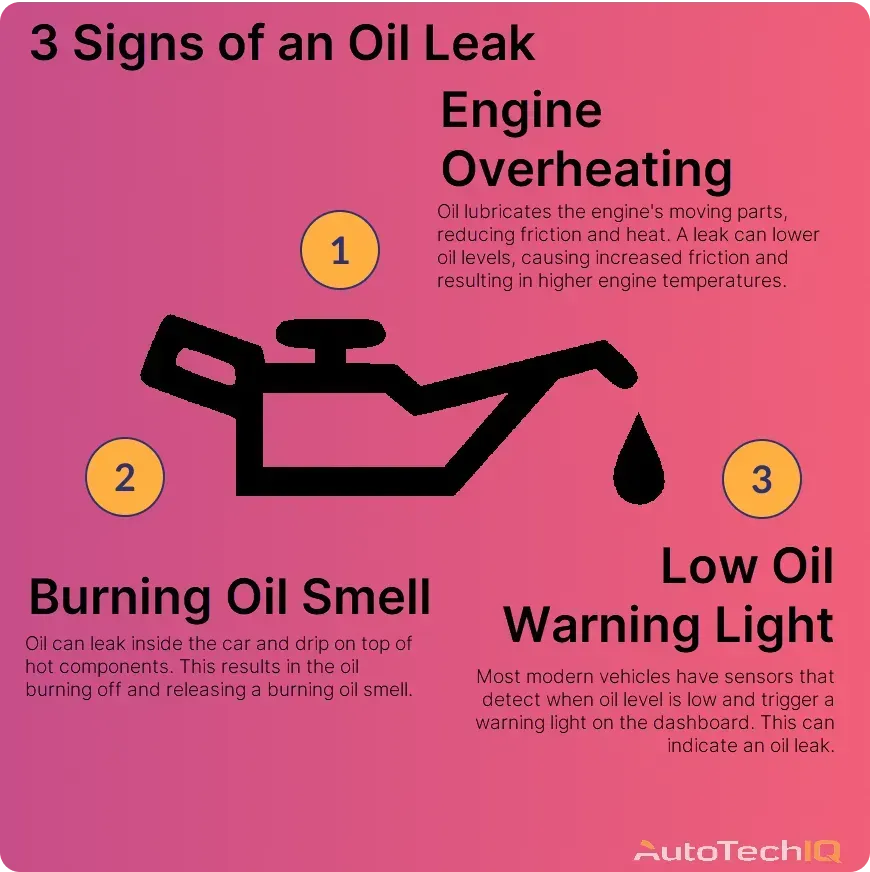
• Engine overheating: Oil helps move heat away from engine parts. With too little oil, the engine may become very hot in a short time.
• White, blue, or gray smoke: Smoke can mean oil is burning inside the engine. It may also come from oil spilled on a hot engine part.
• Loss of power: The mower may struggle in thick grass or slow down when the blade meets resistance.
• The engine surges or runs unevenly: Low lubrication can affect engine movement and heat control.
• Sudden engine shutdown: Some mowers have a low-oil safety switch. Others may simply stop when heat and friction become too high.
• Difficulty starting: A damaged or overheated engine may crank slowly, fail to turn, or refuse to start.
• A burning smell: Hot metal, burning oil, or overheated engine parts can create a strong odor.
One symptom alone does not prove that the oil is low. For example, blue smoke may also result from overfilling, a worn piston ring, or tipping the mower the wrong way. Still, the lawn mower running low on oil symptoms above deserve a quick oil check.
Why does a lawn mower run low on oil?
A mower can lose oil for several reasons. Some causes are easy to fix, while others point to worn or damaged parts. Finding the cause matters because adding oil alone may not solve the problem.
Oil leaks
A damaged drain plug, loose oil cap, worn gasket, or cracked crankcase can allow oil to escape. Check the area under the mower for fresh drops or a wet, oily surface.
Also inspect the area around:
• The oil drain plug
• The dipstick tube
• The crankshaft seal
• The valve cover
• The mower deck and engine base
A small leak can become a major problem after several mowing sessions. A low-oil warning may return soon after you refill the engine.
Burning oil
Some engines burn oil as they age. Worn piston rings, a damaged cylinder, or a faulty breather system can let oil enter the combustion chamber. Blue or blue-gray smoke often appears when this happens.
A mower may burn more oil when it works on steep slopes, cuts tall grass, or runs for long periods in hot weather. Check the oil level often if you notice smoke.
Incorrect oil level after service
A mower can also run low on oil because it was not filled to the correct mark during an oil change. Reading the dipstick the wrong way can cause an inaccurate result.
Most small engines should be checked on level ground. Follow the owner’s manual because some dipsticks should be screwed in before reading, while others should only rest on the opening.
Tipping the mower
Turning a mower onto the wrong side can move oil into the air filter, carburetor, or muffler. This may cause smoke, hard starting, and poor running. It can also leave important engine parts without enough oil.
The owner’s manual usually shows the safe direction for tipping. When possible, keep the spark plug and air filter side facing upward.
Normal oil use
Small engines may use a small amount of oil during normal operation. Heavy use, hot weather, dust, and engine age can increase oil consumption. This is why a seasonal oil change schedule is not enough by itself.
A quick dipstick check before mowing can catch the lawn mower running low on oil symptoms before they become costly.

How to check the oil level safely
Checking the oil takes only a few minutes. It is one of the simplest ways to prevent engine damage.
Follow these steps:
-
Park the mower on flat ground. A slope can make the reading look higher or lower than it really is.
-
Turn off the engine. Remove the ignition key if the mower has one.
-
Let the engine cool. Wait several minutes after use so hot oil can drain back into the sump.
-
Clean around the dipstick. Dirt near the oil opening can fall into the engine.
-
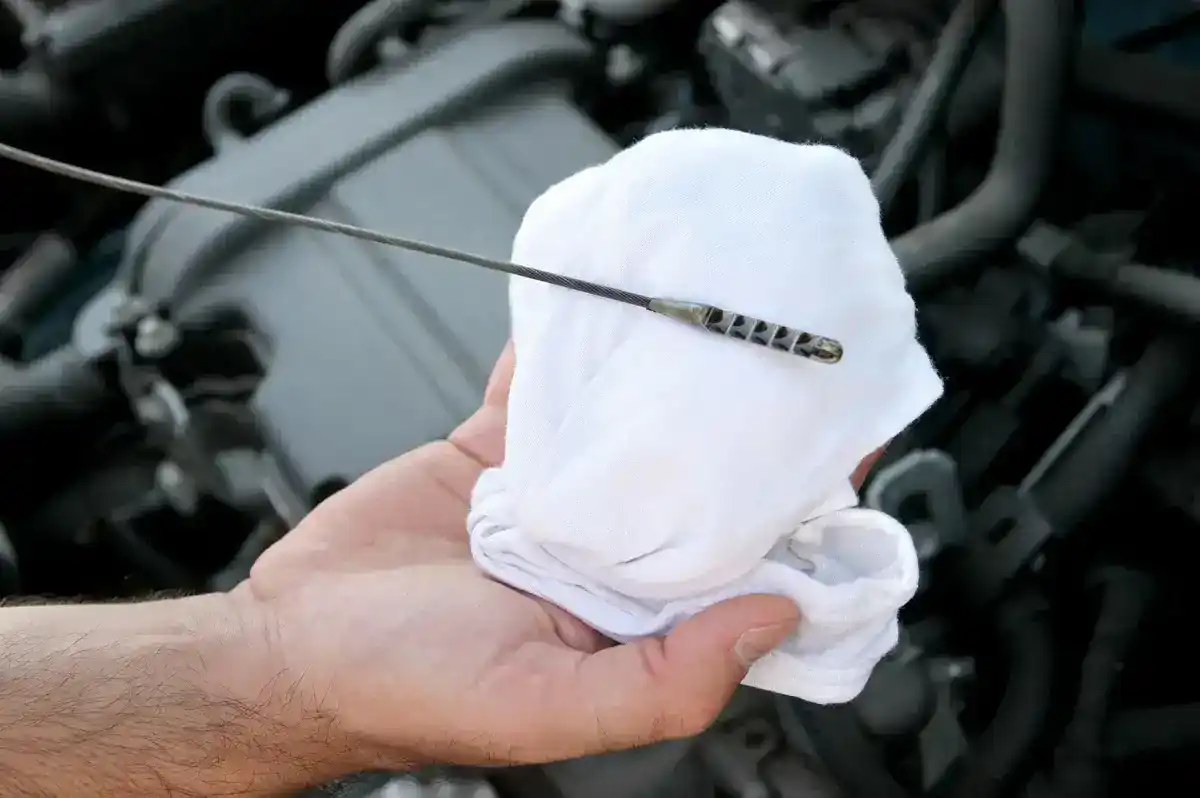
Remove and wipe the dipstick. Use a clean paper towel or cloth.
-
Insert the dipstick correctly. Follow the instructions in the owner’s manual.
-
Remove it again and read the level. The oil should sit between the add and full marks.
-
Add the correct oil slowly. Pour in a small amount at a time and recheck the level.
-
Do not overfill. Too much oil can cause smoke, leaks, foaming, and poor engine operation.
Always use the oil grade listed in the mower manual. Many walk-behind mowers use a small-engine oil such as SAE 30 or 10W-30, but the right choice depends on the engine and outdoor temperature.
Never check the oil while the blade is moving. If the mower has an electric start, disconnect the battery when doing repair work. For a gas mower, remove the spark plug wire before inspecting parts near the blade.
If you find the lawn mower running low on oil symptoms, do not keep mowing to “see if it gets better.” Friction can turn a simple refill into a major repair.
What happens if you keep mowing with low oil?
Low oil can cause fast and serious wear. Engine parts depend on a thin oil film to move smoothly. Without that film, heat and friction rise like two rough stones rubbing together.
Possible damage includes:
• Worn bearings: Bearings may become noisy or seize.
• A damaged connecting rod: A rod can break when the engine runs hot and lacks lubrication.
• Scored cylinder walls: Metal contact can leave deep marks inside the cylinder.
• A seized engine: The crankshaft may stop turning because internal parts lock together.
• Valve train damage: Low oil can affect the camshaft, lifters, and rocker arms.
• Permanent loss of compression: Heat and wear can damage the piston or rings.
A mower that shuts off from a low-oil sensor may restart after cooling. That does not mean it is safe to continue. The sensor may prevent some damage, but it cannot repair worn parts or protect every engine design.
In my experience working through mower troubleshooting cases, the most common mistake is restarting the machine several times after a loud knock begins. Owners often hope the noise will disappear. It usually does not. A strange engine sound is a warning, not an invitation to keep testing.
Stop the mower, check the oil, and inspect for leaks. If the oil level is normal but the engine still knocks, smokes heavily, or overheats, arrange a professional inspection.

What to do after finding low oil
Your next step depends on the oil level and the mower’s condition.
If the engine is only slightly low
Add the correct oil until it reaches the full mark. Start the mower for a short time, then shut it off and check for leaks. Listen for unusual sounds and watch for smoke.
Do not pour in a full bottle without checking the level. Small mower engines often hold less oil than people expect, so even a little extra can cause overfilling.
If the dipstick shows no oil
Do not start the engine. Add the correct oil, then look carefully for a leak. If the engine ran without oil, have it checked before using the mower again.
A dry dipstick does not always mean the engine has no oil at all, but it does mean the level is too low for safe operation.
If the engine made a loud noise
Stop using the mower and seek repair advice. A loud knock, grinding sound, or sudden loss of power may indicate internal damage. Adding oil may reduce the noise for a short time, but it cannot fix damaged bearings or a bent connecting rod.
If oil entered the air filter
Replace a soaked paper filter. A foam filter may be washable, depending on its design. Clean the carburetor area only as directed by the manual, and keep fuel away from sparks and flames.
These steps address the immediate lawn mower running low on oil symptoms. You still need to find out why the oil level dropped.
How to prevent low oil problems
Good maintenance costs far less than an engine replacement. A simple routine can protect the mower through the whole cutting season.
Use this checklist:
• Check the oil before every mowing session or at least every few hours of use.
• Change the oil at the interval listed in the owner’s manual.
• Replace damaged drain plug washers and worn seals.
• Keep the mower on level ground when checking oil.
• Use a clean funnel to prevent dirt from entering the engine.
• Store the mower upright and in a dry place.
• Clean grass and dust from the engine cooling fins.
• Avoid mowing through grass that is far too tall for the mower.
• Check for leaks after each oil change.
• Keep a small bottle of the correct oil in your garage.
The exact service schedule varies by engine type and use. Commercial mowing, dusty yards, steep slopes, and long mowing sessions may require more frequent checks.
One lesson worth remembering is that oil is not just a refill item. It is part of the mower’s cooling and protection system. Treating it like fuel often leads to missed warning signs and avoidable repair bills.

Can low oil cause a mower not to start?
Yes, low oil can contribute to a no-start condition. Some engines include a low-oil shutdown system, while others may stop because heat or friction damaged internal parts.
Other problems can cause the same symptom, including stale fuel, a dirty air filter, a fouled spark plug, or a blocked carburetor. Check the oil first, then use the mower’s troubleshooting guide.
Is white smoke always a low-oil symptom?
No. White smoke may come from spilled oil, an overfilled crankcase, fuel problems, or oil entering the combustion chamber. The smoke’s color can offer a clue, but it does not identify the exact cause by itself.
Check the oil level and look for the direction of the smoke. Persistent smoke needs further inspection.
How often should I check lawn mower oil?
Check the oil before each mowing session, especially when the mower is older or used in hot weather. Also check it after long mowing jobs, steep slopes, or any time you see smoke or notice a new engine sound.
Regular checks help you catch lawn mower running low on oil symptoms early.
Can I add oil while the mower is hot?
It is safer to turn off the mower and let it cool before adding oil. Hot engine parts can cause burns, and oil can spill onto a hot surface.
A warm engine may be acceptable for some oil changes, but always follow the manufacturer’s safety instructions.
What oil should I use in my lawn mower?
Use the oil grade and capacity listed in the owner’s manual. SAE 30 and 10W-30 are common in small engines, but temperature, engine design, and manufacturer guidance determine the best choice.
Never mix up engine oil with two-stroke fuel mix. The wrong lubricant can cause severe damage.
Can a mower recover after running low on oil?
It may recover if the engine was only slightly low and you stopped quickly. If it made a loud knock, seized, overheated badly, or lost compression, internal repair may be needed.
A technician can test compression, inspect the spark plug, and listen for bearing or connecting-rod damage.
Conclusion
The main lawn mower running low on oil symptoms include loud engine noise, overheating, smoke, weak performance, hard starting, and sudden shutdown. These signs can result from a leak, oil burning, incorrect filling, or poor maintenance.
Check the oil on level ground, use the correct grade, and never continue mowing after serious warning signs appear. A few minutes with a dipstick can protect an engine that may cost hundreds of dollars to replace. Use this guide during your next mower check, and share your own repair lesson or maintenance tip in the comments.