


Remove the mower deck by disconnecting the spark plug, lowering the deck, releasing the belt, and sliding the deck out safely.
Learning how to remove lawn mower deck for cleaning makes routine care much easier. Grass, mud, and damp clippings can build under the deck and cause rust, poor cutting, belt wear, and uneven mowing. This guide explains the process for common riding and zero-turn mowers, while noting where your owner’s manual may use a different design.
Why Remove the Lawn Mower Deck for Cleaning?
A mower deck works in a harsh place. It faces wet grass, soil, small stones, and plant sap every time you mow. Over time, this mix can form a hard layer beneath the deck, much like dried cement.
Removing the deck gives you room to clean every corner. It also lets you inspect the blades, spindle housings, belt, pulleys, and deck shell without guessing.
Regular deck removal and cleaning can help you:
• Improve grass discharge and cutting quality
• Reduce clumps during mowing
• Spot cracked belts and loose pulleys early
• Slow rust and paint damage
• Make blade removal safer and easier
• Extend the life of the mower deck
Many manufacturers recommend cleaning the underside after use, especially when grass is wet. Always follow the model-specific instructions first because deck attachment systems vary.

Safety Steps Before Removing the Mower Deck
Safety comes first when learning how to remove lawn mower deck for cleaning. A mower may look inactive but still store energy in the blade, belt, or spring system.
Park the mower on a flat, firm surface. Avoid gravel, slopes, soft soil, or areas where the mower could roll.
Follow these steps before touching the deck:
- Turn off the engine and remove the key.
- Set the parking brake.
- Wait until the engine and muffler are cool.
- Disconnect the spark plug wire on a gas mower.
- Move the wire away from the spark plug so it cannot reconnect.
- Remove the battery cable or battery on models where the manual recommends it.
- Lower the deck to its lowest cutting position.
- Wear work gloves and safety glasses.
- Keep children and pets away from the work area.
On a riding mower, the spark plug wire is the main concern. On an electric mower, remove the battery or unplug the power source. Never rely only on the ignition switch.
When I remove a deck, I take a quick photo of the belt path before loosening anything. That simple habit has saved me from routing the belt incorrectly during reassembly.
Tools You May Need
The exact tools depend on the mower brand and deck design. Your owner’s manual may list special pins, tools, or belt procedures.
For most jobs, gather:
• Work gloves
• Safety glasses
• Socket set or combination wrenches
• Pliers
• Flat screwdriver
• Wooden block
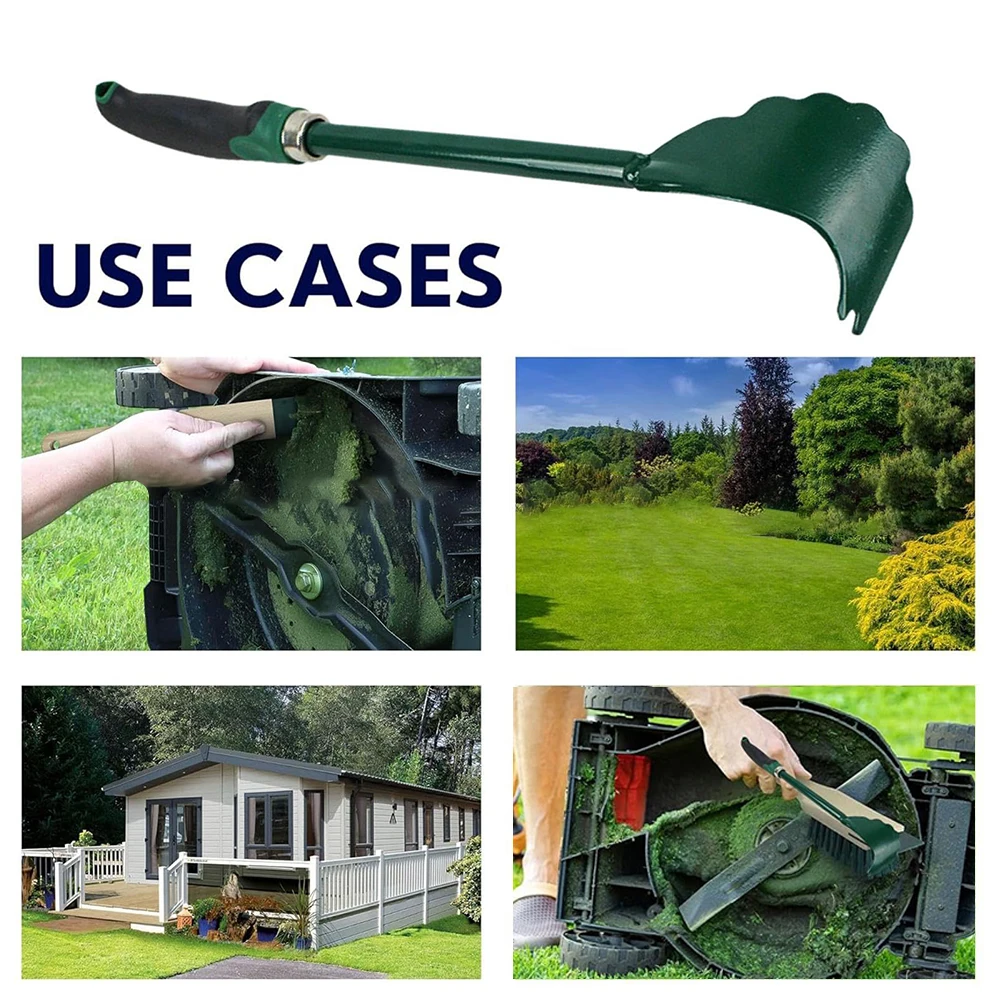
• Wire brush or plastic scraper
• Stiff nylon brush
• Garden hose
• Mild dish soap or mower-safe cleaner
• Clean rags
• Rust-resistant spray or touch-up paint
• A phone for photos
A floor jack or mower lift can help with some riding mowers, but use only equipment rated for the mower’s weight. Add jack stands when the design allows it. Never work beneath a raised mower supported only by a jack.
Do not use a metal scraper aggressively on a thin or painted deck. It can remove protective paint and expose bare steel.

How to Remove Lawn Mower Deck for Cleaning
The general process below applies to many riding lawn mowers. A zero-turn mower may use different brackets, and some decks can be cleaned without full removal.
1. Prepare the Mower
Park on a level surface and lower the deck fully. Turn the steering wheel straight ahead if you have a riding mower.
Remove the key and disconnect the spark plug wire. For battery-powered equipment, remove the battery. Check that the blades cannot move before continuing.
If the mower has gauge wheels, note their position. Some wheels and brackets must be removed before the deck can slide out.
2. Release Belt Tension
Find the deck drive belt. It usually runs around the engine pulley, deck pulleys, and one or more idler pulleys.
Many decks use a spring-loaded tension arm. Use the correct tool or the method shown in the manual to release the tension. Keep your fingers away from the spring and pulley pinch points.
Do not pry the belt off with a screwdriver unless the manual allows it. Prying can damage the belt, pulley edge, or spindle bearing.
3. Remove the Belt From the Engine Pulley
On many riding mowers, the belt must come off the engine pulley before the deck can move. You may need to remove a belt keeper or loosen a guide.
Take a clear photo before removing the belt. Draw a simple belt map if the routing looks complex. A belt that is one groove out of place can slip, squeal, or turn the blades the wrong way.
4. Disconnect Deck Linkages
Most riding mower decks connect to lift arms with pins, clips, or retaining rings. Remove the clips first, then slide out the pins.
Support the deck as you remove each connection. Even a small deck can be awkward because its weight is spread over a wide frame.
Common connection points include:
• Front draft rods
• Rear lift links
• Side suspension arms
• Anti-sway bars
• Height adjustment links
• Deck stabilizer brackets
Keep each pin and clip in a small container. Losing one small retaining clip can stop the entire repair.
5. Remove Gauge Wheels or Obstructions
Some mower decks slide out without removing the gauge wheels. Others need the wheels, discharge chute, or belt guards removed first.
Do not force the deck through the frame. If it catches, stop and look for a missed pin, belt keeper, or bracket. Forcing it can bend the deck or damage the mower frame.
6. Slide the Deck Out
Turn the front wheels as needed and slide the deck out from under the mower. Ask for help if the deck is heavy or difficult to balance.
This is the key part of how to remove lawn mower deck for cleaning: move slowly, support the deck, and keep your hands clear of pinch points.
Place the deck on a flat work surface with the blade side facing up only when it is stable. If you flip it, protect the painted surface with cardboard or wood blocks.

How to Remove a Push Mower Deck for Cleaning
A standard push mower usually does not have a removable deck in the same way as a riding mower. Its deck is the main body of the machine, so you normally clean it in place.
First, remove the spark plug wire and tip the mower with the carburetor and air filter facing upward. This position helps prevent fuel or oil from entering the air filter and engine.
Scrape away heavy buildup with a plastic tool. Then use a damp brush or hose, if the manufacturer permits water cleaning. Dry the deck fully before reconnecting the spark plug wire.
Some electric push mowers have a removable blade guard or lower cover. Follow the manual rather than trying to separate the main housing.

How to Clean the Mower Deck
Once you understand how to remove lawn mower deck for cleaning, the cleaning itself is simple. Start with dry debris because wet grass is harder to remove.
Use a plastic scraper or stiff brush to clear packed clippings. Work around the blade area, discharge opening, baffles, and corners.
Then wash the deck:
- Brush off loose debris.
- Apply mild soap and water.
- Scrub the underside with a nylon brush.
- Rinse lightly if the manual permits it.
- Avoid spraying directly into spindle bearings or electrical parts.
- Dry the deck with a towel or compressed air.
- Let it air-dry before reinstalling it.
Never use a pressure washer close to bearings, seals, pulleys, electrical connectors, or belt areas. High-pressure water can push grit and moisture into parts that need to stay protected.
For sticky sap, let the area soak for a few minutes. A plastic scraper works better than a sharp blade and is less likely to damage the deck coating.

Inspect the Deck While It Is Removed
Deck cleaning is also a useful inspection. Look closely at the metal, welds, spindle areas, and discharge opening.
Check for:
• Deep rust or soft spots
• Cracks near spindle mounts
• Bent baffles
• Loose bolts
• Damaged blade adapters
• Worn pulleys
• Frayed or glazed belts
• Rough spindle bearings
• Missing belt guards
Spin each blade spindle by hand only after confirming the spark plug wire and battery are disconnected. A healthy spindle should turn smoothly without grinding, wobbling, or excessive side movement.
Inspect the blades for bends, large chips, or a thin cutting edge. Sharpening a severely damaged blade is not always safe. Replacement is often the better choice.
In my experience, cleaning often reveals problems that mowing hides. One small crack near a spindle can grow quickly because the deck vibrates at high speed. Finding it during cleaning is far better than finding it in the middle of a mowing job.

Prevent Rust After Cleaning
Water is useful for cleaning but harmful when left on bare steel. Dry the deck completely before putting it back on the mower.
You can reduce rust by:
• Touching up exposed metal with suitable paint
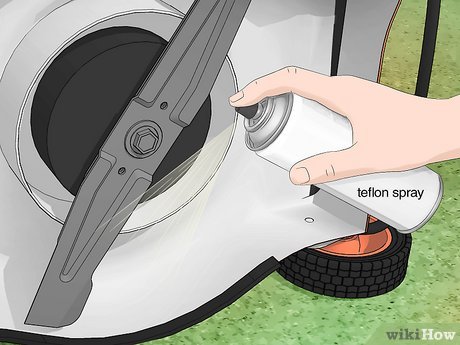
• Applying a light coat of rust-resistant spray to the underside
• Keeping coating away from belts and pulleys
• Storing the mower in a dry, covered space
• Removing wet grass soon after mowing
• Avoiding long-term storage with packed debris
Do not coat the blade cutting edge with oil or paint. Keep all sprays away from friction surfaces, brakes, belts, and electrical connections.
Some owners apply a nonstick deck coating to reduce grass buildup. These products may help, but they do not replace cleaning. Their results also vary with grass type, moisture, and deck condition.
How to Reinstall the Mower Deck
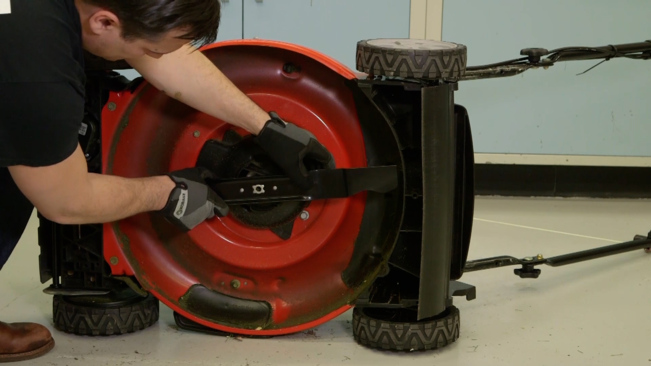
Reinstalling the deck is the reverse of removal, but the order matters. Slide the deck back into position without trapping the belt or wiring.
Reconnect the deck parts in this general order:
- Position the deck under the mower.
- Reattach the front and rear linkages.
- Install retaining pins and clips.
- Refit gauge wheels or guards.
- Route the belt around the pulleys.
- Reconnect the belt to the engine pulley.
- Restore belt tension.
- Check that all belt keepers are in place.
- Raise and lower the deck to test its movement.
- Reconnect the spark plug wire or battery only after the deck is secure.
Compare the belt path with your photo and the owner’s manual. The belt should sit fully inside each pulley groove and should not rub the deck frame.
Before starting the engine, rotate the blades by hand through a safe, controlled movement. Listen for contact with the deck, baffles, or guards. If anything binds, stop and inspect the installation.
Common Mistakes to Avoid
Knowing how to remove lawn mower deck for cleaning is useful, but rushing can create costly problems. Most mistakes happen when people skip safety steps or forget how parts were arranged.
Avoid these errors:
• Working without disconnecting the spark plug
• Using a jack without stable support
• Pulling the deck before removing the belt
• Forgetting a hidden lift pin
• Pressure-washing spindle bearings
• Installing the belt in the wrong direction
• Reusing damaged retaining clips
• Running the mower with a missing belt guard
• Reconnecting power before checking the blades
• Leaving the deck wet after washing
Do not test the blades indoors or near people. Start the mower outside, keep the deck low, and watch for unusual vibration, noise, or belt movement.
If the deck shakes after reassembly, shut the mower off at once. Possible causes include a bent blade, loose spindle bolt, incorrect belt routing, or a misplaced pulley.
How Often Should You Remove the Mower Deck?
The right schedule depends on mowing conditions. A mower used weekly on dry grass may need a deep cleaning several times each season. A mower used in wet grass may need attention after every few uses.
Consider removing the deck for cleaning:
• At the start and end of the mowing season
• When grass clippings form a thick layer
• After mowing wet or tall grass
• When cutting quality drops
• When the belt begins to squeal
• Before sharpening or replacing blades
• When rust or cracks need inspection
A quick brush after mowing can reduce the need for deep cleaning. However, brushing does not replace deck removal when buildup is packed around the spindles and baffles.
Your mower manual is the best guide for service intervals. Commercial use, sandy soil, and damp climates often require more frequent care.
When to Call a Professional
Most careful homeowners can remove and clean a mower deck. Still, some jobs need professional help.
Ask a qualified technician to inspect the mower if you find:
• A cracked or badly bent deck
• A damaged spindle mount
• Broken welds
• Severe rust-through
• A locked spindle
• A damaged engine pulley
• Missing safety guards
• A belt that repeatedly comes off
• Strong vibration after blade replacement
A professional can check blade balance, spindle runout, pulley alignment, and deck level. These problems may not be visible during a basic cleaning.
There is no shame in stopping. A mower deck spins heavy blades at high speed, so a small structural problem deserves serious attention.
Frequently Asked Questions About How to Remove Lawn Mower Deck for Cleaning
Do I need to remove the mower deck every time I clean it?
No. Light grass can often be brushed away while the deck remains attached. Remove the deck when buildup is heavy or when you need to inspect blades, spindles, belts, and hidden areas.
How long does it take to remove a riding mower deck?
Most basic riding mower decks take about 30 to 60 minutes for a first-time removal. The time depends on the mower design, rust, belt guards, and how familiar you are with the attachment points.
Can I use a pressure washer to clean the mower deck?
A pressure washer can damage bearings, seals, pulleys, and electrical parts. Use a brush, mild soap, and low-pressure water instead, then dry the deck fully.
Should I remove the blades before cleaning the deck?
You do not always need to remove the blades for basic cleaning. However, removing them can improve access and allows you to inspect and sharpen them safely, provided the power source is disconnected.
Which way should I tip a push mower for cleaning?
Tip a gas push mower with the air filter and carburetor facing upward. This helps reduce the risk of oil or fuel entering the filter and engine.
What should I do if the mower deck will not slide out?
Stop and check for a remaining belt keeper, linkage pin, gauge wheel, bracket, or belt connection. Never force the deck because a hidden attachment can bend or break.
Can I mow immediately after cleaning the deck?
Yes, but only after the deck is completely dry and all guards, pins, belts, and clips are correctly installed. Test for unusual noise or vibration before normal mowing.
Conclusion
Removing a mower deck makes deep cleaning, blade care, and safety checks much easier. Disconnect the power, lower and support the deck, release the belt carefully, remove the linkages, and slide the deck out without force. Clean it with simple tools, dry it well, and inspect every critical part before reinstalling it.
Use your owner’s manual for model-specific steps, and stop if you find cracks, severe rust, or damaged spindle parts. Give your mower deck a careful cleaning this season, and share your own maintenance tips or questions in the comments.
