


Old gas in a lawn mower can cause hard starting, rough running, stalling, smoke, and poor cutting power.
Old gas in lawn mower symptoms often appear after fuel sits through winter or remains in the tank for several months. Gasoline can lose its useful volatility, form gum, and absorb moisture. The result may look like a bad spark plug, dirty carburetor, or weak ignition system. This guide will help you identify the real cause, test the fuel safely, and get your mower running again.
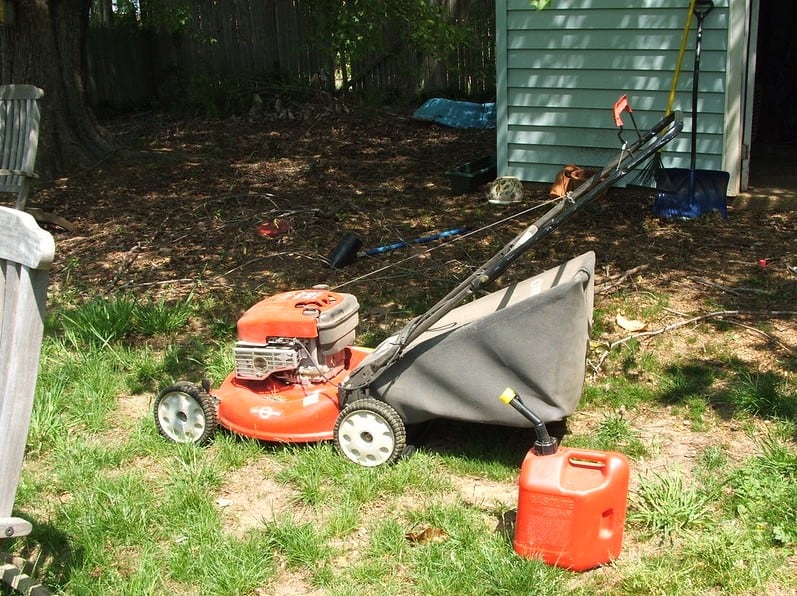
What old gas does to a lawn mower
Fresh gasoline contains light compounds that help an engine start and run well. Over time, those compounds evaporate. The remaining fuel becomes less effective and may leave sticky deposits inside the fuel line, carburetor bowl, jet, and fuel filter.
Gasoline can also react with air and moisture. This process may create varnish-like residue and corrosion. Ethanol-blended fuel can be more sensitive to moisture, especially when stored in a partly empty tank.
The most common old gas in lawn mower symptoms include:
• The engine is hard to start or will not start
• The mower starts briefly, then stalls
• The engine surges or runs unevenly
• The mower loses power while cutting grass
• The engine sputters under load
• The exhaust smells stale or sour
• The carburetor becomes clogged
• The spark plug becomes wet or fouled
• The mower produces dark smoke after repeated starting attempts
Old gas does not always cause every symptom at once. A mower may start with fresh fuel in the carburetor but stop when that small supply runs out. This pattern often points to a blocked fuel passage or contaminated fuel system.
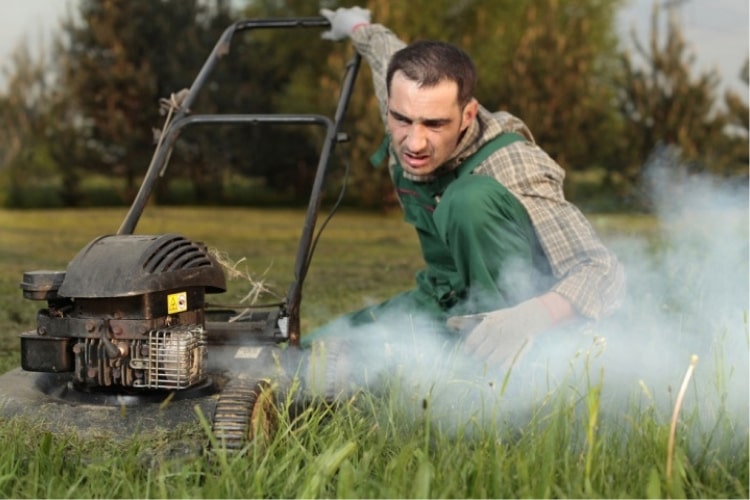
Common old gas in lawn mower symptoms
Hard starting or no starting
Hard starting is one of the clearest old gas in lawn mower symptoms. The engine may crank normally, but the fuel may not vaporize well enough to ignite.
You may need many pulls on a recoil starter. An electric-start mower may crank for several seconds without catching. If the mower starts only after using extra choke, stale fuel may be part of the problem.
Still, hard starting has many causes. A weak battery, dirty air filter, bad spark plug, closed fuel valve, or damaged ignition coil can create the same result.
Starting and then stalling
A mower that starts for a few seconds and dies may be burning the small amount of fuel already inside the carburetor. Once that fuel is gone, stale gas from the tank reaches the carburetor.
This is a useful clue. It suggests a fuel flow problem, a clogged carburetor jet, or old gasoline in the tank.
Surging or hunting
Surging means the engine speed rises and falls without a steady throttle change. The mower may sound as if it is speeding up, slowing down, and repeating the cycle.
Old fuel can cause a lean mixture when the carburetor jet is partly blocked. The engine receives too little fuel, slows down, then briefly recovers as the governor opens the throttle.
Air leaks, a dirty carburetor, and a damaged governor spring can also cause surging. Replace the fuel before replacing expensive parts.
Sputtering under load
A mower may run well with the blade disengaged but sputter when cutting thick grass. Cutting places more demand on the engine. Weak or contaminated fuel may not support that demand.
This is another common old gas in lawn mower symptom. Fresh fuel may improve the problem, but a clogged main jet may still need cleaning.
Poor power and uneven cutting
Old gas can reduce engine power. The mower may struggle on hills or leave tall grass behind. You might also notice that the blade slows when it meets thicker areas.
Poor power can come from several sources:
• Stale fuel
• A clogged air filter
• A dull or bent blade
• Too much grass under the deck
• A dirty carburetor
• Low engine compression
• An incorrect engine speed
Check the simple causes first. A fresh tank of fuel cannot fix a dull blade or a blocked air filter.
Strong or unusual fuel odor
Gasoline normally has a sharp smell. Old fuel may smell sour, stale, or like varnish. It may also look darker than fresh gasoline.
Smell is a helpful clue, but it is not a complete test. Never taste fuel, and do not rely on smell alone to judge whether gasoline is safe. Fuel vapors are highly flammable.
Smoke and rough exhaust
Old fuel may produce rough combustion. The engine can smoke, stumble, or run unevenly. Dark smoke often points to too much fuel or too little air, while blue smoke may suggest oil burning.
Do not assume all smoke comes from old gasoline. Oil overfill, a tipped mower, a dirty air filter, or worn engine parts can produce similar signs.
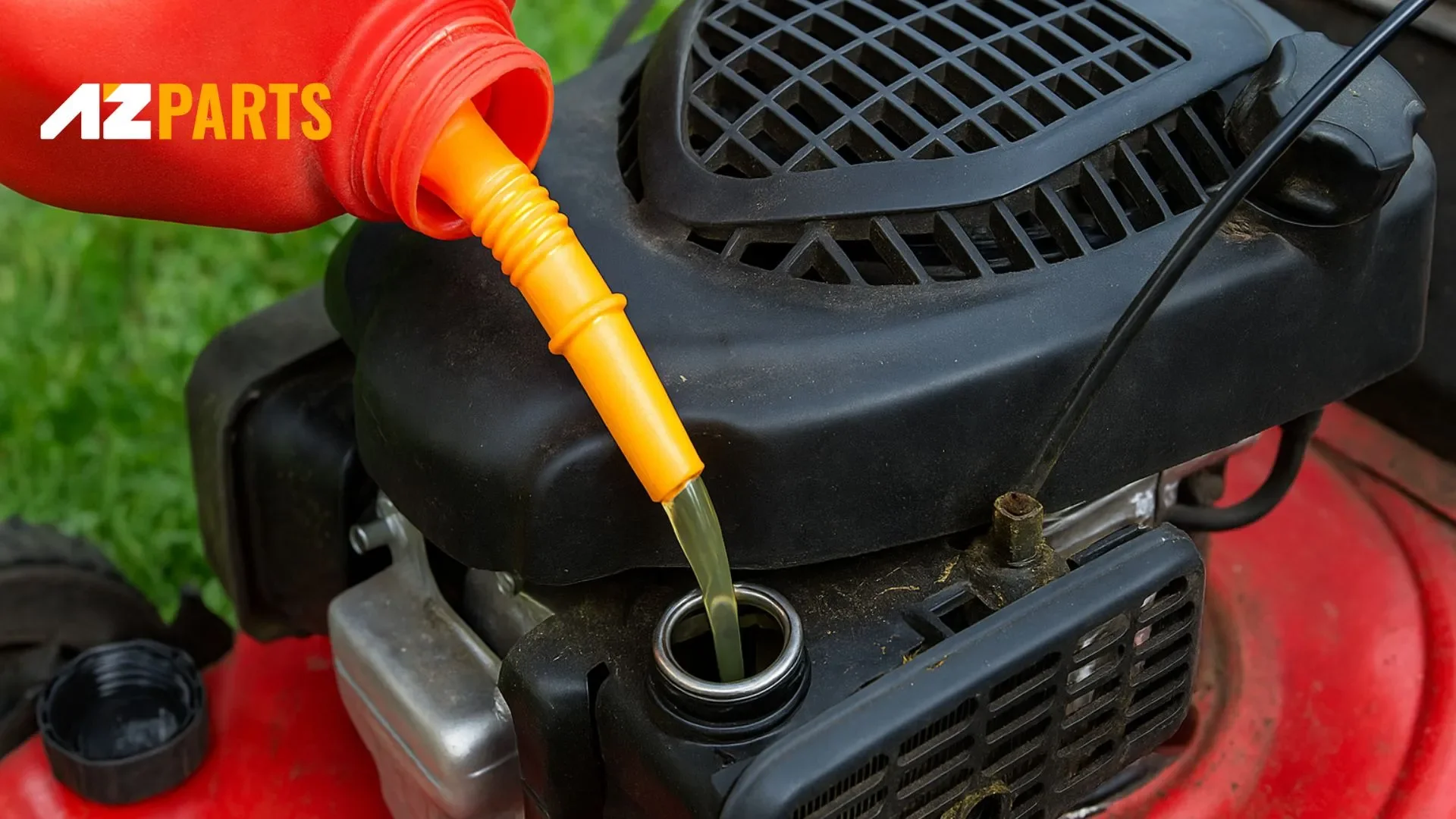
How long does gas last in a lawn mower?
Gasoline may begin to degrade after about 30 days, especially when stored in a warm, partly full tank. Under good storage conditions, untreated fuel may remain usable for several months, but the exact time depends on the fuel blend, temperature, container, and exposure to air.
Fuel with ethanol can absorb water from the air. This is called phase separation. When it occurs, a water and ethanol layer can settle below the gasoline. That layer can cause poor running and corrosion.
Fuel stabilizer can extend storage life when added to fresh gasoline. It does not restore fuel that has already become badly stale. Always follow the stabilizer label and the mower manufacturer’s fuel guidance.
A practical storage guide looks like this:
• Less than 30 days: Fuel is often fine if stored well
• One to three months: Check the smell and appearance before use
• Several months: Treat the fuel as suspect
• Through a full winter: Drain or stabilize the fuel according to the owner’s manual
Storage time is only a guide. Hot storage, a loose cap, and a nearly empty tank can speed up fuel damage.

How to tell if old gas is causing the problem
Use a simple process instead of guessing. Start with the fuel because it is easy to check and often costs less than replacing parts.
1. Check the fuel appearance and smell
Turn off the engine and let it cool. Work outdoors, away from cigarettes, sparks, pilot lights, and other ignition sources.
Look at a small amount of fuel in a clear, approved fuel container. Fresh gasoline is usually clear and fairly bright. Dark fuel, visible particles, cloudiness, or a sour smell suggests contamination or age.
Never pour gasoline into a household cup or an unapproved container.
2. Check the fuel age
Ask when the tank was filled. If the mower has not run since last season, old gasoline is a strong possibility.
A fuel receipt, storage note, or fresh refill date can help. When you are unsure, replacing questionable fuel is safer than trying to save a small amount of gasoline.
3. Drain the tank safely
Use the mower manual for the correct process. Some tanks can be drained through the fuel line. Others require a hand siphon pump designed for gasoline.
Do not use your mouth to siphon fuel. Collect the old gasoline in an approved container and take it to a local household hazardous waste or fuel recycling program. Do not pour it onto soil, into a drain, or into trash.
4. Inspect the fuel filter and line
A restricted filter can look like an old gas problem. Check for cracks, soft spots, kinks, or blocked flow. Replace a dirty filter if the mower design allows it.
Rubber fuel lines can also degrade. Small pieces of damaged hose may travel into the carburetor and block the jet.
5. Use fresh fuel and test the mower
Add the fuel grade and amount listed in the owner’s manual. Use fresh gasoline from a clean, approved container.
Start the mower outdoors. Let it run for a few minutes, then test it under a light cutting load. If the symptoms improve, stale fuel was likely involved.
If the same problem remains, the carburetor or another engine system may need attention.
How to fix old gas in a lawn mower
Replacing the fuel is often the first repair. However, old gas may have already left deposits behind.
Follow these steps:
-
Move the mower to a well-ventilated outdoor area.
-
Turn off the engine and let it cool fully.
-
Disconnect the spark plug wire if the owner’s manual recommends it for service.
-
Drain the old fuel into an approved container.
-
Inspect the tank for dirt, rust, or water.
-
Check or replace the fuel filter.
-
Add fresh fuel that matches the manufacturer’s instructions.
-
Start the engine and allow it to run briefly.
-
Stop and inspect for leaks.
If the mower still stalls, the carburetor may need cleaning. A carburetor cleaner spray may help with light residue, but it cannot always clear a blocked internal jet. Removing and cleaning the carburetor requires care because small springs, seals, and gaskets are easy to lose.
Some engines have rubber or plastic parts that can react poorly to certain cleaners. Use a cleaner labeled for small-engine carburetors and follow the product directions.
Do not keep pulling the starter while the mower is flooded. Wait several minutes, check the owner’s manual, and inspect the spark plug if needed.

When fresh gas does not solve the problem
Fresh fuel may not fix every case of old gas in lawn mower symptoms. Deposits can remain inside the carburetor even after the tank is drained.
Other possible causes include:
• A fouled or worn spark plug
• A blocked air filter
• A clogged fuel filter
• A stuck carburetor float
• A dirty main jet
• A damaged primer bulb
• A weak ignition coil
• Low engine compression
• A loose fuel cap vent
• A bent or dull mower blade
• Grass buildup under the deck
A useful test is to compare the mower’s behavior before and after a complete fuel change. If it runs better but still surges, the carburetor may have partial blockage. If nothing changes, inspect the air, spark, and mechanical systems.
Stop using the mower if you see fuel leaking, smell strong fuel near a hot engine, or notice severe backfiring. A repair shop can test fuel flow, ignition, compression, and carburetor operation more safely.
Mistakes to avoid with stale mower gas
Small engines often suffer when owners try to save a few ounces of old fuel. These common mistakes can turn a simple fuel change into a larger repair.
• Do not mix large amounts of old fuel with fresh fuel and expect perfect performance.
• Do not pour gasoline into soil, storm drains, or household garbage.
• Do not use a plastic bottle that is not approved for gasoline storage.
• Do not spray starting fluid repeatedly into the intake.
• Do not clean a carburetor beside an open flame.
• Do not run a mower indoors, even with a garage door open.
• Do not tip a mower without checking the correct direction in the manual.
• Do not ignore a leaking fuel line or damaged tank.
One mistake I often see in seasonal mower care is draining the tank but leaving old fuel in the carburetor bowl. That small amount can still form residue during storage. If the manual allows it, drain the carburetor bowl or run the engine until the fuel system is empty.

How to prevent old gas in a lawn mower
Prevention is easier than carburetor repair. Before storing the mower, read the owner’s manual because fuel systems differ.
Use these habits:
• Buy only the amount of fuel you expect to use soon.
• Store gasoline in an approved, sealed container.
• Keep the container in a cool, dry, well-ventilated place.
• Add stabilizer to fresh fuel before long-term storage.
• Run the engine for several minutes after adding stabilizer so treated fuel reaches the carburetor.
• Follow the stabilizer’s mixing directions.
• Inspect the fuel cap, line, and tank before the first mow of spring.
• Keep the mower clean and dry.
Some manufacturers recommend draining the fuel system. Others recommend stabilizing the fuel and leaving the tank full enough to reduce condensation. The best choice depends on the engine design and the instructions for your model.
For many homeowners, a simple seasonal routine works well: use fresh fuel in spring, avoid storing large leftovers, and prepare the mower before winter.

Are fuel additives worth using?
Fuel stabilizers can help slow oxidation and protect fuel during storage. They work best when added to fresh fuel, not when gasoline already smells like varnish or contains visible water.
Carburetor cleaners and fuel-system additives may help with light deposits. They are not a guaranteed cure for blocked jets, heavy varnish, rust, or phase-separated fuel.
Use only products made for small engines, and follow the label. More additive is not better. Excess product can create its own problems or violate the engine manufacturer’s guidance.
Fuel additives also have limits. They cannot repair a cracked fuel line, replace a bad spark plug, or restore damaged carburetor parts.
Safety tips for handling old gasoline
Gasoline vapors can ignite quickly. Treat stale gasoline as a hazardous flammable liquid, even if it no longer works well in the mower.
Keep these safety rules in mind:
• Work outdoors or in a space with strong ventilation.
• Keep fuel away from flames, heaters, switches, and smoking materials.
• Wear fuel-resistant gloves and eye protection.
• Keep children and pets away from the work area.
• Use a stable, approved fuel container.
• Clean small spills at once with suitable absorbent material.
• Store removed fuel away from living areas.
• Contact local waste services for disposal instructions.
Never burn old gasoline. Never store it in a food or drink container. If fuel gets in your eyes or on your skin, rinse with clean water and follow medical guidance.
Frequently Asked Questions About Old Gas in Lawn Mower Symptoms
What are the most common old gas in lawn mower symptoms?
The most common signs are hard starting, stalling, rough running, surging, sputtering, weak power, and a stale fuel smell. A clogged carburetor or fuel filter may develop after the gasoline sits too long.
Can old gas stop a lawn mower from starting?
Yes. Old gasoline may not vaporize properly, and it can clog the carburetor jet or fuel line. Drain the suspect fuel and use fresh gasoline that matches the mower manual.
How long can gas sit in a lawn mower?
Untreated gasoline may become questionable after about 30 days, though storage conditions matter. Fuel stabilizer can extend storage life when mixed with fresh gas and used as directed.
Should I mix old gas with new gas?
Mixing a small amount of slightly old fuel with fresh gas may work in some cases, but it is not a good choice for dark, cloudy, watery, or foul-smelling fuel. Dispose of badly degraded gasoline through a local approved program.
Will fuel stabilizer fix old gasoline?
Fuel stabilizer helps protect fresh gasoline during storage. It does not reliably restore gasoline that has already formed varnish, absorbed water, or separated into layers.
Why does my mower start and then die after winter?
The mower may be burning fuel left in the carburetor bowl, then receiving stale fuel from the tank. Drain the old fuel, inspect the filter and fuel line, and clean the carburetor if fresh gasoline does not solve the problem.
Can old gas damage a lawn mower?
Old gas can leave deposits, restrict fuel passages, and contribute to corrosion. Promptly removing questionable fuel and storing the mower correctly can reduce the risk of expensive repairs.
Conclusion
Old gas in lawn mower symptoms usually include hard starting, stalling, surging, sputtering, weak power, and unusual fuel odor. Begin with the safest low-cost check: inspect the fuel, drain questionable gasoline, and add fresh fuel recommended by the mower manufacturer.
If the mower still runs poorly, inspect the spark plug, air filter, fuel filter, fuel line, and carburetor. Work outdoors, handle gasoline carefully, and use a qualified technician when leaks or serious engine faults appear.
A few minutes of fuel care before storage can save hours of repair later. Follow your mower manual, build a simple seasonal routine, and share your experience or questions in the comments.
