


The best rain collection barrel balances safe storage, easy setup, strong build, and a useful garden-friendly design.
Have you ever watched clean rainwater rush from your roof and vanish down the driveway while your garden dries out? I have, and that wasted water can feel like watching money flow away. A good rain barrel turns that runoff into a handy supply for flowers, shrubs, trees, and lawn care. In this guide, I review eight popular options, compare their shape, size, fittings, setup, and daily use, and explain which one fits each type of yard.
RTS ECO 50-Gallon Rain Barrel

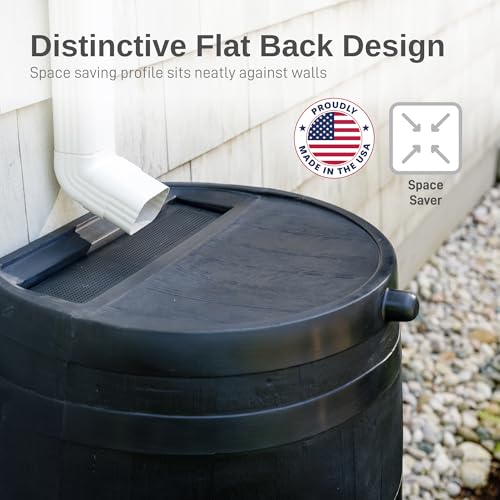
The RTS ECO 50-Gallon Rain Barrel is a smart fit for homes that need a useful water tank without a bulky round shape. Its flat back lets it sit close to a wall, which helps save space beside a garage, shed, or small patio. The dark recycled-plastic body also gives it a clean look that blends well with many outdoor spaces. A 50-gallon size offers a practical middle ground for routine garden watering.
I like this style for gardeners who want simple storage and easy access. The flat profile can make placement easier under a downspout, though the ground must be firm and level before filling. Since the barrel stores untreated roof runoff, I would use the water for plants and outdoor chores rather than drinking. With a proper diverter, screen, and overflow path, this barrel can become a steady helper during dry spells.
Pros:
- Flat-back shape saves space against a wall
- 50-gallon size suits many home gardens
- Made with recycled plastic
- Dark color helps hide dirt and marks
- Useful capacity for flowers, shrubs, and trees
- Simple design is easy to understand and use
Cons:
- May require a separate stand for easier faucet access
- Plastic fittings may need careful tightening
- Untreated water is not for drinking
My Recommendation
I recommend this model for a homeowner who wants a space-saving, everyday rain barrel at a sensible size. It works especially well beside a narrow home wall or shed where a wide barrel would get in the way. The recycled plastic construction adds an eco-minded touch, while the 50-gallon capacity gives a small garden a useful reserve. For many yards, this is a strong candidate for the best rain collection barrel because it keeps the design simple and the footprint modest.
RTS ECO Rain Barrel With Stand

This RTS ECO model keeps the useful flat-back form but adds a stand. That small change can make a big difference in daily use because a raised barrel gives more room beneath the spigot. I find that extra clearance helpful when filling a watering can, bucket, or low garden sprayer. The recycled-plastic body provides a practical way to collect runoff without taking over the yard.
The stand also helps place the outlet at a more comfortable height. Still, a raised full barrel needs a stable base because water weighs about 8.34 pounds per gallon. At 50 gallons, the stored water alone can weigh more than 400 pounds, so I would never place it on soft soil or an uneven surface. A level pad made from compacted gravel, concrete, or sturdy pavers is a wise step.
Pros:
- Includes a stand for better spigot clearance
- Flat back fits close to exterior walls
- 50-gallon capacity works for normal garden tasks
- Recycled plastic supports a lower-waste choice
- Raised outlet makes watering cans easier to fill
- Attractive dark finish suits many outdoor areas
Cons:
- Stand needs a firm, level base
- Full weight can be difficult to move
- May need extra overflow planning
My Recommendation
This version is best for gardeners who dislike bending down to reach a low spigot. It is also a good pick for users who fill watering cans often and want more space below the outlet. I would choose it over the standard version when comfort and access matter more than the smallest possible footprint. Among the options here, it may be the best rain collection barrel for convenient daily use, provided you prepare a strong base first.
RTS Walnut 50-Gallon Rain Barrel

The RTS Walnut 50-Gallon Rain Barrel focuses on appearance as much as function. Its walnut color can look more like outdoor furniture than a plain utility tank, which makes it a nice choice for visible patios and front-yard spaces. The flat-back shape helps it rest close to a wall or fence. A brass spigot adds a classic detail and gives the barrel a more polished look.
This barrel suits someone who wants water storage without an industrial appearance. I would still inspect the spigot and connections at the start of each season, since a small leak can waste stored water and dampen the wall behind the barrel. The 50-gallon capacity is enough for spot watering, but frequent watering in a large garden may empty it quickly. A rain diverter or second barrel can help extend its use.
Pros:
- Warm walnut color looks attractive in visible areas
- Flat back helps save installation space
- Brass spigot offers a classic appearance
- 50-gallon size fits many home gardens
- Useful for watering plants and outdoor beds
- Decorative design can blend with patio furniture
Cons:
- Water level may be hard to see from outside
- May need a stand for comfortable filling
- Large gardens may need more than one barrel
My Recommendation
I would recommend this model to homeowners who care about curb appeal. It is especially suitable for a patio, deck, or front garden where a plain black tank may look out of place. The brass spigot and walnut finish give it a more finished feel while keeping a useful 50-gallon capacity. If style matters as much as storage, this could be the best rain collection barrel for a visible outdoor setting.
Collapsible 53-Gallon Rain Barrel

A collapsible barrel solves a problem that rigid tanks cannot: storage when the rainy season ends. This 53-gallon model can be folded down when empty, which may help renters, seasonal gardeners, and people with limited shed space. It also includes filter and overflow parts in the listed package, giving the setup a more complete starting point. The soft-sided design keeps the unit light before it fills.
I see this type as a flexible tool rather than a permanent garden fixture. It needs careful placement because a soft wall can shift if the ground slopes or the tank fills unevenly. I would remove sharp stones, level the area, and check each connection before a storm. When used with care, a collapsible barrel offers useful storage without committing a large, heavy tank to one spot all year.
Pros:
- Folds down for easier seasonal storage
- Light and easier to move when empty
- 53-gallon capacity gives useful water storage
- Listed filter helps limit larger debris
- Overflow parts support better water control
- Good option for renters and small yards
Cons:
- Soft sides need a smooth, level surface
- May be less rigid than a hard plastic barrel
- Can be more vulnerable to sharp objects and rough handling
My Recommendation
This is best for people who need a rain barrel only during wet months or who move often. It also suits a small yard where a hard tank would be difficult to store. I would not place it beside thorny plants or on rough ground, but I like its space-saving design and included water-control parts. For flexible seasonal use, it has a strong claim as the best rain collection barrel in this group.
Step2 Lakewood 60-Gallon Rain Barrel

The Step2 Lakewood Rain Barrel gives gardeners a little more capacity than the common 50-gallon size. Its 60-gallon tank can collect extra runoff during a strong storm, which may reduce the number of times the barrel runs dry. The included stand raises the unit and improves access to the outlet. Its brown color also helps it fit into a garden with mulch, wood, and soil tones.
This model makes sense for a family garden or a yard with several planting beds. I would pay close attention to its overflow route because a larger tank can release more water near a foundation when full. The barrel should sit on a stable surface, and the downspout connection should direct water cleanly into the top. With those basics in place, the added capacity can make watering feel less like a daily chore.
Pros:
- 60-gallon capacity stores more water than many standard barrels
- Includes a stand for improved outlet access
- Brown finish blends with many garden settings
- Useful for larger flower beds and shrubs
- Raised design makes watering cans easier to use
- Durable molded form suits regular outdoor use
Cons:
- Needs a strong, level base because of its larger load
- Takes more space than a compact 50-gallon model
- May require careful overflow planning near a home
My Recommendation
I recommend the Step2 Lakewood for gardeners who want more water without jumping to a very large tank. It is a good match for multiple beds, young trees, or a home that receives regular rain. The included stand adds comfort, while the brown finish keeps the look calm and natural. If extra capacity is your main goal, this may be the best rain collection barrel for a medium-size garden.
FCMP Raincatcher 4000 50-Gallon Barrel

The FCMP Raincatcher 4000 is a well-known flat-back rain barrel made for home gardens and outdoor water storage. Its shape helps it sit close to a wall, while the 50-gallon capacity keeps the unit manageable for many users. The brown finish is subtle and works well with mulch, planters, and wood fencing. It includes spigots for access to stored water and can serve as a practical starting point for a collection system.
I like the balance this model offers between size and footprint. It is not so large that it overwhelms a small yard, yet it can provide a meaningful amount of water after a storm. As with any barrel, I would check the inlet screen, keep the lid area clear, and direct overflow away from the foundation. A good rain barrel does not need to be complex; it needs to collect water safely and release it without fuss.
Pros:
- Flat-back design works well beside a wall
- 50-gallon capacity fits routine garden care
- Brown color blends into natural outdoor spaces
- Spigots provide practical water access
- Portable size is easier to manage than a large tank
- Suitable for gardens, patios, and backyards
Cons:
- May need a separate stand for extra clearance
- Basic setup may require a downspout diverter
- Stored water can run out during long dry periods
My Recommendation
The FCMP Raincatcher 4000 is best for shoppers who want a dependable, straightforward barrel from an established outdoor-water category. It suits first-time users who prefer a familiar flat-back form and a moderate capacity. I would choose it for a typical suburban garden where easy placement matters more than maximum storage. For balanced design and practical use, it remains a strong contender for the best rain collection barrel.
Collapsible 132-Gallon Rain Barrel
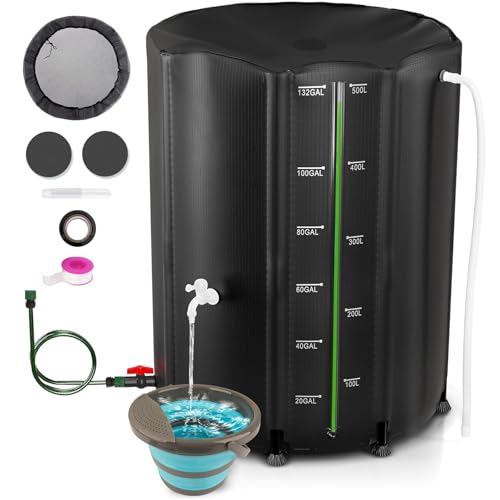
This 132-gallon collapsible rain barrel targets serious water storage. Its large capacity can capture much more runoff than a typical 50-gallon tank, which may help gardeners who care for many beds or deal with dry weeks. The 1000D PVC material and mesh cover are designed for outdoor collection, while the collapsible frame makes storage easier than with a rigid tank of the same size. It offers a lot of water without demanding a permanent hard container.
Large capacity brings a major weight concern. A full 132-gallon barrel can hold more than 1,100 pounds of water, so the base must be very strong, level, and well supported. I would also plan the overflow before connecting the downspout, since excess water must move away from walls and foundations. This is a high-capacity tool, not a casual item to place on a weak deck or soft lawn.
Pros:
- 132-gallon capacity supports larger gardens
- Collapsible design can simplify off-season storage
- 1000D PVC construction is made for outdoor use
- Mesh cover helps keep larger debris out
- Useful for dry climates and long watering cycles
- Can reduce the need for frequent refilling
Cons:
- Full weight requires an exceptionally strong base
- Large footprint may not suit a small yard
- Soft-sided walls need protection from sharp objects
- Overflow planning is especially important
My Recommendation
I recommend this model only for users who truly need high-volume storage and have a safe place to install it. It is a strong choice for large gardens, homesteads, and areas with short rainy seasons followed by dry weather. I would not use it on a deck, balcony, or uncertain surface. For serious collection, this could be the best rain collection barrel, but only when its weight and overflow needs receive careful attention.
RTS Newport 50-Gallon Rain Barrel

The RTS Newport Rain Barrel is designed for shoppers who want useful storage with a decorative appearance. Its bronze finish can add visual warmth to a patio, porch, or garden wall. The included stand raises the tank, and the removable lid may make seasonal inspection and cleaning easier. With a 50-gallon capacity, it remains compact enough for many residential spaces.
I see the Newport as a good compromise between outdoor function and appearance. The removable lid is helpful when checking for leaves, sediment, or standing water, but I would always keep the collection opening covered and screened. Mosquito control matters because still water can become a breeding place. I would also use the stand on a solid pad and test the overflow route before the first heavy storm.
Pros:
- Decorative bronze finish suits visible locations
- Includes a stand for easier access
- Removable lid supports inspection and cleaning
- 50-gallon size works for regular garden watering
- Flat style can fit against a wall
- Balances appearance with useful water storage
Cons:
- Decorative finish may show dust after storms
- Stand needs firm support under a full load
- May not provide enough water for a large landscape
My Recommendation
The Newport is best for homeowners who want their rain barrel to look intentional rather than purely functional. I would place it near a patio, entry garden, or landscaped wall where the bronze color can add charm. The stand and removable lid improve daily use and maintenance. If appearance is a top concern, this model may be the best rain collection barrel for a polished outdoor space.
What to Look for in the Best Rain Collection Barrel
Choosing a rain barrel is not just a matter of picking the biggest tank. I start with the space, roof runoff, local weather, and way I plan to use the water. A small barrel can work well for a few pots, while a large tank may better serve vegetable beds and young trees. The best rain collection barrel should match the yard, not merely promise the largest number.
Capacity
Most home barrels hold about 40 to 60 gallons. That range works for many flower beds and container plants. Larger tanks can hold more water, but they also become much heavier and need more room. Remember that one inch of rain falling on 1,000 square feet of roof can produce roughly 600 gallons before losses from runoff and collection.
This does not mean a 50-gallon barrel will fill every time it rains. Roof size, rainfall intensity, gutter condition, downspout routing, and the diverter all affect the result. A smaller barrel may fill fast during a storm, so overflow control matters just as much as capacity. If you often see water spill over, connect a second barrel or improve the overflow path.
Shape and Footprint
Flat-back barrels are useful beside walls. They take less side-to-side space than a round tank and can sit neatly under many downspouts. However, the wall should not carry the barrel’s weight unless the product specifically supports that type of installation. I place the barrel on its own stable base and leave room to inspect the back and fittings.
Collapsible barrels offer a different benefit. They can be stored when empty, which helps in small yards and rental homes. Their soft walls need more care, though. Sharp gravel, thorns, pets, and careless tools can damage them. A smooth base and gentle handling can greatly improve service life.
Material
Plastic is popular because it does not rust and usually weighs less than metal. Recycled plastic can also support a lower-waste purchase. PVC fabric is common in collapsible tanks and can provide high capacity without a rigid body. Each material still needs protection from extreme impact, rough ground, and poor support.
I also consider sun exposure. Long periods of strong sunlight can age some outdoor materials faster than shaded placement. A barrel made for outdoor use should still receive basic care. Keep the inlet clear, check the fittings, and empty or protect the unit before freezing weather if the maker advises it.
Spigots and Water Access
A low spigot may work well with a hose but can make watering cans awkward to fill. A stand raises the outlet and improves access. It also adds another part that must remain stable under the full weight of the tank. I prefer a raised model when I plan to fill buckets often.
Brass fittings can look attractive and may feel sturdy, but all fittings need proper care. Do not force a connection with excessive pressure. Hand-tighten first, then make small adjustments while watching for drips. A leak is easy to miss when the barrel sits against a dark wall.
Screening and Mosquito Control
A rain barrel should have a secure lid, mesh screen, or covered inlet. This helps keep leaves, insects, and larger debris out. A screen also helps limit mosquito access, but it does not replace routine inspection. I check the top after storms and remove any buildup that could slow water flow.
Standing water can attract mosquitoes. The Centers for Disease Control and Prevention advises removing or covering items that hold water around the home. A sealed collection system, clean screen, and quick use of stored water can help reduce that risk. Never assume that a decorative lid alone makes a barrel fully pest-proof.
Overflow Control
Overflow is one of the most important features in a rainwater system. Once the barrel fills, extra water needs a safe route. That route should move water away from the foundation, basement, crawl space, and neighboring property. I prefer a downspout diverter with a clear overflow hose or a linked barrel system that can handle the extra flow.
Do not place a full barrel where overflow can wash away soil. Erosion can expose roots and shift the base. It can also make a level barrel become unstable. A small plan at installation time prevents a wet and costly surprise later.
Safe Placement
Water is heavy. A 50-gallon tank can hold more than 400 pounds of water, before adding the container itself. A 60-gallon tank holds more than 500 pounds, and a 132-gallon tank can exceed 1,100 pounds. For that reason, I do not place a full rain barrel on a weak deck, balcony, loose soil, or uneven pavers.
Use a firm base that remains level after rain. Compacted gravel, a concrete pad, or strong pavers can work when installed correctly. Keep children and pets away from open access points. If the barrel can tip, secure it according to the maker’s instructions.
What Rain Barrel Water Is Good For
Collected rainwater works well for ornamental plants, shrubs, trees, and many outdoor cleaning jobs. Some gardeners also use it for lawns. I avoid treating barrel water as drinking water because it can collect dust, bird droppings, roofing residue, and other contaminants from the roof and gutter system.
Use extra care with edible crops. The safest approach depends on the roof material, collection system, local rules, and how the water reaches the plant. I would not use runoff from roofs treated with chemicals or roofs made from materials that may release harmful compounds. When in doubt, use collected water on non-edible plants and ask a local extension office for guidance.
How I Compare Rain Barrels
I judge a rain barrel by more than its product photo. I look at capacity, footprint, access, overflow planning, cleaning needs, and the type of yard it can serve. A great barrel for a large garden may be a poor choice for a narrow patio. That is why this review includes hard plastic, decorative, raised, and collapsible designs.
I also consider the work after installation. The best rain collection barrel should not create a new problem near the foundation. It should be easy to inspect, simple to drain, and stable when full. These small details often matter more than a bright finish or a few extra gallons.
| Best for | Why |
|---|---|
| Small yards and narrow spaces | Flat-back 50-gallon barrels fit close to walls and offer useful storage without a wide footprint. |
| Large gardens and dry spells | The 60-gallon Step2 and 132-gallon collapsible model hold more water for longer watering cycles. |
| Seasonal users and renters | Collapsible designs can be moved and stored when rain collection is no longer needed. |
Installation Tips for Better Rainwater Collection
Start by checking the downspout and gutter. Remove leaves, mud, and roof debris before connecting the barrel. A clogged gutter can send dirty water into the tank or force water over the edge. I also look for leaks during the first storm rather than assuming every connection is perfect.
Place the barrel close enough to the downspout for a clean connection. Keep the tank level and leave enough room to remove the lid or inspect the screen. If you use a stand, make sure every foot rests firmly on the base. A rocking stand is not a minor issue once the tank fills.
Plan the overflow before the first rain. Direct it toward a garden bed, rain garden, or safe drainage area. Never let it pool beside a foundation. If the barrel has more than one outlet, test each one with a small amount of water before the tank fills fully.
For a cleaner first flush, some gardeners use a diverter that sends the first roof runoff away from the barrel. The first flow often carries dust and roof debris. Local rainwater rules may also guide how you collect and use runoff. I always check local requirements when installing a permanent system or linking several tanks.
Rain Barrel Care and Maintenance
Maintenance is simple, but it should not be ignored. Check the lid and screen after strong wind. Clear leaves before they form a wet mat. Look at the spigot and hose connection for slow drips. A few minutes of care can protect the tank and preserve the water you collected.
Empty the barrel when freezing weather threatens if the manufacturer recommends it. Ice expands and can damage fittings or split a container. A collapsible barrel may need to be fully dry before storage. Store it away from sharp tools, rodents, and direct weather.
Clean the inside from time to time. Drain all water first, then follow the product instructions. Avoid using harsh chemicals if the water will go onto plants. A clean brush and a thorough rinse may be enough for light buildup, but heavy algae or odor deserves closer attention.
Do not leave a damaged barrel in service. A small crack can become a large split when the tank fills. Replace worn hoses, broken screens, or loose fittings before the next storm. Good care helps the best rain collection barrel perform like a useful garden tool instead of becoming another source of trouble.
FAQs Of best rain collection barrel
What size rain barrel should I buy?
A 50- or 60-gallon barrel suits many home gardens. Choose a larger model if you have several beds, frequent dry periods, and a strong place to install it. Measure your space before buying.
Is rain barrel water safe to drink?
No. Untreated roof runoff may contain dirt, bird waste, roofing residue, and other pollutants. Use it for ornamental plants and outdoor tasks unless a properly designed and tested treatment system makes it potable.
Do I need a stand for a rain barrel?
No, but a stand can raise the spigot and make watering cans easier to fill. It must sit on a firm, level base because a full barrel is very heavy.
How do I stop mosquitoes from entering a rain barrel?
Use a tight lid and fine mesh screen. Keep the inlet clear and inspect the tank often. Empty standing water around the barrel and follow local mosquito-control guidance.
Can I use a rain barrel in winter?
In freezing areas, drain and protect the barrel as the maker directs. Ice can expand and damage fittings or the container. Collapsible models are often easier to store after they dry.
Final Verdict: Which Should You Buy?
For most homes, I would choose the RTS ECO 50-Gallon Rain Barrel With Stand. It offers useful capacity, easy access, a space-saving shape, and a stable everyday design. It is my leading pick for the best rain collection barrel.
Choose a collapsible model for seasonal storage, the Step2 for more capacity, or the Newport for style. Set every barrel on firm ground, control overflow, and use the water wisely.
