


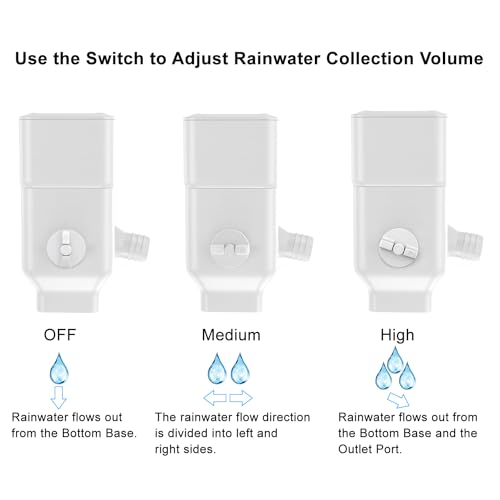
The best downspout diverter for rain barrel is durable, easy to fit, and matched to your gutter size.
A full rain barrel after one storm feels like a small win, but getting there can be hard. Water may miss the barrel, overflow the lid, or carry leaves and grit into the tank. A good downspout diverter solves that problem by guiding roof runoff into the barrel while letting extra water continue through the downspout. I looked at fit, filter options, installation style, clog control, and everyday value to help you choose with less guesswork.
Prestantious Downspout Diverter

The Prestantious downspout diverter is made for two common rectangular sizes: 2 x 3 inches and 3 x 4 inches. That broad fit makes it a useful pick for many standard home gutter systems. I like this design for homeowners who want a simple path from the downspout to a rain barrel without adding a bulky assembly. Before ordering, measure the outside of your downspout and compare it with the listed fit.
This model suits a basic rainwater collection setup where easy routing matters most. It can help send part of the roof water toward a barrel while the downspout still handles excess flow. Like any diverter, it works best with a covered barrel and a clear gutter system. A leaf screen above the downspout can also reduce the amount of debris that reaches the diverter.
Pros:
- Fits common 2 x 3 and 3 x 4 rectangular downspouts
- Useful for standard home rain barrel projects
- Simple design with fewer parts to manage
- Can route water without blocking the main drainage path
- Good choice for first-time rainwater collectors
- Works well when paired with a screened barrel lid
Cons:
- It may not fit round or unusual downspouts
- Users must confirm measurements before installation
- Heavy leaf buildup may still require regular cleaning
My Recommendation
I recommend this Prestantious model for homeowners with a standard rectangular downspout who want a clean and simple setup. It is especially suitable for watering flower beds, shrubs, and container plants. It may also appeal to renters or careful DIY users because the design does not look overly complex. As a practical entry-level choice, it offers good value when the size matches your downspout.
Rain Barrel Diverter Kit With Hole Saw

This rain barrel diverter kit stands out because it includes a hole saw set. That detail can save a separate trip to the hardware store when you convert a plastic container into a rain barrel. The kit is made for rectangular downspouts and is aimed at users who want to install the diverter without taking the whole downspout apart. It is a helpful format for a hands-on project.
I would consider this kit when starting with a repurposed barrel, storage drum, or another plastic container. The hole saw can help create the opening needed for the connection, but careful measuring still matters. I suggest marking the barrel first and drilling slowly on a stable surface. After installation, check the connection during the first heavy rain for leaks or movement.
Pros:
- Includes a hole saw set for the installation task
- Designed for rectangular downspouts
- Can help turn a plastic container into a rain barrel
- Useful for DIY users building a custom collection system
- May avoid the need to dismantle the downspout
- Combines key installation parts in one purchase
Cons:
- Drilling requires care and basic DIY skill
- The fit may not suit round or nonstandard downspouts
- A plastic container still needs a secure, covered top
- The included saw must be used with proper safety care
My Recommendation
This kit is best for a DIY homeowner who wants to make a rain barrel from a plastic container. I especially like it for people who already enjoy small home projects and want the needed cutting tool included. It may not be the best option for someone seeking a no-tool installation. For a custom setup, though, the kit can provide strong value and reduce the number of parts you need to source.
Rain Barrel Diverter Kit for Rectangular Downspouts
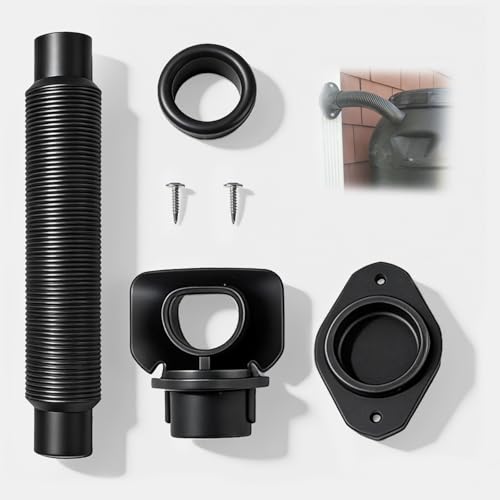
This one-set rain barrel diverter kit focuses on the core job: moving water from a rectangular downspout into a collection barrel. Its compact format may work well when space near the wall is limited. I see it as a practical option for a small garden, patio, or side yard. It avoids the need to buy a large collection system when a single barrel is enough.
A simple diverter can make rainwater harvesting feel less like a construction project and more like a weekend task. Still, the barrel must sit on a firm, level base so the outlet does not twist under weight. Keep the top covered to block mosquitoes, leaves, and other debris. I also suggest leaving room for overflow during a long storm.
Pros:
- Compact one-set format for a basic installation
- Made for rectangular downspouts
- Useful where wall and barrel space is limited
- Suitable for small gardens and container plants
- Simple approach for first-time users
- Can support a neat-looking rain barrel station
Cons:
- It may not fit round downspouts
- The listing does not suggest a broad range of downspout sizes
- Users may need extra parts for overflow control
- A separate filter or leaf guard may be useful
My Recommendation
I would choose this kit for a homeowner who wants a straightforward setup for one rain barrel. It is best for modest water needs, such as watering pots, herbs, and garden beds. It may not be the right fit for a large roof or several barrels unless the system is expanded. If its dimensions match your downspout, it offers a simple path to start collecting free rainwater.
Anivia Rain Barrel Diverter Kit

The Anivia rain barrel diverter kit supports 2 x 3 inch and 3 x 4 inch downspouts. It includes a valve and filter, which gives it more control than a bare connector. The white finish may blend well with light-colored gutters and trim. I consider this a balanced option for users who want water routing plus a basic way to manage flow and debris.
The filter is useful, but it does not replace gutter care. Leaves and roof grit can still collect upstream, so inspect the filter after storms and clean it as needed. The valve may help control the connection to the barrel when you need to pause collection or service the tank. As with every rain barrel system, use the stored water for suitable outdoor tasks unless it has been treated for another purpose.
Pros:
- Fits common 2 x 3 and 3 x 4 downspouts
- Includes a valve for added flow control
- Includes a filter to help limit debris in the barrel
- White color can blend with many home exteriors
- Useful for garden watering and outdoor cleaning
- Offers more control than a basic open connector
Cons:
- The filter needs regular inspection and cleaning
- It may not suit round or unusual downspouts
- White plastic can show dirt over time
- Correct barrel placement remains important
My Recommendation
The Anivia is best for homeowners who want a filter and valve in one rain barrel diverter. I would point to it for a tidy garden setup where the user plans to check the system often. It can also suit people who want to stop or manage water flow during maintenance. Among the listed options, it is a well-rounded pick for routine home use and sensible debris control.
Self-Flushing Rain Barrel Diverter

This self-flushing diverter offers the widest stated fit range in this group. It is listed for several square and rectangular sizes, plus round downspouts, from smaller profiles up to larger sizes. That flexibility makes it a strong candidate when your gutter shape is not the usual 2 x 3 inch style. Its self-flushing design also targets one of the most annoying rain barrel problems: debris and early dirty runoff.
I still would not treat “self-flushing” as a promise of zero maintenance. A diverter can reduce the work, but gutters, screens, and barrel openings need checks throughout the season. The broad fit range is useful, yet exact measurements remain essential before purchase. For a larger roof or a high-flow area, make sure the barrel has a safe overflow route so water does not pool against the foundation.
Pros:
- Fits many listed square, rectangular, and round downspouts
- Self-flushing design may help reduce clog buildup
- Strong choice for unusual or mixed downspout sizes
- Useful for homeowners who want broader compatibility
- Can help manage debris before it reaches the barrel
- Suitable for more flexible rainwater collection plans
Cons:
- Broad compatibility still requires careful measurement
- Self-flushing does not remove the need for seasonal checks
- May be more than needed for a very small setup
- Installation can take longer on an unusual downspout
My Recommendation
I recommend this model for homeowners who are unsure whether a standard diverter will fit. It is also a strong choice for areas with frequent leaves or roof debris, provided the user keeps the system clean. If you have a round downspout or a larger rectangular profile, this may be the best downspout diverter for rain barrel use in your situation. Its main value is flexibility, not simply the lowest price.
Rain Barrel Diverter With Filter and Brass Spigot

This kit is designed for 2 x 3 inch or 3 x 4 inch downspouts and includes a filter plus a brass spigot. The spigot is a useful touch because it gives you a direct outlet for filling a watering can or connecting a hose. Brass hardware often feels more substantial than thin plastic hardware, though the full system still needs proper support. I like this format for gardeners who want the diverter and a convenient barrel outlet together.
A spigot works best when the barrel sits high enough to place a can beneath it. Raise the barrel on a strong, stable platform, and never rely on a weak crate or loose blocks. Check the threaded connection for drips after installation and tighten it gently to avoid damage. The filter can help keep the stored water cleaner, but it needs regular rinsing during leaf season.
Pros:
- Fits common 2 x 3 and 3 x 4 downspouts
- Includes a filter for added debris control
- Includes a brass spigot for convenient water access
- Useful for filling cans and outdoor watering tools
- Good match for raised rain barrel installations
- Combines several useful parts in one kit
Cons:
- Users may need a strong stand for proper spigot clearance
- The filter still needs routine cleaning
- It may not fit round or nonstandard downspouts
- A barrel stand and hose may require separate purchases
My Recommendation
This kit is best for gardeners who want easy access to stored water. The brass spigot makes it more convenient for filling a watering can than a system with only a barrel opening. I would choose it for a raised barrel near flower beds, vegetables, or patio pots. It offers good everyday value when you want a filter and usable outlet in the same package.
Prestantious Diverter for 2 x 3 Downspouts

The Prestantious 2 x 3 inch model targets one of the most common rectangular downspout sizes. A focused fit can be helpful because it avoids the uncertainty that sometimes comes with a universal part. This option makes sense for a homeowner who has already measured a standard 2 x 3 inch downspout. Its simple layout may also appeal to someone who prefers fewer components.
With any narrow-fit diverter, measurement is the key step. Do not assume that a nearby size will slide into place or seal correctly. I suggest measuring at more than one point because downspouts can bend, flare, or change shape near a joint. Once fitted, watch the first rain and confirm that water enters the barrel while overflow still moves away from the home.
Pros:
- Designed for a standard 2 x 3 inch downspout
- Focused fit may simplify product selection
- Simple design for a basic rain barrel setup
- Good option for small residential gutter systems
- Fewer parts can make routine checks easier
- Suitable for users who prefer a neat installation
Cons:
- Limited fit compared with multi-size diverters
- Not intended for 3 x 4 inch or round downspouts
- Users must measure accurately before ordering
- A separate filter may be needed for heavy debris areas
My Recommendation
I recommend this model when your downspout is confirmed as 2 x 3 inches. It is best for a small, focused rain barrel project where you do not need broad size coverage or extra controls. The design may be a good fit for a first barrel beside a shed, garage, or small home. It offers practical value when exact compatibility matters more than a long list of features.
Rain Barrel Diverter for Rectangular Downspouts

This rectangular downspout diverter is built for users who want to collect cleaner roof runoff in a plastic barrel or container. Its design focuses on installation without taking the downspout apart, which can make the job less disruptive. That matters when the downspout is secured tightly to a wall or when access is limited. It is a sensible choice for a simple retrofit.
I would pair this diverter with a covered container, a firm base, and a clear overflow plan. Even a clean-looking connection cannot stop every bit of roof dust or pollen, so do not skip basic barrel care. Keep the barrel away from doors and foundation walls if overflow could cause trouble. A quick inspection after the first storm can reveal whether the connection needs adjustment.
Pros:
- Designed for rectangular downspouts
- Supports a retrofit installation approach
- May avoid removing the full downspout
- Useful for plastic containers and homemade barrels
- Good option for limited-access installation areas
- Helps collect roof runoff for outdoor use
Cons:
- It may not fit round downspouts
- Exact dimensions should be checked before purchase
- A separate hole saw or tool may be required
- Users must plan overflow protection separately
My Recommendation
This kit is best for a homeowner who wants to add rainwater collection to an existing downspout with minimal disruption. It suits custom container projects and modest garden needs. I would not select it without first checking the downspout shape and the container wall thickness. When those details line up, it can be a practical and affordable route to a working rain barrel.
How to Choose the Best Downspout Diverter for Rain Barrel
Choosing the best downspout diverter for rain barrel use starts with one simple task: measure the downspout. Most home systems use rectangular 2 x 3 inch or 3 x 4 inch profiles, but some use round pipe or less common sizes. Measure the width and depth, and check whether the shape stays even along the section where you plan to install the diverter. A close match is far better than forcing a part that almost fits.
Next, think about the barrel itself. A diverter can guide the water, but the barrel must have a stable base, a screened opening, and a safe overflow path. Water weighs about 8.3 pounds per gallon, so a full 50-gallon barrel can weigh more than 400 pounds before you add the container. I always treat the platform as part of the diverter system, not as an afterthought.
Debris control also matters. A roof can send leaves, dust, pollen, and small roof particles into the gutter. Filters and self-flushing features may reduce the load, but they cannot remove the need for inspections. Clean the gutters, check the screen, and rinse the filter when water flow slows. These small steps often matter more than a flashy product claim.
Finally, consider how you will use the stored water. A valve is helpful when you need to stop flow or service the barrel. A brass spigot is convenient for filling a can. A wide fit range helps with unusual downspouts. For most homes, the best downspout diverter for rain barrel is the one that fits securely, manages overflow, and matches your maintenance habits.
Best For Comparison
| Best for | Why |
|---|---|
| Most flexible fit | The self-flushing model lists support for several rectangular, square, and round downspout sizes. |
| Best control and convenience | The Anivia and brass-spigot kits add useful flow or outlet features for regular garden use. |
| DIY container projects | The hole-saw kit helps users create a custom rain barrel without buying every installation tool separately. |
Installation Tips for a Rain Barrel Diverter
Start by choosing a downspout section that is easy to reach and close to the barrel. Keep the barrel on a level base, and leave enough room to remove the lid or clean the filter. Mark the connection point only after checking the hose or outlet position. A few minutes of planning can prevent a crooked cut or a short connection.
Use eye protection when cutting metal or plastic. Remove sharp edges before attaching the diverter, and avoid overtightening fittings. A crushed downspout or cracked barrel can cause a leak that is hard to spot until the next storm. If the kit includes a hole saw, secure the container before drilling and keep your hands clear of the bit.
After installation, test the system with a hose before waiting for rain. Look for drips at the diverter, hose, barrel opening, valve, and spigot. Confirm that the overflow moves away from the foundation. During the first real storm, stay nearby for a few minutes and watch how the water travels. This simple test can protect your siding, soil, and foundation area.
Rain Barrel Maintenance Advice
Inspect the gutter and diverter at the start of the wet season. Remove leaves before they become a wet mat that blocks flow. Wash filters with clean water and check that valves open and close without force. If freezing weather is common in your area, follow the product directions and drain or disconnect the system before hard freezes.
Keep the barrel covered. A secure screen helps block mosquitoes and larger debris, while a closed lid can reduce algae growth from sunlight. Do not use untreated rain barrel water for drinking or cooking. For edible gardens, follow local guidance and use good judgment because roof materials, bird waste, and urban pollutants can affect water quality.
Also check the barrel’s weight and position after a major storm. A soft base can settle and pull on the diverter hose. If the barrel shifts, empty it safely and reset the platform. A steady system is quieter, safer, and less likely to leak.
FAQs Of best downspout diverter for rain barrel
What size downspout diverter do I need?
Measure the width and depth of your downspout before buying. Common rectangular sizes include 2 x 3 inches and 3 x 4 inches, but round downspouts need a different fit. Always compare your measurements with the product listing.
Does a rain barrel diverter stop all leaves and dirt?
No. A filter or self-flushing design can reduce debris, but it cannot replace gutter cleaning. Use a covered barrel and inspect the diverter after storms, especially during fall leaf season.
Can I install a diverter without removing my downspout?
Some kits are designed for installation without dismantling the full downspout. The exact method depends on the product and the space around your gutter. Read the instructions and use the correct cutting tools.
Is rain barrel water safe to drink?
Do not drink untreated rain barrel water. It can collect roof dust, bird waste, chemicals, and other pollutants. Use it for suitable outdoor tasks, and follow local health guidance for any other use.
How do I prevent a rain barrel from overflowing?
Use the diverter’s overflow route or add an overflow hose that directs water away from the foundation. Keep the barrel level, and make sure the outlet is not blocked. Check the path before heavy rain.
Final Verdict: Which Should You Buy?
For broad compatibility, I favor the self-flushing model as the best downspout diverter for rain barrel use. Choose Anivia for a filter and valve, or the brass-spigot kit for easy watering access. For a 2 x 3 inch downspout, the focused Prestantious model is a simple value pick.
Measure first, plan overflow, and keep the system clean. The right rain barrel diverter can turn roof runoff into useful garden water with little daily work.
