


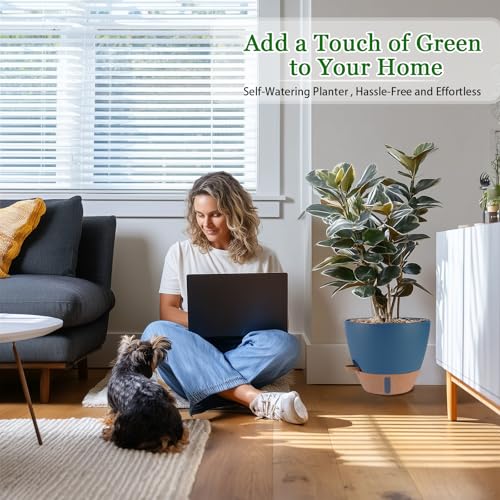
The best self watering planters outdoor make plant care easier with steady moisture, strong drainage, and less daily watering.
A hot week, a busy work schedule, or one missed watering can quickly leave patio plants wilted and sad. I have found that self-watering planters solve this common problem by storing water below the soil and letting roots draw moisture as needed. They do not replace good care, but they act like a small backup tank for herbs, flowers, and foliage plants. The six options below cover large pots, hanging baskets, small plant sets, mobile planters, and deep-reservoir designs for patios, porches, balconies, and outdoor gardens.
Fielda Large Self-Watering Pots

The Fielda large self-watering pots come in 12-, 10-, and 8-inch sizes. This makes the set useful when I want matching planters for plants with different root needs. The plastic body keeps the pots light enough to move, yet the larger sizes give plants more room to settle. Their clean shape also fits a porch, deck, balcony, or sunny indoor corner.
The built-in water storage helps reduce the stress of daily watering. I like this style for herbs, annual flowers, pothos, peace lilies, and other plants that prefer even moisture. Still, I would check the soil before refilling because outdoor heat, wind, plant size, and pot position can change water use. Like any reservoir planter, it works best when the pot has an airy potting mix and the water level does not stay too high.
Pros:
- Three useful sizes for a mixed plant display
- Large pots give roots more growing space
- Self-watering design helps extend time between waterings
- Light plastic is easier to move than ceramic
- Simple look works with many outdoor styles
- Useful for herbs, flowers, and foliage plants
Cons:
- Large plants may still need added weight in strong wind
- Plastic can become warm in direct summer sun
- The reservoir still needs regular cleaning
UOUZ 13-Inch Hanging Self-Watering Planters

The UOUZ set includes two 13-inch hanging planters with removable 50-ounce reservoirs. That size gives trailing plants enough room to make a full display without taking up floor space. I see these as a good fit for a porch beam, balcony hook, window area, or covered patio. The black plastic has a simple look that lets colorful leaves and flowers stand out.
The removable reservoir is one of the most helpful features here. I can take it out, refill it, and check for stale water without carrying the whole planter down. The design may help hanging plants stay hydrated during short trips or busy work weeks. Before hanging each basket, I would confirm that the hook and support point can handle the planter, wet soil, and mature plant.
Pros:
- Two matching hanging baskets create a balanced display
- 13-inch size supports fuller trailing plants
- Removable 50-ounce reservoir makes filling easier
- Uses vertical space on porches and balconies
- Black finish hides soil marks and blends with many settings
- Helpful for plants that prefer steady moisture
Cons:
- Wet soil makes each basket heavier than it looks
- Requires a strong hook or secure mounting point
- High wind can swing or dry hanging baskets faster
Fielda Self-Watering Pots for Indoor and Outdoor Use

This Fielda set offers 8-, 10-, and 12-inch self-watering pots. I like that range because it can handle small plants today and larger plants as they grow. The different sizes also make it easy to create a tiered porch display. Their plastic construction keeps the set more practical for moving, seasonal changes, and routine cleaning.
The water reservoir gives roots access to moisture from below while the upper soil remains less dependent on frequent surface watering. That can be useful for people who travel, work long hours, or often forget a watering day. I would still water the soil from the top when first planting, then allow the roots to reach the lower moisture zone. A quick finger check in the soil helps prevent overwatering during cool or rainy weather.
Pros:
- Three sizes suit seedlings, medium plants, and larger specimens
- Good set for building a coordinated plant group
- Reservoir can reduce daily watering needs
- Plastic body is easier to handle than heavy clay
- Works for many indoor and outdoor plant types
- Useful for patios, windows, balconies, and shelves
Cons:
- Small pots may dry faster in full outdoor sun
- Reservoir capacity may not suit thirsty mature plants
- Lightweight pots can need protection from strong wind
YNNICO Six-Pot Self-Watering Set

The YNNICO set includes six black pots in sizes from 5 to 8 inches. It is a smart choice when I need several small planters instead of one large container. The size mix works well for herbs, starter plants, succulents, small flowers, and young foliage plants. Matching black pots can also make a collection look neat without taking attention away from the plants.
Each pot includes drainage holes and a saucer, which gives me more control over watering. Drainage matters because a self-watering planter should hold moisture without leaving the root zone soaked all the time. I would place the pots on a level surface and empty excess water after heavy rain. This set is especially useful for a windowsill, covered porch, plant shelf, or compact balcony garden.
Pros:
- Six pots provide strong value for a small plant collection
- Several sizes help match pots to plant roots
- Drainage holes help reduce standing water
- Saucers help protect shelves, floors, and patio surfaces
- Compact design suits apartments and small outdoor spaces
- Black finish gives the set a clean, uniform appearance
Cons:
- Small sizes are not suited to large or fast-growing plants
- Saucers may need frequent emptying after rain
- Small reservoirs can dry quickly in hot weather
Dexceder Rolling Self-Watering Planter

The Dexceder planter measures 15 by 14 inches and includes wheels. That combination is useful for a large plant that needs to move with the seasons. I can roll it toward morning light, away from harsh afternoon sun, or under cover before a storm. The white matte finish gives it a brighter, modern look for decks, patios, entryways, and indoor spaces.
Mobility is the main reason to choose this model. Large containers become hard to lift once filled with soil and water, so wheels can save strain on the back and arms. I would keep the planter on a fairly smooth surface and lock or block it when strong wind is expected. Its larger size may suit shrubs, palms, flowers, or decorative foliage, but I would confirm the plant’s mature root needs before planting.
Pros:
- Wheels make a large planter easier to move
- 15-by-14-inch size gives plants useful root space
- Helpful for changing light and weather conditions
- White matte finish looks clean and modern
- Good option for users who cannot lift heavy pots
- Works well as a patio or entryway statement planter
Cons:
- Wheels may work best on smooth, level surfaces
- White surfaces can show soil and water marks
- A large wet planter can still be difficult to steer
KUGAZ Three-Pack Deep-Reservoir Pots

The KUGAZ set includes three pots in 12-, 10-, and 8-inch sizes. Each pot has a deep reservoir, drainage holes, and a water-level indicator. I find a water indicator helpful because it removes some guesswork from routine care. The different sizes also make this set practical for a small group of plants with varied root systems.
The deep reservoir is useful for people who want more time between watering sessions. I would use the indicator as a guide, not as a reason to keep the reservoir full at all times. Plants still need an appropriate soil mix, light, airflow, and seasonal care. For outdoor use, I would watch rain closely and avoid letting the reservoir remain saturated during cool, wet periods.
Pros:
- Water-level indicator makes checking the reservoir easier
- Deep reservoir can extend time between refills
- Three sizes support a range of plant types
- Drainage holes help manage excess water
- Large sizes work well for patio plants and herbs
- Black plastic gives a simple, versatile appearance
Cons:
- Water indicators may need cleaning to stay easy to read
- Deep moisture is not ideal for every plant type
- Large pots can become heavy after filling
My Recommendation
Choosing the best self watering planters outdoor depends on the space, plant size, and care routine. I would choose the Fielda 12/10/8-inch set for most patio gardeners who want useful sizes and a simple design. It offers a balanced mix of capacity, flexibility, and easy handling. The KUGAZ set is a stronger pick for shoppers who value a water-level indicator and a deeper reservoir.
For a small balcony or windowsill, the YNNICO six-pot set gives the most planting variety in a compact format. The UOUZ hanging pair is best when floor space is limited and trailing plants are the focus. I would pick the Dexceder for a large plant that must move often, while the second Fielda set suits buyers who want a flexible indoor and outdoor collection.
| Best for | Why |
|---|---|
| Best overall patio set | Fielda 12/10/8-inch pots offer three useful sizes and steady moisture support. |
| Best for small spaces | YNNICO provides six compact pots for herbs, starters, and small plants. |
| Best for easy water checks | KUGAZ adds a deep reservoir, drainage holes, and a water-level indicator. |
How Self-Watering Planters Work Outdoors
A self-watering planter usually has two main areas: the upper soil chamber and a lower water reservoir. A wick, insert, or similar path moves water upward toward the soil. Plant roots then take in moisture as needed. This process is often called capillary action, and it works best when the potting mix stays loose enough to move air and water.
These planters do not water plants on a fixed schedule. A large plant in full sun may use water much faster than a small plant in shade. Hot wind can also pull moisture from leaves and soil. I use the reservoir as a helpful buffer, not as a set-and-forget system.
When I first use a self-watering pot, I water the top of the soil. This helps settle the roots and allows them to grow toward the moisture below. After that, I fill the reservoir as directed and watch the plant for signs of stress. Yellow leaves, soft stems, a sour soil smell, or constantly wet soil can point to too much water.
What to Look For in the Best Self Watering Planters Outdoor
Size is the first point I check. A pot that is too small can dry out fast and restrict roots. A pot that is too large can hold more wet soil than a young plant can use. For most container plants, I prefer a pot only a little larger than the current root ball, with room for healthy growth.
Drainage is just as important as water storage. Outdoor rain can fill a reservoir even when I have not watered. Drainage holes, overflow paths, and a removable insert can help control that extra water. I also look for a design that lets me empty or clean the reservoir with little effort.
Material affects weight, heat, and durability. Plastic planters are often light and easy to move. Ceramic and thick clay can look rich, but they may be heavy and more likely to crack in harsh weather. A light planter may need a sheltered location or added weight if the area gets strong wind.
I also consider the water indicator. It can save time, especially for new plant owners. However, an indicator is only one clue. I still check the soil, look at the leaves, and adjust care for the season. A good planter supports judgment; it does not replace it.
Best Plants for Outdoor Self-Watering Pots
Many herbs perform well in self-watering containers when they receive enough light. Basil, parsley, mint, and chives can benefit from even moisture. Mint can spread fast, so I prefer to keep it in its own pot. Harvesting herbs often also encourages fresh growth.
Annual flowers are another strong match. Petunias, impatiens, marigolds, and begonias can look full when they receive steady care. Their water needs may rise during hot weather, so I check the reservoir more often during summer. A hanging self-watering basket can be especially attractive with trailing flowers.
Foliage plants can also work well, but each plant has its own needs. Ferns and some tropical plants enjoy even moisture. Succulents and many drought-tolerant plants prefer a drier cycle, so I use less reservoir water and a fast-draining mix. Never assume that every plant wants constant access to water.
Vegetables such as lettuce and some compact pepper varieties can grow in containers. Their success depends on pot depth, sunlight, feeding, and pollination. Large crops may outgrow small pots. I use the 10- or 12-inch options for plants that need more root room, while smaller pots fit young greens and herbs.
How I Set Up a Self-Watering Planter
I start with a clean planter and inspect the reservoir, wick, insert, and drainage openings. I remove packing material and make sure water can move through the system. If the pot has a water indicator, I check that it moves freely. This quick step can prevent trouble later.
Next, I use a quality container mix instead of heavy garden soil. Garden soil can compact inside a pot and reduce airflow. A loose mix helps roots receive both moisture and oxygen. I fill the pot around the plant, press gently, and leave a little space at the top for watering.
For a new plant, I water from above first. This wets the full root ball and removes dry pockets. Once the plant settles, I begin using the lower reservoir. I keep the pot in a spot that matches the plant’s light needs rather than choosing a place based only on convenience.
During the first week, I watch the soil and leaves each day. This gives me a feel for how fast the plant uses water. After that, I can check less often, but I still look more closely during heat waves, storms, and sudden cold. Outdoor conditions can change quickly.
Common Mistakes to Avoid
The most common mistake is filling the reservoir and forgetting the plant. A self-watering pot can reduce work, but it cannot measure sun, wind, or plant thirst. I check the water level and soil at regular intervals. This simple habit protects against both drought and soggy roots.
Another mistake is using a pot that is much too large. Extra soil can hold excess moisture around small roots. It may also make the planter heavy and hard to move. I match the container to the plant’s current size and repot when the roots truly need more room.
I also avoid placing light plastic pots in an exposed, windy spot. Wind can tip a tall plant or dry its leaves. A wall, railing, heavy companion pot, or sheltered corner can add useful protection. For hanging baskets, I inspect the hook and support point before each season.
Finally, I do not let leaves, soil, or algae clog the reservoir. I empty old water, rinse the lower section, and clean the indicator when needed. A clean reservoir smells better and gives the water path a better chance to work well.
Care Tips for Outdoor Self-Watering Planters
Check planters more often during hot weather. Full sun, dry air, and wind can empty even a large reservoir. A layer of mulch on the soil surface can slow evaporation, but I keep mulch away from the plant stem. Morning checks are useful because they give plants water before the hottest part of the day.
During heavy rain, move portable planters under cover when possible. This is especially important for plants that dislike wet roots. If a planter has an overflow opening, make sure it is not blocked. Too much water can be just as harmful as too little.
Feed container plants based on their needs and the label directions of the fertilizer. Water can move nutrients through the pot, and frequent growth can use them quickly. I avoid adding extra fertilizer just because a plant looks weak. Poor light, root stress, pests, or too much water may be the real cause.
At the end of the season, I clean the planter before storage or winter use. I remove old roots and soil, rinse the reservoir, and let the parts dry. In cold areas, I protect plastic from repeated freezing and thawing when possible. This small task helps the planter last longer.
FAQs Of best self watering planters outdoor
Do self-watering planters work well outdoors?
Yes. They can help outdoor plants receive steady moisture between regular waterings. Sun, wind, rain, and plant size still affect care. I use them as a water buffer, not a fully automatic system.
How often should I fill an outdoor self-watering planter?
There is no single schedule. Check the reservoir and soil every few days at first. Hot sun and wind may require more frequent refills, while rain may reduce the need.
Can I leave self-watering planters outside in the rain?
Usually, but watch the water level. Heavy rain can overfill some designs and keep roots too wet. Use an overflow feature, move the planter under cover, or empty extra water when needed.
Are self-watering planters good for herbs?
Many herbs do well with even moisture. Basil, parsley, chives, and mint are common choices. Use a loose potting mix and give herbs enough light and airflow.
Which self-watering planter is best for a balcony?
The YNNICO set suits small balconies because it includes six compact pots. The UOUZ hanging pair also saves floor space. Check weight limits before placing wet planters on a railing or hanging support.
Final Verdict: Which Should You Buy?
For most shoppers, the Fielda large set is the best self watering planters outdoor choice because it offers three useful sizes and easy placement. Choose KUGAZ for its water indicator, YNNICO for small spaces, or UOUZ for hanging plants.
Each option can make outdoor plant care more forgiving. Match the pot to the plant, check moisture often, and enjoy a healthier patio garden with less daily watering stress.
