


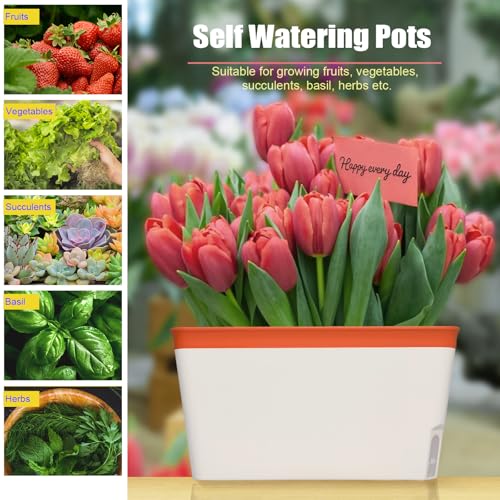
The best self watering planters for herbs make indoor gardening simple, tidy, and far more forgiving.
Have you ever bought fresh basil, mint, or parsley, only to watch it wilt after a few busy days? I have, and the problem is often uneven watering rather than poor gardening skill. Self-watering planters help by storing water below the soil and moving moisture upward as the roots need it. That means fewer dry spells, less mess on the windowsill, and healthier herbs with less daily work. In this guide, I review popular options for small kitchens, sunny windows, larger herb collections, and beginner gardeners.
OurWarm 3-Pack Windowsill Herb Planters
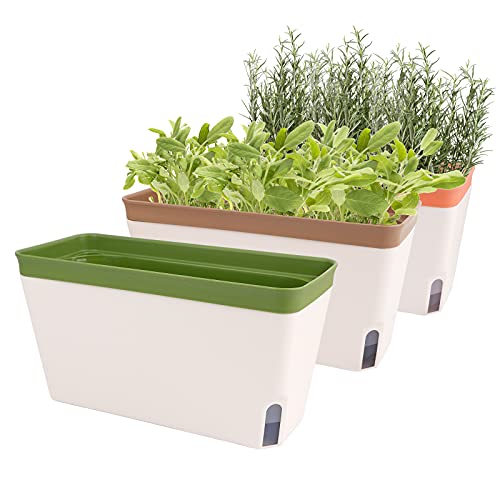
The OurWarm windowsill herb planter set includes three matching 10.5-inch pots made for compact indoor growing. Each pot has a lower water area and a visual water-level window, so I can check the supply without lifting the planter. The clean shape looks at home beside a kitchen sink, coffee maker, or sunny window. It gives basil, chives, cilantro, and parsley their own growing space.
I like this set for people who want a neat herb garden without a complex setup. The reservoir can reduce the need for daily watering, but the soil still needs time to dry between refills. I would place these planters near bright light and rotate them every few days for even growth. The plastic body also makes them easier to move than heavy ceramic pots.
Pros:
- Three matching planters create a tidy herb display
- Water-level windows make checking moisture easy
- 10.5-inch size gives common herbs useful root room
- Light plastic construction is easy to move
- Works well on a kitchen windowsill or shelf
- Suitable for herbs, flowers, succulents, and small vegetables
Cons:
- The set may need frequent refills in hot, bright rooms
- Plastic may not feel as premium as ceramic
- Large mature herbs can eventually outgrow the pots
My Recommendation
I recommend this OurWarm set for home cooks who want three herbs close at hand. The water-level window is especially useful for new gardeners who are unsure when to refill. It also suits renters because the pots are light and easy to rearrange. Among the best self watering planters for herbs, this set offers a strong mix of size, style, and simple care.
| Best for | Why |
|---|---|
| Kitchen herb starters | Three pots give basil, parsley, and chives separate homes. |
| Busy plant owners | The reservoir helps stretch the time between water checks. |
| Neat windowsill displays | Matching shapes create a clean, balanced look. |
Oliz Two-Pack Rectangular Planters
 rectangular self watering herb planters” />
The Oliz planters come as a two-pack with a long rectangular form that fits well on narrow ledges. Each 10-inch window pot includes drainage and a tray, which helps control excess water after filling. The shape gives herbs room to spread while keeping the footprint fairly slim. I see this design working well for a pair of related plants, such as basil and thyme.
These planters are a practical choice when a round pot wastes space. A rectangular planter can line up with the edge of a window and make better use of a long sill. I would still check the soil before watering because self-watering systems do not remove the risk of overwatering. The tray adds a useful layer of protection for indoor surfaces.
Pros:
- Rectangular shape uses windowsill space efficiently
- Two-pack supports a simple two-herb setup
- Drainage helps excess water leave the soil
- Included trays help protect furniture and ledges
- 10-inch length suits many common kitchen herbs
- Simple design blends with modern indoor décor
Cons:
- Two planters provide less variety than a larger set
- The long shape may not fit narrow round shelves
- Users must assemble or position the drainage parts correctly
My Recommendation
I would choose the Oliz two-pack for anyone with a long, narrow windowsill. It is also a good match for couples who want two favorite herbs rather than a full collection. The drainage and tray setup adds confidence for indoor use. If space matters most, these are among the best self watering planters for herbs because they turn a slim ledge into a useful growing row.
| Best for | Why |
|---|---|
| Narrow windowsills | The rectangular shape uses length without taking much front-to-back space. |
| Two favorite herbs | The pack gives each plant a separate container. |
| Apartment kitchens | Trays help reduce water marks on indoor surfaces. |
Vugosson Seven-Pack Window Planters

The Vugosson set stands out because it offers seven planters in several sizes. The assortment includes small and larger rectangular pots, which can support different stages of herb growth. Drainage openings and saucers help manage water indoors and outdoors. This flexibility makes the set appealing to gardeners who want more than one planting style.
I would use the smaller containers for seedlings or compact herbs and reserve the larger planters for basil, mint, or leafy plants with more spread. The different sizes also let me create a tiered display rather than a flat row. Because mint can spread quickly, I would keep it in its own pot. This set offers more room to experiment than a basic three-piece kit.
Pros:
- Seven pieces provide strong value for herb collections
- Multiple sizes support seedlings and mature plants
- Rectangular pots fit shelves and window ledges
- Drainage holes help prevent stagnant soil
- Saucers add protection for indoor and outdoor use
- Useful for herbs, houseplants, flowers, and small starts
Cons:
- The larger set needs more storage or display space
- Different sizes may not create a perfectly uniform look
- Small pots may hold less water than larger planters
My Recommendation
The Vugosson set is best for gardeners who want variety and room to grow. It suits families, plant collectors, and people starting herbs from seed. I like the ability to match each plant with a suitable pot instead of forcing every herb into one size. For a broad collection, this is one of the best self watering planters for herbs because it supports many planting plans at once.
| Best for | Why |
|---|---|
| Large herb collections | Seven pieces offer space for many plants and varieties. |
| Seed starting | Small pots can hold young plants before a later move. |
| Indoor and outdoor use | Saucers and drainage add flexibility in different locations. |
OurWarm Six-Pack Herb Window Boxes

This OurWarm six-pack gives gardeners a coordinated group of 10.5-inch plastic window planters. Each pot includes a water-level indicator, so I can see when the lower supply needs attention. The set is designed for herbs, flowers, seedlings, vegetables, and succulents. Six matching containers can turn a plain window into a small indoor garden.
The main appeal is scale. I can grow cooking staples such as basil, parsley, oregano, thyme, cilantro, and chives without mixing several pot styles. The dual-layer design separates the growing area from the stored water, which can help keep roots from sitting directly in a full reservoir. I would leave some space between mature plants for airflow and easier harvesting.
Pros:
- Six matching planters support a full herb lineup
- Water-level indicators simplify routine care
- 10.5-inch size works for many kitchen herbs
- Plastic is lighter than stone or ceramic
- Uniform design gives a polished indoor display
- Useful for seedlings and other small plants
Cons:
- Six planters require a large sill, shelf, or plant stand
- Water use will vary between plants and room conditions
- Plastic surfaces may show dust more than textured pots
My Recommendation
I recommend this six-pack to serious home cooks and families who use herbs often. It is also a smart choice for anyone who wants a matching garden instead of a collection of random pots. The indicators can reduce guesswork, especially for new growers. For a larger indoor setup, these are among the best self watering planters for herbs because they offer uniform size and strong planting capacity.
| Best for | Why |
|---|---|
| Full kitchen herb gardens | Six pots make room for a useful mix of cooking herbs. |
| Matching décor | Uniform planters create a clean and planned display. |
| New gardeners | Water indicators make basic care easier to understand. |
Permasteel Herb Planter with Trellis

The Permasteel herb planter combines a self-watering system with trellis support. That makes it different from simple windowsill pots, since the structure can guide taller or climbing growth. The planter is designed for herbs, flowers, succulents, and indoor or outdoor use. Its black finish gives it a stronger decorative presence than a small plastic pot.
I see this planter as a good fit for basil, flowering herbs, or plants that benefit from support. A trellis can help keep growth upright and make harvesting easier. It may also help a small balcony garden feel more organized. I would check its placement before filling it because a planted container becomes heavier and may need a stable surface.
Pros:
- Built-in trellis supports upright plant growth
- Self-watering design can reduce daily watering work
- Water-level indicator helps guide refills
- Works indoors or outdoors in a suitable location
- Black finish adds a bold decorative look
- Useful for herbs, flowers, and supported plants
Cons:
- It may take more floor or shelf space than basic pots
- The trellis is unnecessary for short herbs
- A full planter can be heavy to move
My Recommendation
I would pick the Permasteel planter for gardeners who want support and style in one unit. It is especially useful for a balcony, patio, sunroom, or large kitchen corner. The trellis gives it an advantage for taller herbs and decorative plants. If you want the best self watering planters for herbs with a more substantial garden look, this model deserves attention.
| Best for | Why |
|---|---|
| Tall herbs and flowers | The trellis gives growing stems a place to lean and climb. |
| Balcony gardens | One supported planter can add height without many separate pots. |
| Decor-focused growers | The black finish looks more like garden furniture than a basic pot. |
OurWarm Three-Pack Self-Watering Pots
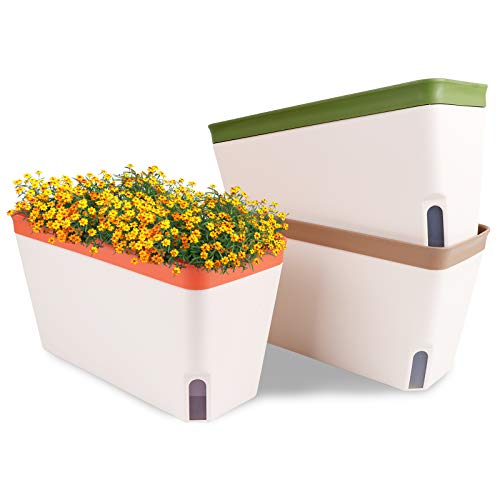
This OurWarm set includes three 10.5-inch indoor herb planters with a dual-layer design. A water-level indicator helps show the amount of water below the soil. The planters are made for herbs, flowers, vegetables, and succulents, so they can serve more than one purpose. Their matching form works well for a small kitchen garden.
I would use the three pots for herbs with similar light needs but different flavors. For example, basil, cilantro, and parsley can make a useful trio when placed in a bright area. The reservoir can help during a busy work week, but it cannot replace good light or proper soil. I also like that the set leaves enough room to move the plants if a window becomes too hot.
Pros:
- Three 10.5-inch containers suit compact herb gardens
- Dual-layer construction separates soil from stored water
- Water indicator reduces guesswork during care
- Matching pots make a simple, attractive set
- Lightweight body is easy to clean and reposition
- Supports herbs, vegetables, flowers, and succulents
Cons:
- Plants with very different water needs may need separate care
- The set may be too large for a very narrow sill
- Plastic has less weight than a heavy ceramic planter
My Recommendation
This three-pack is best for beginners who want an easy starting point without buying six pots. It offers enough room for a small herb rotation and keeps the look consistent. I would choose it for a sunny apartment window, office, or kitchen shelf. It remains one of the best self watering planters for herbs for shoppers who want a simple three-pot value set.
| Best for | Why |
|---|---|
| Beginner gardeners | Three pots and visible water levels keep the setup simple. |
| Small herb collections | The set supports a few useful plants without excess clutter. |
| Flexible indoor growing | Light plastic makes it easy to change locations as needed. |
Yarlung Six-Pack Self-Watering Pots

The Yarlung set includes six smaller self-watering pots, each listed at about five inches. That compact size makes the set useful for herbs with modest root systems, seedlings, aloe, and other small indoor plants. Each pot includes a water-level indicator, which makes routine checks quick. The nested design also helps save space when the pots are empty.
These are not the planters I would choose for a very large basil plant, but they can work well for young plants and compact herbs. Small pots also let me group several varieties on one shelf without creating a heavy display. I would watch the soil more closely in warm rooms because small reservoirs can dry sooner. The set is a practical way to try several herbs at once.
Pros:
- Six compact pots support a range of small plants
- Water-level indicators make quick checks simple
- Five-inch size fits small shelves and narrow ledges
- Nested design saves storage space when not in use
- Useful for seedlings, herbs, aloe, and small flowers
- Multiple pots allow easy separation of spreading herbs
Cons:
- Small size can limit mature herb growth
- Compact reservoirs may need more frequent refills
- Six pots can look crowded on a narrow windowsill
My Recommendation
I recommend the Yarlung set for seedlings, compact herbs, and gardeners with limited room. It is also useful for people who like to grow many small plants rather than a few large ones. The indicators are helpful, but I would not ignore the soil or roots. For small-space growing, these are among the best self watering planters for herbs because they offer six separate homes in a compact format.
| Best for | Why |
|---|---|
| Small shelves | The five-inch size fits where larger window boxes cannot. |
| Seedlings | Individual pots make early plant care and later moves easier. |
| Many compact herbs | Six containers let growers separate plants with different habits. |
VIVOSUN Six-Pack Window Herb Planters

The VIVOSUN six-pack provides six 10.5-inch window herb planters for a larger indoor growing plan. The long format gives each herb useful room while keeping the plants grouped near the light. This can be convenient for cooks who use several fresh herbs each week. The set also creates a consistent look across a kitchen window or plant shelf.
I would place herbs with similar light needs together and keep taller plants toward the back. A self-watering reservoir can help keep moisture more even, though herbs still need a well-draining potting mix. I would avoid filling every pot with a high-water plant and a dry-loving plant in the same care routine. The six-pack works best when I label each herb and track its needs.
Pros:
- Six large window planters support a broad herb garden
- 10.5-inch format gives roots useful growing space
- Matching design keeps the display organized
- Good option for cooks who harvest herbs often
- Suitable for windowsills, shelves, and plant stands
- Can also hold flowers, greens, and small vegetables
Cons:
- The full set needs substantial display space
- Six planted pots may be heavy on a weak shelf
- Plants with different water needs require close attention
My Recommendation
The VIVOSUN set is best for a dedicated indoor gardener who wants a full row of herbs. It suits a bright kitchen, sunroom, or sturdy plant stand. I like it for people who cook often and want a reliable supply close by. If your space and light can support six pots, this is one of the best self watering planters for herbs for building a complete home herb station.
| Best for | Why |
|---|---|
| Frequent herb users | Six roomy pots can support a wide cooking selection. |
| Dedicated indoor gardens | The matching set creates one organized growing area. |
| Bright kitchens and sunrooms | The window format keeps plants close to natural light. |
How Self-Watering Herb Planters Work
A self-watering planter usually has two zones. The upper zone holds potting mix and roots. The lower zone stores water. A wick, insert, or raised base lets moisture move upward toward the mix through capillary action.
This system does not mean the planter waters a plant perfectly on its own. It acts more like a small reserve tank. The plant still needs the right soil, light, temperature, and pot size. I always follow the care needs of the herb instead of treating every plant the same.
Self-watering planters work best when the soil can pull up moisture without becoming heavy and airless. A light indoor potting mix is often a better choice than dense garden soil. Garden soil can compact inside a container and reduce airflow around roots.
What I Look For in the Best Self Watering Planters for Herbs
I start with size. Basil, parsley, cilantro, and mint can grow quickly, so a tiny pot may become limiting. Small thyme or chives can handle less room, but larger plants need more soil volume and stable support.
Next, I check the water indicator. It should be easy to see from a normal standing position. A clear indicator saves time, but I still touch the soil when the plant looks stressed. No indicator can measure every factor in a living pot.
Drainage also matters. A good self-watering planter should keep the root zone above stored water or provide a controlled path for moisture. Roots that remain soaked can suffer from poor oxygen and rot. This is why I avoid pouring water into the soil every day.
Finally, I consider the footprint. A planter may fit the window but still block light or crowd other plants. Measure the sill before ordering. Also check the weight limit if you plan to use a wall shelf or narrow ledge.
How to Use a Self-Watering Planter for Herbs
Start with a clean planter and fresh potting mix. If the planter has a wick or insert, install it as the instructions show. Add enough mix to hold the plant at the same depth it had in its original container.
After planting, water the soil from the top. This first drink helps settle the roots and connect the mix to the moisture system. Do not rely only on the reservoir during the first few days.
Place the planter in bright light that matches the herb. Many cooking herbs need several hours of strong light each day. A bright south-facing window may work in some homes, while an east or west window may provide gentler light. If stems become thin and pale, the plant may need more light.
Let the top layer of soil become slightly dry when the herb prefers a moderate dry cycle. Then refill the reservoir as directed. Do not keep adding water if the indicator remains full. Empty and clean the reservoir from time to time to reduce stale water and buildup.
Best Herbs for Self-Watering Containers
Basil is a popular choice because it grows fast and benefits from steady moisture. It also needs strong light and regular harvesting. Pinching the top leaves encourages a fuller plant.
Parsley and cilantro can also grow well in containers. They prefer even care, but cilantro may bolt when temperatures rise. Planting small batches at different times can extend the harvest.
Chives and thyme are useful for smaller planters. Chives like regular moisture, while thyme prefers good drainage and should not stay wet. Mint grows strongly and should usually stay in its own container.
Oregano and rosemary need more caution. They enjoy bright light and good drainage, but they may dislike constantly wet soil. For these herbs, I let the mix dry more between waterings and avoid keeping the reservoir filled all the time.
Common Mistakes to Avoid
The most common mistake is assuming “self-watering” means “no care.” These planters reduce watering work, but they do not replace observation. I still check leaves, soil, light, and the water level.
Another mistake is using a pot that is too large for a small plant. Extra wet soil can stay damp for too long. Choose a container that gives roots room without creating a swamp around a tiny root ball.
Do not place a herb planter in a dark corner just because it has a reservoir. Water cannot solve weak light. Herbs need light to make energy, grow strong stems, and produce flavorful leaves.
Finally, do not crowd every container together. Airflow helps leaves dry after watering and may reduce fungal problems. Leave enough space to harvest, inspect, and rotate each plant.
FAQs Of best self watering planters for herbs
Are self-watering planters good for herbs?
Yes. They can provide a steadier supply of moisture and reduce daily watering. Herbs still need bright light, fresh potting mix, drainage, and regular care.
How often should I refill a self-watering herb planter?
It depends on the herb, pot size, light, heat, and room humidity. Check the indicator and soil often at first. Refill when the reservoir is low and the plant needs more moisture.
Can I grow mint in a self-watering planter?
Yes, but keep mint in its own container. Mint spreads quickly and can crowd other herbs. A separate planter makes pruning and repotting easier.
Do self-watering planters prevent root rot?
No. They can help manage moisture, but poor soil, overfilling, and weak drainage can still cause problems. Keep the roots above standing water and follow the planter instructions.
What soil should I use for indoor herb planters?
Use a light, well-draining indoor potting mix. Avoid heavy garden soil because it can compact and hold too much water inside a container.
Final Verdict: Which Should You Buy?
For most homes, I would choose the OurWarm three-pack with water-level indicators. It offers useful size, simple care, and enough room for a practical herb trio. Larger collections may prefer the VIVOSUN or OurWarm six-pack.
The best self watering planters for herbs make fresh cooking herbs easier to grow. Choose the size that fits your light, space, and daily routine, then give every plant the care it needs.
