


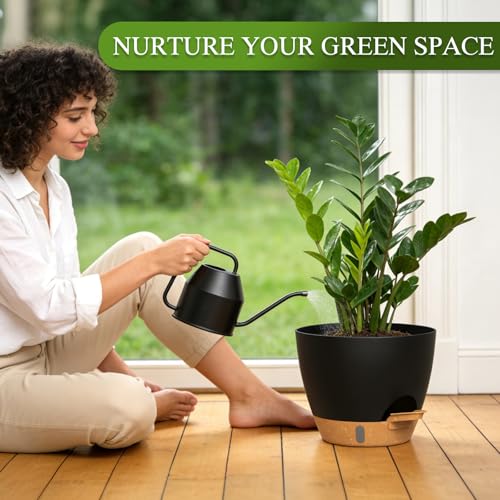
The best self watering planters for indoor plants balance drainage, water control, size, and easy daily care.
Have you ever watered a houseplant on Monday, then found dry soil by Friday? Or added “water the plants” to a busy travel week? Self-watering planters help by holding extra water in a lower reservoir and moving moisture toward the soil as needed. They can reduce watering stress, but they do not replace good light, fresh potting mix, or drainage. I reviewed these 2026 options for size, value, plant range, and ease of use. This guide will help you choose the best self watering planters for indoor plants without guessing.
KUGAZ Self-Watering Pots: Best Large Set

The KUGAZ set includes three large pots in 12-, 10-, and 8-inch sizes. That range works well for plants that have outgrown small nursery pots, such as pothos, snake plants, monsteras, palms, and rubber plants. The built-in water level indicator gives you a quick visual check instead of making you poke the soil each day. I also like the mix of black and brown because it can fit both modern and warm home decor.
Each pot uses a lower reservoir to hold water away from the main root mass. Drainage holes help excess water leave the growing area, which is important because constantly wet roots can lead to root stress. The deep reservoir may be useful in a warm room or during a short trip, but you should still check the level before adding more water. This is one of the best self watering planters for indoor plants when you need larger sizes and a clear water reminder.
Pros:
- Three useful sizes for medium and large houseplants
- Water level indicator makes care easier
- Drainage holes help reduce standing water around roots
- Deep reservoir can extend the time between watering
- Works indoors or outdoors in suitable weather
- Black and brown colors suit many rooms
Cons:
- Large pots may be heavy after filling with soil and water
- Not the best fit for very small plants or narrow shelves
- Plastic construction may feel less premium than ceramic
YNNICO Indoor Self-Watering Planters: Best Variety Pack

YNNICO offers six pots in several sizes, from about 5 to 8 inches. This is a practical set for a plant shelf, kitchen window, office, or small indoor garden. The size spread lets you match the pot to the plant instead of forcing every plant into one container. The included saucers also help protect furniture and catch small amounts of runoff.
The drainage design is helpful for people who tend to water too quickly. I recommend placing a nursery pot inside only if it fits without blocking the drainage path, or planting directly with a light, airy mix made for the plant type. The smallest pots suit herbs, compact succulents, and young foliage plants, while the larger sizes can hold established pothos or spider plants. For anyone building a mixed collection, YNNICO is among the best self watering planters for indoor plants because one purchase covers many common sizes.
Pros:
- Six pots cover a broad range of indoor plant sizes
- Included saucers help protect desks and shelves
- Useful for plant propagation and growing collections
- Drainage holes support better moisture control
- Black color gives the set a clean, simple look
- Good choice for homes with several small plants
Cons:
- Small reservoirs may need frequent refilling for thirsty plants
- The set may include more small pots than some buyers need
- Very large root systems will outgrow the largest size
Carsapro Self-Watering Pots: Best Five-Pack
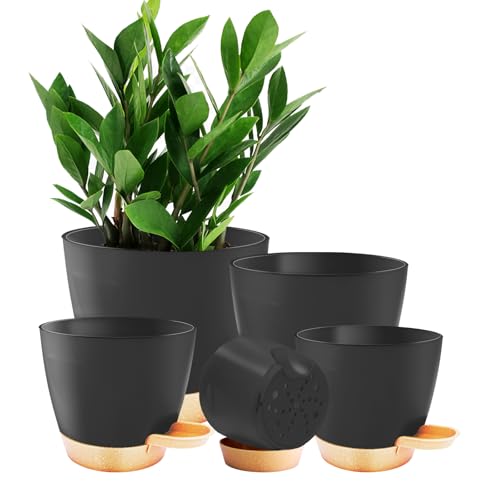
The Carsapro five-pack includes pots in approximately 5-, 5.5-, 6-, 6.5-, and 7-inch sizes. This steady size progression is useful when you have plants at different stages of growth. It can also help when you want matching pots without buying one large container at a time. The design is compact enough for windowsills, bookcases, counters, and work areas.
These planters are a good middle ground between tiny propagation pots and large floor planters. The self-watering feature can help maintain more even moisture, especially when you use a well-draining indoor mix. Still, let the soil and plant guide your schedule; cacti and succulents need much less water than ferns or peace lilies. I see this as one of the best self watering planters for indoor plants for new plant owners who want a coordinated set at a practical size.
Pros:
- Five graduated sizes make plant matching simple
- Compact form suits shelves and windowsills
- Helpful starter set for new indoor gardeners
- Consistent design creates a neat visual display
- Useful for herbs, foliage plants, and young houseplants
- Less bulky than large self-watering containers
Cons:
- Sizes may be too small for mature floor plants
- Reservoir capacity is limited compared with large pots
- Plants that need fast drying soil require careful monitoring
Fielda Self-Watering Pots: Best for Larger Plants

Fielda provides 8-, 10-, and 12-inch options for plants that need more room at the root zone. These sizes can suit larger pothos, peace lilies, monsteras, dracaenas, and other leafy plants when their current pot feels cramped. A larger reservoir can be useful for busy households, offices, or people who travel for a few days. The pots are also marked for indoor and outdoor use, although outdoor placement requires attention to rain and drainage.
Large self-watering containers need a careful setup. Use a suitable potting mix, keep the water path clear, and do not fill the reservoir constantly if the plant prefers dry soil between drinks. I would also lift the planter before filling it, since a 12-inch pot can become difficult to move once loaded. Fielda belongs on a shortlist of the best self watering planters for indoor plants when your main need is capacity rather than a large collection of small pots.
Pros:
- Large sizes support bigger indoor plants
- Useful reservoir capacity for busy plant owners
- Can work indoors and outdoors with proper placement
- Good option for plants that outgrow small containers
- Three sizes make it easier to plan future repotting
- Reduces the need for frequent small waterings
Cons:
- Filled 12-inch pots can be hard to move
- Large size needs more soil and floor space
- Not ideal for tiny plants, cacti, or narrow shelves
Utopia Home Self-Watering Pots: Best Large Set

Utopia Home includes 10 self-watering pots in sizes from about 4.9 to 6.8 inches. That makes this set a strong choice for plant parents who want many matching containers at once. The olive green color adds more warmth than plain black or white, so it can make a group of small plants feel like part of the room. The set is especially useful for herbs, starter plants, succulents, desk plants, and small foliage varieties.
Each planter combines drainage with a lower reservoir, which gives you two important parts of indoor plant care in one design. The smaller capacity means you should watch the water level more often, but it also helps prevent a small plant from sitting in a large mass of wet soil. I like the set for plant swaps, gifts, propagation projects, and shelf displays. If you need many coordinated pots, Utopia Home is one of the best self watering planters for indoor plants for overall quantity and display value.
Pros:
- Ten pots offer excellent quantity for a growing collection
- Multiple sizes fit many small houseplants
- Olive green color adds a soft decorative touch
- Drainage and reservoir design support better moisture control
- Good for desks, shelves, kitchens, and window areas
- Useful for gifting or starting several plants at once
Cons:
- Sizes are not suited to large mature plants
- Small reservoirs may dry faster in warm rooms
- Ten pots may be more than a single-plant buyer needs
Self-Watering Pots 8 to 5 Inches: Best Mixed Sizes

This mixed-size set includes pots around 5, 6, 6.5, 7, and 8 inches. It gives you a smooth step-up range for plants that are growing but not yet ready for a large floor planter. The plastic build keeps the pots easier to lift than thick ceramic containers. That matters when you rotate plants toward the light or move them for cleaning.
The self-watering layout can help create a buffer between the last watering and the next one. However, the soil should not stay wet just because a reservoir still has water. I suggest checking the top layer of soil, reading the plant’s care needs, and emptying excess water when required. This set is among the best self watering planters for indoor plants for people who want flexible sizes and easy handling at a reasonable scale.
Pros:
- Five sizes cover common indoor plant stages
- Light plastic is easy to lift and move
- Useful for apartments and small rooms
- Supports a wide range of foliage plants
- Size progression helps with gradual repotting
- Suitable for indoor or protected outdoor use
Cons:
- Plastic may not have the weight of ceramic pots
- Water needs still vary by plant and room conditions
- Some buyers may prefer included saucers or indicators
QRRICA Self-Watering Pots: Best Size Range

QRRICA offers several sizes from roughly 7 to 10 inches. This range focuses on medium plants and gives you more room than a typical small starter set. It may suit people who have moved past tiny desk plants and now care for larger foliage plants. The stepped sizes also make it easier to keep a consistent look across a living room, entryway, or office.
The larger footprint can offer better stability for plants with tall leaves or trailing growth. As with any self-watering planter, good results depend on the root zone, potting mix, and watering habits. Keep the pot away from a cold draft, choose a spot with suitable light, and check for blocked drainage paths. QRRICA is one of the best self watering planters for indoor plants if you want medium-to-large pots with a broad size choice.
Pros:
- Broad size range suits medium indoor plants
- Larger pots give growing roots more room
- Stable choice for taller or fuller plants
- Useful for matching several rooms or plant displays
- Can reduce daily watering work for busy owners
- Suitable for indoor and protected outdoor spaces
Cons:
- Not a good match for tiny seedlings
- Large sizes use more soil and need more room
- Water-sensitive plants still need careful monitoring
My Recommendation
For large plants, I would start with KUGAZ or Fielda. KUGAZ stands out because its water level indicator makes the reservoir easier to read, while Fielda gives you a simple 8-, 10-, and 12-inch path for plants that need more space. Both are better suited to floor plants and larger foliage than the smaller multipacks.
For a mixed collection, YNNICO offers the most useful spread of small and medium sizes. Carsapro is a nice middle choice for beginners who want five matching pots without taking over a room. Utopia Home gives the strongest quantity value for small plants, herbs, and gifts. The 5- to 8-inch mixed set is easy to lift, and QRRICA is a practical pick for medium plants that need a wider, more stable container.
Remember that a self-watering planter is a helper, not a cure for poor plant care. I still check the soil, inspect the roots during repotting, and adjust the watering plan for light, temperature, season, and plant type. Extension horticulture guidance commonly stresses that roots need both moisture and air, while excess water can cause root problems. A reservoir works best when it supports that balance rather than keeping the soil soaked.
| Best for | Why |
|---|---|
| Large floor plants | KUGAZ and Fielda offer larger sizes and more reservoir capacity. |
| Small plant collections | Utopia Home and YNNICO provide many compact pots in one set. |
| New plant owners | Carsapro and the mixed 5- to 8-inch set offer simple size choices and easy handling. |
How Self-Watering Planters Work
A self-watering planter normally has two zones. The upper zone holds the plant and potting mix. The lower zone stores water. A wick, insert, perforated divider, or similar channel lets the soil draw up some moisture from below.
This process is often called capillary action. It does not force unlimited water into the roots. Instead, the soil can take up moisture as it dries. The exact result depends on the wick, soil texture, plant size, room humidity, and how much water sits in the reservoir.
That is why the best self watering planters for indoor plants still need a smart setup. A dense garden soil can stay too wet and block air. A very dry, coarse mix may not move water upward well. I prefer a fresh indoor potting mix adjusted for the plant, with extra drainage material only when the plant calls for it.
What to Look for Before Buying
Choose the right pot size
Pot size is one of the most important details. A pot that is too small may dry out quickly and restrict roots. A pot that is too large can hold more wet soil than the plant can use. That creates a slow-drying root zone and may invite root rot.
Look for a container that gives the current root ball a little room to grow. Do not jump from a tiny nursery pot to a huge 12-inch container unless the plant has a strong root system and the soil mix drains well. The best self watering planters for indoor plants should match the plant, not just the room.
Check the reservoir design
A clear water indicator is helpful because it removes some guesswork. If the pot has no indicator, you can often check the reservoir through an opening or by lifting the inner pot. Read the product instructions before planting because designs vary.
A deep reservoir is not always better. Plants such as peace lilies and some tropical foliage may enjoy steady moisture. Cacti, many succulents, and plants with thick roots often need the reservoir to dry between waterings. Match the water system to the plant’s natural needs.
Do not ignore drainage
Self-watering does not mean water should sit around the roots at all times. Drainage holes help excess water move away from the root zone. A saucer or outer basin can protect furniture, but it should not remain full for long periods unless the design specifically calls for it.
Before buying, check where the holes sit and how the inner pot connects to the reservoir. Some planters work best with direct planting. Others are easier to use with a nursery pot. A good fit prevents wobbling and keeps the wick or water channel in place.
Think about the material
Plastic planters are light, affordable, and easy to move. They also do not wick water away through the sides as unglazed clay can. That can make plastic useful for plants that need steady moisture, though the soil may dry more slowly.
Ceramic pots look more decorative and feel stable, but they can be heavy and may cost more. For a tall plant, weight can be an advantage. For a hanging shelf or a plant that you move often, a lighter planter may be safer and more convenient.
Measure your space
Measure both the shelf and the plant. Check the pot’s width, height, and saucer footprint. Leave enough space for leaves to spread and for you to reach the reservoir. A planter can be a great buy and still fail if it blocks a window or tips on a narrow ledge.
How I Would Use a Self-Watering Planter
First, I check the plant’s roots. Healthy roots are usually firm and light in color, though color varies by species. I remove loose old soil, trim only damaged roots, and place the plant at the same depth it had before. Planting too deep can cover the stem and cause trouble.
Next, I use a suitable indoor mix. I avoid packing the soil down hard because roots need small air spaces. I also make sure the wick or lower water path stays in contact with the mix if the planter uses one. A poor connection can make a good reservoir seem broken.
After planting, I water from the top once. This settles the mix and helps moisten the full root ball. I then let excess water drain and wait before filling the reservoir. This first top watering matters because very dry soil may not pull water upward right away.
For the next few weeks, I watch the plant rather than follow a fixed calendar. I check the soil, leaves, pot weight, and water level. Once I learn how quickly the plant uses water, the planter becomes much easier to manage.
Common Mistakes to Avoid
Keeping the reservoir full all the time
Many people see an empty reservoir and refill it at once. That can be a mistake. If the soil still feels wet, the plant may need more air before it receives more water. Let the reservoir and root zone follow the needs of the plant.
Using heavy soil
Heavy soil can remain wet for too long in a self-watering pot. Choose a mix made for indoor plants, then adjust it for the species. A chunky mix may suit an aroid, while a cactus mix may work better for succulents.
Ignoring light
A planter cannot fix poor light. A plant in a dark corner uses water slowly, so the soil may stay wet. A plant in bright sun may use water fast. Place each plant where its light needs are met, then adjust watering as the seasons change.
Forgetting to clean the pot
Mineral residue, algae, old roots, and soil can block small water channels. Empty and rinse the reservoir during repotting. Clean the pot with mild soap and water, then rinse it well before reuse.
Assuming every plant likes self-watering
Many tropical plants respond well to steady moisture, but not all houseplants do. Succulents, some hoyas, and plants that need a dry rest may need a different method. When in doubt, use a smaller reservoir, a fast-draining mix, and longer dry periods.
Best Plants for Self-Watering Planters
Spider plants are often forgiving and can work well in a planter with a moderate reservoir. Pothos also adapts to many indoor settings and can show signs of thirst when its leaves begin to droop. Peace lilies appreciate even moisture but should not sit in stagnant water.
Ferns may benefit from consistent moisture and higher humidity, although they still need air around the roots. Fittonia, some calatheas, and many tropical foliage plants can also appreciate a stable water supply. Keep the plant in suitable light and avoid placing it near a heater or cold air vent.
Succulents need more care. They store water in their leaves and can suffer when the soil stays damp. If you use one of the best self watering planters for indoor plants with a succulent, use a gritty mix and allow the reservoir to dry fully between waterings. The same rule applies to many cacti.
Are Self-Watering Planters Good for Beginners?
Yes, they can make plant care easier for beginners. The reservoir gives you a buffer when you forget a watering day. Size options and water indicators can also reduce guesswork. Still, beginners need to learn the difference between a thirsty plant and a plant with roots that are too wet.
I suggest starting with pothos, spider plants, or other forgiving foliage plants. Avoid using a large planter for a tiny plant. Keep a simple note on watering dates for the first month. That small habit teaches you how the planter behaves in your home.
Self-Watering Planter Care Tips
- Check soil moisture before adding water.
- Keep drainage holes and wicks free of soil.
- Clean the reservoir during repotting.
- Use a potting mix suited to the plant.
- Turn the plant for even growth if its light comes from one side.
- Watch for yellow leaves, soft stems, or a sour smell.
- Let plants with dry-soil needs dry more fully.
- Reduce watering during low-light winter periods when needed.
- Empty unwanted runoff from saucers.
- Keep tall plants stable and away from busy walkways.
FAQs Of best self watering planters for indoor plants
Do self-watering planters prevent overwatering?
No. They can help control moisture, but they cannot prevent overwatering by themselves. The wrong soil, poor light, or a constantly full reservoir can still keep roots too wet.
How often should I fill a self-watering planter?
It depends on the plant, room, season, and reservoir size. Check the soil and water indicator first. Refill only when the plant needs more moisture and the root zone has had enough air.
Can I use a nursery pot inside a self-watering planter?
Sometimes. The inner pot must fit securely and allow the wick or water channel to work. If it blocks drainage or leaves a large air gap, direct planting may work better.
Are self-watering pots safe for succulents?
They can be, but use caution. Choose a fast-draining mix and let the reservoir dry between waterings. Succulents usually need less frequent moisture than tropical foliage plants.
Which size is best for a houseplant?
Choose a pot only a little larger than the root ball. A small plant in a very large pot may stay wet for too long. Measure the plant’s current container and compare it with the listed inside dimensions.
Final Verdict: Which Should You Buy?
For large plants, I would choose the KUGAZ set because its size range and water indicator make care simple. For many small plants, Utopia Home offers strong value. YNNICO is the most flexible mixed set for a growing collection.
The best self watering planters for indoor plants make watering calmer, not automatic. Match the pot to the plant, use airy soil, and check moisture often for healthier growth.
