You can sharpen lawn mower blades at home by removing the blade, cleaning it, grinding the cutting edge at the original angle, balancing the blade, and reinstalling it correctly.
Across the United States, homeowners rely on lawn mowers to maintain everything from small suburban lawns to large backyard landscapes. A dull mower blade can leave grass torn, uneven, and more vulnerable to stress, but sharpening the blade at home is a practical maintenance task when performed safely and correctly.
Sharpening a mower blade does not require replacing the blade every season. With basic tools such as a file, bench grinder, or angle grinder, many homeowners can restore the cutting edge. The key is removing only enough metal to create a sharp edge while preserving the blade shape, balance, and original cutting angle.
A lawn mower blade becomes dull from normal use as it contacts grass, soil, small rocks, and other yard debris. A dull edge forces the mower to work harder and often produces uneven cuts instead of a clean slice.
A properly sharpened blade helps the mower cut efficiently and can improve the appearance of a lawn. However, sharpening cannot fix a blade with serious structural damage, deep cracks, or excessive wear.
Source: lawnandmowers.com
Cleaner grass cuts
A sharp edge cuts grass more cleanly, while a dull edge often tears the tips and leaves a ragged appearance.
Better mower performance
A balanced, sharp blade can reduce unnecessary strain on the mower engine and cutting system.
Longer blade usefulness
Regular sharpening can extend the service life of a mower blade when the metal remains in good condition.
Tools and Safety Equipment You Need Before Sharpening
Before starting, gather the correct tools and prepare a safe workspace. The exact equipment depends on your sharpening method, but every approach requires a way to secure the blade and protect yourself from sharp edges and metal particles.
Work on a stable surface with good lighting. Wear protective equipment whenever grinding or filing metal.
Source: The Family Handyman
Basic tools
Common options include a socket wrench for blade removal, a wire brush for cleaning, a metal file, angle grinder, or bench grinder for sharpening.
Safety equipment
Use safety glasses, gloves, and hearing protection when operating powered grinding tools.
Blade support tools
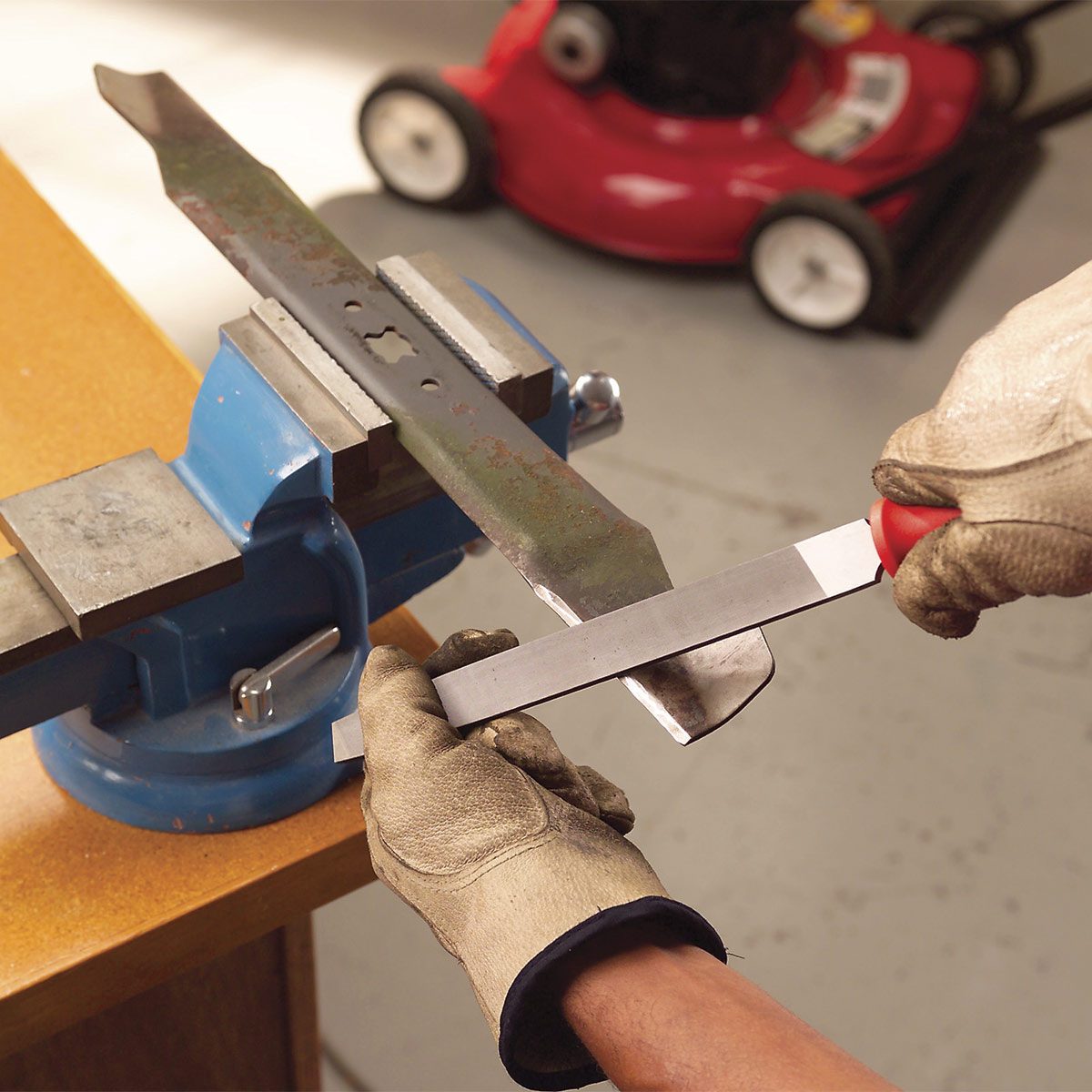
A vise or clamp helps hold the blade securely while sharpening.
How to Sharpen Lawn Mower Blades at Home Step by Step
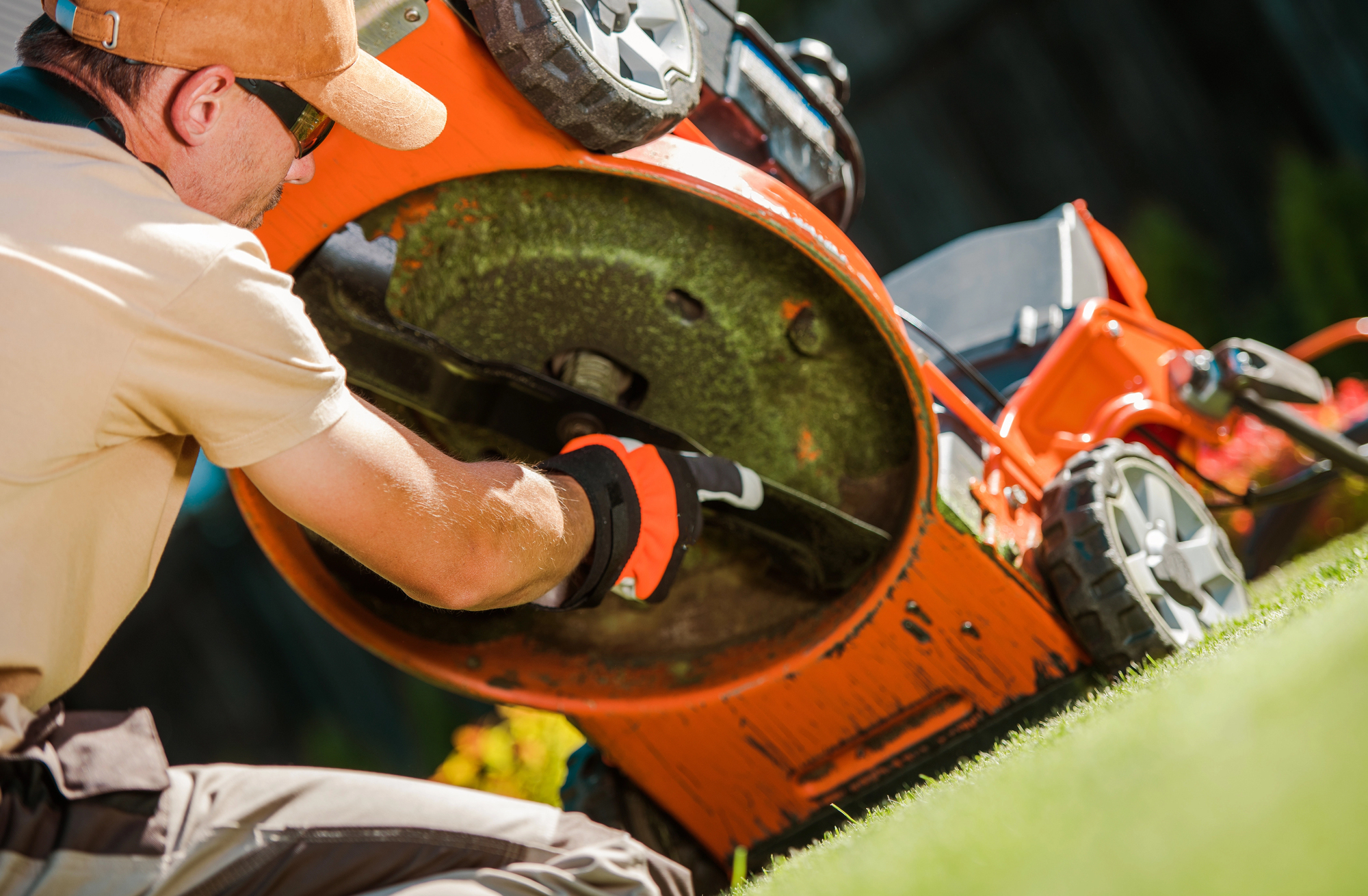
The safest and most reliable method is to remove the blade before sharpening. This gives you better control over the cutting edge and allows you to inspect the blade for damage.
Follow the mower manufacturer’s instructions when available because blade removal procedures vary between push mowers, riding mowers, and zero-turn models.
Remove grass buildup and check for cracks, bends, missing sections, or excessive thinning.
Step 3: Secure the blade
Place the blade firmly in a vise with the cutting edge accessible.
Step 4: Sharpen the cutting edge
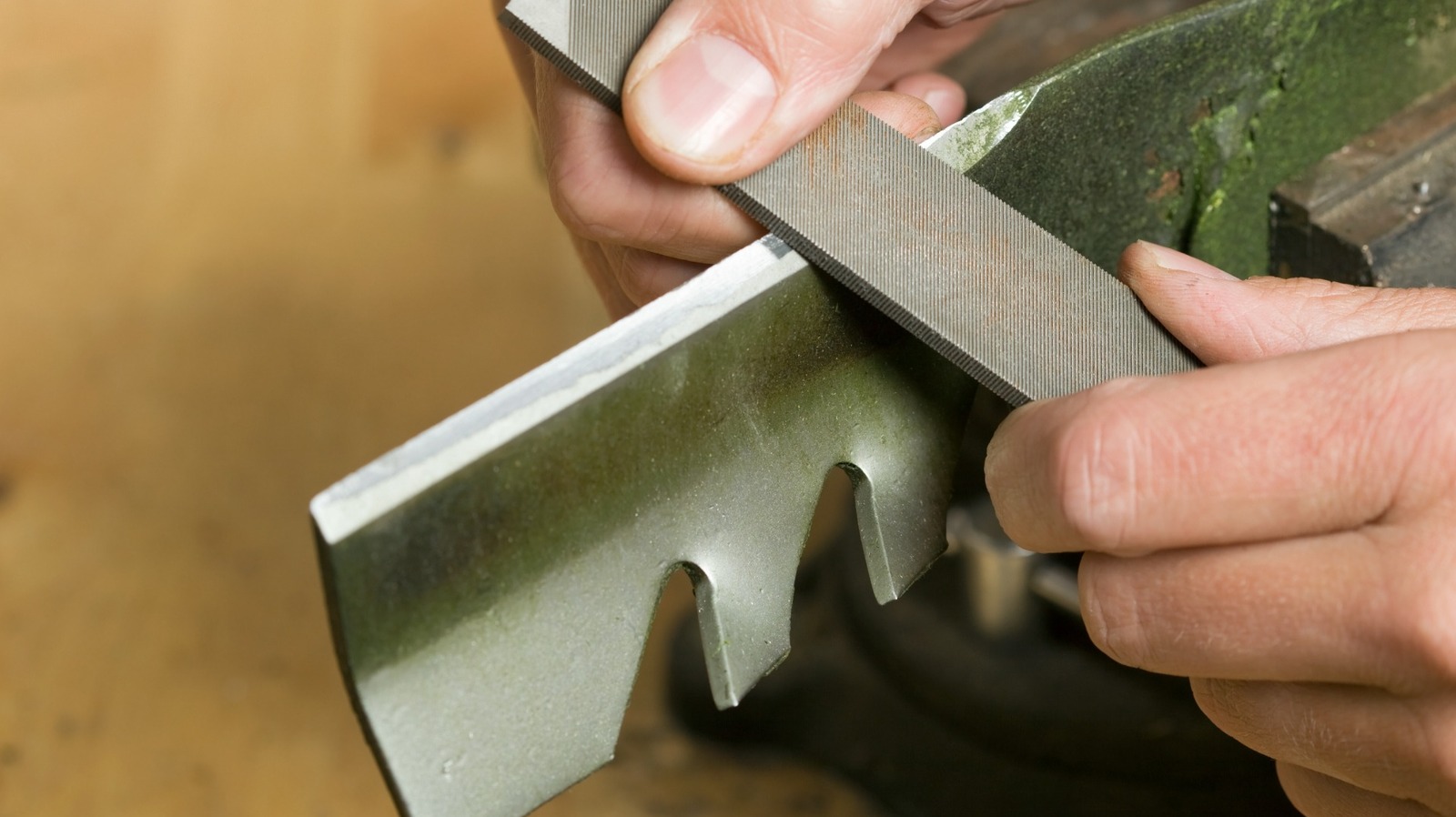
Follow the existing bevel angle and move the sharpening tool across the edge in smooth strokes. Avoid grinding away too much material.
Step 5: Balance the blade
Check balance by placing the blade on a nail or blade balancer. Remove small amounts of metal from the heavier side if necessary.
Step 6: Reinstall the blade
Install the blade in the correct orientation and tighten the bolt according to the mower manufacturer’s specifications.
How to Know When the Blade Is Sharp Enough
A mower blade does not need to be razor sharp. The goal is a clean, durable edge that can cut grass repeatedly without becoming damaged quickly.
Signs of proper sharpening
The cutting edge should appear smooth, consistent, and free of large nicks while maintaining the original blade profile.
Choosing the Best Sharpening Method for Your Mower Blade
Different sharpening tools provide different levels of speed and control. The best method depends on your available equipment, blade condition, and experience level.
Source: www.youtube.com > Jeff Seeton Lawn Care
Metal file
A file is inexpensive and provides good control, making it suitable for light sharpening and beginners.
Angle grinder
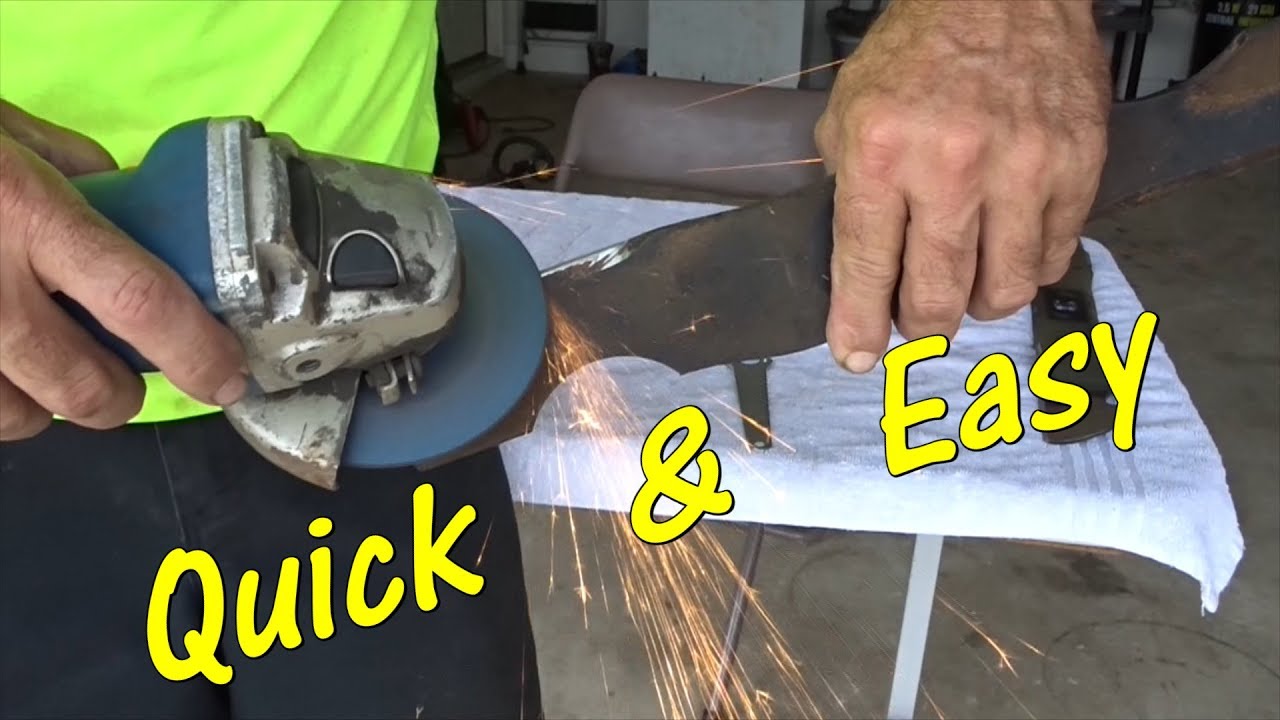
An angle grinder removes material quickly and works well for damaged edges, but it requires careful control to avoid overheating or changing the blade angle.
Bench grinder
A bench grinder offers speed and stability but requires attention to avoid removing too much metal.
Common Lawn Mower Blade Sharpening Mistakes to Avoid
Many sharpening problems happen because homeowners focus only on making the blade sharp and overlook blade balance, safety, or correct installation.
Source: www.youtube.com > Home Built Workshop (Jeff Baker)
Removing too much metal
Excessive grinding can weaken the blade and change its original shape.
Ignoring blade balance
An unbalanced blade can create vibration, uneven cutting, and unnecessary wear on mower parts.
Installing the blade upside down
A reversed blade will not cut correctly and may affect mower performance.
Sharpening a damaged blade
Bent, cracked, or severely worn blades should usually be replaced rather than repaired.
Frequently Asked Questions
Q
How often should I sharpen my lawn mower blade?
Many homeowners sharpen mower blades about once or twice per mowing season, but the timing depends on mowing frequency, lawn conditions, and contact with debris.
Q
Can I sharpen a lawn mower blade without removing it?
Some people sharpen blades while they remain attached, but removing the blade generally provides better access, safer handling, and a better opportunity to check balance and damage.
Q
What angle should I sharpen a lawn mower blade?
The safest approach is to match the existing factory bevel angle instead of creating a new angle. The exact angle varies by blade design.
Q
How do I know if my mower blade needs replacement instead of sharpening?
Replace the blade if it has cracks, major bends, missing pieces, deep corrosion, or has become too thin from repeated sharpening.
Q
Why does my mower vibrate after sharpening the blade?
Vibration often indicates an unbalanced blade, incorrect installation, or a damaged blade. Check blade balance and installation before using the mower again.
✦ Wrapping Up
Conclusion
Learning how to sharpen lawn mower blades at home can save maintenance costs and help keep your lawn looking healthier. The process is straightforward when you use the correct tools, maintain the original blade angle, and check the blade balance before reinstalling it.
Safe sharpening is about more than creating a sharp edge. A properly maintained blade should also be structurally sound, correctly installed, and suitable for continued use.
💡 Key Takeaway
Inspect your mower blade before every sharpening session, remove only the necessary amount of metal, balance the blade afterward, and replace it when damage makes sharpening unsafe.
Nothing ruins a weekend lawn care plan faster than a Toro lawn mower that refuses to start because the pull string snapped or jammed. One small rope, and your reliable mower becomes a heavy garden ornament. If you’ve ever yanked the handle only to feel it give way or fail to retract, you know the…
There comes a time in every homeowner’s life when their trusty lawn mower starts sputtering, coughing, or refusing to start altogether. It’s a familiar story—one moment you’re mowing the backyard under the summer sun, and the next, the engine gives out mid-cut, leaving you staring at a half-finished lawn. Buying a brand-new mower might seem…
When your Craftsman lawn mower starts sputtering, losing power, or guzzling fuel faster than usual, the culprit is often something small but mighty—your air filter. The air filter is like the lungs of your mower. When it’s clean, your engine breathes easy. When it’s clogged, your engine struggles to perform. Many people overlook this simple…
When your lawn mower is not turning over, it can quickly turn a peaceful weekend plan into frustration. You head out to mow the yard, turn the key or pull the cord, and… nothing. No crank, no sound, sometimes just a faint click. This is one of the most common problems homeowners face during mowing…
Maintaining a well-manicured lawn depends heavily on the condition of your mower blades. For Craftsman lawn mowers, choosing the right replacement blades ensures not only a cleaner cut but also the longevity of your machine. Dull or damaged blades tear grass instead of slicing it cleanly, leading to uneven lawns and stressed turf. Whether you…