Most gas-powered lawn mowers in the United States take fresh unleaded gasoline with an octane rating of 87 or higher and no more than 10% ethanol (E10). Always check your mower manufacturer’s manual because fuel requirements can vary by engine model.
For homeowners across the United States, choosing the correct gasoline for a lawn mower helps protect the small engine, improve starting performance, and prevent fuel-related problems during mowing season. Most walk-behind mowers, riding mowers, and zero-turn mowers with gasoline engines are designed to run on regular unleaded fuel commonly sold at U.S. gas stations.
The best fuel choice is usually fresh 87-octane unleaded gasoline with limited ethanol content. Using the wrong fuel, old gasoline, or gasoline with excessive ethanol can contribute to issues such as hard starting, clogged carburetors, poor engine performance, and fuel system damage.
Most residential gas-powered lawn mowers take regular unleaded gasoline. In the United States, the most common recommendation for small gasoline engines is fresh fuel with an octane rating of 87 or higher and ethanol content of 10% or less.
Gasoline engines in lawn mowers are different from diesel engines and electric motors. They require gasoline that can properly ignite inside the combustion chamber without causing unnecessary deposits or fuel system problems.
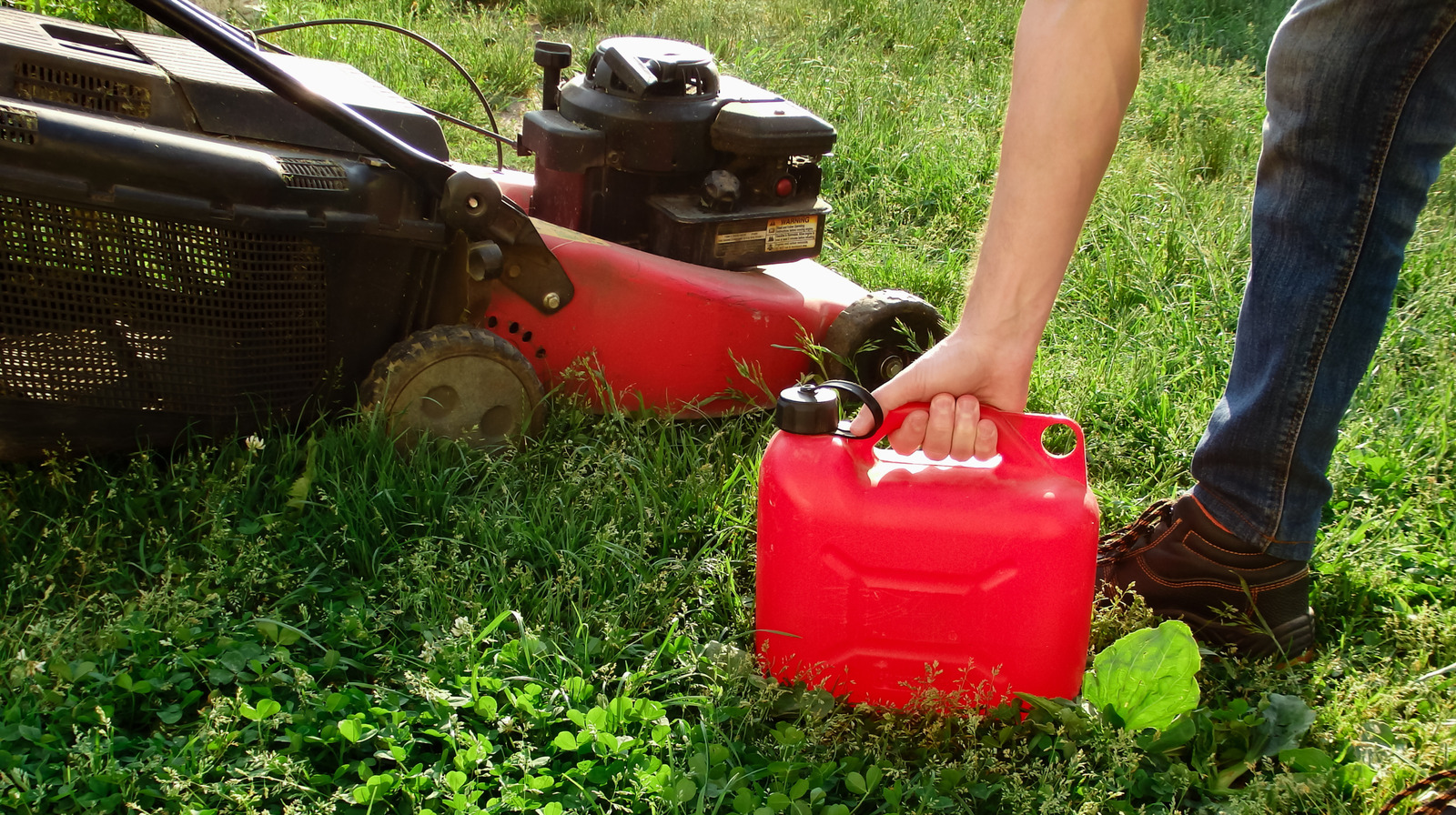
Source: cuttingresource.com
Recommended fuel
Fresh unleaded gasoline with 87 octane is suitable for many standard lawn mower engines.
Common ethanol limit
Many mower manufacturers allow E10 gasoline, which contains up to 10% ethanol.
Avoid improper fuel
Do not use diesel fuel, gasoline mixed with oil unless required by a two-stroke engine, or fuel blends not approved by the manufacturer.
Why Does Octane Rating Matter?
Octane measures gasoline’s resistance to premature combustion, also known as knocking. Most lawn mower engines are designed with compression levels that do not require premium gasoline, so higher octane fuel usually does not provide extra benefits unless the manufacturer recommends it.
Regular gasoline
Usually provides the performance needed for typical residential mower engines.
Premium gasoline
May be unnecessary for many lawn mowers unless specifically required by the engine manufacturer.
Can You Use Regular Gas in a Lawn Mower?
Yes, regular unleaded gasoline is the fuel used by many lawn mowers. Most homeowners do not need premium gasoline for normal mowing tasks because mower engines are typically designed to operate on standard unleaded fuel.
The important factors are fuel quality, freshness, and compatibility with the engine. A lower-quality or old fuel supply can create more problems than the octane rating itself.
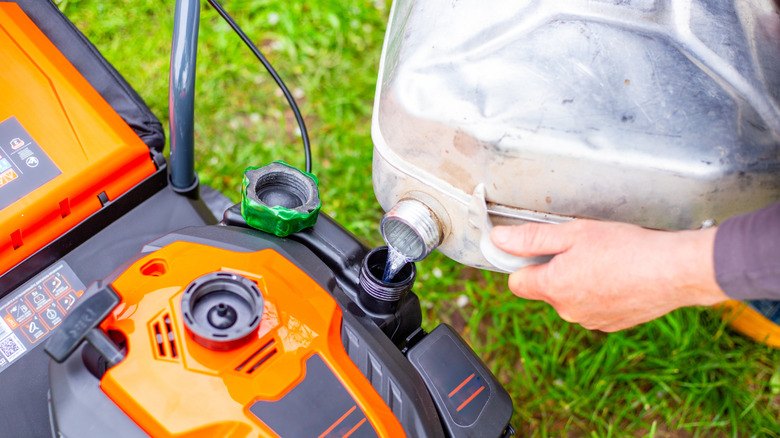
Source: housedigest.com
Use fresh gasoline
Fresh fuel helps the engine start more easily and reduces the chance of deposits forming in the fuel system.
Check the manual
Some specialty engines may have specific requirements that differ from common recommendations.
Is Premium Gas Better for a Lawn Mower?
Premium gasoline is not automatically better for a lawn mower. Higher octane fuel is designed for engines that require greater resistance to knocking, and many mower engines are not built to gain additional performance from premium fuel.
Use premium only when required
Follow the engine manufacturer’s recommendation instead of choosing premium fuel by default.
Ethanol can be a concern for small engines when fuel is stored for long periods. Many lawn mower engines can operate on E10 gasoline, but gasoline with higher ethanol percentages may increase the risk of fuel system issues.
Ethanol attracts moisture, and stored fuel containing ethanol can contribute to corrosion or fuel degradation in some small engine components.
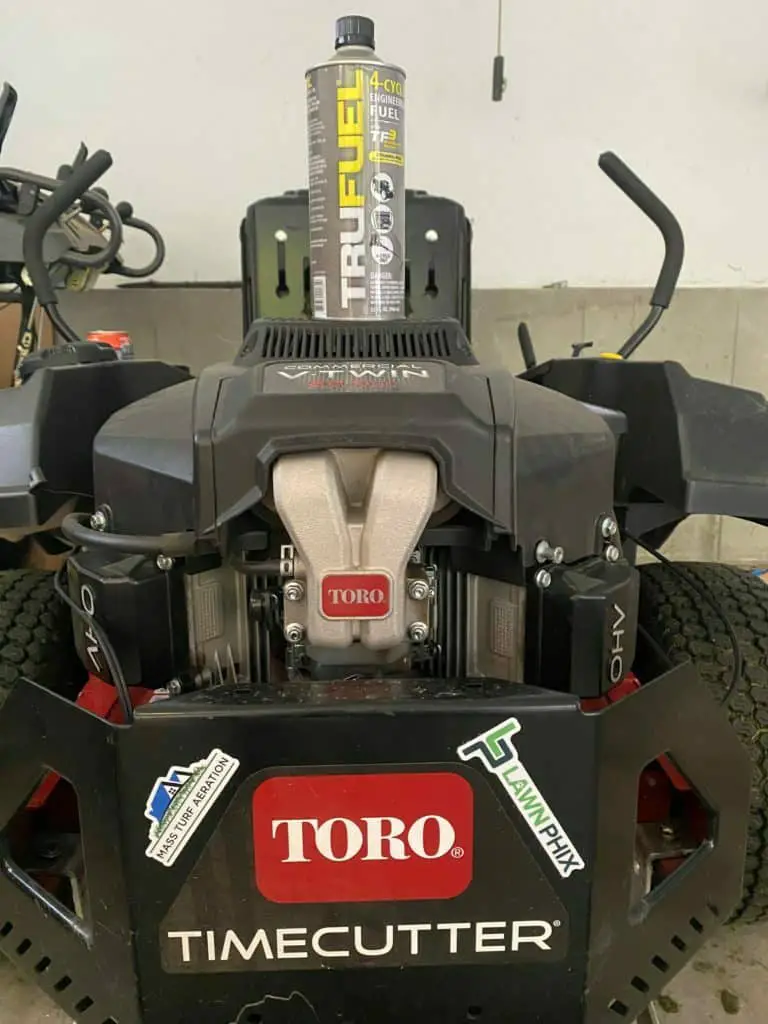
Source: lawnphix.com
E10 gasoline
Gasoline containing up to 10% ethanol is commonly available and approved for many mower engines.
Higher ethanol blends
Fuel such as E15 or higher blends should only be used if specifically approved by the mower manufacturer.
Storage matters
Fuel left sitting for months can degrade and cause engine starting problems.
Should You Use Ethanol-Free Gas in a Lawn Mower?
Ethanol-free gasoline can be useful for equipment that is stored for extended periods because it may reduce some ethanol-related storage concerns. However, it is not required for every lawn mower and availability varies by location.
Good option for seasonal equipment
Some homeowners prefer ethanol-free fuel for mowers stored during winter or long periods of inactivity.
How to Choose the Right Gas for Your Lawn Mower
Choosing lawn mower fuel is a simple process when you know the engine requirements. Start by checking the owner’s manual, then select gasoline that matches the recommended octane and ethanol limits.
For most homeowners, buying fresh regular unleaded gasoline from a reliable fuel station and storing it correctly is enough for dependable mowing performance.
Source: crabgrasslawn.com
Step 1: Read the fuel recommendation
Find the manufacturer’s fuel instructions in the owner’s manual or on the engine label.
Step 2: Buy the correct gasoline
Choose fresh unleaded gasoline that meets the engine’s octane and ethanol requirements.
Step 3: Store fuel properly
Keep gasoline in an approved fuel container away from heat and ignition sources.
Fuel problems often appear as engine performance issues rather than obvious fuel problems. Checking the gasoline quality is one of the first troubleshooting steps when a mower does not start correctly.
Hard starting
Old or degraded fuel can make the engine difficult to start.
Rough running
Poor fuel quality can contribute to uneven engine operation.
Loss of power
Fuel system restrictions may reduce mowing performance.
Common Lawn Mower Fuel Mistakes to Avoid
Many lawn mower fuel problems happen because of simple mistakes during filling, storage, or seasonal maintenance. Avoiding these errors can help keep the engine running reliably.
Source: hunker.com
Using old gasoline
Gasoline that has been stored too long may lose quality and create starting issues.
Using the wrong fuel type
Diesel fuel or incorrect fuel mixtures can damage a gasoline lawn mower engine.
Overfilling the tank
Leave room for fuel expansion and follow the mower manufacturer’s filling instructions.
Ignoring seasonal storage
Prepare the fuel system properly before storing the mower for long periods.
Frequently Asked Questions
Q
What gas should I put in my lawn mower?
Most lawn mowers use fresh unleaded gasoline with an octane rating of 87 or higher and no more than 10% ethanol. Always confirm the exact requirement in your mower manual.
Q
Can I use 93 octane premium gas in my lawn mower?
Premium gasoline may work in many lawn mower engines, but it is usually unnecessary unless the manufacturer specifically recommends it. Higher octane does not automatically improve mower performance.
Q
Can a lawn mower run on E15 gasoline?
Many small engines are not approved for gasoline containing more than 10% ethanol. Check your mower documentation before using E15 or higher ethanol blends.
Q
How long does gasoline last in a lawn mower?
Gasoline quality decreases during storage, especially when exposed to heat and moisture. If fuel has been stored for a long time, replacing it with fresh gasoline may help prevent performance issues.
Q
What should I do if I put the wrong gas in my lawn mower?
Do not continue running the mower if you added the wrong fuel type. Drain the incorrect fuel if needed and follow the manufacturer’s guidance or seek professional repair assistance.
✦ Wrapping Up
Conclusion
Most gas-powered lawn mowers in the United States take regular unleaded gasoline with 87 octane and up to 10% ethanol. The best results come from using fresh fuel, following the manufacturer’s instructions, and storing gasoline properly.
Fuel choice is only one part of lawn mower maintenance, but using the correct gasoline helps reduce common starting problems and supports long-term engine performance.
💡 Key Takeaway
Check your mower manual, choose fresh approved gasoline, and avoid unapproved ethanol blends or old fuel to keep your lawn mower running properly.
When your Ryobi electric riding lawn mower battery begins to fade, it’s more than just an inconvenience—it’s a test of patience. Picture this: you’re halfway through mowing your backyard, the sun’s shining, and suddenly, the mower slows down and stops. No warning, no mercy—just a dead battery and half a lawn left untouched. If this…
Maintaining a lawn mower isn’t just about sharpening blades and changing oil. One often overlooked but critical component is the gas line. Over time, standard rubber hoses can crack, harden, or leak, especially due to modern gasoline blends containing ethanol. A compromised gas line can cause sputtering, fuel leaks, or even a mower that refuses…
Finding the right Replacement Battery Toro Lawn Mower option can feel confusing, especially when your mower refuses to start on a busy weekend. I know the feeling well because many homeowners only think about their battery when it fails at the worst moment. The good news is that you can avoid these annoyances by understanding…
Learn how water gets into a lawn mower gas tank, the symptoms of contaminated fuel, and the correct steps to drain water from gasoline and get your mower running safely again.
A broken or frayed lawn mower pull cord can turn what should be a relaxing Saturday chore into an instant frustration. You walk out with your coffee, ready to tidy the lawn, give the cord a pull—and nothing. The handle flies off, the rope snaps, or the recoil spring fails to retract. Suddenly, mowing becomes…
Can you use old gas in a lawn mower? Learn how gasoline age affects mower performance, when old fuel is still usable, how to fix bad gas problems, and when to replace it.