To put gas in a lawn mower, turn off the engine, let it cool, place the mower on a level surface, remove the fuel cap, add the correct gasoline slowly without overfilling, and securely replace the cap before starting the mower.
Across the United States, millions of homeowners rely on gasoline-powered lawn mowers to maintain yards during the growing season. Refueling a mower is a simple maintenance task, but using the wrong fuel, spilling gasoline, or filling the tank incorrectly can create safety risks and cause engine problems.
The correct way to add gas to a lawn mower depends on the mower type and manufacturer instructions, but most walk-behind gasoline mowers follow the same basic process. This guide explains how to refill a lawn mower safely, what fuel to choose, how much gas to add, and what to do if the mower does not start afterward.
Before refueling your lawn mower, gather the correct supplies and prepare a safe work area. Refueling should always be done outdoors or in a well-ventilated space away from flames, sparks, cigarettes, and other ignition sources.
Most gasoline-powered lawn mowers use a fuel tank located near the engine with a removable fuel cap. Check your owner’s manual before adding fuel because different mower models may have specific gasoline recommendations or fuel capacity limits.
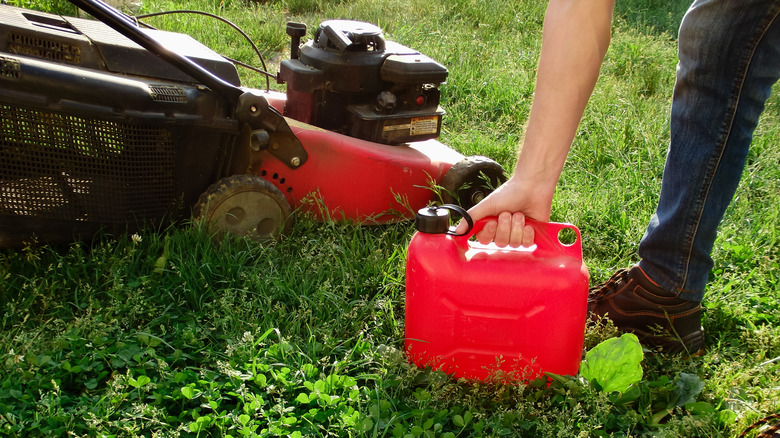
Source: insightweeds.com
Fresh gasoline
Use fresh fuel that meets the mower manufacturer’s recommendations. Many small engines operate on regular unleaded gasoline, but the manual should confirm the correct fuel type.
Approved fuel container
Use a proper gasoline storage container designed for fuel. Avoid using household containers that are not made for gasoline storage.
Clean work area
Keep the mower on a flat surface and wipe away dirt around the fuel cap area before opening the tank.
What Type of Gas Does a Lawn Mower Use?
Most modern gasoline lawn mowers use unleaded gasoline recommended by the engine manufacturer. Many manufacturers allow gasoline with up to 10 percent ethanol, commonly called E10, but fuel requirements vary by engine model.
Avoid guessing when choosing fuel. The owner’s manual provides the most accurate information about acceptable gasoline grades, ethanol limits, and fuel storage recommendations.
Check the manual first
Fuel requirements can differ between mower brands and engine designs.
How to Put Gas in a Lawn Mower Step by Step
Adding gas to a lawn mower takes only a few minutes when done correctly. Follow these steps to reduce the chance of spills, fuel contamination, or engine problems.
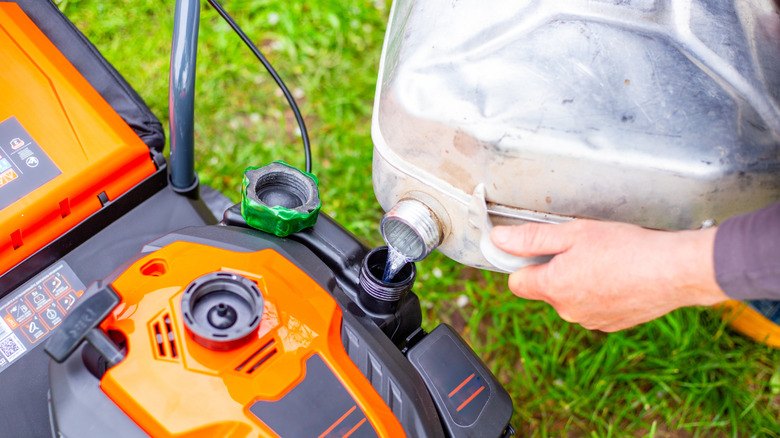
Source: hunker.com
Step 1: Turn off the mower
Stop the engine completely and remove the key if your mower has one. Never add fuel while the engine is running or hot.
Step 2: Move the mower to a safe location
Place the mower on a level surface outdoors. Keep gasoline away from open flames, electrical sparks, and heat sources.
Step 3: Clean around the fuel cap
Remove grass clippings and dirt near the fuel opening so debris does not fall into the tank.
Step 4: Remove the fuel cap
Slowly remove the cap and inspect the opening before adding fuel.
Step 5: Add gasoline slowly
Pour fuel carefully into the tank. Stop before the fuel reaches the top because gasoline expands as temperatures change.
Step 6: Replace the cap securely
Tighten the fuel cap completely and wipe away any spilled gasoline before starting the mower.
The fuel tank is full when gasoline reaches the manufacturer’s recommended fill level. Many mower tanks have space above the fuel line to allow for expansion, so filling completely to the brim is not recommended.
If you are unsure about the fuel capacity, check the owner’s manual rather than estimating.
Avoid overfilling
Overfilled tanks can leak fuel, especially when the mower is stored in warm conditions.
Common Mistakes When Adding Gas to a Lawn Mower
Most lawn mower fuel problems happen because of incorrect fuel handling rather than the refueling process itself. Avoiding a few common mistakes can help protect the engine and improve reliability.
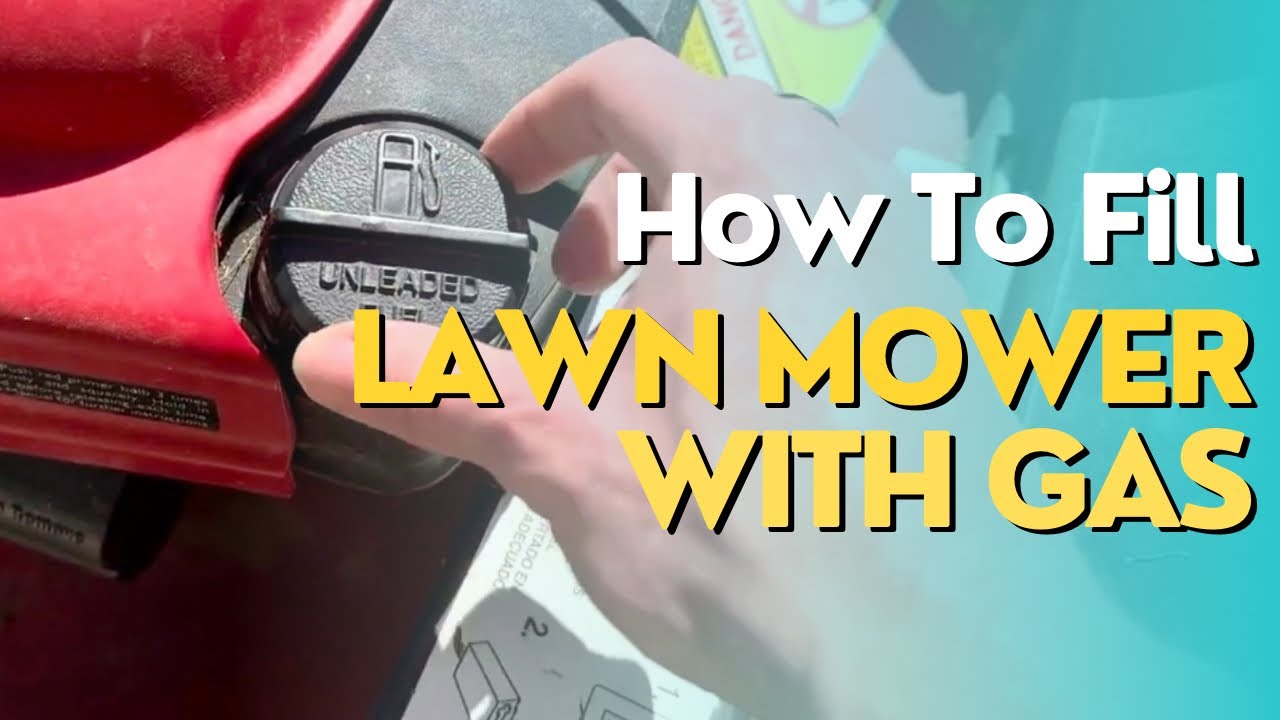
Source: www.youtube.com > Simple Tasks
Using old gasoline
Gasoline that has been stored too long can degrade and may contribute to hard starting, poor performance, or engine issues.
Adding fuel to a hot engine
A hot engine increases the risk of gasoline contacting heated surfaces and creating a dangerous situation.
Using the wrong fuel container
Improper containers may not safely store gasoline or prevent contamination.
Mixing gasoline and oil incorrectly
Some engines require mixed fuel while others require separate gasoline and oil. Confirm your mower type before adding fuel.
What Happens If You Spill Gas on a Lawn Mower?
If gasoline spills while refueling, stop and clean the area before starting the mower. Allow spilled fuel to evaporate and avoid operating the mower until the area is safe.
Do not wipe gasoline spills into soil, drains, or areas where they may create environmental problems. Follow local guidance for gasoline disposal when needed.
Clean immediately
Remove spilled fuel safely before operating the mower.
What to Do If the Lawn Mower Will Not Start After Adding Gas
If the mower does not start after refueling, check the simplest and safest causes first. A no-start problem does not always mean the fuel was added incorrectly.
Confirm that the correct gasoline was added and that it was not accidentally mixed with another liquid.
Check the fuel cap and controls
Make sure the fuel cap is secure and the mower controls are set according to the starting procedure.
Check for stale fuel
Old gasoline can affect starting performance, especially after long storage periods.
Review the owner’s manual
Manufacturer instructions provide model-specific troubleshooting steps.
Signs of a Fuel-Related Lawn Mower Problem
Fuel-related problems may appear as difficulty starting, uneven running, reduced power, or the engine stopping shortly after startup.
If basic checks do not solve the issue, additional engine inspection may be required.
Hard starting
May be related to old fuel, incorrect fuel, or a clogged fuel system.
How to Store Lawn Mower Gas Properly
Proper gasoline storage helps maintain fuel quality and reduces problems when the mowing season begins. Store gasoline in an approved container and follow local fuel storage rules.
For seasonal equipment, many manufacturers recommend following the owner’s manual guidance for fuel storage, including whether to drain fuel or use approved fuel stabilizers.
Source: YouTube
Store fuel safely
Keep gasoline containers in a cool, dry, ventilated area away from ignition sources.
Avoid unnecessary storage
Only keep the amount of fuel needed for your equipment and maintenance schedule.
Frequently Asked Questions
Q
Can you put regular gas in a lawn mower?
Many lawn mowers can use regular unleaded gasoline, but the correct fuel depends on the engine manufacturer’s specifications. Always check the owner’s manual before refueling.
Q
Should I fill my lawn mower gas tank to the top?
No. Avoid filling the tank completely to the brim. Leave room for fuel expansion and follow the manufacturer’s recommended fill level.
Q
Can I add gas while the lawn mower is hot?
No. Turn off the mower and allow the engine to cool before adding gasoline to reduce fire and safety risks.
Q
How often should I refill my lawn mower?
The refill frequency depends on the mower’s fuel tank size, engine size, mowing conditions, and how long the mower runs during each use.
Q
What should I do if I accidentally put the wrong fuel in my lawn mower?
Do not start the mower. Refer to the owner’s manual or contact a qualified small-engine service professional for guidance on removing incorrect fuel safely.
✦ Wrapping Up
Conclusion
Putting gas in a lawn mower is a straightforward maintenance task when you use the correct fuel and follow safe refueling practices. Turning off the engine, adding gasoline carefully, avoiding overfilling, and storing fuel properly can help keep your mower running reliably.
Always use the mower manufacturer’s instructions as the final authority because fuel requirements and maintenance procedures vary between models.
💡 Key Takeaway
Before your next mowing session, check your mower manual, use fresh approved gasoline, and refill the tank safely on a cool engine.
When you’re ready to mow and your riding lawn mower won’t start, it’s more than just a delay—it’s frustrating. You turn the key, hear a click, or maybe nothing at all, and realize the battery isn’t charging. Many homeowners face this issue every mowing season, and while it sounds complicated, it often comes down to…
Nothing ruins a sunny weekend faster than when your lawn mower starts but does not stay running. You pull the cord, the engine fires up, you think it’s ready—then it coughs, sputters, and dies. It’s frustrating, especially when your grass looks like a mini jungle and all you want is a clean, even cut. The…
When your DeWalt electric lawn mower not starting moment strikes, it often happens on the worst possible day—sunny weather, tall grass, and your schedule packed. You press the start button, expecting that familiar hum, but instead, nothing happens. No sound, no movement—just silence. Whether you’re using a DeWalt 20V, 40V cordless, or corded mower, this…
If you have ever pushed your mower out on a warm weekend, only to hear a strange squeal or feel the blades stop spinning, you already know how frustrating a worn belt can be. Many homeowners face the same problem every year. A belt that slips, cracks, or snaps can stop the whole mowing job…
A clean air filter is one of the most essential components for maintaining a healthy Honda lawn mower engine, yet it is one of the most overlooked maintenance tasks by homeowners. Over time, dirt, grass clippings, and dust accumulate inside the air filter, restricting airflow and reducing engine power. If ignored long enough, a dirty…