To start a gas lawn mower, check the fuel and oil, place the mower on a clear surface, engage the safety handle, prime the engine if required, set the choke or throttle, and pull the starter cord until the engine runs.
Across many U.S. homes, gas lawn mowers remain a common tool for maintaining suburban lawns, especially during the spring and summer mowing season. Starting one correctly helps protect the small engine, reduces unnecessary wear, and allows the mower to operate efficiently.
The exact starting process depends on the mower model, engine design, and control layout. Most walk-behind gas lawn mowers use similar steps, but owners should always follow the operating instructions provided by the manufacturer for their specific machine.
Before starting a gas lawn mower, prepare the machine and the mowing area. A quick inspection prevents many common starting problems and reduces safety risks.
Gas lawn mowers typically use a small gasoline-powered engine that requires fuel, engine oil, air flow, ignition from a spark plug, and proper engine controls to start and run.
Source: lawn.com.au
Fresh gasoline
Use the fuel type recommended in the owner’s manual. Avoid using old gasoline that has been stored for long periods because degraded fuel can make starting difficult.
Correct oil level
Check the engine oil before starting. Running a mower with insufficient oil can damage the engine.
Clear mowing area
Remove sticks, rocks, toys, and other objects that could be thrown by the mower blade.
Safety equipment
Wear closed-toe shoes and eye protection when operating a gas lawn mower.
Identify Your Mower Controls
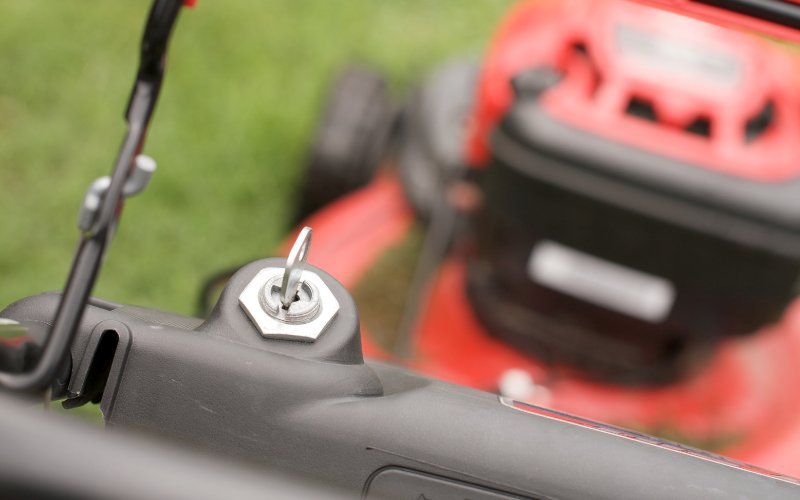
Most walk-behind gas lawn mowers have a safety handle called an operator presence control. This handle usually must be held against the mower handlebar for the engine to run.
Other controls may include a primer bulb, choke lever, throttle control, fuel valve, or electric start button depending on the mower design.
How Do You Start a Gas Lawn Mower Step by Step?
To start a gas lawn mower, follow the correct starting sequence for your mower type. Most pull-start models require only a few steps when the engine is properly maintained.
Source: lawnmowerguru.com
Step 1: Move the mower to a safe position
Place the mower on a flat area of grass or pavement away from obstacles. Make sure the blade area is clear before starting.
Step 2: Check the fuel and oil
Confirm that the fuel tank contains suitable gasoline and that the engine oil is at the recommended level.
Step 3: Press the primer bulb if required
If your mower has a primer bulb, press it several times according to the manufacturer’s instructions to move fuel into the engine.
Step 4: Set the choke or throttle
Cold engines often require a choke setting to provide a richer fuel mixture. Warm engines may not need choking.
Step 5: Hold the safety handle
Pull the operator presence control against the handlebar and keep holding it while starting and operating the mower.
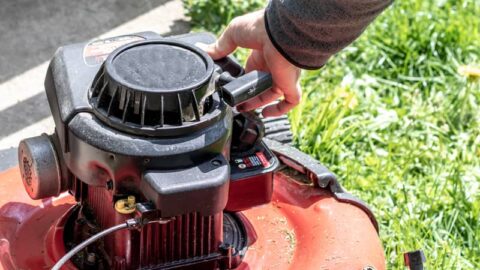
Step 6: Pull the starter cord
Grip the starter handle firmly and pull smoothly. Repeat if necessary until the engine starts.
A properly started gas lawn mower should produce a steady engine sound without excessive shaking, unusual smoke, or repeated stalling. The blade should engage only when the mower’s controls are designed to activate it.
Normal signs
The engine runs consistently, responds to throttle adjustments, and does not stop immediately after starting.
Warning signs
Heavy smoke, fuel leaks, loud knocking sounds, or repeated shutdowns indicate that inspection or repair may be needed.
Why Won’t My Gas Lawn Mower Start?
When a gas lawn mower does not start, check the simplest and safest causes first. Many starting problems come from fuel issues, incorrect controls, or basic maintenance needs.
Source: lawn.com.au
Old or contaminated fuel
Gasoline that has degraded during storage may prevent the engine from starting properly.
A clogged air filter can restrict airflow and affect engine performance.
Spark plug problems
A worn or dirty spark plug may prevent the engine from creating the ignition needed to start.
Incorrect choke position
Using the choke incorrectly on a warm or cold engine can make starting more difficult.
Simple Troubleshooting Sequence
Start troubleshooting by confirming fuel, oil, and control settings. Avoid immediately removing engine parts unless basic checks do not solve the problem.
First check
Verify that the fuel tank has suitable gasoline and the fuel valve is open if the mower has one.
Second check
Inspect the air filter and spark plug according to the mower manual.
Third check
Seek professional service if the mower has mechanical damage, fuel leaks, or persistent starting failures.
Common Mistakes When Starting a Gas Lawn Mower
Many starting difficulties happen because users skip preparation steps or use the wrong starting method for their mower.
Fuel left in a mower for extended periods can lose quality and make ignition harder.
Pulling the starter cord incorrectly
Short, weak pulls may not spin the engine fast enough. A smooth and firm pull is usually more effective.
Ignoring maintenance
Regular oil changes, filter cleaning, and spark plug inspections help maintain reliable starting.
Safety Tips Before Operating a Gas Lawn Mower
Safe mower operation begins before the engine starts. Gas lawn mowers contain sharp moving blades and hot engine components, so proper handling is essential.
Source: eadn-wc01-2912785.nxedge.io
Avoid starting indoors
Operate gas lawn mowers outdoors or in well-ventilated areas because engine exhaust contains carbon monoxide.
Keep hands away from blades
Never place hands or feet near the mower deck while the engine is running.
Turn off before adjustments
Stop the engine before cleaning, inspecting, or performing maintenance.
Frequently Asked Questions
Q
How many times should I prime a gas lawn mower before starting?
The number of primer presses depends on the mower engine design. Follow the manufacturer’s instructions because too little or too much priming can affect starting performance.
Q
Should I use the choke every time I start my gas lawn mower?
No. The choke is generally used when starting a cold engine. A warm engine usually requires less or no choke depending on the mower model.
Q
Why does my lawn mower start and then stop?
A mower that starts and stops may have fuel flow problems, a dirty carburetor, restricted airflow, or an incorrect choke setting. Begin with basic checks before seeking repairs.
Q
Can I start a gas lawn mower after winter storage?
Yes, but inspect the fuel, oil, air filter, and spark plug before starting. Old gasoline and storage-related issues are common reasons for difficulty after a long idle period.
Q
What should I do if the starter cord is hard to pull?
A hard-to-pull starter cord can result from blade obstruction, engine problems, or improper mower position. Turn off the mower, disconnect the spark plug if servicing, and inspect safely.
✦ Wrapping Up
Conclusion
Starting a gas lawn mower correctly requires a simple routine: inspect the mower, prepare the controls, engage the safety handle, and use the proper starting method for the engine type.
If a mower refuses to start after basic checks, avoid forcing the machine and investigate fuel, air, ignition, and maintenance issues in a logical order.
💡 Key Takeaway
Before each mowing session, spend a minute checking fuel, oil, and safety conditions. Proper preparation makes starting a gas lawn mower easier and helps extend engine life.
When you’re ready to mow and your riding lawn mower won’t start, it’s more than just a delay—it’s frustrating. You turn the key, hear a click, or maybe nothing at all, and realize the battery isn’t charging. Many homeowners face this issue every mowing season, and while it sounds complicated, it often comes down to…
Maintaining a lawn mower isn’t just about sharpening blades and changing oil. One often overlooked but critical component is the gas line. Over time, standard rubber hoses can crack, harden, or leak, especially due to modern gasoline blends containing ethanol. A compromised gas line can cause sputtering, fuel leaks, or even a mower that refuses…
Nothing ruins a quiet Saturday morning faster than walking out ready to mow and finding your Cub Cadet lawn mower will not start. It feels like planning a family picnic only to discover it is raining right when you set the food down. The grass keeps growing, the day keeps ticking, and suddenly you are…
Learn how to fix bad gas in a lawn mower with safe draining steps, fuel system cleaning tips, symptoms to check, and prevention methods for reliable engine performance.
Nothing ruins a weekend lawn care plan faster than a Toro lawn mower that refuses to start because the pull string snapped or jammed. One small rope, and your reliable mower becomes a heavy garden ornament. If you’ve ever yanked the handle only to feel it give way or fail to retract, you know the…