Water in a lawn mower gas tank can prevent the engine from starting because gasoline and water do not mix. The safest fix is to drain the contaminated fuel, dry the fuel system, and refill the mower with fresh gasoline.
Across the United States, homeowners often store gas-powered lawn mowers in garages, sheds, or outdoor areas where moisture, rain, condensation, and improperly sealed fuel containers can introduce water into the fuel system. When water gets into a lawn mower gas tank, the engine may sputter, lose power, or refuse to start because the carburetor cannot deliver a proper fuel mixture.
Water contamination is different from ordinary old gasoline. Since water is heavier than gasoline, it usually settles at the bottom of the fuel tank where the fuel pickup system can draw it into the engine. Removing the contaminated fuel and checking related components such as the fuel line and carburetor can restore normal operation in many cases.
What Happens When Water Gets Into a Lawn Mower Gas Tank
Water in a lawn mower gas tank creates fuel contamination that interferes with the combustion process. Gasoline provides the energy needed for the engine to run, but water does not burn and can block fuel from reaching the engine correctly.
Because water is denser than gasoline, it normally sinks to the bottom of the tank. When the mower is started, the fuel system may pull this water into the carburetor, causing poor engine performance or preventing ignition completely.
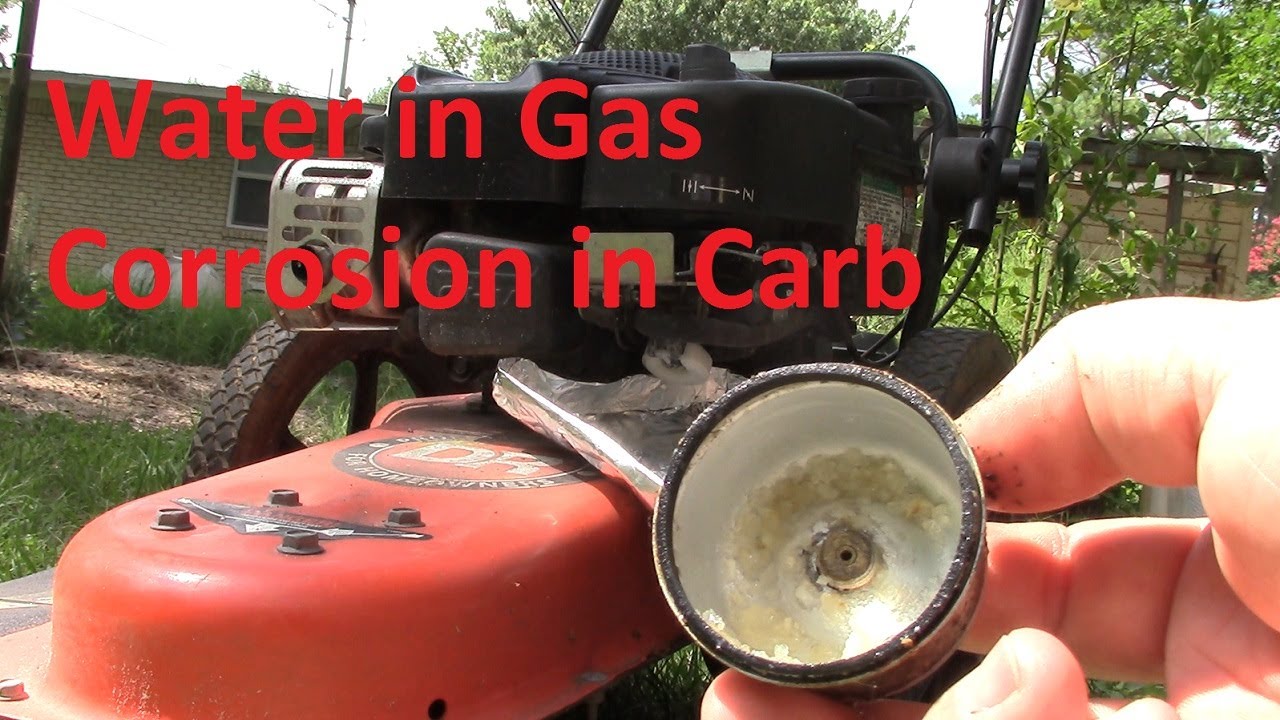
Source: www.youtube.com > L&M Small Engine Repair
Engine misfire
Water entering the combustion chamber can cause uneven running, hesitation, or sudden engine shutdown.
Fuel system contamination
Standing water inside fuel components can contribute to corrosion and affect small engine parts.
Reduced fuel quality
Gasoline mixed with water cannot provide consistent combustion for normal mower operation.
Common Ways Water Enters Lawn Mower Fuel
Water usually enters through storage problems, fuel handling mistakes, or exposure to moisture. A loose gas cap, uncovered fuel container, rain exposure, or condensation inside a partially filled tank can introduce water over time.
Rain or moisture exposure
A mower stored outdoors or with a damaged fuel cap may allow water into the tank.
Contaminated fuel containers
Gas cans that contain leftover moisture can transfer water into fresh gasoline.
Signs Your Lawn Mower Has Water in Gas
The symptoms of water contamination often look similar to other fuel or ignition problems. Checking for multiple signs together can help identify whether water is the likely cause.
Source: hunker.com
Mower will not start
The engine may crank normally but fail to run because water prevents proper combustion.
Engine sputters or stalls
The mower may start briefly and then shut off as contaminated fuel reaches the carburetor.
Uneven engine performance
A mower may run roughly, lose power, or surge during operation.
How to Check for Water in Gasoline
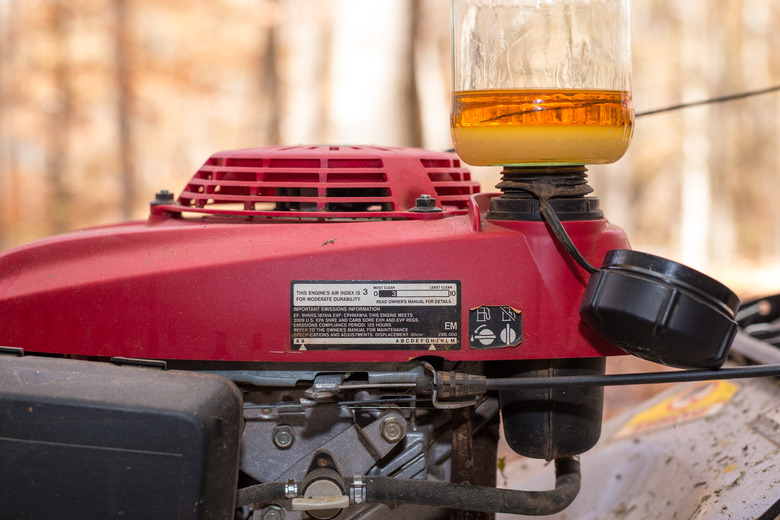
A simple inspection can help identify water contamination. Allowing fuel to sit in a clear container can reveal separation because water settles below gasoline as a separate layer.
Look for separation
A visible layer at the bottom of a fuel sample may indicate water contamination.
Check fuel appearance
Cloudy or unusual-looking gasoline can indicate moisture or other contamination.
The safest method is to remove the contaminated gasoline and replace it with fresh fuel. Do not rely on running the mower until the water disappears because water does not mix with gasoline and may continue causing engine problems.
Source: YouTube > Ben Huttash
Step 1: Work safely
Turn off the mower, allow the engine to cool, and work in a well-ventilated area away from flames or sparks.
Step 2: Drain contaminated fuel
Remove the old gasoline according to the mower manufacturer’s instructions and use an approved fuel container.
Step 3: Refill with fresh gasoline
Add clean fuel recommended for your mower engine and avoid using questionable gasoline.
Step 4: Inspect related parts
If the mower still runs poorly, check the carburetor, spark plug, and fuel system for remaining contamination.
What to Do If Water Reached the Carburetor
If contaminated fuel has already entered the carburetor, draining the tank alone may not solve the issue. Small amounts of water or debris may remain inside the fuel passages and require additional cleaning.
Clean the carburetor when needed
A heavily contaminated carburetor may require removal and cleaning by someone familiar with small engine repair.
Not every starting problem comes from water in gasoline. Old fuel, clogged filters, ignition problems, and carburetor issues can create similar symptoms.
Source: greenlawnguide.com
Water contamination
Usually causes fuel separation and may create sudden starting or running problems.
Old gasoline
Fuel that has degraded over time may cause poor combustion and deposits.
Carburetor problems
Blocked passages can prevent fuel from reaching the engine correctly.
If fresh gasoline does not restore normal operation, the issue may involve components affected by contaminated fuel. Further troubleshooting should focus on the spark system, fuel delivery, and engine condition.
Check the spark plug
A fouled or damaged spark plug can prevent reliable ignition.
Inspect fuel flow
Restricted fuel lines or filters can limit gasoline delivery.
Frequently Asked Questions
Q
Can a lawn mower run with water in the gas tank?
A lawn mower may start briefly with a small amount of water contamination, but water can cause poor combustion, stalling, and fuel system problems. Removing contaminated fuel is the recommended solution.
Q
Can I use a fuel additive to remove water from lawn mower gas?
Some fuel additives are designed to manage small amounts of moisture, but they may not solve significant water contamination. If visible water is present, draining the fuel is usually the safer approach.
Q
How can I prevent water from getting into my lawn mower gas?
Store the mower in a dry location, keep the fuel cap secure, use clean fuel containers, and avoid leaving gasoline exposed to moisture.
Q
Why does my mower still not start after removing water from gas?
Remaining contaminated fuel in the carburetor, a dirty spark plug, clogged fuel passages, or other mechanical issues may continue causing problems.
Q
Is water in gasoline dangerous for a lawn mower engine?
Water does not provide lubrication or combustion and can contribute to corrosion in fuel system components if the problem is left unresolved.
✦ Wrapping Up
Conclusion
Water in a lawn mower gas tank is a common fuel problem that can stop a mower from starting or make it run poorly. The most effective repair is removing contaminated gasoline, checking for remaining fuel system issues, and adding fresh fuel.
Preventing moisture contamination through proper storage and fuel handling can reduce future starting problems and extend the life of a gas-powered lawn mower.
💡 Key Takeaway
If you suspect water in your lawn mower gas, do not keep running the engine. Drain the contaminated fuel, refill with fresh gasoline, and inspect the fuel system if problems continue.
A clean air filter is one of the most essential components for maintaining a healthy Honda lawn mower engine, yet it is one of the most overlooked maintenance tasks by homeowners. Over time, dirt, grass clippings, and dust accumulate inside the air filter, restricting airflow and reducing engine power. If ignored long enough, a dirty…
If you’ve ever struggled pushing your Honda lawn mower across uneven grass, or noticed your mower veering to one side, chances are the front wheels are worn out. A Honda Lawn Mower Front Wheel Replacement might sound like a small fix, but it’s actually one of the most impactful maintenance upgrades you can make. Think…
Learn how old gas in a lawn mower affects engine performance, how to identify bad fuel, remove it safely, and prevent future starting problems with practical maintenance tips.
When it comes to maintaining a lush, evenly cut lawn, nothing matters more than the sharpness and precision of your mower blades. Even the best Honda mower can struggle when the blades are dull, chipped, or unbalanced. Replacing them with the right Honda replacement lawn mower blades can transform your mowing experience from frustrating to…
When your Toro electric start lawn mower refuses to start, it’s easy to think the engine has failed or that something complex is wrong. But in most cases, the culprit is much simpler—the battery. The battery is the heart of your mower’s electric start system, and when it begins to fade, your reliable weekend mower…
If you’ve ever pushed your Troy-Bilt riding lawn mower across a slightly uneven lawn and noticed the front wobbling or dragging, chances are the front tires are the culprit. Over time, these tires lose tread, crack, or flatten, making your mower harder to steer and less comfortable to ride. Many homeowners underestimate how much a…