Lawn Mower Pull Cord Won’t Retract: Easy Fixes That Work
A lawn mower pull cord won’t retract when the recoil spring, starter pulley, rope, or engine is stuck.
A lawn mower pull cord won’t retract is frustrating, especially when the mower is ready for a busy weekend of cutting. In most cases, the problem comes from a dirty or damaged recoil starter, a tangled rope, a broken spring, or engine resistance. This guide explains how to find the cause, fix it safely, and know when replacement is the better choice.

Why Your Lawn Mower Pull Cord Won’t Retract
The pull cord works with a recoil starter. Inside this starter are a plastic pulley, a rope, and a flat spiral spring. When you pull the handle, the pulley turns the engine. When you release it, the spring winds the rope back around the pulley.
When a lawn mower pull cord won’t retract, one part of this simple system has stopped moving freely. The cord may stay loose, hang outside the housing, or return only part of the way.
The most common causes include:
• A broken or weak recoil spring
• A rope that is tangled or crossed inside the housing
• Dirt, grass, or rust around the starter pulley
• A rope that is too thick, too long, or badly fitted
• A starter pulley that is cracked or jammed
• A bent starter cover
• A mower blade or engine that cannot turn freely
A mower that sat all winter is more likely to have a stiff spring, rust, or compacted grass near the starter. Heat, water, and age can also make the rope rough and the pulley brittle.

Safety Steps Before You Inspect the Starter
Before working on a lawn mower pull cord, stop the engine and let the mower cool. Remove the spark plug wire and keep it away from the spark plug. This prevents the engine from starting while your hands are near the blade or starter.
For extra safety, remove the battery if the mower has electric start. If you must tilt the mower, follow the owner’s manual. Many push mowers should be tilted with the air filter and carburetor facing upward to help prevent oil or fuel from entering the wrong areas.
Wear work gloves when handling the recoil spring. A spring under tension can snap back quickly. Eye protection is also wise when removing the starter housing.
Never test the starter with the spark plug connected. A small mistake can turn a repair into an injury.

Check the Simple Problems First
A lawn mower pull cord won’t retract sometimes because of a basic obstruction. Start with an external inspection before removing parts.
Look closely at the handle and rope. Make sure the cord is not wrapped around the handle, caught under a plastic guide, or trapped beneath the mower cover. Pull the rope out a few inches and release it slowly. Do not yank it.
Next, inspect the starter housing. Look for:
• Grass packed around the cover
• Cracks near the rope opening
• Loose screws
• A rope pinched between the cover and engine
• Signs of water or rust
Clean loose grass with a soft brush or compressed air. Keep compressed air away from your eyes and avoid blowing dirt into the carburetor or air filter.
If the rope moves out but does not return, the spring may still have some tension. This often means the rope is tangled, the pulley is rubbing, or the spring is partly broken.

Test Whether the Engine Is Stuck
A lawn mower pull cord won’t retract if the engine cannot rotate. The recoil starter may be working, but the engine may be stopping it.
With the spark plug wire removed, gently turn the mower blade by hand. Use gloves and keep your fingers clear of sharp edges. On many mowers, the blade turns the engine crankshaft, so you can feel whether the engine moves.
The blade should turn with steady resistance. It should not be completely locked. If it will not move, possible causes include:
• A piece of wood or stone trapped beneath the deck
• A bent blade
• A seized engine
• A damaged crankshaft
• Too much oil in the cylinder
• Internal engine damage
Do not force the blade. Forcing it can bend the crankshaft or damage the starter. If the engine is locked, have a qualified small-engine technician inspect it.
If the blade and crankshaft turn normally, the problem is more likely inside the recoil starter.
Remove and Inspect the Recoil Starter
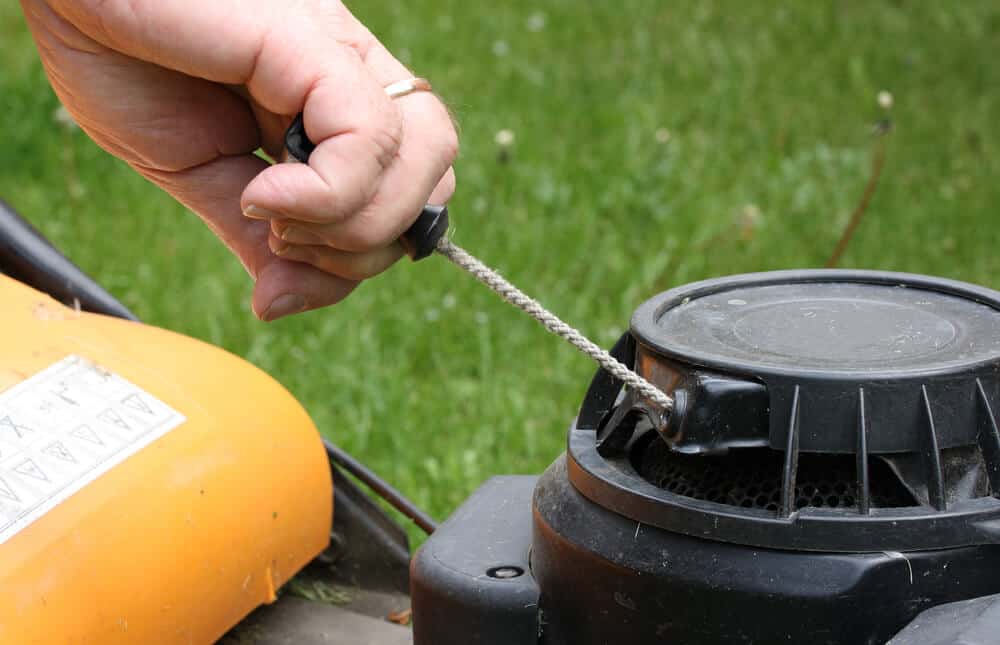
If a lawn mower pull cord won’t retract after cleaning, remove the recoil starter housing. Most starters are held by three or four bolts, but the layout varies by brand and engine model.
Place the bolts in a small container so they do not get lost. Take a photo before removing the housing. This simple step helps you remember how the rope guide, cover, and wire shield fit together.
Once removed, inspect the starter pulley. It should turn smoothly and pull the rope back with firm spring tension. Watch for:
• A cracked pulley
• A loose center screw
• A spring that has come out of its slot
• A broken spring end
• Rope wrapped beneath the pulley
• Deep grooves or melted plastic
A healthy recoil starter feels controlled. It should not grind, wobble, or lock at one point in its rotation.
In my repair experience, people often replace the rope first when the real problem is a cracked pulley. A new rope will not solve a pulley that cannot turn.

Fix a Tangled or Misrouted Rope
A tangled rope is one of the easiest causes to repair. Carefully unwind the cord from the pulley. Check the full length for knots, flattened areas, fraying, or melted fibers.
If the rope is in good shape, route it through the correct hole and guide. The rope must sit neatly in the pulley groove. It should not cross over itself or rub against the starter housing.
To reinstall the rope:
-
Remove the old rope if needed.
-
Turn the pulley in the direction that increases spring tension.
-
Align the rope hole in the pulley with the rope opening in the housing.
-
Hold the pulley firmly.
-
Feed the new rope through the housing and pulley.
-
Tie a secure knot.
-
Slowly release the pulley so it winds the rope in.
Use starter rope made for small engines. Do not use clothesline, nylon cord, or thin utility rope. The wrong rope may stretch, melt, or fail when you pull the engine over.
Keep your fingers away from the pulley while releasing tension. A controlled release is safer than letting the pulley spin freely.

Replace a Broken Recoil Spring
A broken recoil spring is a major reason a lawn mower pull cord won’t retract. The spring may be cracked, unhooked, or pulled out of its track.
You have two repair choices:
• Replace the complete recoil starter assembly
• Replace only the spring
Replacing the complete assembly is often easier. It also reduces the chance of installing the spring incorrectly. Many starter assemblies are affordable and can be matched by engine model and starter design.
Replacing only the spring can save money, but it requires care. The spring must sit in the correct slot and face the correct direction. It also needs the right amount of preload. Too little tension leaves the rope outside. Too much tension can break the rope or damage the pulley.
If you reuse the old spring, inspect it for rust, cracks, and bent ends. A spring that looks weak may fail again soon. For many homeowners, a complete starter assembly offers the best balance of safety, time, and cost.

Replace the Pull Rope Correctly
A worn rope can cause a lawn mower pull cord won’t retract problem even when the spring works. Frayed fibers catch inside the guide or pile up in the pulley groove.
Choose rope with the same diameter as the original. The owner’s manual or a mower parts dealer can provide the correct size. Too much rope can prevent full retraction. Too little rope may limit how far you can pull the starter.
A good replacement rope should:
• Fit cleanly through the starter guide
• Sit fully inside the pulley groove
• Have a tight knot
• Leave enough length for a comfortable pull
• Retract without rubbing the housing
Do not melt the rope end with an open flame. If you need to stop fraying, use a proper lighter carefully and only in a safe, ventilated area. Keep fuel and oil far away from any flame.
Lubricate and Clean the Starter
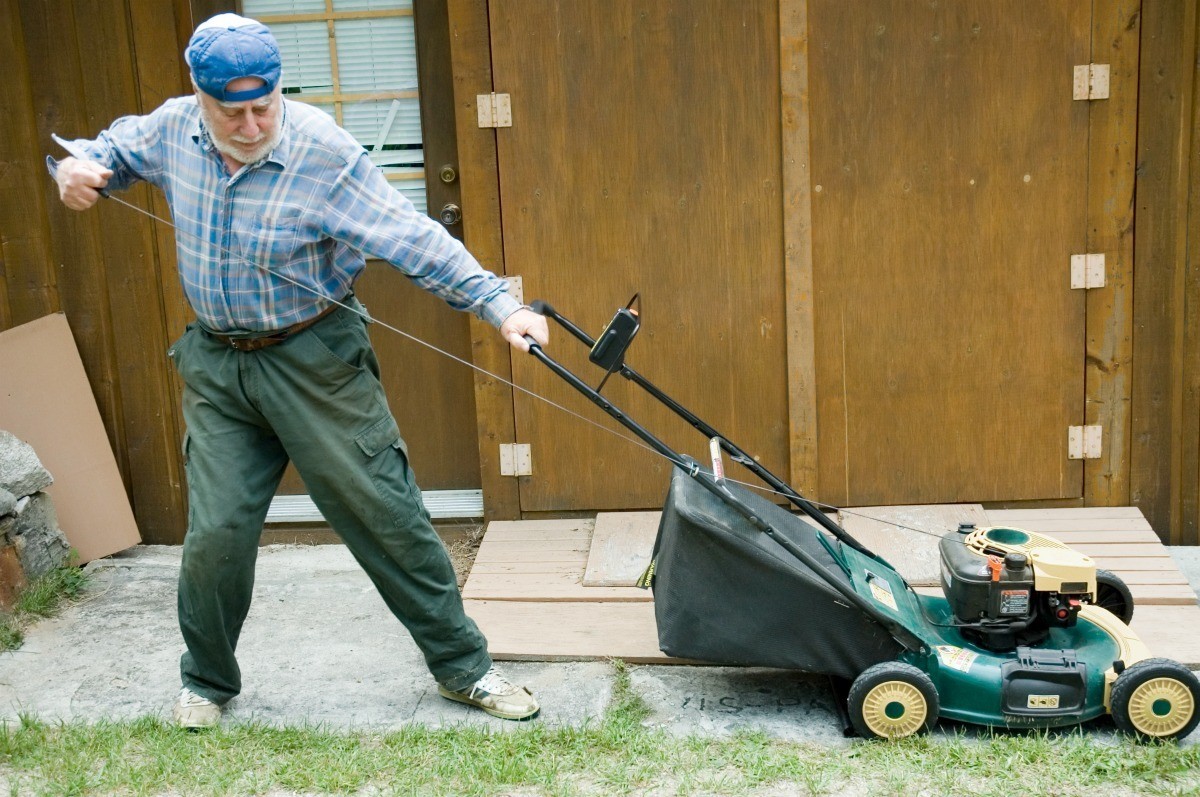
Dirt can make a lawn mower pull cord won’t retract slowly or unevenly. Clean the starter before applying lubricant.
Wipe the pulley and housing with a dry cloth. Use a small brush to remove grass and dust. If the pulley has light surface rust, gently clean it with fine abrasive paper.
Use only a light amount of lubricant on the pulley pivot if the manufacturer allows it. Avoid soaking the recoil spring with oil. Heavy oil attracts dust and can turn the starter into a sticky mess.
Do not spray lubricant into the carburetor, ignition parts, or air filter. Also avoid spraying near the rope if the product can weaken synthetic fibers.
Many recoil starters work best when they are clean and dry. In several mower repairs, cleaning restored smooth movement without replacing a single part.
Check for a Bent Cover or Misaligned Housing
A lawn mower pull cord won’t retract if the recoil housing is bent or installed out of line. The plastic cover may rub against the pulley after a hard impact or incorrect repair.
Place the starter housing on a flat surface. Check whether it rocks or has a visible bend. Inspect the rope exit hole for sharp edges. A damaged hole can cut the rope every time you pull it.
When reinstalling the starter:
• Match every mounting hole
• Tighten bolts evenly
• Keep wires away from moving parts
• Confirm that the rope guide is aligned
• Turn the pulley by hand before starting the engine
Do not overtighten plastic housing bolts. Excess force can crack the cover and create a new alignment problem.
How to Tell Which Part Has Failed
You can often identify the fault by the way the rope behaves.
If the rope stays completely outside, the spring may be broken or disconnected. If the rope retracts slowly, dirt, friction, or a weak spring is likely. If it pulls out only a short distance and locks, the pulley or spring may be jammed.
Use this quick guide:
• Rope does not move at all: Check for an engine lock, seized pulley, or trapped rope.
• Rope pulls out but stays out: Check the recoil spring.
• Rope returns part way: Check for incorrect rope length, tangling, or weak spring tension.
• Rope snaps back sharply: Check for excessive spring tension or a damaged pulley.
• Rope feels rough: Check the guide, pulley groove, and frayed rope.
This process saves time because it helps you test the likely part first. It also prevents unnecessary replacement of working components.
When You Should Replace the Whole Starter
Repairing one part makes sense when the housing and pulley are in good condition. Replacing the whole starter is usually better when several parts are worn.
Consider a complete replacement when:
• The pulley is cracked
• The spring is broken and rusty
• The rope guide is badly damaged
• The cover is warped
• The starter has been repaired more than once
• Replacement parts cost nearly as much as a complete assembly
Match the starter by engine model, mounting pattern, pulley shape, and rope position. The mower brand alone may not be enough because one brand can use several engine designs.
Take the old starter to a small-engine parts store or compare the engine identification numbers. A correct match should fit without drilling, bending, or forcing the bolts.
Common Mistakes to Avoid
A lawn mower pull cord won’t retract more often after an unsafe or rushed repair. Small details matter with recoil starters.
Avoid these mistakes:
• Pulling the cord repeatedly when it is stuck
• Working with the spark plug wire connected
• Installing rope that is too thick
• Overloading the pulley with extra rope
• Using heavy grease inside the starter
• Forcing a locked blade
• Losing the spring’s original direction
• Mounting the housing while the rope is misaligned
• Ignoring a cracked pulley
One mistake I have seen many times is releasing the spring without controlling it. The spring can jump out, twist, and become much harder to reinstall. Take photos, work slowly, and use a clamp or screwdriver only when you understand how the spring is held.
Prevent Future Pull Cord Problems
Once you fix a lawn mower pull cord won’t retract issue, a few habits can help prevent it from returning.
Clean grass from the mower after each use. Keep the starter housing dry and avoid storing the mower where rain or sprinklers can reach it. Do not drag the mower by the pull handle.
At the end of the season:
• Clean the mower deck
• Check the rope for fraying
• Inspect starter bolts
• Store the mower in a dry place
• Follow the manufacturer’s fuel storage instructions
• Avoid placing heavy objects on the starter handle
Pull the cord with a smooth, steady motion. A sharp sideways pull can wear the rope guide and place extra stress on the pulley.
Routine checks take only a few minutes. They are much easier than fixing a broken spring on mowing day.
When to Call a Small-Engine Professional
Some starter repairs are suitable for home maintenance. Others need trained help.
Contact a professional if the engine is locked, the blade will not turn, the crankshaft appears bent, or the recoil spring has broken into several pieces. Seek help if fuel has entered the cylinder or if you are unsure how to control spring tension.
A professional can also test engine compression, inspect the crankshaft, and confirm whether the starter or engine is causing the problem. This matters because replacing the starter will not fix an internal engine failure.
Repair costs vary by mower model and local labor rates. Ask for an estimate before authorizing work. If the mower is old and has several problems, compare the repair cost with the price of a reliable replacement mower.
Frequently Asked Questions About a Lawn Mower Pull Cord Won’t Retract
Why is my lawn mower pull cord stuck out?
The recoil spring may be broken, disconnected, or too weak to wind the rope back. A tangled rope, dirty pulley, or damaged starter housing can also hold the cord outside.
Can I fix a lawn mower pull cord that will not retract?
Yes, many cases can be fixed by cleaning the recoil starter, routing the rope correctly, or replacing the rope or spring. Disconnect the spark plug wire first and follow the mower’s service instructions.
How do I know if the recoil spring is broken?
If the rope pulls out but does not return at all, the recoil spring is a likely cause. A broken spring may also rattle inside the housing or appear detached from the pulley.
Why does my pull cord retract only halfway?
The rope may be too long, tangled, or incorrectly wound. A weak spring, dirty pulley, or rope rubbing against the housing can also limit retraction.
Should I replace the rope or the whole recoil starter?
Replace only the rope when the pulley, spring, and housing work correctly. Replace the complete starter when the pulley is cracked, the spring is damaged, or several parts are worn.
Is it safe to pull the starter when the cord is stuck?
No. Repeatedly forcing a stuck cord can damage the pulley, spring, or engine. Remove the spark plug wire and inspect the starter and blade before trying again.
Conclusion
A lawn mower pull cord won’t retract because the recoil system cannot wind the rope normally, or the engine is preventing the starter from turning. Start with safety, then check for a trapped rope, dirt, a damaged pulley, a broken spring, and engine resistance.
Many repairs need only cleaning or a new rope. When the spring or pulley is badly damaged, a complete recoil starter is often the simplest fix. Work slowly, use the correct parts, and stop if the engine or blade is locked.
Inspect your mower before the next cutting day, and share your repair experience or questions in the comments.