
How Heavy Is A Riding Lawn Mower: Average Weight Guide
A riding lawn mower in the United States usually weighs 300 to 1,000 pounds. Most common lawn tractors weigh about 400 to 600 pounds, while zero-turn mowers often weigh 500 to 900 pounds. Large garden tractors and commercial zero-turn mowers can weigh more than 1,000 pounds.
The exact weight depends on the mower type, cutting deck, engine, battery, fuel, attachments, and whether the listed number is the dry weight or shipping weight. A mower that weighs 500 pounds on paper may weigh closer to 550 pounds when filled with fuel and fitted with a grass bagger.
This guide explains riding mower weight ranges, how to find the exact weight of your mower, and how much trailer or ramp capacity you need.

Average Riding Lawn Mower Weight by Type
The mower type gives the best starting point for estimating weight. Smaller rear-engine riders are usually the lightest. Garden tractors and commercial zero-turn mowers are usually the heaviest.
| Riding mower type | Typical weight range | Common use |
|---|---|---|
| Rear-engine riding mower | 300–500 lb | Small residential lawns |
| Lawn tractor | 400–600 lb | General home mowing |
| Garden tractor | 600–1,000+ lb | Large lawns and heavy attachments |
| Residential zero-turn mower | 500–900 lb | Fast mowing around trees and beds |
| Commercial zero-turn mower | 800–1,300+ lb | Frequent or large-scale mowing |
| Electric riding mower | 400–800+ lb | Residential mowing with lower fuel use |
These ranges are practical estimates, not fixed standards. Two mowers with the same cutting width may have very different weights because one has a heavier frame, larger tires, a larger engine, or a stronger transmission.
For example, a 42-inch lawn tractor may weigh less than a 48-inch garden tractor. A residential zero-turn mower with a stamped steel deck may weigh much less than a commercial model with a thick fabricated deck.
Why mower weight matters
Weight affects several practical decisions:
- Trailer size and payload
- Ramp capacity
- Storage-floor strength
- Transport vehicle choice
- Traction on slopes
- Lawn damage
- Ease of pushing or recovery
- Towing and braking needs
A heavier mower may feel more stable and may have better traction. However, it can also leave deeper tire marks, compact wet soil, and require stronger ramps and tie-down points.
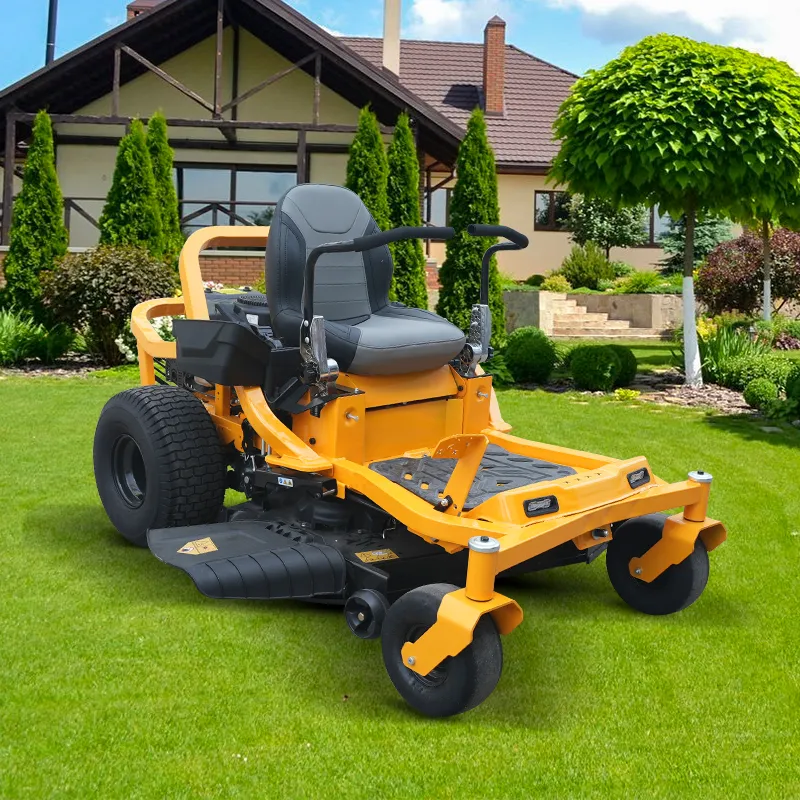
What Is the Exact Weight of Your Riding Mower?
The owner’s manual or manufacturer specification page is the best source for the exact mower weight. Look for terms such as operating weight, dry weight, shipping weight, net weight, or machine weight.
Check these locations in order:
- Owner’s manual
- Product specification sheet
- Manufacturer’s model page
- Dealer specification page
- Model identification label or service document
Find the full model number first. A name such as “XT1” or “S100” may cover several versions with different engines and deck sizes.
Dry weight versus operating weight
A listed mower weight may not include every item installed on the machine.
- Dry weight usually excludes fuel and may exclude fluids.
- Operating weight is closer to the mower’s ready-to-use weight.
- Shipping weight may include the crate, packaging, pallet, and accessories.
- Base weight may exclude a mower deck, bagger, rear hitch, or other attachment.
If the manufacturer lists only dry weight, estimate the ready-to-use weight by adding:
- Gasoline
- Engine oil and other fluids
- Battery, if not already included
- Grass bagger or mulch kit
- Rear hitch or tow attachment
- Snow blade, snowblower, or front-mounted tool
A U.S. gallon of gasoline weighs about 6 pounds. A full 2-gallon tank therefore adds about 12 pounds. The exact amount changes with fuel blend and temperature, but this is close enough for trailer planning.
Use a public scale for a load-sensitive job
If you need the exact loaded weight for a trailer, lift, or vehicle, use a certified truck scale or a suitable vehicle scale. Do not rely on a bathroom scale or on the mower’s shipping weight.
A scale reading should include the mower in the condition in which you plan to transport it. Include the fuel, battery, bagger, ramps, and other equipment that will travel with it.

How Much Does a Lawn Tractor Weigh?
A typical lawn tractor weighs 400 to 600 pounds. Smaller models with 30- to 42-inch decks may be near the lower end. Larger tractors with 46- to 54-inch decks, stronger frames, and larger engines may weigh more.
A lawn tractor is designed mainly for cutting grass. It may tow a light cart or spreader, but its frame and transmission are not always built for heavy ground work.
Common factors that raise a lawn tractor’s weight include:
- Wider cutting deck
- Larger engine
- Heavier steel frame
- Electric clutch
- Larger tires
- Stronger transmission
- Hydraulic systems
- Factory-installed bagger
- Snow blade or other front attachment
A lawn tractor is often the weight people mean when they ask, “How heavy is a riding lawn mower?” For most American homeowners, a realistic planning figure is about 500 pounds, unless the owner’s manual gives a different number.
Lawn tractor weight example
Suppose a mower has a listed dry weight of 475 pounds. You add:
- 12 pounds of gasoline
- 8 pounds for a rear bagger
- 5 pounds for other fluids and small equipment
The estimated operating weight is:
475 + 12 + 8 + 5 = 500 pounds
This is a hypothetical calculation. The manufacturer’s operating specification or a scale reading should take priority.
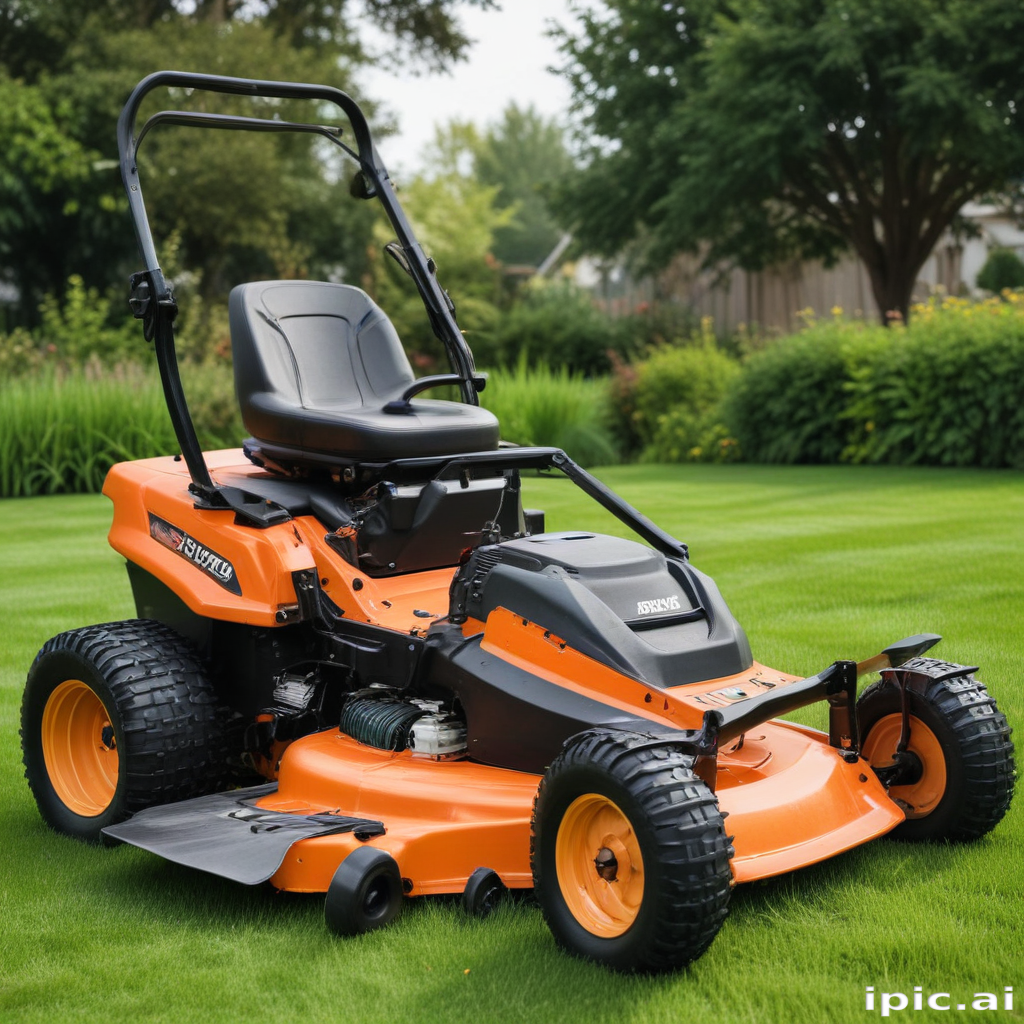
How Much Does a Zero-Turn Mower Weigh?
A residential zero-turn mower commonly weighs 500 to 900 pounds. Commercial zero-turn models often weigh 800 to 1,300 pounds or more.
Zero-turn mowers can be heavier than lawn tractors because they may use:
- Two wheel motors
- A reinforced steel frame
- Larger rear tires
- A thick fabricated cutting deck
- Dual fuel tanks
- Suspension seats
- Heavy-duty hydraulic parts
- Commercial-grade transmissions
A small residential zero-turn mower with a 42-inch deck may weigh near 500 pounds. A commercial mower with a 60-inch deck can weigh well over 1,000 pounds.
Zero-turn mowers also create a transport challenge because their drive wheels and steering controls differ from those of a lawn tractor. Use a ramp and tie-down method approved for the mower’s weight. Keep the loading path straight and clear.
Never assume a zero-turn mower is safe to load because it starts and drives normally. A ramp that holds the static mower weight may still be unsafe if it is too narrow, steep, damaged, or poorly supported.

How Much Does a Riding Mower Weigh With Attachments?
Attachments can add from a few pounds to several hundred pounds. A bagger, snowblower, front blade, or heavy cart changes the load that your trailer or storage system must support.
| Attachment or added load | Approximate effect |
|---|---|
| Mulch plug | Usually minimal |
| Small grass catcher | About 10–40 lb |
| Full rear bagger system | About 30–100+ lb |
| Tow-behind spreader | Often 20–60 lb empty |
| Utility cart | Often 100–300+ lb empty |
| Front blade | Often 100–250+ lb |
| Snowblower attachment | Often 150–300+ lb |
| Loaded cart or spreader | Can add hundreds of pounds |
These are broad planning ranges. Use the attachment manual for the actual specification.
The load can also shift toward the front or rear. A front-mounted snowblower may reduce front-end lift but add stress to the frame and axle. A heavy rear bagger may affect balance and steering. A loaded cart places additional force on the hitch and transmission.
Calculate the transport load
Use this simple formula:
Total transport weight = mower weight + fuel and fluids + attachments + loose equipment
For example:
- Mower: 550 pounds
- Fuel and fluids: 15 pounds
- Bagger: 60 pounds
- Ramps and tools: 75 pounds
Total load = 700 pounds
Choose a trailer with a payload rating above the total load. Leave a safety margin rather than matching the rating exactly.

What Trailer Size and Ramp Capacity Do You Need?
A trailer for a riding mower must support both the mower’s weight and its physical dimensions. Payload capacity is more important than the trailer’s empty weight.
If your mower and equipment weigh 700 pounds, a trailer rated for 700 pounds leaves no useful margin. Choose a trailer with a higher payload rating, and confirm that its floor, gate, axle, tires, and ramp can handle the load.
Before loading, check:
- Trailer payload rating
- Ramp weight rating
- Ramp width
- Ramp angle
- Trailer floor condition
- Gate latch strength
- Tie-down anchor rating
- Vehicle hitch and towing limits
- Tire and wheel ratings
The mower’s wheelbase and overall width also matter. Measure the widest point, which may include the deck, discharge chute, or rear tires.
Safe loading steps
-
Park the trailer on firm, level ground.
Chock the trailer wheels so it cannot move. -
Align the ramps correctly.
Make sure each ramp is fully seated and cannot slide sideways. -
Remove loose items.
Secure tools, bags, fuel cans, and attachments separately. -
Drive slowly and straight.
Avoid sudden steering, braking, or acceleration. -
Center the mower over the trailer axle.
Keep the trailer balanced without placing too much weight at the rear. -
Lower the cutting deck if the manual permits it.
This can lower the center of gravity during transport. -
Engage the parking brake and remove the key.
-
Secure the mower at approved tie-down points.
Use rated straps or chains. Do not rely on the parking brake alone. -
Check strap tension and clearance.
Keep straps away from sharp edges, hot parts, belts, and moving components. -
Recheck the load after a short drive.
Stop in a safe place and inspect the straps and mower position.
Do not ride on the mower while it is being transported. Do not load it into a pickup bed with improvised ramps unless the ramps, truck, and loading method are rated for the full load.

Does a Heavier Riding Mower Work Better?
A heavier mower is not automatically better. Weight can improve traction and stability, but it also increases soil pressure, transport demands, and recovery risk.
Potential benefits of more weight
A heavier machine may:
- Hold the ground better on dry, level turf
- Feel more stable during normal operation
- Resist movement when towing light equipment
- Use a stronger frame or deck
- Have heavier-duty transmission parts
Potential disadvantages of more weight
A heavier machine may:
- Leave ruts on wet or soft ground
- Compact soil
- Need a stronger trailer and ramp
- Be harder to push or move when disabled
- Cause more damage during a rollover or collision
- Put more stress on slopes, bridges, and storage floors
Weight does not replace safe slope operation. A heavy mower can still lose traction or overturn. Follow the operator’s manual for slope limits, mowing direction, and surface conditions. Avoid wet hills, sharp turns on slopes, and driving across a slope when the manual warns against it.
If the mower becomes stuck, turn off the engine before attempting recovery. Keep people away from the mower, tow line, and wheels. Use equipment rated for the mower’s actual weight.

How to Move a Riding Lawn Mower Without a Trailer
For short moves on private property, use a method designed for the mower’s weight and terrain. A running mower may drive onto a rated trailer, but a dead mower needs a different plan.
Possible options include:
- A heavy-duty lawn mower dolly
- A winch rated above the mower’s total weight
- A utility trailer with a proper ramp
- A service vehicle with a lift gate
- Professional equipment transport
Do not pull a disabled mower with a small garden tractor, automobile, or rope unless the mower manual specifically allows that method and the equipment is properly rated.
Before moving a disabled mower:
- Remove the key.
- Turn off the fuel valve if the manual provides one.
- Check whether the transmission has a release or bypass control.
- Use wheel chocks and a rated winch or dolly.
- Keep hands and feet away from pinch points.
- Keep bystanders clear.
- Secure the mower before working beneath or beside it.
Never crawl under a mower supported only by a jack. Use stands or a lifting system rated for the full machine weight.

Common Mistakes When Estimating Riding Mower Weight
The most common error is using the wrong weight figure. A product listing may show shipping weight, while a trailer calculation needs the ready-to-transport weight.
Avoid these mistakes:
- Treating shipping weight as machine weight
- Ignoring fuel and attachments
- Using the mower’s name instead of its full model number
- Forgetting ramps, tools, and spare equipment
- Matching the trailer rating exactly to the estimated load
- Checking only trailer capacity and not ramp capacity
- Ignoring width and wheel spacing
- Assuming a larger deck always means a much heavier mower
- Using a damaged or narrow ramp
- Relying on the parking brake during transport
- Moving a mower on a slope without a recovery plan
When specifications conflict, check the model year, deck size, engine version, and region. A manufacturer may sell similar-looking versions with different frames or equipment.

Frequently Asked Questions
Is a riding lawn mower too heavy for a pickup truck?
Some smaller riding mowers can fit in a pickup bed, but the truck’s payload, bed length, tailgate rating, ramp rating, and center of gravity must all be suitable. A 500-pound mower is not the only load; fuel, ramps, passengers, and tools also count against payload. Confirm the truck and ramp limits before loading.
How much does a 42-inch riding mower weigh?
Many 42-inch residential lawn tractors weigh roughly 400 to 550 pounds. A 42-inch zero-turn mower may weigh more or less depending on its frame, deck, engine, and transmission. Check the exact model specification.
How much does a riding mower weigh with gas?
Add about 6 pounds per U.S. gallon of gasoline to the listed dry weight. A mower with a 2-gallon tank can gain about 12 pounds when full, plus oil and other equipment.
Can two people lift a riding lawn mower?
Usually, no. Even a small riding mower may weigh several hundred pounds, and its weight is unevenly distributed. Use a rated ramp, winch, lift, or professional equipment instead of attempting a manual lift.
Does mower weight affect lawn damage?
Yes. Heavier mowers can create more soil pressure, especially when the ground is wet. Tire size, tire pressure, turning technique, and the number of passes also matter. Avoid mowing saturated soil and sharp turns that scuff the turf.
Conclusion
Most riding lawn mowers weigh 400 to 600 pounds, but the full range is much wider. Rear-engine riders may weigh about 300 to 500 pounds, residential zero-turn mowers commonly weigh 500 to 900 pounds, and large commercial or garden tractors can exceed 1,000 pounds.
For transport, use the exact model specification when possible. Add fuel, attachments, ramps, and loose equipment to the calculation, then choose a trailer and loading system with a clear capacity margin. The safest next step is to find the mower’s full model number and check its owner’s manual for operating or machine weight.


