A lawn mower blade should be sharp enough to cut grass cleanly but not razor sharp. The ideal edge is similar to a butter knife or kitchen knife that has been used a little, with a smooth cutting edge that can slice grass without becoming dangerously thin.
Across lawns in the United States, from cool-season grasses in northern states to warm-season turf in southern regions, a properly sharpened mower blade helps maintain healthier grass. A dull blade tears grass instead of cutting it, leaving damaged tips that can turn brown and make the lawn look stressed.
The goal is not to make a mower blade extremely sharp. A razor-like edge can chip quickly when it hits small rocks, sticks, or hard objects. A balanced edge with the correct bevel angle, usually around 30 degrees for many residential mower blades, provides efficient cutting performance and better durability.
What Is the Correct Sharpness for a Lawn Mower Blade?
The correct sharpness for a lawn mower blade is a clean, consistent edge that can cut grass easily while remaining strong enough to handle normal yard conditions. A properly sharpened blade should feel sharp to the touch along the edge but should not have a knife-like, extremely thin finish.
Most residential mower blades work best when sharpened to approximately the same edge angle they were manufactured with. Many blades use a bevel angle near 30 degrees, although the exact angle depends on the blade design and manufacturer specifications.
Source: lawncarelab.com
Too dull
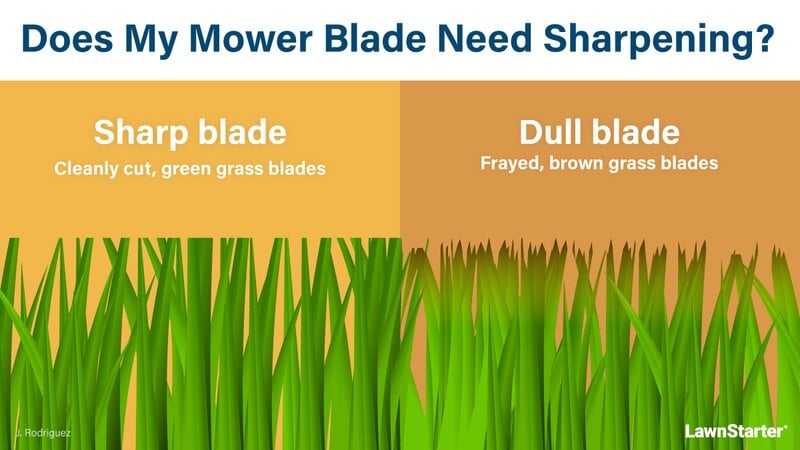
A dull blade bends and tears grass instead of cutting it, often leaving ragged brown tips after mowing.
Correctly sharp
A properly sharpened blade creates a clean cut while maintaining enough metal behind the edge for strength.
Too sharp
An extremely thin razor edge may wear faster, become damaged more easily, and require more frequent sharpening.
How to Tell if a Mower Blade Is Sharp Enough
You can usually judge mower blade sharpness by inspecting the grass after mowing. Healthy cuts should look clean and even rather than split, shredded, or ragged.
Another simple check is to inspect the blade edge visually after removing the blade safely. The edge should appear smooth and consistent without large nicks, cracks, or rolled metal.
Good signs
Grass appears evenly cut, the mower runs normally, and the blade edge has a smooth cutting line.
Warning signs
Grass tips look white or brown, mowing requires repeated passes, or the blade has visible damage.
Why a Properly Sharpened Mower Blade Matters
A sharp mower blade improves the quality of the cut because grass is sliced instead of pulled and damaged. Clean cuts help the grass recover faster and maintain a better appearance.
A dull blade also forces the mower to work harder. More resistance against the blade can increase strain on the engine, especially when mowing thick grass or wet conditions.
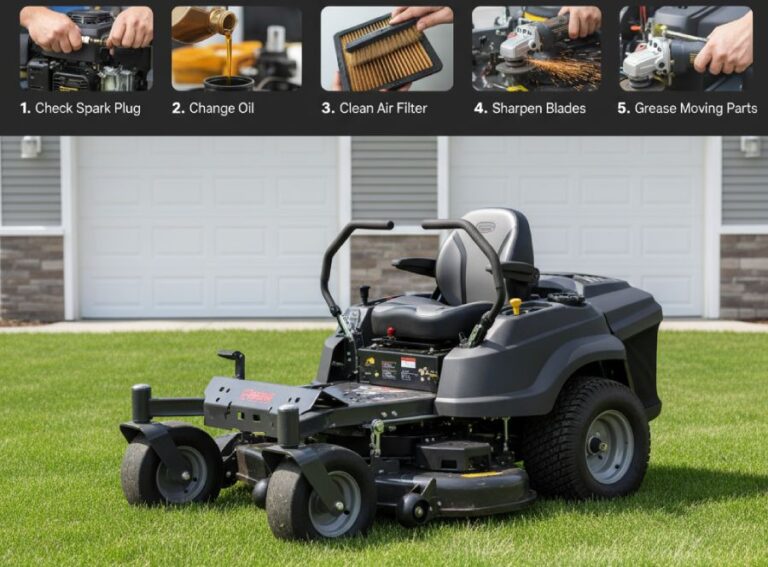
Source: i.pinimg.com
Healthier grass
Clean cuts reduce shredded grass tips that can lose moisture and develop a brown appearance.
Better mower performance
A properly maintained blade can help the mower operate more efficiently during normal mowing.
Improved appearance
A sharp blade helps create a more uniform lawn surface after cutting.
Many homeowners sharpen mower blades several times during the mowing season, depending on lawn size, mowing frequency, grass conditions, and the amount of debris encountered.
A mower used on a large property with sandy soil or frequent debris may need sharpening more often than a mower used on a small, clean residential lawn.
Regular inspection
Check the blade condition throughout the mowing season instead of waiting for poor cutting results.
How to Maintain the Right Lawn Mower Blade Edge
Maintaining the correct mower blade edge requires more than simply removing metal until the blade feels sharp. The blade should be sharpened evenly on both ends to maintain balance and avoid vibration.
Before sharpening, always disconnect the mower from its power source. For gas mowers, remove the spark plug wire before working near the blade. For electric or battery models, remove the battery or unplug the mower according to the manufacturer’s instructions.
Source: theturfdoctor.co.uk
Remove the blade safely
Secure the mower and follow proper safety steps before accessing the blade.
Follow the existing angle
Sharpen along the original bevel instead of creating a new cutting angle.
Balance the blade
An unbalanced blade can cause vibration and uneven mower operation.
Common Mistakes When Sharpening Mower Blades
Many mower owners remove too much metal because they try to create a razor edge. This can weaken the blade and shorten its usable life.
Another common mistake is sharpening only one side more than the other. Uneven sharpening can create imbalance and may cause unnecessary wear on mower components.
Over-sharpening
Avoid creating a thin knife edge that may damage easily during mowing.
Ignoring blade damage
Replace blades with severe cracks, deep damage, or excessive wear instead of repeatedly sharpening them.
Signs Your Lawn Mower Blade Needs Sharpening or Replacement
A mower blade usually gives clear signs when it is no longer cutting properly. Checking these symptoms helps determine whether sharpening is enough or whether the blade should be replaced.
Sharpening is suitable for normal dulling, while replacement is often needed when the blade has major cracks, severe bends, or has lost too much material from repeated sharpening.
Source: lawnstarter.com
Uneven grass height
A damaged or dull blade may leave patches of grass at different heights.
Ragged grass tips
Torn grass ends indicate that the blade is crushing or pulling rather than cutting.
Excessive vibration
Vibration can indicate an unbalanced, bent, or damaged blade.
Safety Limits When Working With Lawn Mower Blades
Lawn mower blades are heavy, sharp metal components that can cause serious injury if handled incorrectly. Always disconnect power and prevent accidental starting before inspection or maintenance.
If a blade is cracked, badly bent, or damaged near mounting holes, sharpening may not restore safe operation. Installing a replacement blade may be the safer option.
Source: thespruce.com
Use protective equipment
Wear gloves and eye protection when handling or sharpening mower blades.
Do not sharpen damaged blades
Structural damage can make a blade unsafe even if the edge becomes sharp.
Frequently Asked Questions
Q
Should a lawn mower blade be razor sharp?
No. A lawn mower blade should be sharp enough to cut grass cleanly but not sharpened to a razor edge. A slightly durable cutting edge lasts longer and handles normal yard conditions better.
Q
Can a mower blade be too sharp?
Yes. An extremely thin edge can become damaged faster when it contacts small rocks, sticks, or other debris. The goal is efficient cutting, not maximum sharpness.
Q
What angle should a lawn mower blade be sharpened?
Many residential mower blades are sharpened around a 30-degree bevel angle, but the correct angle depends on the blade design. Maintaining the original factory angle is usually the best approach.
Q
How can I tell if my mower blade is dull?
Common signs include torn grass tips, uneven cutting, brown-looking grass after mowing, and the mower struggling through normal grass conditions.
Q
How often should I check my mower blade sharpness?
Inspect the blade regularly during the mowing season. The ideal schedule depends on mowing frequency, lawn size, soil conditions, and whether the mower frequently hits debris.
✦ Wrapping Up
Conclusion
A lawn mower blade should be sharp enough to produce a clean cut but strong enough to withstand everyday mowing conditions. The best edge is a balanced cutting edge, not a razor-thin one.
Regular inspection, correct sharpening technique, and proper safety practices help maintain mower performance and keep grass looking healthier throughout the season.
💡 Key Takeaway
Sharpen your mower blade when it begins tearing grass or producing uneven cuts, and aim for a durable cutting edge rather than the sharpest possible blade.
Learn how a lawn edger works, including manual, electric, and gas-powered models, blade movement, edging techniques, common mistakes, and safety tips for creating clean lawn borders.
Learn how to steer a zero turn mower safely and correctly. This guide explains control levers, turning techniques, common mistakes, and tips for smooth mowing.
When your lawn starts looking patchy or uneven, it’s often not the mower’s engine—it’s the blade. A dull or damaged blade tears grass instead of slicing it cleanly, leaving your yard looking rough and unhealthy. If you own a Hyper Tough mower, finding the right Hyper Tough 20 Inch Lawn Mower Blade Replacement can make…
There’s nothing more frustrating than being ready to mow on a sunny weekend morning, only to find your Troy-Bilt mower’s pull cord snapped in half. You stand there, handle in one hand, and frustration in the other. This is a common scenario that turns a simple task into a mechanical puzzle. The Troy Bilt lawn…