How Heavy Is A Lawn Tractor: Average Weight Guide
Introduction
Most lawn tractors sold in the United States weigh about 400 to 600 pounds without fuel, a battery, or attachments. Larger garden tractors often weigh 600 to 1,000 pounds. A small riding mower may weigh less than 400 pounds.
The exact weight depends on the frame, engine, cutting deck, transmission, tires, and added equipment. For moving or hauling a lawn tractor, always use the manufacturer’s listed shipping weight or operating weight for the exact model.

How Much Does a Lawn Tractor Weigh?
A typical lawn tractor weighs 400 to 600 pounds, but the full range is wider.
| Machine type | Typical weight in the United States | Common use |
|---|---|---|
| Small rear-engine riding mower | 250–400 lb | Small yards |
| Light lawn tractor | 350–500 lb | Routine home mowing |
| Standard lawn tractor | 450–650 lb | Medium and large lawns |
| Zero-turn mower | 500–900 lb | Fast mowing and open yards |
| Garden tractor | 600–1,000+ lb | Heavy work and attachments |
| Commercial riding mower | 700–1,200+ lb | Frequent or professional use |
These are useful planning ranges, not exact limits. A mower with a wider deck, heavier frame, larger tires, or a powerful engine can weigh much more than a similar-looking model.
For example, current specifications from major U.S. manufacturers show large differences between riding machines:
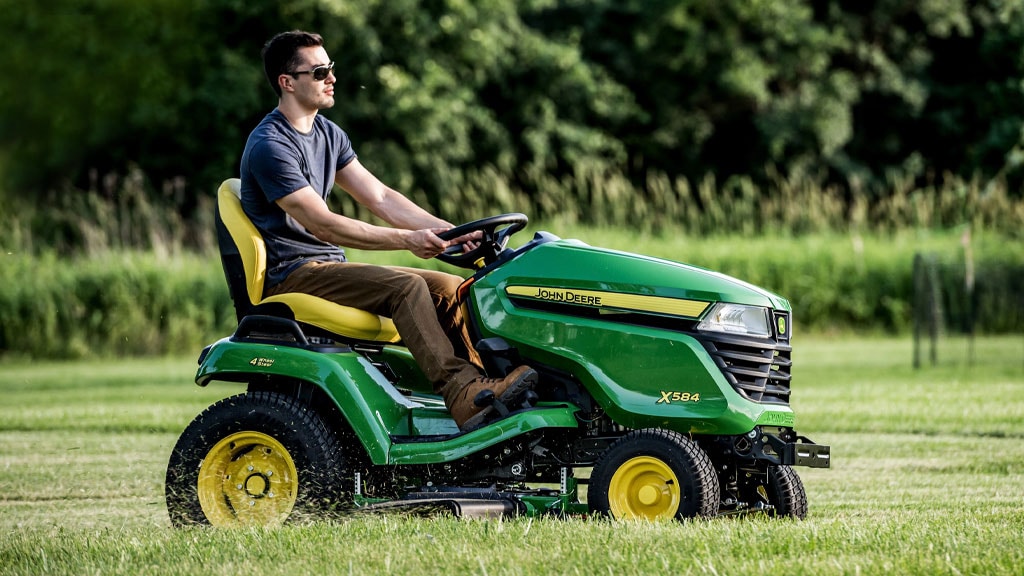
- A small John Deere lawn tractor may weigh around 400 pounds.
- A standard Cub Cadet lawn tractor may weigh around 500 to 600 pounds.
- A larger John Deere garden tractor may weigh 700 pounds or more.
- Some commercial zero-turn mowers weigh close to or above 1,000 pounds.
Model years and trim levels can change these figures. Check the official product page, owner’s manual, or data plate before moving the machine.
Lawn Tractor Weight by Size and Type
The mower’s class gives you a useful first estimate. The frame and cutting deck usually have the largest effect on total weight.
Small riding mowers: about 250 to 400 pounds
Small rear-engine riders are made for compact U.S. yards. They often have a narrow deck, a light frame, and a simple transmission.
Their lower weight makes them easier to:
- Store in a small shed
- Load onto a trailer
- Move by hand over short distances
- Use on lawns with limited access
Their lighter design may also mean less stability on slopes. A light mower can lose traction sooner on wet grass or uneven ground.
Lawn tractors: about 400 to 650 pounds
Most homeowners asking about lawn tractor weight are referring to this group. These machines usually have:
- A front-mounted engine
- A 36- to 54-inch cutting deck
- A steering wheel
- A belt-driven or hydrostatic transmission
- A steel or reinforced mower frame
A 42-inch lawn tractor often falls near the lower or middle part of this range. A 48- or 54-inch model may weigh more because of its wider deck and stronger frame.
Garden tractors: about 600 to 1,000 pounds
Garden tractors are heavier than ordinary lawn tractors. They are built for more than mowing and may support:
- Snow blowers
- Front blades
- Heavy carts
- Rear tillers
– Utility attachments - More demanding towing work
A garden tractor’s added weight can improve traction and stability. It also creates more risk during transport, recovery, or work on a slope.
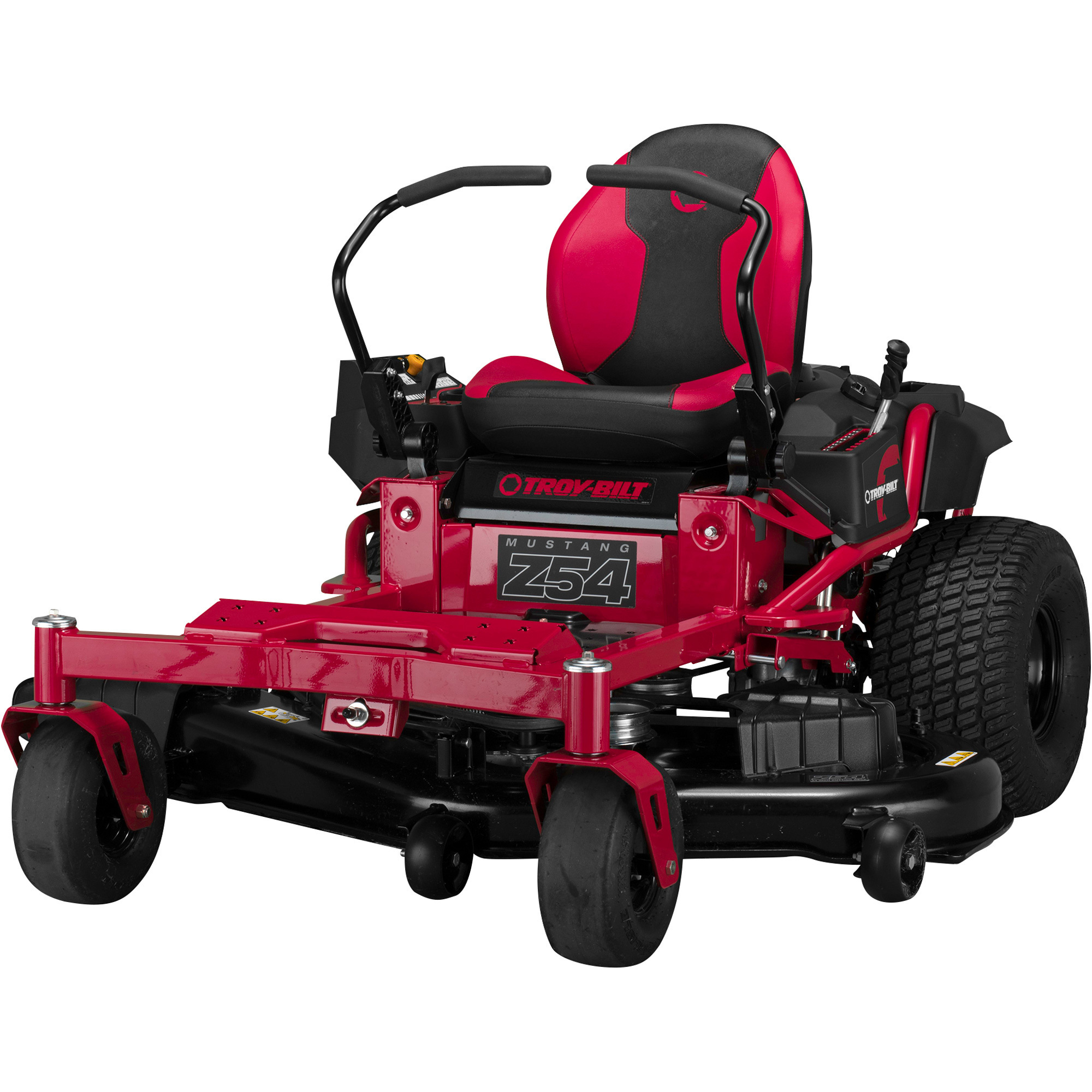
Zero-turn mowers: about 500 to 900 pounds
Zero-turn mowers vary widely. Residential models may weigh about 500 to 700 pounds. Commercial models can exceed 1,000 pounds.
A zero-turn mower may be heavy even when it has a similar cutting width to a lawn tractor. Its frame, hydraulic drives, large tires, and operator platform or seat add weight.
Electric riding mowers: often 500 to 800 pounds
Electric riding mowers may weigh more than gas models because of their battery packs. The battery weight depends on its voltage, capacity, and design.
An electric mower may weigh less in another area because it has no gas engine, fuel tank, muffler, or conventional transmission. The battery can still make the total machine weight similar to, or higher than, a gas-powered model.
What Is Included in a Lawn Tractor’s Listed Weight?
The listed weight may not represent the mower as you see it in your yard. Manufacturers can use different terms and conditions.
Shipping weight
Shipping weight usually includes the mower and its packaging materials. It may include a pallet, carton, or shipping hardware.
Shipping weight is useful when planning delivery. It is often higher than the bare machine weight.
Operating weight
Operating weight means the mower is ready for normal use. It may include:
- Engine oil
- A battery
- A mower deck
- Standard tires
- Other factory-installed parts
It may not include fuel or optional attachments. The manufacturer’s definition controls.
Dry weight
Dry weight usually means the machine has no fuel. Depending on the brand, it may also exclude oil, a battery, or removable equipment.
Do not assume that “dry” means the same thing for every brand.
Accessory weight
Attachments can add a large amount of weight. Examples include:
- Grass baggers
- Snow blowers
- Front blades
- Rear spreaders
- Dump carts
- Wheel weights
- Tire chains
- Mulching kits
A 500-pound lawn tractor can become a 650-pound machine after adding a bagger, weights, and other equipment.
Fuel and battery weight
Gasoline weighs about 6 pounds per U.S. gallon. A lawn tractor with a 2-gallon tank can carry roughly 12 pounds of fuel.
A lead-acid battery may weigh about 30 to 50 pounds. A lithium battery pack may weigh less or more, depending on its capacity and design.
A simple estimate is:
Ready-to-use weight = listed machine weight + fuel + battery difference + attachments
Use the manual when the number affects trailer capacity, ramp safety, or lifting equipment.
How to Find the Exact Weight of Your Lawn Tractor
The best method is to find the model number and use the manufacturer’s own specification.
Step 1: Find the model and serial information
Look for a label under the hood, below the seat, near the frame, or beside the rear wheel. The label may show:
- Brand
- Model number
- Product identification number
- Serial number
- Manufacturing date
The model number matters more than the engine name. The same engine may be used on several mower models with different weights.
Step 2: Check the official specification page
Search the manufacturer’s U.S. website for the exact model. Look for terms such as:
- Weight
- Product weight
- Operating weight
- Shipping weight
- Machine weight
- Tractor weight
Do not rely on a retailer listing if the weight affects a safety decision. Retailer pages can contain missing, rounded, or incorrectly copied specifications.
Step 3: Read the owner’s manual
The manual may provide a more useful transport number than the product page. It can also show:
- Tie-down points
- Jacking points
- Safe lifting areas
- Trailer instructions
- Battery removal steps
- Fuel recommendations
For example, John Deere manuals and product support provide model-specific service information. Cub Cadet support and Husqvarna manuals provide similar documentation for their equipment.
Step 4: Weigh the machine when the number must be exact
If the specification is unclear, a commercial scale is the safest way to confirm total weight. A certified truck scale, equipment scale, or suitable platform scale can help.
Do not place a lawn tractor on a small household scale. Do not lift it with a jack or hoist that is not rated for the full load.
Step 5: Add everything that will travel with it
Include the weight of:
- Fuel
- The battery
- The cutting deck
- A grass catcher
- A snow attachment
- Wheel weights
- Tools or cargo
- Any cart or loaded accessory
The weight of the tractor alone is not the same as the load placed on a trailer.

Why Lawn Tractor Weight Matters
Weight affects transport, traction, ground pressure, slope control, and storage.
Trailer capacity
A trailer must support the combined weight of the mower, fuel, attachments, and any cargo. This is the cargo load, not just the tractor weight.
For example, a hypothetical load may look like this:
- Lawn tractor: 520 lb
- Fuel and battery allowance: 40 lb
- Grass bagger: 80 lb
- Tools and ramps: 60 lb
Estimated cargo load: 700 pounds
The trailer’s cargo rating must exceed 700 pounds. You must also stay within the trailer’s axle rating, tire rating, coupler rating, and the vehicle’s towing limit.
A trailer rated for 1,000 pounds of cargo is not the same as a trailer with a 1,000-pound gross vehicle weight rating. Read the label and manual for both limits.
Loading ramps
A ramp must support the mower’s total weight. It must also be wide enough for the tires and long enough to create a manageable angle.
A steep ramp can cause:
- Wheel spin
- Loss of steering control
- A rearward tip
- Deck damage
- A mower rolling back
Load the mower on level, firm ground when possible. Keep people away from the sides and rear of the machine.
Tie-downs
After loading, turn off the engine, remove the key, set the brake, and secure the mower with suitable straps or chains.
Secure the machine at strong frame points. Do not attach a strap to:
- The steering wheel
- Plastic body panels
- The mower deck
- A fragile control arm
- A light-duty lever
Use the trailer manufacturer’s instructions and the mower manual. Check the straps again after a short distance.
Slopes and traction
More weight can improve traction on level ground, but it does not make a slope safe. A heavy mower can be harder to stop if it begins to slide or roll.
Follow the slope rules in the owner’s manual. Many lawn tractor manuals warn against mowing across steep slopes and advise extra care near drop-offs, ditches, and wet grass.
Never add homemade weights simply to make the tractor feel more stable. Use only approved wheel weights or ballast, and follow the manufacturer’s limits.
Ground pressure and lawn damage
A heavy mower can leave deeper tracks when the soil is wet. Turf damage becomes more likely when:
- The ground is soft
- Tires are overinflated or underinflated
- The mower turns sharply
- The same path is used often
- The tractor carries heavy attachments
Wait for firmer conditions when possible. Correct tire pressure helps, but it does not remove the risk of soil compaction.

Lawn Tractor Weight Compared With Other Yard Equipment
A lawn tractor is heavier than most walk-behind equipment but lighter than many utility vehicles.
| Equipment | Common weight range |
|---|---|
| Push mower | 50–100 lb |
| Self-propelled mower | 70–120 lb |
| Walk-behind snow blower | 100–250 lb |
| Small riding mower | 250–400 lb |
| Lawn tractor | 400–650 lb |
| Zero-turn mower | 500–900 lb |
| Garden tractor | 600–1,000+ lb |
| Compact utility tractor | 1,500–4,000+ lb |
These ranges are broad. A commercial mower or tractor with attachments may exceed the upper end.
The main lesson is simple: a lawn tractor is usually too heavy to move safely by hand over long distances. Use a proper trailer, ramp, winch, or lifting system when the route is difficult.

Common Mistakes When Estimating Lawn Tractor Weight
Using engine size as the weight estimate
A 24-horsepower tractor is not always heavier than a 20-horsepower tractor. Frame design, deck width, transmission type, and accessories matter more than engine horsepower alone.
Confusing shipping weight with working weight
Shipping weight may include packaging. Dry weight may exclude fuel. Operating weight may include some factory parts but not optional equipment.
Always confirm the definition before using the number.
Ignoring attachments
A bagger, snow blower, or wheel-weight kit can add enough mass to change the trailer and ramp requirements.
Trusting an old specification
Manufacturers may change a model during its production run. The same model name may also have different versions in different years.
Match the specification to the model number and serial range.
Lifting without a safe plan
A lawn tractor can crush hands, feet, or legs if it rolls or falls. Never work beneath a raised mower unless it is supported by equipment rated for the load and placed on stable ground.
Remove the key and disconnect the battery when the service procedure requires it. Do not attempt a lift if you lack the correct stand, hoist, jack, or experience.
Key Takeaways
- Most U.S. lawn tractors weigh 400 to 600 pounds.
- Small riding mowers may weigh 250 to 400 pounds.
- Garden tractors often weigh 600 to 1,000 pounds or more.
- Fuel, batteries, decks, baggers, and other attachments increase the real load.
- Use the exact model’s official operating or shipping weight for transport planning.
- A trailer, ramp, tie-down, and towing vehicle must all support the complete loaded weight.
- More weight may improve traction, but it does not make steep slopes safe.
- Never lift or move a lawn tractor with equipment that is not rated for its full weight.
Frequently Asked Questions
Is a 500-pound lawn tractor considered heavy?
Yes. A 500-pound lawn tractor is a normal mid-size machine, but it is too heavy for most people to move safely without proper equipment.
How much does a lawn tractor weigh with a mower deck?
The mower deck is often part of the listed operating weight, but not always. If the deck is sold or shipped separately, add its weight to the tractor’s listed weight. Check the manual for that model.
Can two people lift a lawn tractor?
Two people should not try to lift a lawn tractor by hand. The weight is uneven, and the machine can roll or tip. Use a rated hoist, jack, ramp, or loading system instead.
What size trailer is needed for a lawn tractor?
The trailer must have enough cargo capacity for the tractor, fuel, attachments, ramps, and other cargo. A 500-pound tractor may require a trailer rated for more than 500 pounds because the total load includes everything carried on it.
Does a heavier lawn tractor mow better?
Not automatically. Extra weight can improve traction and stability, but it can also increase turf damage, fuel use, transport difficulty, and soil compaction. The best weight depends on the lawn, slope, soil, and intended attachments.
Conclusion
A typical lawn tractor in the United States weighs around 400 to 600 pounds. Small riding mowers may be much lighter, while garden tractors and commercial machines can weigh 700 pounds to more than 1,000 pounds.
For an accurate answer, identify the exact model and check the manufacturer’s current U.S. specifications or owner’s manual. When transporting the machine, calculate the full ready-to-use load, including fuel, battery, attachments, ramps, and cargo.