
How Small Do They Make Zero Turn Mowers: Smallest Sizes
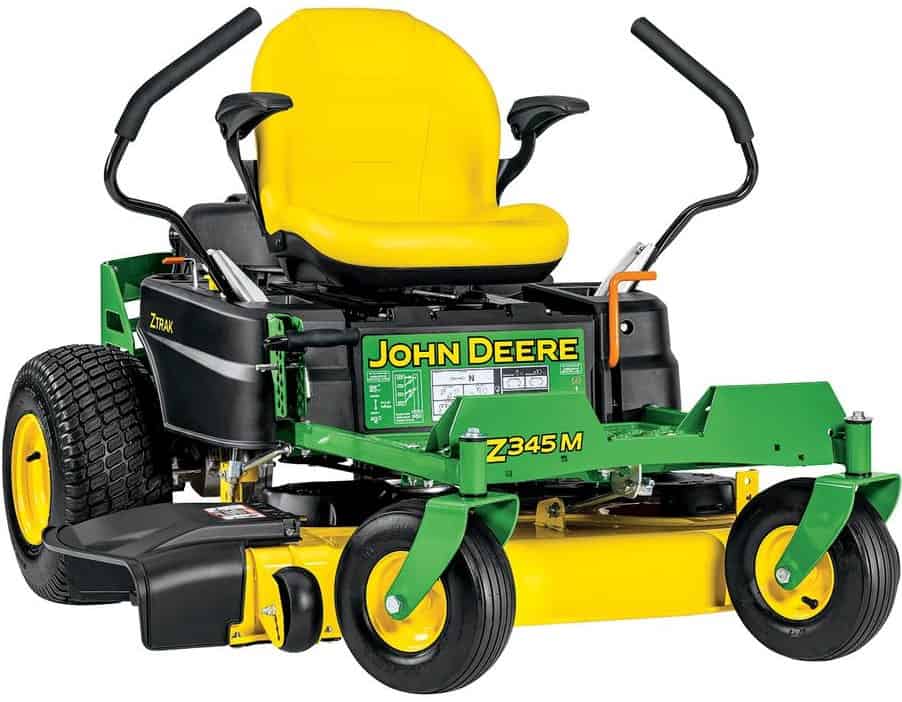
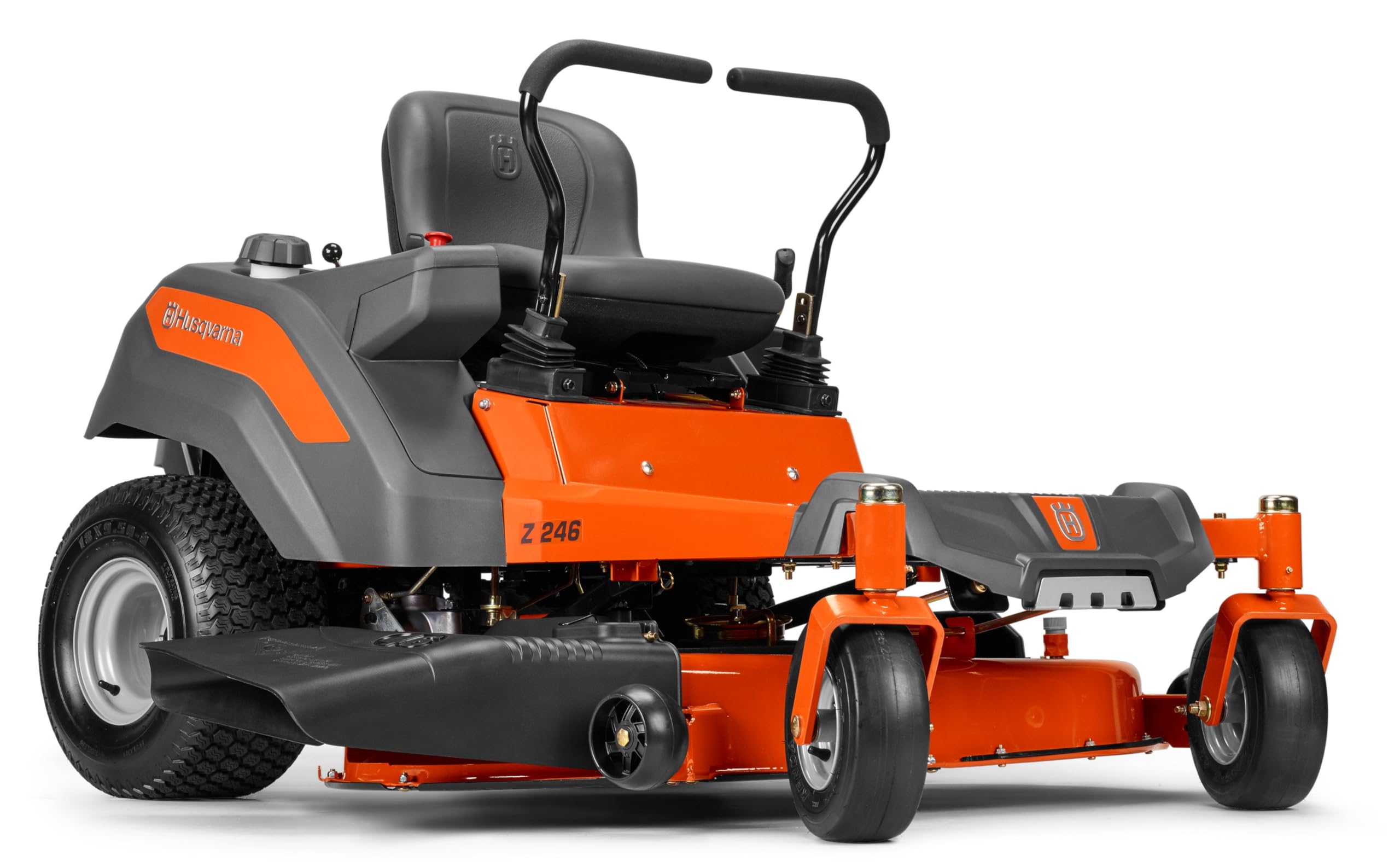
In the United States, the smallest zero-turn mowers usually have a 30- to 34-inch cutting deck and a total width of about 36 to 42 inches. Compact residential models may be about 60 to 75 inches long and 40 to 45 inches high.
A 30-inch or 32-inch zero-turn mower can fit through some backyard gates, but it may not fit through a standard 36-inch opening once you account for the discharge chute, tires, and control levers. For many U.S. homeowners, a 34- or 36-inch model is the practical lower limit for a true riding zero-turn mower.
The exact size depends on the deck, frame, tires, seat, chute position, and whether the manufacturer lists the width with or without the discharge chute.
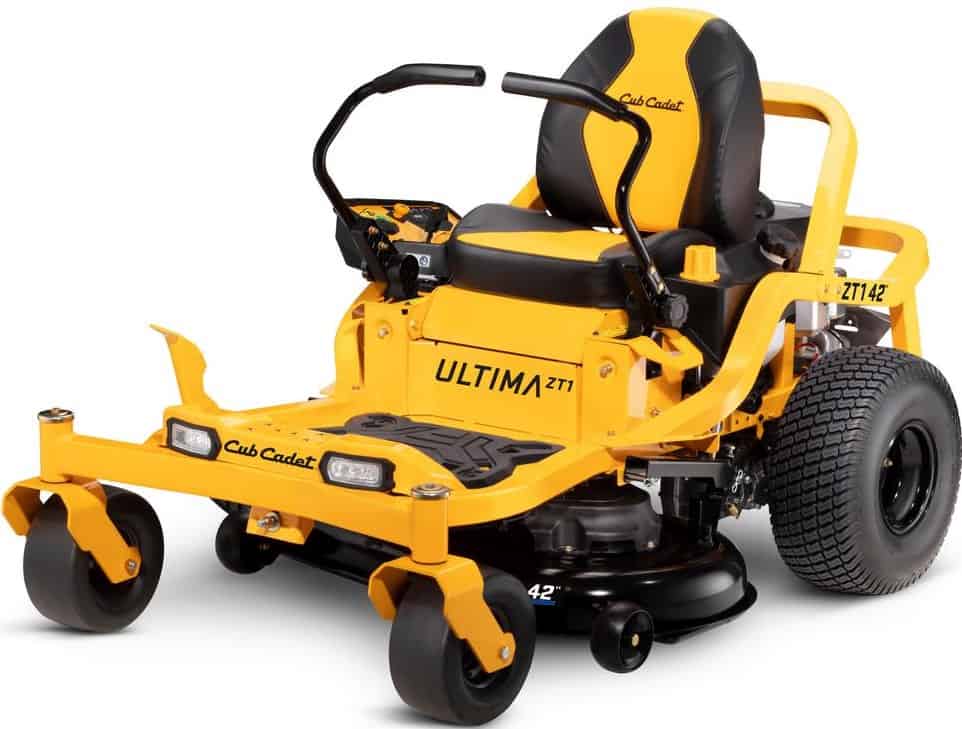
What Is the Smallest Zero-Turn Mower?
The smallest commonly available residential zero-turn mowers generally use a 30- to 34-inch deck. A few compact models may use a deck near 32 inches, while many small homeowner models start at 34, 36, or 42 inches.
The cutting deck is only one part of the mower’s size. The machine’s full footprint also includes:
- Rear tires
- Front caster wheels
- Side discharge chute
- Steering arms or control levers
- Engine cover
- Seat and armrests
- Safety guards
A mower with a 32-inch deck may therefore need more than 36 inches of clear space. Some chutes fold upward, but you should measure the mower in its normal operating position rather than rely on a folded chute.
Typical size range for compact zero-turn mowers
| Mower type | Typical deck width | Approximate overall width | Best fit |
|---|---|---|---|
| Extra-compact residential | 30–32 inches | About 36–40 inches | Small lawns and narrow gates |
| Compact residential | 34–36 inches | About 40–46 inches | Small to medium suburban yards |
| Small residential | 42 inches | About 44–50 inches | Larger yards with open access |
| Standard residential | 46–54 inches | About 50–60 inches | Larger lawns |
| Commercial compact | 32–48 inches | Varies by model | Frequent use and tight areas |
These are planning ranges, not universal measurements. Always check the current specification sheet for the exact mower.

How Wide Is the Smallest Zero-Turn Mower?
The narrowest zero-turn mower may be around 36 inches wide, but the usable clearance should be greater than that. A narrow gate, fence post, or uneven path can make a machine difficult to move through even when the listed width appears to fit.
For a comfortable fit, use these planning rules:
- For a mower listed at 36 inches wide, allow at least 38 to 40 inches of clear opening.
- For a mower listed at 40 inches wide, allow about 42 to 44 inches.
- For a mower listed at 46 inches wide, allow about 48 to 50 inches.
- Measure the narrowest point, not just the gate opening.
A gate may measure 40 inches between its posts but offer less space because of hinges, a sloped approach, or a fence that is not square.
Does the discharge chute change the width?
Yes. The side discharge chute may be the widest part of the mower. Some manufacturers list deck width, while others list the full machine width. These measurements are not always interchangeable.
Before buying, ask the dealer or check the manual for:
- Overall width with the chute installed.
- Width with the chute raised, if that position is allowed for movement.
- Width with the chute removed, if removal is permitted.
- Whether the chute must be lowered during operation.
- The width across the rear tires and front caster wheels.
Never mow with a required safety chute removed or held in an unsafe position.

How Small Can a Zero-Turn Mower Cut?
A compact zero-turn mower can cut areas that are too large for a push mower but too tight for a 42-inch or 48-inch riding mower. Its main advantage is not only its narrow deck. The front caster wheels and independent drive wheels allow the machine to turn within its own footprint.
A small zero-turn mower is often useful for:
- Suburban lawns with narrow side gates
- Yards with several trees
- Areas around garden beds
- Lawns with curved borders
- Properties where a tractor-style mower leaves large uncut areas
However, zero-turn steering does not remove the need for clearance. The rear of the mower can swing outward during a turn. That movement can strike a fence, wall, tree, or parked vehicle.
Minimum lawn size
There is no single minimum lawn size for a zero-turn mower. A compact model can work on a small lawn, but it may not be the best tool if the area has many obstacles or tight corners.
A small zero-turn mower usually makes more sense when:
- The grass area is large enough to justify a riding mower.
- The ground is fairly open after obstacles are considered.
- The operator has room to turn without damaging landscaping.
- The mower can be stored under cover.
- The access route is wide enough for the full machine.
For very small lawns, a walk-behind mower may be faster to unload, easier to store, and less costly to maintain. A zero-turn mower becomes more useful as mowing time, lawn size, and the number of open areas increase.

Compact Zero-Turn Mower Dimensions to Expect
A small zero-turn mower is usually compact in width but not tiny in every direction. The length can still exceed 5 feet, and the mower may need considerable storage space.
Typical planning dimensions for compact residential models are:
- Width: About 36 to 48 inches
- Length: About 60 to 75 inches
- Height: About 40 to 45 inches
- Weight: Commonly 500 to 800 pounds
These ranges can vary widely. A larger engine, heavy frame, suspension seat, wide tires, or fabricated deck can increase weight and length.
Why length matters
Many buyers measure the gate but forget the storage shed. A mower may fit through the gate and still fail to fit between the shed door and the back wall.
Measure:
- Door width
- Door height
- Interior depth
- Turning space inside the shed
- Ramp length and angle
- Space needed to open the seat or engine cover
- Room for fuel, tools, and maintenance access
If you use a ramp, confirm that it is rated for the mower’s total weight. Include the operator’s weight when checking the ramp rating.
30-Inch, 32-Inch, 34-Inch, or 36-Inch: Which Size Is Best?
The best compact deck size depends on access, lawn shape, mowing time, and storage. A smaller deck is not automatically better.
| Deck size | Main benefit | Main limitation |
|---|---|---|
| 30–32 inches | Fits more narrow spaces | Slower cutting and often less stable on uneven ground |
| 34 inches | Good balance for tight gates | Fewer choices than larger deck sizes |
| 36 inches | More productive while still fairly narrow | May not fit a true 36-inch gate |
| 42 inches | Faster on open lawns | Usually too wide for narrow access |
A simple mowing-time comparison
A wider deck covers more ground per pass. The theoretical mowing capacity can be estimated with this formula:
Acres per hour = width in feet × speed in miles per hour × efficiency ÷ 8.25
Use an efficiency factor of about 0.6 to 0.8 for turns, obstacles, overlap, and stops. This is a planning estimate, not a guarantee.
For example, compare a 32-inch deck with a 42-inch deck at the same speed and efficiency:
- 32 inches = 2.67 feet
- 42 inches = 3.5 feet
- The 42-inch deck covers about 31% more width per pass
The smaller mower may still finish first on a narrow, complex lawn because it can pass through gates and maneuver around obstacles. The larger mower is usually faster on open ground.
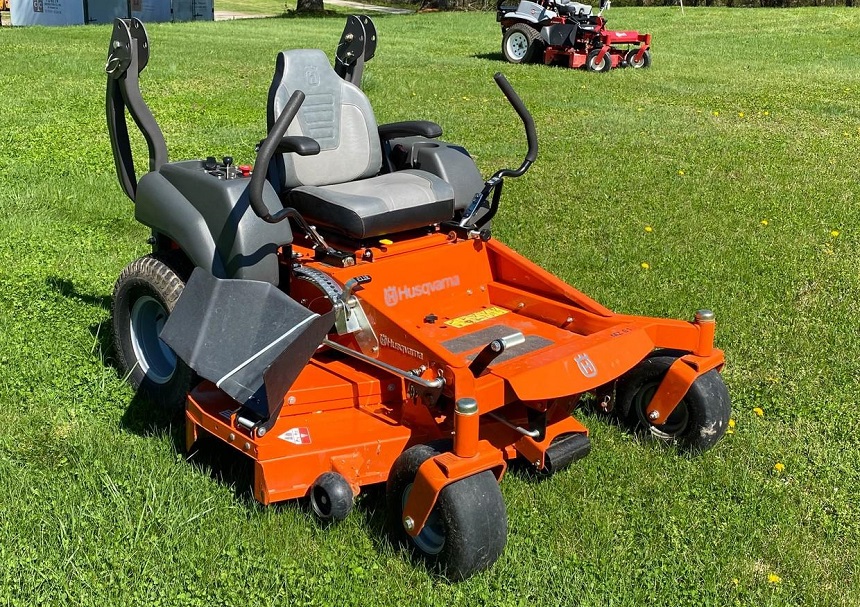
Will a Small Zero-Turn Mower Fit Through a 36-Inch Gate?
A mower advertised as 36 inches wide may not fit safely through a 36-inch gate. The listed width may exclude the discharge chute or may leave almost no room for error.
For a 36-inch gate, look for a mower with a true overall width well below 36 inches. Even then, inspect the following:
- Gate posts that reduce the opening
- Hinges and latch hardware
- Sloped or soft ground
- Tire bulge under load
- A chute that extends beyond the deck
- Control arms that swing outward
- The need to approach at an angle
If the access route is a major purchase condition, measure the mower at the dealer before signing a sales agreement. A manufacturer’s specification page is useful, but the exact configuration should match the mower you plan to receive.
Can you remove the mower deck to make it fit?
Some mower decks can be removed for service, but that does not make deck removal a practical daily solution. Removing a deck takes time, creates handling and storage issues, and may expose the operator to incorrect reassembly risks.
Do not remove guards, discharge parts, or safety equipment unless the manufacturer’s instructions specifically allow it for transport or service. Reinstall every required part before mowing.
What to Check Before Buying a Small Zero-Turn Mower
Use the following process before choosing a compact zero-turn mower.
1. Measure the complete route
Measure the narrowest point from the storage area to the lawn. Include gates, fence openings, walkways, shed doors, and turns.
Write down the smallest width. Do not estimate it by eye.
2. Measure storage space
Check the mower’s full length, height, and width. Leave enough room to walk around it and perform basic maintenance.
3. Confirm the full operating width
Ask for the width with the chute, tires, and control levers in their normal positions. If the manufacturer lists more than one width, use the largest relevant measurement.
4. Inspect the lawn
Look for:
- Steep slopes
- Ditches
- Soft soil
- Tree roots
- Drop-offs
- Retaining walls
- Pond edges
- Tight turns
A compact mower may fit the property but still be unsafe on a slope or near an edge.
5. Compare deck width with lawn shape
A 32-inch deck is useful in tight spaces, but it may require more passes. A 36-inch mower may offer a better balance if it fits the access route.
6. Check service access
Small machines still need oil changes, blade care, belt checks, tire pressure checks, and cleaning. Make sure you can safely raise or access the deck as directed by the manual.
7. Confirm transport needs
Check the mower’s weight before choosing a trailer, ramp, hitch carrier, or pickup loading method. Use tie-down points specified by the manufacturer and follow the owner’s manual.
Are Small Zero-Turn Mowers Safe on Slopes?
A small zero-turn mower is not automatically safer on a slope than a conventional riding mower. Zero-turn machines can lose traction or slide, especially on wet grass, loose soil, or a side slope.
Follow the slope limits in the owner’s manual. Manufacturers often give different limits for straight travel, turning, and side-hill operation. These limits are model-specific.
General precautions include:
- Mow only when grass is dry.
- Travel up and down slopes when the manual directs this method.
- Avoid sudden turns on hills.
- Keep away from drop-offs and retaining walls.
- Slow down before changing direction.
- Never carry passengers.
- Stop if the tires lose traction.
If the property has steep or uneven ground, have the exact model evaluated against the terrain before purchase. A dealer familiar with the mower can help, but the owner’s manual remains the controlling source for operating limits.
Common Mistakes When Choosing a Compact Zero-Turn Mower
The most common mistake is buying by deck width alone. A 34-inch deck does not always mean a 34-inch-wide machine.
Other mistakes include:
- Measuring the gate but not the chute.
- Forgetting the mower’s length.
- Ignoring the turning swing of the rear end.
- Choosing the narrowest model without checking cutting speed.
- Assuming all compact models handle slopes the same way.
- Measuring a showroom model with different tires or accessories.
- Using a shed ramp that is too narrow or weak.
- Storing gasoline-powered equipment in an unsafe or poorly ventilated area.
- Treating a small commercial mower and a small residential mower as equal in weight or service needs.
The right size is the smallest mower that meets your access, terrain, cutting, and storage needs without creating a safety problem.

Frequently Asked Questions
What is the narrowest zero-turn mower?
The narrowest commonly available residential zero-turn mowers are generally in the 30- to 34-inch deck class, with total widths often near 36 to 42 inches. Exact dimensions vary by model and by whether the measurement includes the discharge chute.
Can a zero-turn mower fit through a 36-inch gate?
Some compact models can, but many cannot fit comfortably. Check the mower’s complete width, including the chute and control levers. A listed width of 36 inches leaves little practical clearance in a 36-inch gate.
Are 30-inch zero-turn mowers available?
Yes, compact zero-turn models near 30 inches may be available in some U.S. markets. Availability changes, and these machines may have fewer features or lower productivity than 34- to 42-inch models.
Is a small zero-turn mower good for a half-acre?
It can be, especially when the lawn has trees, beds, or narrow sections. For a mostly open half-acre, a 42-inch mower may finish faster if the access route and storage area can accommodate it.
Do small zero-turn mowers cost less?
Not always. A smaller deck may reduce material use, but price also depends on the engine, frame, transmission, deck construction, seat, controls, and warranty. Compare the full specification and maintenance needs rather than deck width alone.
Can a small zero-turn mower mow uneven ground?
It can handle mild uneven ground if the model is designed for it, but compact size does not remove rollover, traction, or scalping risks. Follow the manual and avoid terrain that exceeds the mower’s operating limits.
Bottom Line
The smallest practical zero-turn mowers in the United States usually have 30- to 34-inch decks, while their full width is often about 36 to 42 inches. A compact 34- or 36-inch model is often the best compromise for homeowners who need narrow access without giving up too much mowing speed.
Before buying, measure the complete mower—not just the deck—and compare that measurement with every gate, door, ramp, and storage space. If the mower must pass through a 36-inch gate, choose a model with verified clearance rather than assuming the deck size tells the whole story.


