How Much Does A Lawn Mower Weigh In Kg: Weight Guide
Introduction
In the United States, a lawn mower usually weighs 14 to 45 kilograms (30 to 100 pounds) when it is a walk-behind model. Lightweight electric mowers may weigh less, while gas-powered self-propelled mowers often weigh more.
Riding mowers are much heavier. A riding lawn mower may weigh 136 to 272 kilograms (300 to 600 pounds), and a residential zero-turn mower may weigh 227 to 454 kilograms (500 to 1,000 pounds) or more.
The exact weight depends on the mower type, deck size, battery, fuel, engine, and whether the listed figure is the mower’s dry weight or shipping weight.

Lawn Mower Weight in Kilograms: Quick Answer
The table below shows common lawn mower weight ranges. These are practical estimates based on typical manufacturer specifications for residential equipment sold in the United States.
| Lawn mower type | Typical weight in pounds | Approximate weight in kilograms |
|---|---|---|
| Small manual reel mower | 15–40 lb | 7–18 kg |
| Corded electric mower | 30–55 lb | 14–25 kg |
| Battery-powered push mower | 30–70 lb | 14–32 kg |
| Gas push mower | 50–80 lb | 23–36 kg |
| Gas self-propelled mower | 60–100 lb | 27–45 kg |
| Heavy-duty walk-behind mower | 80–120 lb | 36–54 kg |
| Lawn tractor | 300–600 lb | 136–272 kg |
| Residential zero-turn mower | 500–1,000 lb | 227–454 kg |
| Commercial zero-turn mower | 700–1,500 lb | 318–680 kg |
These ranges are not a substitute for the exact specification of a particular model. A mower with a steel deck, large engine, wide cutting deck, or installed battery will usually weigh more than a smaller mower with a plastic deck.
For most homeowners, the most useful short answer is 23 to 45 kg for a walk-behind mower.

How Much Does Each Type of Lawn Mower Weigh?
Reel mowers
A manual reel mower is often the lightest option. Most weigh about 7 to 18 kg.
These mowers have no engine, fuel tank, or battery. Their weight comes mainly from the steel or polymer frame, wheels, handle, and cutting reel.
A reel mower is easy to lift and store. However, it works best on short, maintained grass and may struggle with tall weeds or uneven ground.
Corded electric mowers
A corded electric mower commonly weighs 14 to 25 kg.
The motor is lighter than a gas engine, and the mower does not carry fuel. Its main limitation is the power cord, which can restrict movement and requires care around the cutting deck.
The listed weight usually excludes the extension cord. The cord itself adds only a small amount, but it can affect handling during use.
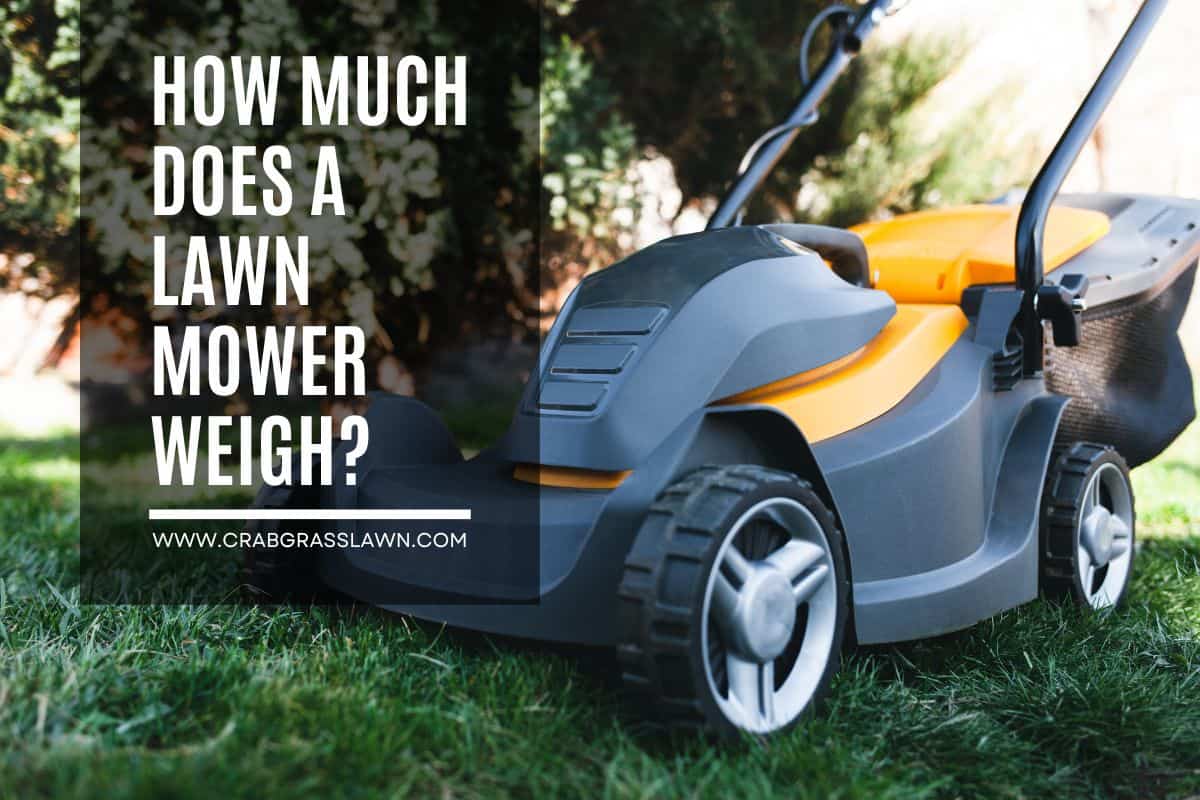
Battery-powered push mowers
Most battery push mowers weigh about 14 to 32 kg without the battery. With the battery installed, the operating weight may be several kilograms higher.
Battery size matters. A high-capacity battery stores more energy but often adds weight. Some manufacturers list:
- Tool-only weight
- Weight without the battery
- Weight with the battery
- Shipping weight
Check the product manual or specification sheet before comparing models.
Gas push mowers
A standard gas push mower usually weighs 23 to 36 kg when dry.
The engine, metal deck, fuel tank, wheels, and handle make gas mowers heavier than many electric models. A full fuel tank may add roughly 1 to 3 kg, depending on the tank size.
A mower with a steel deck often weighs more than a similar mower with a composite or plastic deck.
Gas self-propelled mowers
A self-propelled mower commonly weighs 27 to 45 kg.
The drive system adds a transmission, gears, drive wheels, and related parts. These components make the mower easier to move across the lawn under its own power, but they also increase its total weight.
A self-propelled mower may still need to be lifted for storage, repair, or transport. Its heavier body can make ramps and loading equipment especially useful.
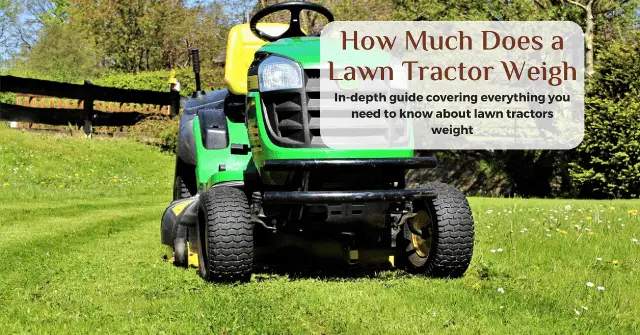
Riding lawn mowers
A riding mower, often called a lawn tractor, generally weighs 136 to 272 kg.
Its weight includes the engine, frame, seat, steering system, transmission, battery, fuel tank, and cutting deck. Larger deck widths and stronger transmissions can add considerable weight.
Some lawn tractors weigh more than 300 kg. Always confirm the exact operating weight before using a trailer, ramp, lift, or vehicle.
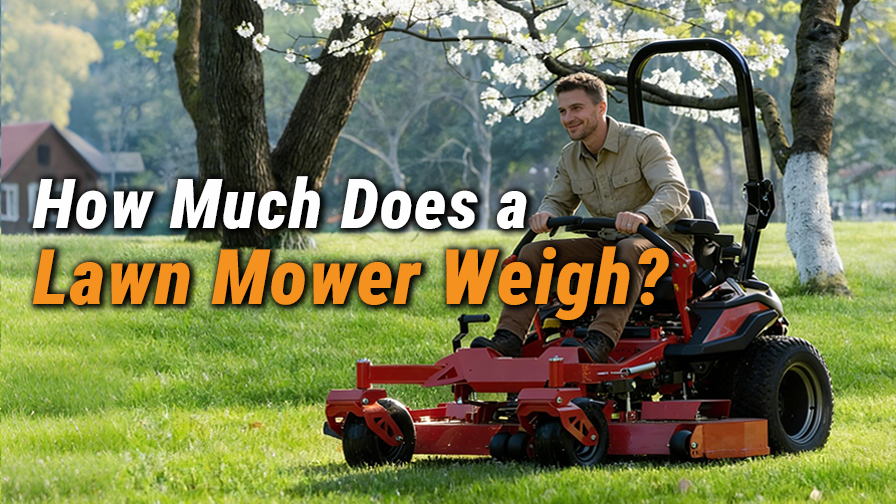
Zero-turn mowers
Residential zero-turn mowers commonly weigh 227 to 454 kg. Commercial models may exceed 500 kg.
Zero-turn mowers have a wide deck, two drive systems, large rear tires, and a strong frame. Commercial models often use heavier decks and larger engines, which raise the total weight.
Zero-turn mowers may look compact compared with tractors, but they can be too heavy for a basic pickup tailgate or light-duty ramp.
What Changes a Lawn Mower’s Weight?
The mower type gives you the first estimate, but several parts can change the final number.
Cutting deck material
A steel cutting deck is usually heavier than a plastic or composite deck. Steel may provide a strong housing, while composite materials can reduce lifting weight.
The deck width also matters. A 21-inch deck usually weighs less than a 30-inch or 42-inch deck because it uses less material and often pairs with a smaller engine or frame.
Engine size
A larger gas engine adds weight. It may also require a larger fuel tank, stronger frame, and heavier transmission.
Engine size does not tell you the complete mower weight by itself. Two mowers with similar engines may have different weights because of their decks, wheels, handles, and drive systems.
Battery size
Battery mowers can have a wide weight range. A small residential battery may add about 2 to 4 kg. A larger battery pack can add more.
The safest comparison is the ready-to-use weight:
Mower body + installed battery + other normal operating parts = operating weight
Fuel and fluids
A gas mower’s dry weight does not include fuel. Oil may also be excluded from the listed figure.
For lifting and transport, use the weight of the mower in its normal operating condition. A full tank makes the mower heavier than the dry specification.
Accessories
Grass bags, mulching plugs, side-discharge parts, striping kits, snow blades, and other attachments can change the weight.
A grass catcher may add several kilograms. A riding mower with a bagger, weights, or a snow attachment can weigh much more than the base machine.
Shipping weight versus product weight
Shipping weight includes packaging materials, manuals, protective foam, and sometimes extra parts. It is usually higher than the mower’s actual weight.
Look for these terms:
- Net weight: The product weight without packaging
- Operating weight: Weight ready for normal use
- Dry weight: Weight without fuel or some fluids
- Shipping weight: Product plus packaging and included shipping materials
For moving or lifting the mower, operating weight is usually the most useful figure.

How to Convert a Lawn Mower’s Weight From Pounds to Kilograms
Use this simple formula:
Kilograms = pounds × 0.453592
For quick estimates, multiply pounds by 0.45.
Examples
- 40 lb × 0.453592 = 18.1 kg
- 60 lb × 0.453592 = 27.2 kg
- 80 lb × 0.453592 = 36.3 kg
- 100 lb × 0.453592 = 45.4 kg
- 500 lb × 0.453592 = 226.8 kg
You can also convert kilograms to pounds:
Pounds = kilograms × 2.20462
For example, a 30 kg mower weighs about 66.1 pounds.
Quick conversion chart
| Weight in pounds | Weight in kilograms |
|---|---|
| 20 lb | 9.1 kg |
| 30 lb | 13.6 kg |
| 40 lb | 18.1 kg |
| 50 lb | 22.7 kg |
| 60 lb | 27.2 kg |
| 70 lb | 31.8 kg |
| 80 lb | 36.3 kg |
| 90 lb | 40.8 kg |
| 100 lb | 45.4 kg |
| 300 lb | 136.1 kg |
| 500 lb | 226.8 kg |
| 1,000 lb | 453.6 kg |

How to Find the Exact Weight of Your Lawn Mower
The exact weight is normally listed in the owner’s manual, product page, assembly guide, or specification label.
Follow these steps:
-
Find the model number.
Look on the mower frame, deck, engine area, handle, or product label. -
Search for the official manual.
Use the manufacturer’s support page rather than relying on a retailer’s shortened description. -
Check the specifications section.
Look for product weight, net weight, dry weight, or operating weight. -
Confirm what the number includes.
Check whether the battery, grass bag, fuel, oil, or attachments are included. -
Use the correct weight for your task.
Use operating weight for ramps, lifting, storage shelves, and transport. -
Add removable parts if needed.
Include the battery, catcher, fuel, or attachment when estimating the real moving weight.
If the manual lists only pounds, multiply the number by 0.453592 to get kilograms.
Which Lawn Mower Weight Is Best for You?
The right weight depends on how you store, move, and use the mower.
Choose a lighter mower if:
- You need to lift it into a vehicle.
- You store it on a high shelf or raised platform.
- You have limited upper-body strength.
- Your yard is small and mostly flat.
- You want easier turning and storage.
A lighter mower is not always easier to push. Wheel design, handle height, deck balance, and cutting conditions also affect handling.
Choose a heavier mower if:
- You mow thick or tall grass.
- You need better stability on uneven ground.
- You want a wider cutting deck.
- You need a self-propelled drive system.
- You plan to use the mower for larger areas.
A heavier mower may feel more stable, but it can be harder to load, unload, turn by hand, or repair.
Weight and slope safety
Weight becomes more important on slopes. A heavy mower has more mass and may be harder to stop or redirect. A riding mower also has a higher risk of tipping on unsuitable terrain.
Follow the slope limits and operating instructions in the mower’s manual. Do not assume that a heavier machine is safer on every hill.

How to Move a Heavy Lawn Mower Safely
A mower weighing more than about 25 kg can be difficult for one person to lift. A riding mower may require ramps, a trailer, or mechanical lifting equipment.
Use these precautions:
- Turn off the engine before moving a gas mower.
- Remove the key from a riding mower.
- Let hot engine parts cool.
- Disconnect the battery when the manual permits it.
- Secure loose parts, such as the grass bag.
- Keep the mower upright unless the manual gives a safe alternative.
- Use a ramp rated above the mower’s total operating weight.
- Check the ramp width, angle, and surface.
- Secure the mower with suitable straps during transport.
- Never rely on the parking brake alone.
- Keep hands and feet away from the blade.
- Do not lift a heavy mower without enough help or proper equipment.
For gasoline mowers, follow the manufacturer’s instructions before tilting or transporting the machine. Fuel and oil can leak if the mower is placed on the wrong side.
For riding mowers and zero-turn mowers, use equipment rated for the full mower weight plus any attachment or cargo. If you are unsure whether a ramp, trailer, lift, or vehicle can handle the load, check its capacity or ask a qualified equipment professional.

Common Mistakes When Comparing Lawn Mower Weight
Comparing dry weight with operating weight
A mower listed at 30 kg may weigh more when it has a battery, fuel, grass bag, and mulch plug installed.
Using shipping weight for lifting plans
Shipping weight includes packaging. It can overstate the mower’s actual weight, but it may still be relevant if you are moving the unopened box.
Ignoring attachments
A bagger, snow blade, trailer hitch, or rear weight kit can add a meaningful amount of weight to a riding mower.
Assuming a lighter mower cuts better
Weight alone does not determine cutting quality. Blade design, motor power, deck shape, cutting height, and grass conditions also matter.
Estimating a riding mower from its engine size
Engine horsepower does not provide a reliable weight estimate. Frame design, deck width, transmission, tires, and accessories can change the result.
Forgetting the ramp capacity
A ramp must support the mower’s total load. Add the weight of the operator if the operator will ride the mower up the ramp, unless the ramp instructions prohibit that method.
Frequently Asked Questions
How much does a small lawn mower weigh in kg?
A small electric or compact gas mower often weighs 14 to 27 kg. A small manual reel mower may weigh only 7 to 18 kg.
How much does a 21-inch lawn mower weigh?
A typical 21-inch walk-behind mower weighs about 23 to 45 kg. Electric models are often near the lower end, while self-propelled gas models are commonly near the upper end.
How much does a lawn mower weigh with a battery?
A battery mower may weigh 2 to 5 kg more with its battery installed, depending on battery capacity. Always check whether the manufacturer lists body-only or ready-to-use weight.
How much does a riding lawn mower weigh in kg?
Many riding lawn mowers weigh 136 to 272 kg. Larger tractors, baggers, and attachments can increase the total substantially.
Can one person lift a 40 kg lawn mower?
Some people can lift 40 kg briefly, but the mower’s shape, balance, and awkward handles make the task difficult and risky. Use a ramp or get help rather than lifting a heavy mower alone.
Does a full gas tank add much weight?
Yes. Gasoline weighs about 0.74 kg per liter, although tank size varies. A full tank may add roughly 1 to 3 kg to a walk-behind mower.
Key Takeaways
- Most walk-behind lawn mowers weigh 14 to 45 kg.
- Gas self-propelled models often weigh 27 to 45 kg.
- Battery mowers may weigh 14 to 32 kg, not including or including the battery depending on the specification.
- Riding mowers commonly weigh 136 to 272 kg.
- Residential zero-turn mowers often weigh 227 to 454 kg.
- Use the formula pounds × 0.453592 = kilograms.
- Check the manufacturer’s operating weight before choosing a ramp, trailer, lift, or storage system.
- Include fuel, batteries, grass bags, and attachments when estimating the real moving weight.
Conclusion
A typical American walk-behind lawn mower weighs about 23 to 45 kilograms, while lightweight electric models can weigh less. Riding mowers are far heavier and commonly range from 136 to 272 kilograms.
For the most accurate answer, find the model number and check the manufacturer’s specification sheet or owner’s manual. Use the mower’s operating weight—not only its dry or shipping weight—when planning transport, storage, or lifting.