
Best Raised Garden Bed Planter: Smart Buying Guide
The best raised garden bed planter combines sturdy materials, easy access, good drainage, and enough room for healthy roots.
A poor planter can leave plants crowded, waterlogged, or hard to reach. I tested these raised garden bed options by looking at size, material, planting depth, support, access, and daily use. This list includes open-bottom metal beds for large crops, plus elevated wood planters for patios, balconies, and gardeners who want less bending. The right choice depends on your space, crop list, soil needs, and budget.
See the differences between my top picks at a glance.
| Planter | Style | Size / Capacity | Best For | Buy |
|---|---|---|---|---|
| Best Choice 6×3×2 | Galvanized steel | 269 gallons | Small yards | View on Amazon |
| Best Choice 8×4×2 | Galvanized steel | 478 gallons | Large gardens | View on Amazon |
| Best Choice 72-inch Wood | Elevated wood | 300-pound capacity | Backyards and patios | View on Amazon |
| Best Choice Herb Bed | Grid wood planter | 10 compartments | Herbs and small crops | View on Amazon |
| Best Choice 48-inch Wood | Elevated wood | 200-pound capacity | Small spaces | View on Amazon |
| Best Choice 72-inch Metal | Elevated steel | 72×24×30 inches | Accessible gardening | View on Amazon |
| Best Choice 72-inch Acorn | Elevated wood | 300-pound capacity | Decorative patios | View on Amazon |
| Best Choice 8×2 Metal | Oval steel bed | 215 gallons | Deep-root crops | View on Amazon |
| Best Choice 48-inch Acorn | Elevated wood | 200-pound capacity | Compact patios | View on Amazon |
Best Choice 6×3×2 Foot Steel Bed
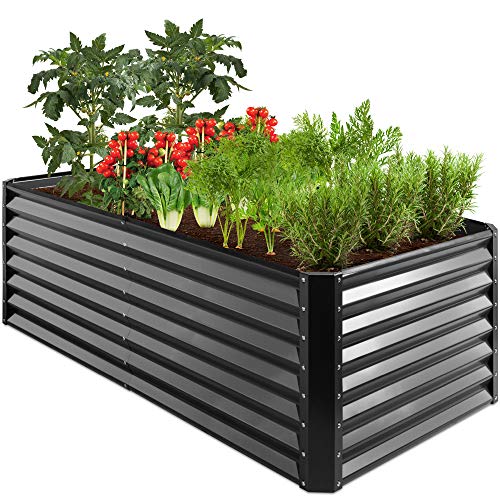
This 6-by-3-by-2-foot galvanized steel bed offers a useful balance between planting room and footprint. Its open-bottom design lets roots reach the soil below when you place it on the ground. The listed 269-gallon capacity gives you room for vegetables, herbs, and flowers. The gray finish also fits well in most outdoor spaces.
I see this size as a strong choice for first-time gardeners and small family gardens. The 2-foot depth suits many common crops, although you still need to fill it with a large amount of quality soil. An open base improves drainage when the bed sits on healthy ground. It does not work like an elevated planter, so you will still bend down to tend plants.
Pros:
- Good size for a modest yard
- Deep bed supports many vegetables
- Open bottom helps excess water drain
- Galvanized steel suits outdoor use
- Large enough for mixed planting
Cons:
- Requires a large soil investment
- Open bottom may allow roots to reach nearby soil
- Ground-level height does not reduce bending
What Amazon Buyers Are Saying
Buyer feedback for this type of bed often focuses on the useful size and clean metal look. Shoppers also tend to value the open base and deep growing area. Assembly and panel alignment are common points to inspect before filling the bed. As with any large planter, buyers should check every fastener and place it on level ground.
My Recommendation
I recommend this model for gardeners who want a durable ground-level bed without using a very large footprint. It offers strong value for vegetables, flowers, and herbs. I would choose it over a small box when root depth matters.
Best Choice 8×4×2 Foot Steel Bed
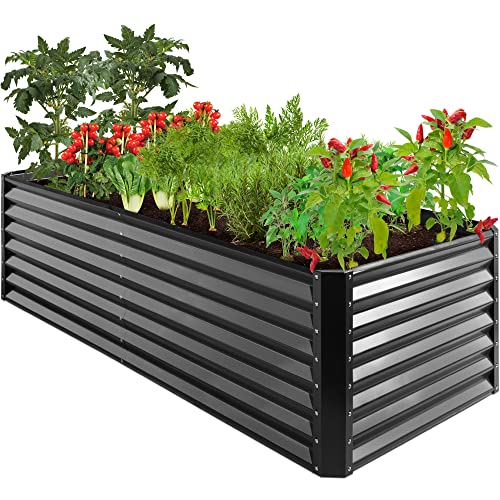
This 8-by-4-by-2-foot metal bed is built for gardeners who need serious planting space. Its listed 478-gallon capacity can support a broad mix of vegetables and flowers. The open bottom helps water move away from the root zone when the bed sits on suitable ground. Galvanized steel gives the panels a practical outdoor finish.
The large footprint makes this a better fit for a yard than a balcony. It can hold several crop groups, but its size also makes placement important. Measure gates, paths, and the chosen garden site before ordering. I also suggest preparing the soil mix nearby because moving enough fill after assembly can be tiring.
Pros:
- Very large planting area
- Deep profile suits many root systems
- Open base supports natural drainage
- Useful for several crop zones
- Strong choice for serious home gardens
Cons:
- Needs a large open site
- Filling it takes substantial soil and labor
- Ground-level design still requires bending
What Amazon Buyers Are Saying
Customers who select this size usually like the roomy layout and the amount of planting space. Reviews for large metal beds often mention that level ground makes assembly much easier. Some buyers may find the finished bed bigger than expected, so careful measuring matters. The main practical concern is the time and cost needed to fill a bed of this capacity.
My Recommendation
This is my pick for large gardens and gardeners who want one central growing area. It is not the most convenient option for a tiny yard or rental patio. If you have the space, it delivers excellent growing capacity.
Best Choice 72-Inch Elevated Wood Bed

This elevated wood planter measures 72 by 24 by 30 inches and includes a divider panel. Its raised height makes planting and harvesting easier than with a ground bed. The six-leg design supports the box, while the listed 300-pound capacity gives you a clear load limit. The natural wood look suits patios, decks, and backyard spaces.
The divider helps separate herbs, flowers, or crops with different care needs. I like this layout for gardeners who want a tidy bed without kneeling in the soil. The planter needs a level, firm surface and should not be overloaded with wet soil. Drainage holes help, but you should still watch water flow on a hard patio.
Pros:
- Comfortable 30-inch working height
- Useful 72-inch growing length
- Divider supports organized planting
- Six legs spread the load
- Works well on patios and decks
Cons:
- Wood needs care in wet weather
- Weight limit requires careful soil planning
- Less suitable for deep-root crops
What Amazon Buyers Are Saying
Buyers commonly look for the raised height, long planting area, and attractive wood style. The divider is useful for keeping plants apart, though it also reduces one large open planting zone. Assembly quality can depend on careful alignment and firm tightening. Buyers should also follow the listed weight limit rather than filling the box with dense garden soil.
My Recommendation
I recommend this elevated bed for patio gardeners, older adults, and anyone who wants easier access. It offers a practical mix of comfort and capacity. I rate it highly for herbs, greens, and compact flowers.
Best Choice 10-Grid Herb Planter

This elevated wooden herb planter uses 10 growing compartments to keep small crops in order. It is designed for herbs, flowers, and other compact plants. Drainage holes help excess water leave each growing area. The raised format also keeps the planting surface more comfortable to reach than a bed on the ground.
The grid layout is the main reason to choose this model. You can give basil, mint, parsley, or flowers their own sections instead of mixing everything together. Each compartment is smaller than a full bed, so large tomatoes and deep-root crops may feel cramped. I see it as a focused herb station rather than a replacement for a large vegetable garden.
Pros:
- Ten compartments simplify plant organization
- Good choice for herbs
- Raised design reduces kneeling
- Drainage holes support plant health
- Compact format suits patios and balconies
Cons:
- Small sections limit large plants
- Many compartments need regular watering
- Wood requires outdoor care
What Amazon Buyers Are Saying
Shoppers are drawn to the clean compartment layout and the chance to grow many herbs in one place. Buyers often value the easy access and neat appearance. The most important fit issue is compartment size, since large plants need more room. Reviewers also tend to note that drainage and watering can vary from one section to another.
My Recommendation
This is a smart buy for cooks, herb growers, and small-space gardeners. I would not use it as the only planter for a full vegetable crop. For organized herbs, it earns a strong rating.
Best Choice 48-Inch Elevated Wood Bed

This 48-by-24-by-30-inch elevated wood planter offers a smaller footprint than the 72-inch model. It includes a bed liner and has a listed 200-pound capacity. The raised height makes it easier to plant, weed, and harvest from a standing position. Its natural finish works well on a balcony, deck, or compact patio.
The shorter length makes this planter easier to place in a tight space. It can hold herbs, lettuce, flowers, and some compact vegetables. The liner helps contain the growing mix, but you should still confirm that drainage paths remain open. Because the box has a lower capacity than larger beds, avoid filling it with heavy soil unless the product instructions allow it.
Pros:
- Fits smaller outdoor areas
- Comfortable raised working height
- Includes a bed liner
- Good for herbs and leafy greens
- Easy to combine with other planters
Cons:
- Limited space for large crops
- Lower weight capacity than the 72-inch version
- Wood needs protection from long-term moisture
What Amazon Buyers Are Saying
Customers usually like this planter because it saves space and reduces bending. The liner is a useful feature for gardeners who want a contained growing area. The most common planning concern is its smaller planting volume. Buyers should also place it on a stable surface and keep the box within its stated capacity.
My Recommendation
This is one of the best choices for a small patio or balcony. It offers more comfort than a floor planter without taking over the space. I recommend it for light crops and compact plants.
Best Choice 72-Inch Elevated Metal Bed

This elevated metal bed measures 72 by 24 by 30 inches and uses galvanized construction. The raised design brings the growing surface closer to waist height for many users. It can suit vegetables, herbs, and flowers on a patio or other hard surface. The charcoal finish gives it a modern look that differs from traditional wood.
Metal is useful when you want a firm, easy-to-clean planter surface. The elevated format also keeps the growing area separate from poor ground soil and makes access simple. You still need to manage the total load of wet growing mix. Place the bed on a level surface and check that water can drain without pooling underneath.
Pros:
- Comfortable elevated height
- Galvanized metal suits outdoor use
- Long planting area
- Modern charcoal finish
- Useful for hard-surface spaces
Cons:
- Wet soil can create heavy loads
- Metal may heat in strong sun
- Requires a level support area
What Amazon Buyers Are Saying
Buyers are often interested in the combination of metal construction and easy access. The long shape gives plants room without requiring a ground bed. Customers should pay close attention to assembly and placement because an elevated planter must sit securely. In hot locations, a gardener may also need to watch soil moisture more closely.
My Recommendation
I recommend this model when low maintenance and easy access matter more than a wood look. It is a strong choice for patios and accessible gardens. It earns high marks for its blend of height, length, and metal construction.
Best Choice 72-Inch Acorn Wood Bed

This acorn-brown elevated wood planter shares the 72-by-24-by-30-inch format of the natural version. It includes a divider panel, six legs, and a listed 300-pound capacity. The warm brown finish gives it a more decorative look for visible patios and decks. Its raised layout helps reduce the need to kneel while gardening.
The divider can separate herbs from flowers or divide crops by watering needs. The long box provides more room than a small tabletop planter, but it still has a weight limit. Use a light, well-draining growing mix and follow the care directions for the wood. I would also keep the planter away from standing water to help extend its service life.
Pros:
- Attractive acorn-brown finish
- Raised height improves access
- Long planting area
- Divider supports neat crop planning
- Six-leg design spreads support
Cons:
- Wood needs regular outdoor care
- Weight limit restricts dense soil
- Divider reduces one large open area
What Amazon Buyers Are Saying
Many shoppers choose this version for its warm color and elevated design. Buyers tend to like the long footprint and the ability to keep plants organized. Assembly and surface placement remain important for a stable result. The finish may suit a decorative space better than a plain metal bed, but wood still needs protection from prolonged moisture.
My Recommendation
This is a good choice when appearance matters as much as access. It gives you a practical garden box that can also blend into a furnished outdoor area. I recommend it for herbs, greens, and seasonal flowers.
Best Choice 8×2 Foot Oval Metal Bed

This oval metal raised bed measures 8 by 2 by 2 feet and lists a 215-gallon capacity. Its narrow profile fits well where a wide rectangular bed may not. Four support bars help reinforce the long shape. The 2-foot depth gives many vegetables more root room than a shallow planter.
The oval form creates a softer visual line and avoids sharp outer corners. It works well for rows of vegetables, herbs, or flowers along a fence or path. The long shape may need careful leveling during setup. Because it has an open ground-bed format, it suits yards more than balconies or elevated patio spaces.
Pros:
- Long design fits narrow garden zones
- Deep growing profile
- Four support bars add reinforcement
- 215-gallon capacity supports mixed planting
- Rounded shape has a clean appearance
Cons:
- Needs a long, level location
- Not raised for seated or standing access
- Less suitable for compact balconies
What Amazon Buyers Are Saying
Customers often notice the oval shape and narrow footprint first. Gardeners who have long planting strips may find this layout easier to use than a wide square bed. Buyers should take care during assembly so the support bars and panels line up well. The bed also needs enough room around it for watering, harvesting, and walking.
My Recommendation
I recommend this bed for a narrow yard, side path, or fence line. It offers useful depth without taking the width of a large rectangular model. It is a focused choice for row crops and deep-rooted plants.
Best Choice 48-Inch Acorn Wood Bed
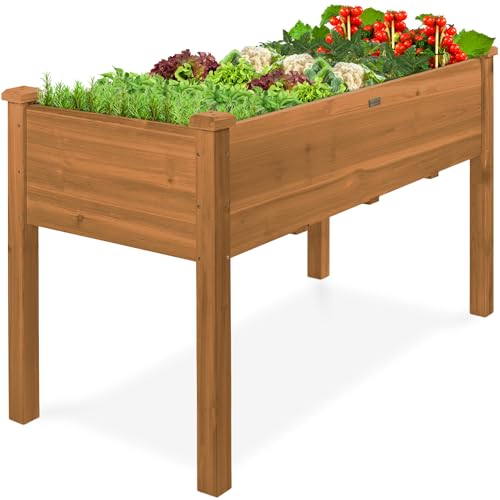
This compact acorn-brown wood planter measures 48 by 24 by 30 inches. It offers the same easy working height as the larger elevated wood bed but takes up less room. The listed 200-pound capacity suits a controlled amount of growing mix. Its warm finish works well in small yards, patios, and balconies.
The compact box is easy to add beside a door or seating area. It suits herbs, lettuce, flowers, and other plants with modest root needs. Its smaller volume also makes soil planning simpler than with a full-size bed. As with the other wood planters, keep drainage clear and protect the box from constant damp conditions.
Pros:
- Compact footprint
- Comfortable 30-inch height
- Warm acorn-brown appearance
- Good for light crops and herbs
- Easy to place near the home
Cons:
- Limited room for large vegetables
- Lower capacity than the 72-inch bed
- Needs care against moisture
What Amazon Buyers Are Saying
Buyers tend to like this planter when they want raised access in a smaller space. The acorn color can look more polished than plain unfinished wood. The main concern is planting volume, since the short box cannot replace a large garden bed. Customers should also check the surface for level support before adding soil.
My Recommendation
This is a useful small-space planter with a pleasing finish. I recommend it for beginners who want a raised box but do not need a large crop area. It offers good comfort and practical value.
How to Choose the Best Raised Garden Bed Planter
The best raised garden bed planter should match your space, plants, body, and watering habits. Do not choose by size alone. A large bed can waste money if you cannot fill it or reach the center. A small bed can disappoint if you plan to grow tomatoes, carrots, or several squash plants.
1. Match the Bed to Your Crops
Start with a crop list. Herbs and lettuce need less room than tomatoes or root vegetables. A 2-foot-deep metal bed gives roots more space than a shallow herb box. Divided planters work well for small herbs, but each section limits plant spread.
Think about mature plant size, not seed size. Leave room for air movement and harvest access. Tall crops may also need a trellis or separate support. If you want a mixed vegetable garden, choose a wide bed with an open layout.
2. Choose the Right Material and Height
Galvanized steel offers a clean, durable outdoor surface and works well for large ground beds. It can also suit elevated designs when you want a modern look. Wood blends into patios and yards, but it needs care against long exposure to water. Always follow the product directions for cleaning and finish care.
Ground beds provide more root room and often hold more soil. Elevated beds reduce bending and work well on patios, decks, and firm surfaces. Check the listed weight limit before adding wet soil. A planter full of growing mix can become much heavier after rain.
3. Check Drainage, Placement, and Total Cost
Good drainage protects roots from standing water. Open-bottom beds need suitable ground below them. Elevated beds need clear drainage holes and a surface that will not hold water. Never block drainage with a solid tray unless the product design calls for one.
Measure the location before ordering. Include walking space around the planter. Then estimate soil, compost, mulch, support stakes, and watering tools. The purchase price is only part of the cost. A smaller planter may offer better value if it reduces soil waste and fits the space you already have.
Final Verdict: Which Should You Buy?
For most large home gardens, I recommend the Best Choice 6×3×2-foot galvanized steel bed. It offers useful depth, strong capacity, and a manageable footprint. For easier access, the 72-inch elevated wood or metal beds are better.
The best raised garden bed planter is the one that fits your crops and space. Measure first, plan drainage, and choose a soil mix that supports healthy roots.
FAQs Of best raised garden bed planter
What is the best material for a raised garden bed planter?
Galvanized steel suits large outdoor beds and needs little surface care. Wood offers a warmer look but needs protection from moisture.
Are elevated garden beds better for seniors?
Yes. An elevated bed can reduce kneeling and bending. Choose a height and width that let you reach the center with ease.
How deep should a raised garden bed be?
A depth of about 12 inches suits many shallow-rooted plants. A 2-foot bed gives more room for deep roots and larger crops.
Do raised garden beds need drainage holes?
Yes. Drainage prevents water from sitting around plant roots. Open-bottom beds drain into the ground, while elevated beds need clear drainage holes.
Can I put a raised garden bed on concrete?
Yes, but choose an elevated model with proper drainage. Protect the surface if needed, and make sure the planter sits level and securely.


One Comment