
Lawn Mower Cord Not Pulling: Easy Fixes That Work
A lawn mower cord that will not pull can stop yard work before it starts. You may pull the starter rope and feel a hard stop, a short tug with no engine turn, or a rope that hangs loose. Each symptom points to a different problem.
The most common causes are a jammed mower blade, a flooded engine, a locked recoil starter, a damaged pull rope, or an internal engine issue. The good news is that many cases need only a safe inspection, cleaning, or a new starter rope. More serious faults need a repair shop.
This guide explains why a lawn mower cord is not pulling, how to test the mower safely, what tools you may need, and when repair is not worth the risk. It applies mainly to gas push mowers and self-propelled mowers with a recoil starter. If you mean the power cord on a corded electric mower, a separate section covers that problem too.
Quick answer: why is my lawn mower cord not pulling?
A lawn mower starter cord usually will not pull because the blade or engine is stuck, the recoil starter is jammed, the engine is flooded, or the rope has tangled or broken. Remove the spark-plug wire, inspect the blade area, and try the rope again. Never put your hands near the blade until the spark plug is disconnected. If the blade will not move by hand or the engine locks again, stop and seek professional service.
A starter rope should pull out with firm, steady resistance. It should turn the engine and then rewind into the recoil housing. A rope that will not move at all is different from one that pulls freely without turning the engine.
The first rule is simple: do not keep yanking. Hard pulls can break the rope, damage the recoil spring, bend a blade, or make a mechanical fault worse.
Start with safety and a quick symptom check
The safest way to diagnose a stuck mower cord is to shut down the machine before touching the blade, belt, spark plug, or starter housing. Work on a flat, dry surface with the mower turned off and cool.
Safety steps before inspection
Follow these steps before you test the starter:
- Move the mower outdoors or into a well-ventilated work area.
- Turn off the engine and let it cool.
- Remove the ignition key, if fitted.
- Disconnect the spark-plug wire and keep it away from the plug.
- If the mower has a battery, remove it when the manual allows.
- Wear safety glasses, work gloves, and closed-toe shoes.
- Keep children and pets away.
- Do not place your hands under the deck.
- Use a wood block or blade tool when checking blade movement.
- Follow the owner’s manual for your exact model.
Do not pull the starter rope with the spark-plug wire connected while your hands are near the blade. The engine could start without warning.
⚠️ Safety Warning: Wear eye and hearing protection and closed-toe shoes when servicing or running a mower. Clear sticks, stones, wire, and toys from the lawn first. Never mow wet grass on a slope, and never refuel a hot engine.
Match the symptom to the likely cause
a few details can narrow the fault quickly. Think about what happened just before the cord stopped pulling.
| What you feel or see | Likely cause | First check |
|---|---|---|
| Rope will not move at all | Locked blade, seized engine, or jammed recoil | Disconnect the spark plug and inspect the blade |
| Rope moves a few inches, then stops | Compression, flooded engine, or internal blockage | Pull slowly and inspect for oil or fuel |
| Rope pulls freely with no resistance | Broken starter pawl or damaged flywheel connection | Inspect the recoil starter |
| Rope pulls but will not rewind | Broken recoil spring or tangled rope | Remove the recoil cover |
| Rope is frayed or loose | Worn or broken starter rope | Replace the rope |
| Cord works after the mower cools | Heat-related binding or engine problem | Check oil level and cooling areas |
| Electric power cord has no power | Damaged cord, outlet, switch, or extension cord | Test the outlet and cord |
The main clue is whether the rope feels locked, loose, or normal. A locked rope points toward the blade, engine, or recoil unit. A loose rope points toward the starter mechanism.
Why a lawn mower pull cord gets stuck
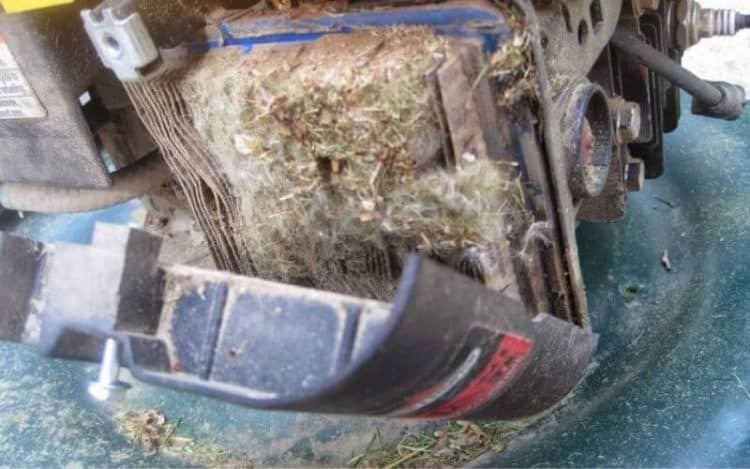
The most common reason is a blockage in the blade system. Long grass, wet clippings, vines, or a piece of wire can wrap around the blade and stop the crankshaft from turning. The starter rope then feels frozen because the rope is trying to turn the same shaft.
A jammed blade or mower deck
Grass can pack under the deck when you mow wet turf or let the lawn grow too tall. A stick can also wedge between the blade and deck. This problem is common after mowing rough ground, areas with small branches, or lawns with hidden debris.
Disconnect the spark-plug wire first. Then tip the mower only as the manual directs. Many gas mowers should be tilted with the air-filter and carburetor side facing up. This helps prevent oil or fuel from entering the filter and cylinder.
Use a wood stick to remove packed grass. Do not use your bare hand. Turn the blade with the stick or a gloved hand only after you confirm the ignition system is disconnected.
If the blade turns after the debris is removed, inspect it for bends or cracks. A bent blade can strike the deck and create another lock. Replace damaged mower blades instead of trying to straighten them.
A flooded engine
A flooded engine has too much fuel in the cylinder. It may happen after repeated pulls, too much choke, a stuck carburetor float, or a mower that was tipped the wrong way. The rope may feel harder to pull because liquid fuel does not compress like air.
A flooded engine often produces a strong gas smell. The mower may also sputter, fail to start, or briefly fire and stop.
To clear a flooded engine, disconnect the spark plug wire and follow the owner’s manual. Some engines require the throttle in the run position with no choke while you pull the rope several times. Others need the spark plug removed and dried. Do not guess if your manual gives a different procedure.
A locked or damaged recoil starter
The recoil starter is the round housing above the engine. It contains the starter rope, pulley, return spring, and small pawls. Pawls are catch tabs that grab the engine’s flywheel when you pull the rope.
Dirt, rust, a broken spring, or a tangled rope can lock the pulley. A cracked housing can also let the rope bind. In this case, the blade may turn normally, but the rope still will not move.
Remove the recoil cover only if you feel comfortable controlling a spring-loaded part. Take a photo before removing parts. If the spring jumps out, it can be difficult to rewind and may cause an injury.
Low oil or an engine seizure
Low oil can cause severe friction and heat. In extreme cases, the piston can seize inside the cylinder. The mower cord may become almost impossible to pull, even with the blade clear.
Check the oil level on a flat surface. Use the oil grade listed in the manual. Do not assume that adding oil will fix a seized engine. If the oil is empty, metallic, or smells strongly burned, stop using the mower.
| Cause | Typical signs | Repair level |
|---|---|---|
| Packed grass or debris | Blade area blocked; problem began during mowing | Easy cleaning |
| Bent blade | Blade hits deck or stops at one spot | Moderate; replace blade |
| Flooded engine | Gas smell; repeated failed starts | Easy to moderate |
| Broken recoil spring | Rope will not rewind | Moderate |
| Seized engine | Rope and blade both stay locked | Advanced |
| Bad starter pawl | Rope pulls with little engine movement | Moderate |
| Low or dirty oil | Hot engine, smoke, grinding, or lockup | Moderate to advanced |
A simple cleaning job can restore a mower in minutes. A seized engine or damaged crankshaft may cost more than an older mower is worth.
A bent crankshaft or flywheel problem
A mower that hits a rock, tree root, or landscape edge can bend the crankshaft. The crankshaft is the shaft that connects the engine to the blade. A bent shaft can make the blade wobble and bind against the deck.
A damaged flywheel key can also affect starting. The flywheel is the heavy rotating wheel on top of the engine. Its key helps keep ignition timing correct. A sheared key usually causes a no-start problem, but impact damage can also create unusual resistance.
Do not run a mower with a bent blade or crankshaft. It may vibrate hard, damage the deck, and create a serious hazard.
How to fix a lawn mower cord that will not pull
The best repair starts with the least invasive test. Begin outside the engine. Check the blade and starter housing before opening the carburetor or cylinder.
Step 1: Disconnect the spark plug
Find the thick wire leading to the spark plug. Pull the rubber boot off the plug, not the wire itself. Place the boot where it cannot touch the plug terminal.
Some modern mowers use an engine brake handle. Hold or release it only as the manual directs. The goal is to prevent ignition while you inspect the mower.
Step 2: Inspect the blade and deck
Look beneath the deck with a flashlight. Search for:
- Wet grass packed around the blade
- Twine, wire, plastic, or vines
- A loose blade bolt
- A bent or cracked blade
- Metal contact marks on the deck
- Heavy rust or missing deck parts
- A belt caught around the blade pulley
Use a wood stick to clear debris. Do not turn the blade with the spark-plug wire attached.
Step 3: Test blade movement
With the mower secure and the plug disconnected, try to rotate the blade carefully. It should turn through much of a full circle, although some resistance is normal from engine compression.
If it stops at the same point each time, look for a bent blade or deck contact. If it will not turn at all, the engine or crankshaft may be locked.
Do not force the blade with a pipe or long bar. Extra leverage can bend the crankshaft or damage the blade adapter.
Step 4: Check the oil
Set the mower on level ground. Check the dipstick or oil-fill opening. Oil should reach the marked level, not rise above it.
Too little oil can cause serious engine wear. Too much oil can create smoke, hard starting, and oil entering the air filter or muffler.
Use the correct four-stroke mower oil listed in the manual. Never pour gasoline into the oil fill.
Step 5: Test the recoil starter
If the blade and engine turn, inspect the recoil housing. Look for a rope that has crossed over itself, a damaged handle, or a housing that has shifted.
Pull the rope slowly while watching the pulley, if visible. The pulley should turn and the rope should rewind. If the rope stays out, the return spring may be broken.
A replacement recoil assembly is often simpler than rebuilding the old one. Confirm the engine model, starter shape, mounting holes, and rope direction before ordering.
Step 6: Check for a flooded engine
If the mower smells strongly of gasoline, stop pulling for a moment. A flooded engine may need time to clear. Follow the manual for the correct throttle and choke position.
Remove and inspect the spark plug only when the engine is cool. A wet plug may need to dry or be replaced. Check the gap and plug number against the manual.
Do not use an open flame to dry a spark plug. Fuel vapors can ignite.
Step 7: Try the starter again
Reconnect nothing yet. With the blade area clear and the plug wire still disconnected, pull the rope gently. It should now move in a steady cycle.
If the rope pulls normally, reconnect the spark plug wire and start the mower according to the manual. If it locks again, stop. Repeated locking suggests a deeper fault.
🔧 Quick Fix: If packed grass caused the lock, clean the deck, sharpen or replace the blade, check the blade bolt, and let the grass dry before mowing. Raise the mowing height for the first cut of an overgrown lawn.
Replacing a broken starter rope
A broken rope is a common and manageable repair. You may need a screwdriver, socket set, replacement rope, lighter or heat tool, pliers, and gloves.
The basic process is:
- Remove the recoil starter housing.
- Hold the pulley so the spring cannot unwind.
- Remove the old rope.
- Measure the old rope and compare it with the manual’s size.
- Wind the pulley in the direction that stores spring tension.
- Align the rope holes.
- Thread the new rope through the housing and handle.
- Tie secure knots.
- Let the pulley rewind the rope slowly.
- Check that the handle rests against the housing.
Do not let the pulley spin free. A recoil spring can unwind suddenly and may be hard to reset.
Some mower engines use a complete recoil starter module. Replacing the whole module can save time, especially for a first-time homeowner or a gift buyer helping an older family member.
Replacing a mower blade safely
A blade replacement can solve a cord problem if the old blade is bent or damaged. Confirm the blade length, center-hole shape, rotation direction, and mower model.
Most blade bolts are tight. Use a block of wood to stop the blade from turning. Disconnect the spark plug first. Install the blade with the cutting edge facing the correct direction.
After installation, tighten the bolt to the manual’s torque specification. A loose blade can come off. An upside-down blade may not cut well and can increase vibration.
Cleaning a dirty carburetor
A carburetor mixes fuel and air. If its passages clog, the mower may start hard or flood. However, a dirty carburetor usually does not cause a completely locked rope.
Clean it only after checking the blade and recoil system. Use fresh fuel and the cleaner recommended for small engines. Take photos as you remove linkage, springs, and fuel lines.
If fuel leaks, the carburetor float sticks, or the engine has no compression, professional service may save time and prevent more damage.
Problems and solutions at a glance
The table below links the symptom to a sensible next action. It can help a renter decide whether to call the property owner or a repair shop.
| Symptom | Safe next action | Avoid |
|---|---|---|
| Rope is fully locked | Disconnect plug and clear the deck | Pulling harder |
| Rope is loose | Inspect the recoil pulley and pawls | Running the mower |
| Rope will not rewind | Replace the rope or recoil spring | Letting the spring snap |
| Blade will not turn | Stop and inspect for seizure | Using a long bar |
| Blade hits the deck | Replace damaged parts | Mowing with vibration |
| Engine smells of fuel | Follow flooded-engine steps | Adding more gas |
| Corded mower stays dead | Test outlet, cord, and switch | Using a damaged cord |
| Rope works after cleaning | Reassemble and test safely | Ignoring the cause |
The main takeaway is to separate external problems from internal ones. A clogged deck and broken rope are often repairable at home. A seized engine, bent crankshaft, or unsafe electrical fault deserves expert help.
When the problem is a corded electric mower
A corded electric mower has a power cable, not a recoil starter rope. If its cord will not pull from the outlet or the mower does not run, inspect the electrical path.
Check the outlet and extension cord
Reset a tripped breaker or ground-fault circuit interrupter, often called a GFCI. Test the outlet with another device. Then inspect the extension cord for cuts, crushed spots, melted plastic, or loose ends.
Use an outdoor-rated extension cord with the size and length listed in the mower manual. A cord that is too long or too thin can cause voltage drop and motor heat.
Never tape over major cord damage and continue mowing. Replace the cord.
Check the mower safety controls
Many electric mowers use a safety key, bail handle, or lockout button. The motor may not run if the key is missing or the handle is not held in the right position.
Unplug the mower before checking the blade. Clear the deck only with a tool, never your hand. A corded motor can start as soon as power returns if a control is stuck.
Prevent the starter cord from sticking again
Good mowing habits reduce stress on the starter system. Mow when grass is dry, keep the blade sharp, and avoid cutting more than one-third of the grass height at a time.
Use the right mowing height
Mowing height depends on grass type and climate. Cool-season turf often needs a higher cut during heat or drought. Warm-season turf may use a different range. Check local turfgrass guidance and the mower manual.
A low cut makes the mower work harder. It also increases the chance that the blade strikes soil, roots, or hidden objects. A higher setting is often better for an overgrown or stressed lawn.
Keep the blade sharp and balanced
A dull blade tears grass and increases load. A damaged blade creates vibration and can affect the crankshaft. Inspect the blade during the mowing season and sharpen it with the correct angle.
Replace a blade that is cracked, bent, badly worn, or missing large sections. Do not install a blade that does not match the deck.
Use fresh fuel
Gasoline degrades during storage. Old fuel can clog the carburetor and make cold starts difficult. Use the fuel type in the manual and consider fuel stabilizer when the mower will sit for more than a short period.
Never store gasoline in an unapproved container. Follow local fuel-storage rules. Empty or stabilize fuel before long-term storage as directed by the manufacturer.
📜 Check Local Rules: Some cities restrict gas-powered equipment during certain hours or prohibit specific gas equipment. HOAs may also limit noise, storage, or mowing times. Confirm local rules before buying a gas, corded, battery, riding, or zero-turn mower.
Store the mower correctly
Store the mower in a dry garage or shed. Protect it from rain, standing water, and large temperature swings. Do not cover a damp machine and trap moisture inside.
Keep the handle, pull rope, and recoil housing free of mud. Clean clippings from the deck after the engine cools. For battery mowers, remove the battery if the manual recommends it and store it within the stated temperature range.
Lithium-ion batteries should stay away from heat, water, and metal objects. Do not store loose batteries beside nails, tools, or other items that can bridge the terminals.
A simple mower maintenance schedule
Regular care costs less than many emergency repairs. The exact schedule varies by brand, engine size, cutting width, and use.
| Timing | Maintenance task | Reason |
|---|---|---|
| Before each use | Check oil, blade, debris, and controls | Finds safety problems early |
| After each use | Remove grass and dry the deck | Reduces rust and buildup |
| Every few uses | Inspect rope, handle, and fasteners | Finds wear before failure |
| During the season | Sharpen or replace the blade | Reduces engine load |
| Per manual | Replace spark plug and air filter | Supports reliable starting |
| Before storage | Stabilize or drain fuel | Limits fuel-system problems |
| Storage period | Charge and store batteries correctly | Protects battery life |
The items that wear out first are often the blade, starter rope, spark plug, air filter, drive belt, and battery. A self-propelled mower may also need cable, belt, and transmission service.
When to call a repair shop
Call a repair shop when the blade and recoil system do not explain the lock. Internal engine work can involve the piston, connecting rod, crankshaft, valves, or flywheel.
Professional help makes sense when:
- The engine stays locked after the deck is clear.
- The mower hit a rock or curb and now vibrates.
- The crankshaft appears bent.
- Oil contains metal flakes.
- The engine has no compression.
- Fuel leaks near the carburetor.
- The recoil spring will not stay contained.
- You do not have a safe work area.
- The mower is still under warranty.
- The repair requires flywheel or valve removal.
Ask for a written estimate. Compare the repair cost with the mower’s age, deck condition, cutting width, engine parts, and replacement value. A basic push mower for a small, flat yard may not justify a major engine rebuild. A heavy-duty self-propelled mower or commercial unit may be worth repairing.
A riding mower or zero-turn mower needs a different level of care. Its starter system, battery, belts, and hydraulic parts are larger and more costly. Do not use a push-mower repair guide for a riding machine unless the manual supports the procedure.
Choosing a replacement mower if repair is not practical
A stuck starter cord does not always mean you need a new mower. But if the deck is rusted, the engine is seized, and several parts are worn, replacement may be more sensible.
Match the mower to the yard
Measure the yard, gates, slopes, and storage space first. A wide deck can reduce passes but may not fit through a narrow gate. A smaller deck can suit tight beds, paths, and small city lots.
| Yard and user | Suitable mower type | Main limitation |
|---|---|---|
| Small, flat yard; low budget | 16–21-inch push mower | Requires more walking |
| Small yard near neighbors | Battery mower or reel mower | Battery or manual effort limits use |
| Medium yard; mild slopes | Battery or gas self-propelled mower | Costs more than a basic push mower |
| Hilly lawn; user needs help | Self-propelled mower with suitable traction | Still requires safe slope control |
| Large open yard | Riding mower | Needs storage and regular service |
| Wide, open acreage | Zero-turn mower | Poor fit for tight gardens and steep slopes |
| Small regular lawn; low noise goal | Robotic mower | Needs setup, boundary planning, and charging |
A first-time homeowner often benefits from a simple battery push mower if the lawn is small and the battery platform fits other tools. A senior may prefer self-propelled operation, but slope, controls, weight, and brake behavior matter more than a single feature.
A gift buyer should confirm who will store, charge, fuel, clean, and service the mower. A large gas mower can be a poor gift for someone without a shed or who dislikes fuel handling.
Consider mower power and care
Gas engines list displacement in cc, or cubic centimeters. More cc can support heavier cutting, but it can also mean more noise, fuel, and maintenance. Battery mowers list voltage and amp-hours, or Ah; Ah describes battery capacity, but actual runtime depends on grass, height, blade load, battery age, and temperature.
Corded mowers avoid gasoline but need a safe outlet and extension-cord setup. Reel mowers suit small, flat lawns that are mowed often. They are quiet but may struggle with tall grass, weeds, and uneven ground.
Mulching means cutting clippings into small pieces so they return to the lawn. Side discharge sends clippings to the side. A grass catcher collects them but needs regular emptying. Each method suits a different yard and cleanup preference.
Cost, skill, and repair value
A starter rope is usually a low-cost part. A complete recoil assembly costs more but may still be reasonable for a sound mower. Engine seizure, crankshaft damage, and transmission faults can move the repair into a higher cost tier.
| Repair level | Typical work | Best for |
|---|---|---|
| Basic DIY | Clear deck, change oil, replace rope | Confident beginners |
| Moderate DIY | Replace blade, recoil unit, plug, or filter | DIY users with hand tools |
| Advanced repair | Carburetor, flywheel, valves, crankshaft | Experienced small-engine users |
| Shop repair | Seized engine or major impact damage | Valuable or newer mowers |
| Replacement | Several major parts worn | Older budget mowers |
Do not base the decision on the rope alone. Check the tires, deck rust, drive system, handle, blade adapter, engine leaks, and parts availability.
Common mistakes that make the problem worse
A mower starter is simple, but careless testing can create extra damage. The most common mistake is working under the deck before disconnecting the spark plug.
Avoid these errors:
- Pulling harder when the rope is locked
- Tilting the mower toward the air filter
- Using a hand near the blade
- Starting a mower with a damaged blade
- Ignoring a fuel smell
- Overfilling the oil
- Installing the wrong rope size
- Letting the recoil spring unwind
- Using a damaged extension cord
- Storing old fuel for a long period
- Skipping the owner’s manual
- Mowing wet, tall grass at a very low height
A mower is not a toy, even if it is small. Treat the blade, fuel, battery, and starter spring as working hazards.
Questions homeowners ask
Q: Why will my lawn mower pull cord not move at all?
A: The blade may be jammed by grass or debris, or the engine may be seized. Disconnect the spark-plug wire, inspect the deck, and check whether the blade turns safely. If the blade and starter remain locked, use a repair shop.
Q: Can a bad spark plug stop the pull cord from pulling?
A: Usually no. A bad spark plug can cause a no-start condition, but it normally does not lock the rope. A flooded engine or mechanical blockage is more likely when the cord feels stuck.
Q: Why does the mower cord pull out but not start the engine?
A: The recoil pawls may not engage the flywheel, or the rope may be attached to a damaged pulley. Other causes include no fuel, a clogged air filter, a bad spark plug, or a safety-control problem.
Q: Is it safe to turn a lawn mower on its side?
A: Only if the owner’s manual allows it and you use the correct direction. Tipping it the wrong way can send oil or fuel into the air filter, carburetor, or cylinder. Disconnect the spark plug first.
Q: How do I know if the mower engine is seized?
A: A seized engine usually keeps the blade and starter locked even after you remove debris. Low oil, overheating, impact, or internal wear may be involved. Do not force it with a long bar.
Q: Can I replace a lawn mower pull cord myself?
A: Yes, many homeowners can replace a rope with basic tools. The main danger is the recoil spring. Keep tension controlled, use the correct rope, and replace the whole recoil assembly if the old unit is damaged.
Q: Why is my mower hard to pull after mowing wet grass?
A: Wet grass can pack beneath the deck and wrap around the blade. It also adds cutting load. Disconnect the spark plug, clear the deck with a tool, and let the lawn dry before mowing again.
Q: Should I repair or replace an old mower?
A: Repair is often sensible when the deck, engine, and drive system are sound. Replacement may make more sense when the engine is seized and the mower also has heavy rust, worn tires, bad belts, or unavailable parts.
Q: What mower is easiest for a senior homeowner?
A: A lightweight battery mower may suit a small, flat yard if charging is simple. A self-propelled mower can help on mild slopes, but controls, weight, stopping distance, and storage are important. Test the controls before purchase.
Q: Are battery mowers easier to maintain than gas mowers?
A: They usually avoid spark plugs, oil changes, fuel storage, and carburetor cleaning. They still need blade care, deck cleaning, battery storage, and electrical inspection. Confirm battery price and compatibility before buying.
Q: Can a mower cord fail because of cold weather?
A: Cold can make rope fibers stiff and batteries less effective. Old fuel may also cause cold-start trouble. Store the mower dry, use the correct oil, and follow the manual for seasonal starting.
Q: How long should a lawn mower last?
A: Service life depends on construction, hours, storage, climate, and care. A well-maintained mower can last many seasons, but blades, belts, ropes, batteries, spark plugs, and air filters need replacement over time.
Q: Can I use a string trimmer instead of a mower?
A: A string trimmer is useful for edges, narrow strips, and places a mower cannot reach. It is not a practical replacement for a mower across a full lawn. Use an edger for crisp borders and a leaf blower for cleanup.
Q: Do lawn mower repairs have environmental rules?
A: Yes. Recycle lithium-ion batteries at approved drop-off sites. Take old gasoline and oil to a household hazardous-waste location. Donate or recycle usable mowers instead of sending them to a landfill.
Final thoughts
A lawn mower cord that will not pull is a warning, not a challenge to pull harder. Disconnect the spark plug, clear the blade area, check the oil, and inspect the recoil starter in that order. Many problems are simple, but a locked engine, bent crankshaft, damaged blade, or unsafe fuel system needs professional attention.
Choose repair based on the mower’s full condition and the yard it serves. A small flat lawn may suit a light battery or push mower. A sloped yard may need self-propelled traction. A large property may justify a riding mower or zero-turn model, with enough storage and service support.
Keep blades sharp, mow dry turf when possible, store fuel and batteries correctly, and follow the owner’s manual. Those small habits help keep the starter rope moving and the mower ready when the grass needs attention.
Affiliate disclosure: This article may contain affiliate links. If you buy through a link, we may earn a commission at no extra cost to you. Always confirm current specifications, compatibility, pricing, safety information, and replacement part numbers on the manufacturer’s product page and in the owner’s manual.

One Comment